
Impact Craters
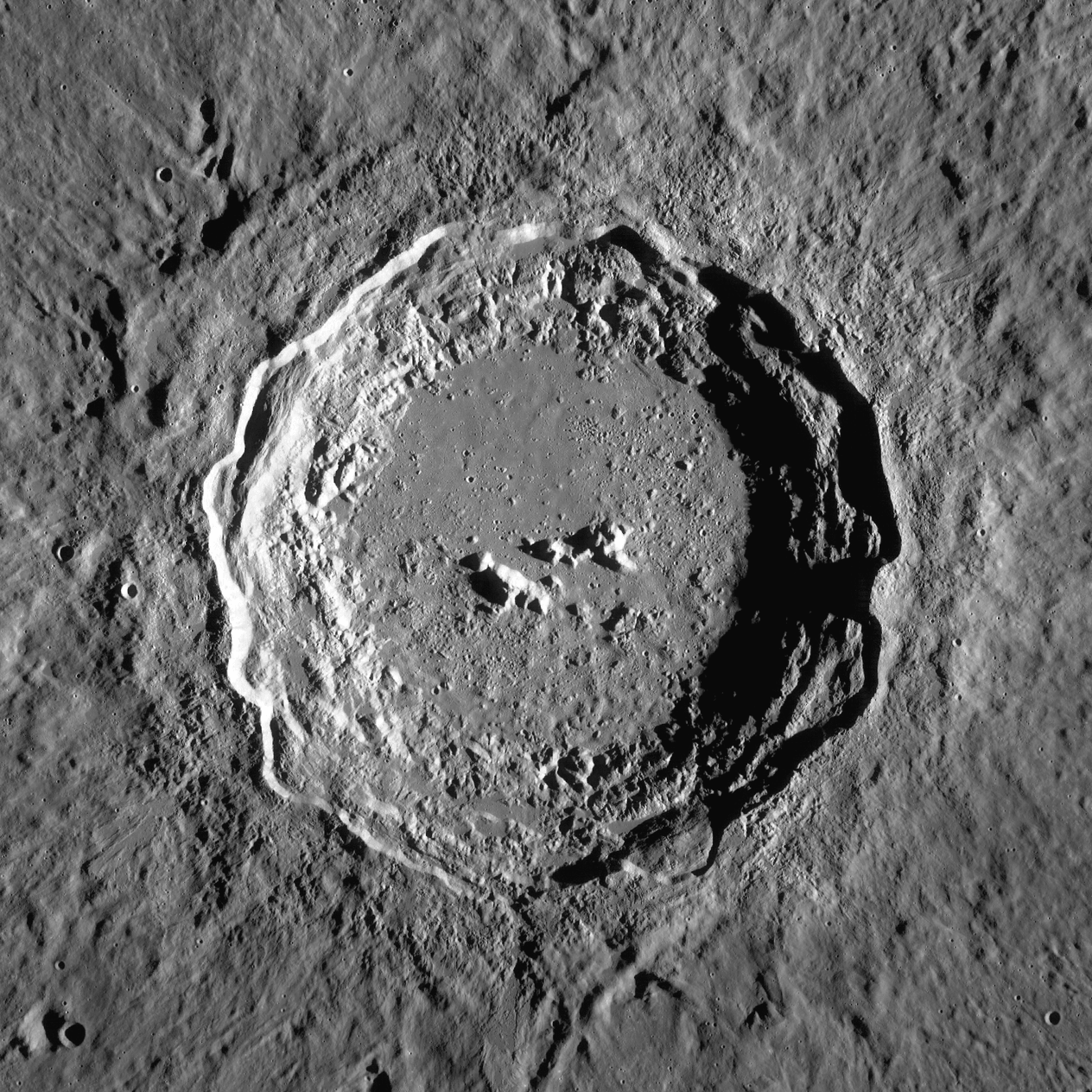
Look at the Moon and almost every crater is round. That should be strange. Meteoroids arrive from every direction and at every angle, and most of them hit at a slant — so why are there almost no oval scars?
Because a crater is not a dent. At tens of kilometres per second, the arriving body carries so much kinetic energy that on contact it is converted almost entirely to heat, and the projectile vaporises in an instant. What excavates the hole is not the impactor ploughing in but the explosion that follows, and an explosion at a point radiates outwards equally in all directions. The crater records the blast, not the trajectory.
The effect holds down to surprisingly shallow angles: high-velocity impacts stay essentially circular at 30° or steeper, elongate below that, and below about 15° the projectile is likely to ricochet. The ejecta blanket gives the secret away earlier than the crater does — asymmetry in the thrown-out debris can betray obliquity at angles as high as 45°.
A tray of flour under a dusting of cocoa reproduces the geometry astonishingly well: the crater bowl, the raised rim, the overturned flap, the bright rays. What it cannot reproduce is the physics of vaporisation — your marble does not explode — which is exactly why the angle experiment in step 5 is the interesting one.
Drop things into flour, measure carefully, and find the scaling law yourself.
ہدایات
Build a two-layer target
Build a two-layer target
Fill a deep tray with at least 50 mm of flour and level the surface with a straight edge.
Sift a thin, even layer of cocoa powder over the top.
The contrasting layer is the instrument: it makes the ejecta visible as bright rays where dark cocoa is thrown aside and white flour is exposed.
Depth matters — a shallow tray hits the bottom and gives a false, flat crater.
اس مرحلے کے لیے مواد:
 ہمہ مقصد آٹا2 کلوگرام
 کوکو کا سفوف (قلوی عمل)100 گرام
Drop one projectile and name every feature
Drop one projectile and name every feature
Drop a marble vertically from about 1 m. Look before you touch anything.
Find and name: the bowl, the raised rim (material pushed up, not piled on), the overturned flap where the surface layer is folded back, the ejecta blanket, and the bright rays.
Every one of these has a counterpart on the Moon. The rays around Tycho are the same feature as the streaks in your cocoa.
اس مرحلے کے لیے مواد:
 شیشے کی گولیاں10 ٹکڑے
Vary the height and find the scaling
Vary the height and find the scaling
Using one projectile, drop from five measured heights spanning a factor of ten. Resurface the tray between drops. Measure each crater's rim-to-rim diameter with calipers.
Energy is mass x g x height. Plot log diameter against log energy and measure the slope.
Expect a straight line with a slope well below 1/2 — crater size grows much more slowly than energy, which is why a ten-fold more energetic impact does not make a ten-fold bigger hole.
درکار اوزار:
 ڈیجیٹل ورنیئر کیلیپر ۶ انچ
 فیتہ پیما
 خانہ دار کاغذ
Separate mass from speed
Separate mass from speed
Choose a light and a heavy projectile and drop them from heights chosen so the energy is equal. Measure both craters.
Then match momentum instead and measure again.
Expect the equal-energy pair to agree more closely than the equal-momentum pair.
Cratering is governed mainly by energy delivered, not by momentum — which is why a small fast body can out-excavate a large slow one.
اس مرحلے کے لیے مواد:
 فولادی بال بیئرنگ (سیٹ)10 ٹکڑے
درکار اوزار:
 ڈیجیٹل باورچی خانہ ترازو
The angle experiment — and where the model breaks
The angle experiment — and where the model breaks
Fire projectiles at the surface at roughly 90°, 45° and 20°, keeping speed the same. Measure the crater's length and width and compute the ratio. Photograph the ejecta from directly above.
Expect your low-angle craters to be visibly elongated — and that is where the model diverges from reality, because real high-velocity craters stay circular down to about 30°.
Your marble does not vaporise. It ploughs. Note it as a limitation, then look at the ejecta: even here, the asymmetric spray downrange is the same clue planetary scientists use to read impact direction.
درکار اوزار:
 زاویہ پیما
Read a real crater
Read a real crater
Find a lunar crater in a photograph or through binoculars. Estimate its diameter from a map scale, and look for rim, rays, ejecta and any central peak.
Compare its depth-to-diameter ratio with your flour craters.
Expect your bowls to be relatively deeper. Real craters above a few kilometres collapse under their own gravity into shallow, flat-floored forms with a central peak — a size effect your tray is too small to show at all.
درکار اوزار:
 دوربین
Compendium — how craters were finally understood
Compendium — how craters were finally understood
For most of the twentieth century the Moon's craters were thought to be volcanic. The impact hypothesis was a minority view, and the objection that sank it for decades was precisely the one this blueprint starts with: if impacts come in at all angles, craters should be mostly elliptical, and they are not. The answer — that the projectile vaporises and the crater is dug by the resulting explosion, so its shape is set by the blast rather than the trajectory — was argued from studies of explosion craters and finally settled the question. Gene Shoemaker's work at Meteor Crater in Arizona in the late 1950s and 1960s clinched it, by finding the shocked high-pressure silica minerals coesite and stishovite, which form at pressures no volcano can reach.
Craters are a clock. Because impacts arrive at a roughly known rate, a surface covered in craters is old and a surface with few is young. Counting craters per unit area is how planetary geologists date terrain across the entire solar system — calibrated against the Apollo samples, which are the only places we have both a crater count and a laboratory radiometric age. Nearly every "this surface is 3.5 billion years old" you read for Mars or Mercury rests on counting holes.
Why Earth looks so smooth. The Moon keeps its craters because it has no atmosphere, no water and no plate tectonics. Earth has all three, and they erase impact structures on timescales of tens of millions of years, so fewer than 200 confirmed structures survive here. Earth was hit just as hard; it simply healed.
Simple and complex craters. Below a threshold — a few kilometres on Earth, larger on the lower-gravity Moon — craters are simple: deep bowls with raised rims, geometrically like yours. Above it the walls slump and the floor rebounds, giving complex craters with terraced walls, flat floors and a central peak, and at the largest sizes multi-ring basins. The transition is set by gravity and by the strength of the target rock, so the same energy makes a different shape on different worlds.
Honest limits of the flour model. Real impacts happen at tens of km/s, where rock behaves as a fluid and both projectile and target partly vaporise; yours happens at metres per second into a weak powder, so it is a granular cratering experiment that happens to produce similar morphology. It cannot show vaporisation, shock metamorphism, melt sheets, or the collapse of large craters — and the angle result in step 5 disagrees with reality for exactly that reason. A model that visibly fails in a known way is more useful than one that appears to work everywhere, because it tells you which physics you left out.
مواد
4- 2 کلوگرامپلیس ہولڈر
- 100 گرامپلیس ہولڈر
- 10 ٹکڑےپلیس ہولڈر
- 10 ٹکڑےپلیس ہولڈر
درکار اوزار
6- پلیس ہولڈر
- 1 vendor sell this, none ship to you yetپلیس ہولڈر
- پلیس ہولڈر
- پلیس ہولڈر
- پلیس ہولڈر
- پلیس ہولڈر
منسلک بلیو پرنٹ مواد
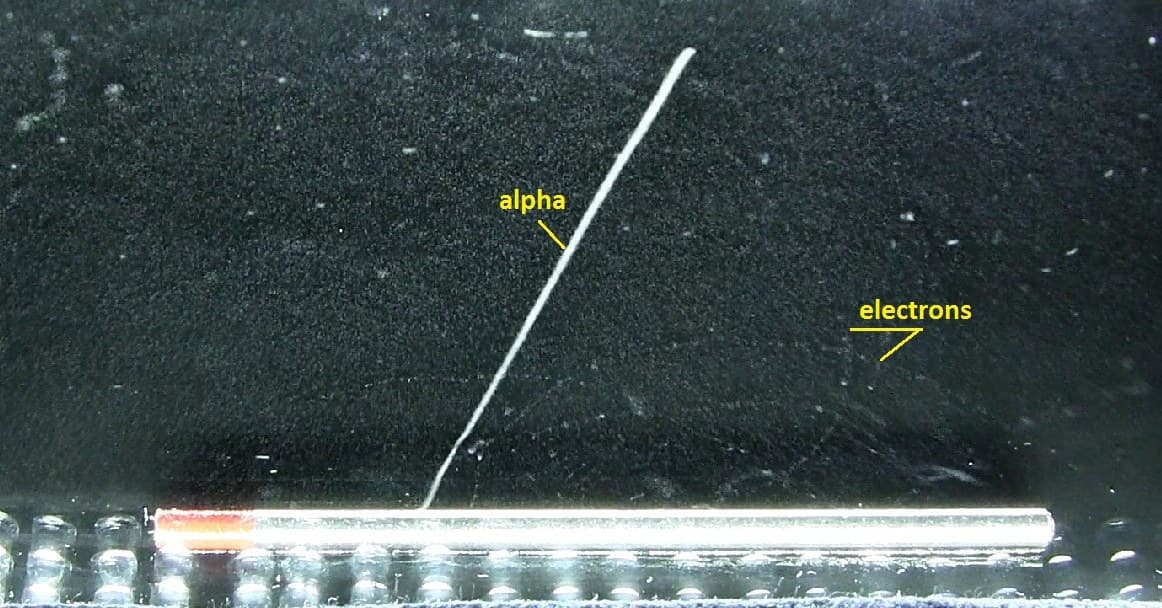

متعلقہ بلیو پرنٹ
یہ بلیو پرنٹ علم بانٹتے ہیں — تکنیک، مواد یا اصول
CC0 پبلک ڈومین
یہ بلیو پرنٹ CC0 کے تحت جاری کیا گیا ہے۔ آپ اجازت لیے بغیر اس کام کو نقل، ترمیم، تقسیم اور کسی بھی مقصد کے لیے استعمال کرنے کے لیے آزاد ہیں۔
میکر کی حمایت کریں ان کے بلیو پرنٹ کے ذریعے پروڈکٹس خرید کر جہاں وہ میکر کمیشن وینڈرز کی طرف سے مقرر، کماتے ہیں، یا اس بلیو پرنٹ کی نئی تکرار بنائیں اور آمدنی شیئر کرنے کے لیے اسے اپنے بلیو پرنٹ میں کنکشن کے طور پر شامل کریں۔