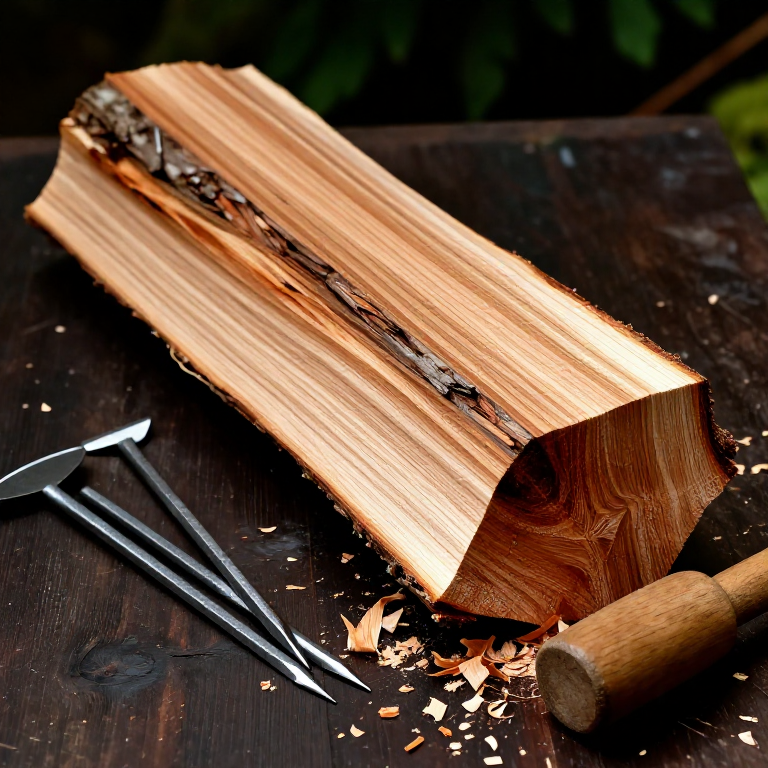


Riving Planks from a Log — Splitting Timber Along the Grain with Wedges
Before sawmills, every plank was riven — split from a log using wedges and mallets. Riving exploits the natural grain of the wood: a wedge driven into the end grain propagates a crack that follows the fibres, producing a plank that is stronger than any sawn board because no fibres are cut across. Every Viking longship, every medieval roof, and every Iron Age door was built from riven timber.
The technique is simple but requires reading the wood. A straight-grained log splits cleanly into halves, quarters, and eighths. Each successive split reduces the section until planks of the desired thickness are reached. Crooked grain, knots, or spiral growth cause the split to run off-line, ruining the plank. Selecting the right log is half the skill.
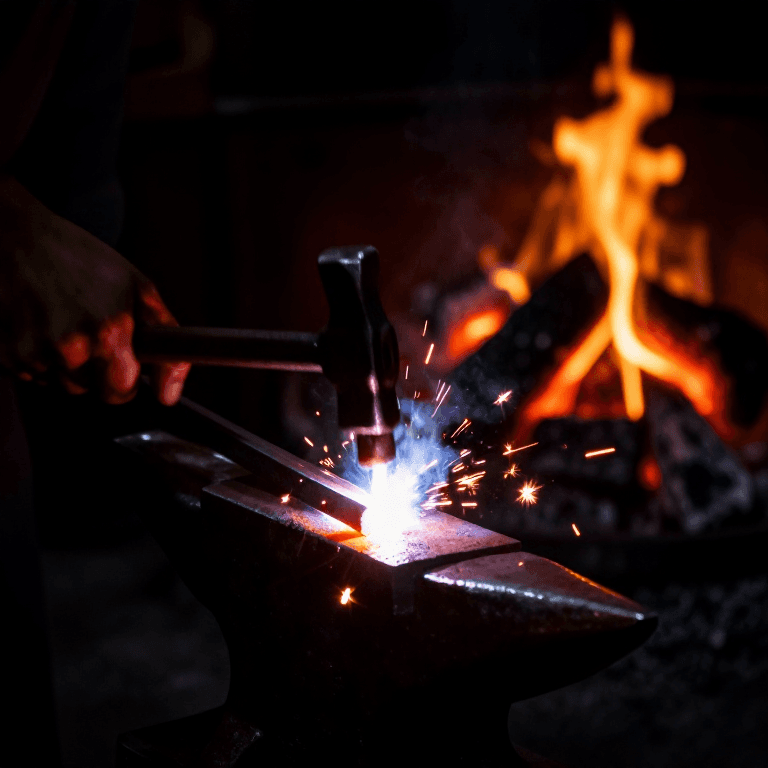
Iron wedges transformed riving from a slow stone-age process into an efficient production method. A smith's iron wedge driven by a wooden maul splits a log in minutes. Combined with an iron drawknife for smoothing, riving produces finished planks faster than pit-sawing and with superior strength.
ہدایات
Select a straight-grained log
Select a straight-grained log
اس مرحلے کے لیے مواد:
 بلوط کا تختہ (سرخ)1 ٹکڑا
Split the log in half
Split the log in half
درکار اوزار:
 کٹائی کا ہتھوڑا
 فولادی پچر سیٹ
 بڑا ہتھوڑا
Quarter each half
Quarter each half
Rive planks from the quarters
Rive planks from the quarters
درکار اوزار:
 فرو (چیرنے والی چھری)
 لکڑی کا ہتھوڑا
Correct wandering splits
Correct wandering splits
Smooth the riven surface
Smooth the riven surface
درکار اوزار:
 دو دستوں والا چھیلنے کا چاقو
 چھیلنے کی بنچ
 بسولا
بسولامواد
1- 1 ٹکڑاپلیس ہولڈر
درکار اوزار
8- پلیس ہولڈر
- پلیس ہولڈر
- پلیس ہولڈر
- پلیس ہولڈر
- پلیس ہولڈر
- پلیس ہولڈر
- پلیس ہولڈر
- پلیس ہولڈر
منسلک بلیو پرنٹ مواد
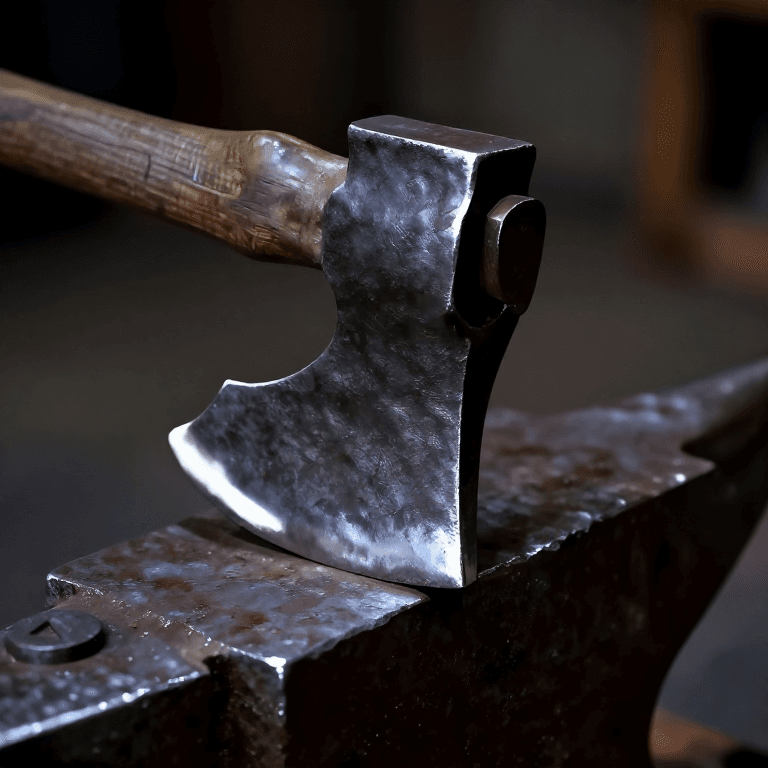
یہ بلوپرنٹ بناتا ہے


متعلقہ بلیو پرنٹ
یہ بلیو پرنٹ علم بانٹتے ہیں — تکنیک، مواد یا اصول
CC0 پبلک ڈومین
یہ بلیو پرنٹ CC0 کے تحت جاری کیا گیا ہے۔ آپ اجازت لیے بغیر اس کام کو نقل، ترمیم، تقسیم اور کسی بھی مقصد کے لیے استعمال کرنے کے لیے آزاد ہیں۔
میکر کی حمایت کریں ان کے بلیو پرنٹ کے ذریعے پروڈکٹس خرید کر جہاں وہ میکر کمیشن وینڈرز کی طرف سے مقرر، کماتے ہیں، یا اس بلیو پرنٹ کی نئی تکرار بنائیں اور آمدنی شیئر کرنے کے لیے اسے اپنے بلیو پرنٹ میں کنکشن کے طور پر شامل کریں۔