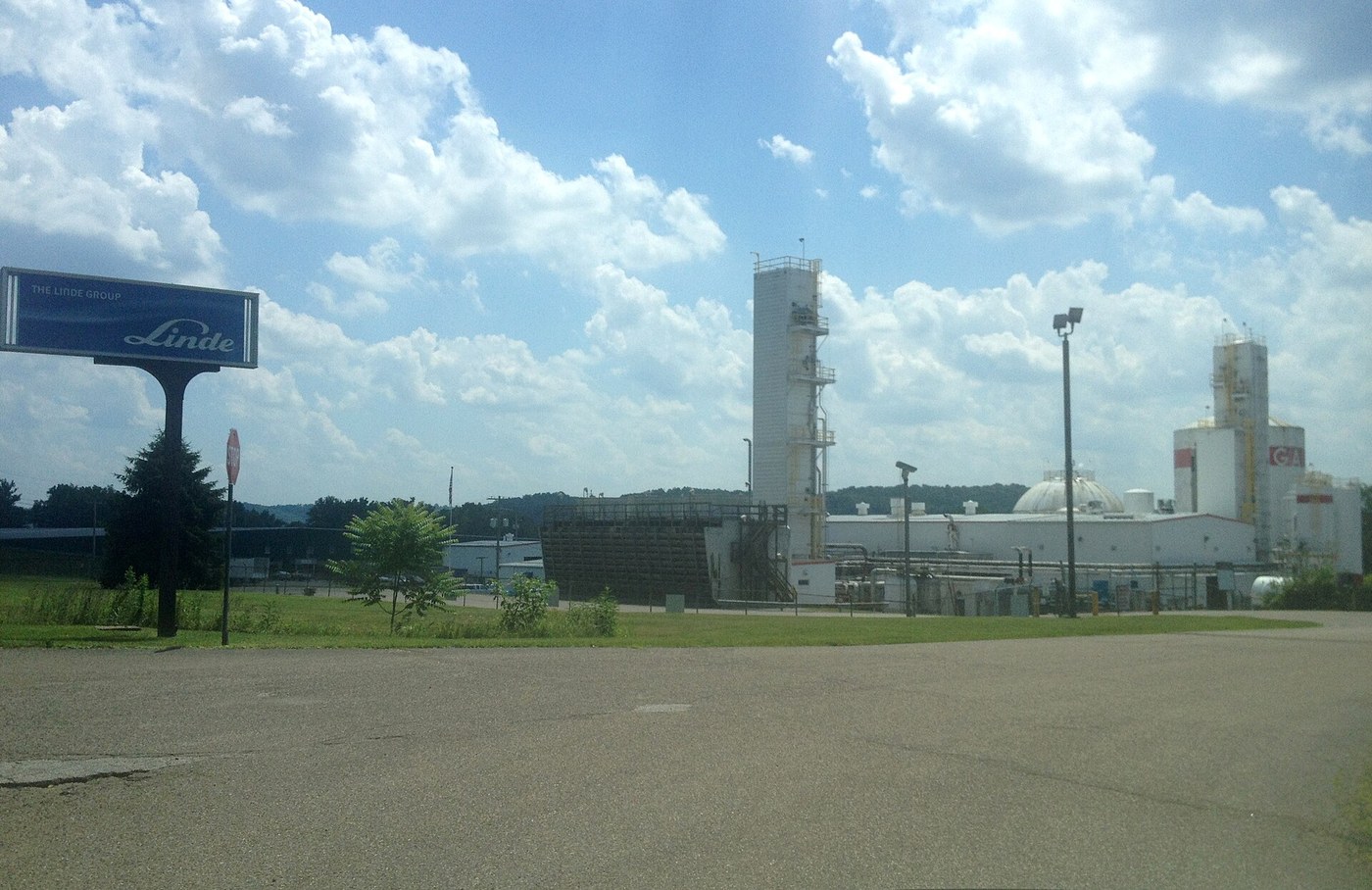


Linde Air Liquefaction
ہدایات
Feel the effect you are about to industrialise
Feel the effect you are about to industrialise
The Joule-Thomson effect is not exotic. You can feel it in a minute.
- Pump a bicycle tyre and touch the pump barrel — compression warms the gas.
- Let air out of a full tyre across your hand — expansion cools it.
درکار اوزار:
 فوری پڑھت کا حرارت پیما
Regenerative counter-current cooling
Regenerative counter-current cooling
The cooled gas is not thrown away. It is used to chill the gas coming in behind it.
- Compressed air passes down through a heat exchanger.
- It expands through a throttle valve and cools.
- The cold expanded gas flows back up around the incoming pipe, chilling it.
- The next portion therefore starts colder, and expands to colder still.
The inversion temperature — and why hydrogen surprised everyone
The inversion temperature — and why hydrogen surprised everyone
Throttling only cools a gas if it starts below its inversion temperature.
- Above that temperature, expansion warms the gas instead.
- Air is comfortably below its inversion temperature at room temperature, so the cycle works directly.
- Hydrogen and helium are not — they must be pre-cooled first or the machine heats them up.
Separating the components
Separating the components
Liquid air is a mixture, and the parts boil at different temperatures.
- Nitrogen boils at -196 °C.
- Argon at -186 °C.
- Oxygen at -183 °C.
Fractional distillation of the liquid separates them.
Nitrogen boils off first, so it comes out of the top of the column and oxygen collects below. That 13-degree gap between nitrogen and oxygen is the entire basis of the industrial gas industry.History and context
History and context
Carl von Linde was a professor of engineering in Munich who had already built a successful refrigeration business on ammonia compression before turning to air. His air-liquefaction patent dates from 1895. William Hampson, working independently in England, filed for a very similar regenerative cycle in the same year — the two are close enough that the cycle is commonly credited to both.
What it unlocked: cheap oxygen. Oxy-acetylene welding and cutting, the oxygen used to blow steel, and the nitrogen used as an inert blanket in industry all begin here. Liquid nitrogen became a routine laboratory coolant. When Haber and Bosch needed enormous quantities of pure nitrogen for ammonia synthesis, air separation is where it came from.
Georges Claude improved the cycle a few years later by expanding the gas through an engine that does external work, which cools it much more effectively than a plain throttle. Modern plants use expansion turbines on the same principle.
Why there is no build here. Reaching -195 °C requires sustained high-pressure compression and a heat exchanger with very low losses; a leak of high-pressure gas or a cold-embrittled fitting is genuinely dangerous, and liquid oxygen in contact with oil or grease is an explosion hazard. The Joule-Thomson step in this blueprint is real and safe to feel; the plant that multiplies it is not something to attempt.
درکار اوزار
1- پلیس ہولڈر
متعلقہ بلیو پرنٹ
یہ بلیو پرنٹ علم بانٹتے ہیں — تکنیک، مواد یا اصول

CC0 پبلک ڈومین
یہ بلیو پرنٹ CC0 کے تحت جاری کیا گیا ہے۔ آپ اجازت لیے بغیر اس کام کو نقل، ترمیم، تقسیم اور کسی بھی مقصد کے لیے استعمال کرنے کے لیے آزاد ہیں۔
میکر کی حمایت کریں ان کے بلیو پرنٹ کے ذریعے پروڈکٹس خرید کر جہاں وہ میکر کمیشن وینڈرز کی طرف سے مقرر، کماتے ہیں، یا اس بلیو پرنٹ کی نئی تکرار بنائیں اور آمدنی شیئر کرنے کے لیے اسے اپنے بلیو پرنٹ میں کنکشن کے طور پر شامل کریں۔