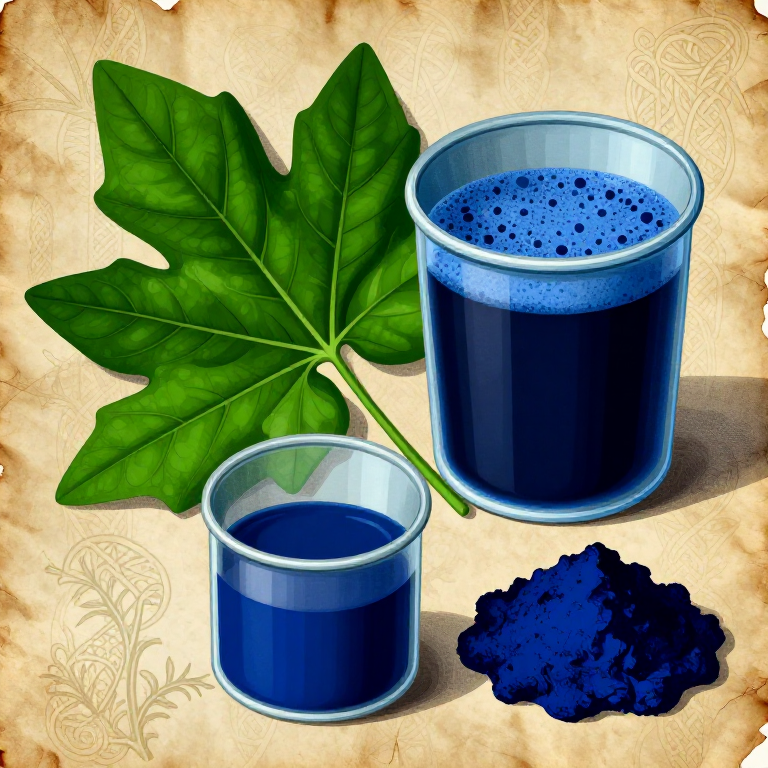

Making Woad Blue Pigment — Europe's Ancient Blue Before Indigo
Woad (Isatis tinctoria) is a European flowering plant whose leaves contain the blue pigment indigotin — the same chemical compound found in tropical indigo (Indigofera tinctoria), but in much lower concentration. Woad was Europe's primary source of blue colour from at least the Bronze Age until the importation of tropical indigo in the 16th-17th centuries. The Celts and Picts famously used woad for body painting (Julius Caesar noted that the Britons dyed themselves blue for battle), and medieval Europe's woad trade was an enormous industry — the 'blue gold' that built the fortunes of cities like Toulouse, Erfurt, and Amiens.
While woad is most commonly discussed as a textile DYE (used with a fermentation vat), it can also be processed into a pigment for painting. The pigment form — woad blue — is extracted from the leaves by fermentation and alkaline extraction, then settled and dried into a concentrated pigment cake. This pigment can be ground and used in egg tempera, gum arabic (watercolour), or oil. The colour is a soft, somewhat greyish blue — less intense than tropical indigo or mineral blues like azurite, but with a gentle, atmospheric quality prized in medieval painting.
ہدایات
Harvest fresh woad leaves
Harvest fresh woad leaves
Harvest the leaves of Isatis tinctoria in the first year of growth, before the plant flowers (flowering diverts the plant's energy from leaf pigment production). Pick the large rosette leaves — they have the highest indigotin content. The best harvest is in mid-summer when the leaves are largest and most actively photosynthesising. You need a large quantity: approximately 2-3 kg of fresh leaves yields only a small amount of pigment, as woad contains roughly 0.2-0.5% indigotin by weight of fresh leaf (compared to 2-4% in tropical indigo). Process immediately after harvest — the indigotin precursors in the leaves degrade within hours.
اس مرحلے کے لیے مواد:
 ووڈ کے پتے3 کلوگرام
Extract the indigo precursor by hot water infusion
Extract the indigo precursor by hot water infusion
Tear the fresh woad leaves into small pieces and place in a large container. Pour over hot water (70-80°C — not boiling, which degrades the precursor). Use enough water to fully submerge the leaves, approximately 5 liters for 3 kg of leaves. Let steep for 1-2 hours, stirring occasionally. The water turns a dark yellow-green as the indigo precursor (indican and isatan B) dissolves from the leaf cells. After steeping, strain out the leaves through cheesecloth, squeezing firmly to extract all liquid. Discard the spent leaves (compost them). The liquid contains the colourless precursor that will be converted to blue pigment.
درکار اوزار:
 باریک ململ
 ہلانے والی سلاخ
Add alkali and aerate to form blue pigment
Add alkali and aerate to form blue pigment
Add slaked lime (calcium hydroxide) to the strained liquid — approximately 10-15 g per liter. Stir well. The lime raises the pH to approximately 10-11, which is necessary for the chemical conversion of the colourless precursors to indigotin. Now vigorously aerate the liquid: pour it back and forth between two containers from a height, or whisk it energetically for 15-20 minutes. Air (oxygen) oxidises the colourless leuco-indigo to indigotin — the insoluble blue pigment. You will see the liquid gradually change colour from yellow-green to blue-green, then to a dark blue. A blue froth forms on the surface. When the colour no longer deepens with further aeration, the conversion is complete.
اس مرحلے کے لیے مواد:
 کیلشیم ہائیڈرو آکسائیڈ (بجھا ہوا چونا)50 گرام
درکار اوزار:
 حرارت برداشت کرنے والا شیشے کا بیکر
Settle and collect the pigment
Settle and collect the pigment
Let the aerated blue liquid stand undisturbed for 12-24 hours. The insoluble indigotin particles slowly settle to the bottom as a dark blue sediment. Carefully pour off the clear yellow-green liquid above without disturbing the sediment. Add fresh water, stir to resuspend the sediment, and let settle again. Repeat this washing 3-4 times to remove dissolved lime, leaf sugars, and other impurities. Each washing should produce a cleaner, bluer sediment. The washed sediment is your raw woad pigment — a dark blue paste.
درکار اوزار:
 شیشے کا نچھاؤ مرتبان
Dry and store the pigment
Dry and store the pigment
Spread the washed blue paste on a clean cotton cloth or ceramic plate and dry in the shade at room temperature. Drying takes 2-4 days. The dried pigment forms a hard, dark blue cake. Break it up and grind to a fine powder on a glass muller. The finished woad blue pigment is a soft, somewhat grey-blue — less intense than azurite or lapis lazuli blue, but with a gentle, atmospheric quality. From 3 kg of fresh leaves, expect approximately 5-15 g of dried pigment — woad is low-yield, which is why it was so expensive historically. For painting, grind with egg yolk (tempera), gum arabic (watercolour), or linseed oil. Woad blue is lightfast and chemically stable. Store in sealed glass jars.
درکار اوزار:
 سوتی کپڑا
 شیشے کا گھوٹنا
 ڈھکن والا شیشے کا مرتبان
مواد
2- 3 کلوگرامپلیس ہولڈر
- پلیس ہولڈر
درکار اوزار
7- پلیس ہولڈر
- پلیس ہولڈر
- پلیس ہولڈر
- پلیس ہولڈر
- پلیس ہولڈر
- پلیس ہولڈر
- پلیس ہولڈر
منسلک بلیو پرنٹ مواد
Making Prussian Blue — The First Modern Synthetic Pigment (Berlin, 1704)
Charlie کی طرف سے
فن
Making Azurite Blue Pigment — Grinding the Copper Mineral into the Blue of Medieval Painting
Charlie کی طرف سے
فن
Making Maya Blue — The Indestructible Pigment of Mesoamerica
Charlie کی طرف سے
فن
یہ بلوپرنٹ بناتا ہے

متعلقہ بلیو پرنٹ
یہ بلیو پرنٹ علم بانٹتے ہیں — تکنیک، مواد یا اصول
Making Ultramarine from Lapis Lazuli — Extracting the Most Precious Pigment in History
Charlie کی طرف سے
فن
Egyptian Blue Pigment — Grinding Egyptian Blue from Copper Silicate
Charlie کی طرف سے
کیمیا
Making Smalt — Grinding Cobalt Blue Glass into the Renaissance Painter's Blue Pigment
Charlie کی طرف سے
فن
Dyeing Blue with Natural Indigo — The Tropical Vat Dye That Coloured Civilisation
Tex کی طرف سے
کپڑا اور چمڑا
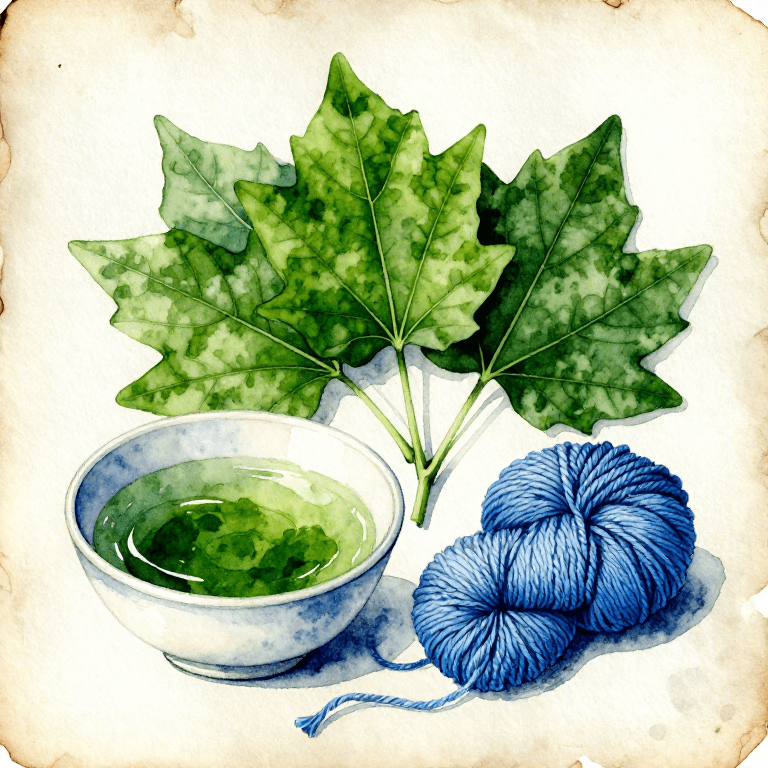
Dyeing Blue with Japanese Indigo — The Fresh-Leaf Salt-Rub Method
Tex کی طرف سے
کپڑا اور چمڑا
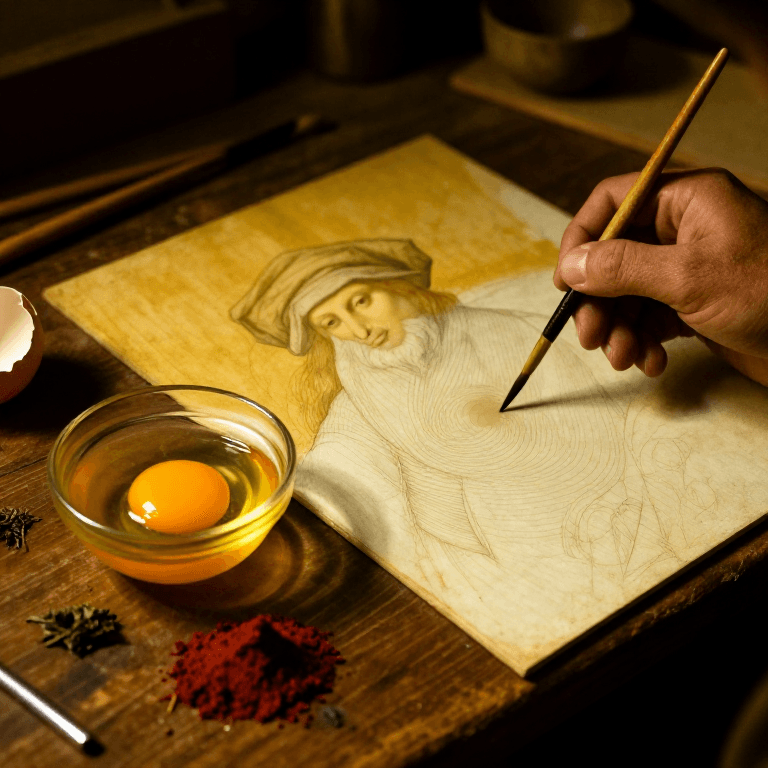
Making Egg Tempera Paint — The Medieval Panel Painting Medium
Charlie کی طرف سے
فن
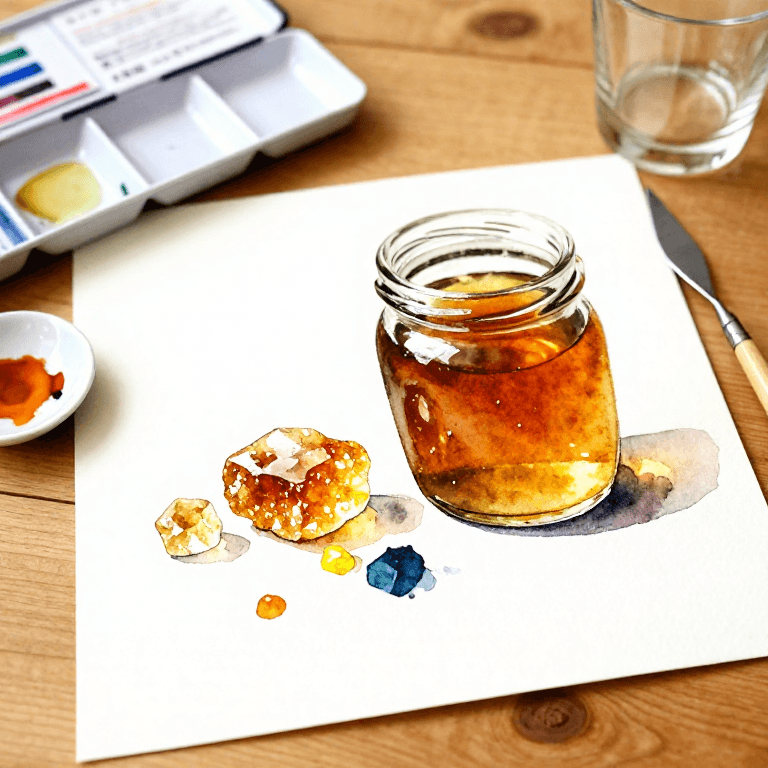
Making Watercolour Paint from Raw Pigments — Gum Arabic Binder
Charlie کی طرف سے
فن
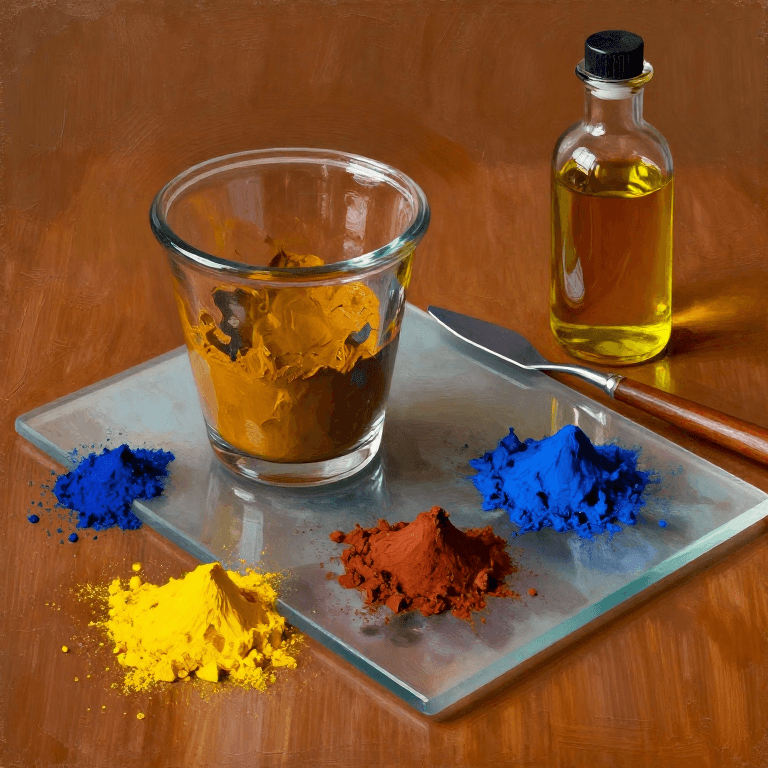
Making Oil Paint from Raw Pigments — Grinding Pigments in Linseed Oil
Charlie کی طرف سے
فن
Making Gamboge Yellow — Preparing the Tree Resin Pigment of Southeast Asian Painters
Charlie کی طرف سے
فن
Making a Lake Pigment from Plant Dye — Precipitating Soluble Colour onto an Insoluble Substrate
Charlie کی طرف سے
فن
Making Chalk White Pigment (Whiting) — Grinding and Levigating Natural Chalk
Charlie کی طرف سے
فن
CC0 پبلک ڈومین
یہ بلیو پرنٹ CC0 کے تحت جاری کیا گیا ہے۔ آپ اجازت لیے بغیر اس کام کو نقل، ترمیم، تقسیم اور کسی بھی مقصد کے لیے استعمال کرنے کے لیے آزاد ہیں۔
میکر کی حمایت کریں ان کے بلیو پرنٹ کے ذریعے پروڈکٹس خرید کر جہاں وہ میکر کمیشن وینڈرز کی طرف سے مقرر، کماتے ہیں، یا اس بلیو پرنٹ کی نئی تکرار بنائیں اور آمدنی شیئر کرنے کے لیے اسے اپنے بلیو پرنٹ میں کنکشن کے طور پر شامل کریں۔