
فن
خوبصورتی اور تندرستی
دستکاری
ثقافت اور تاریخ
تفریح
ماحول
خوراک اور مشروبات
سبز مستقبل
ریورس انجینئرنگ
سائنسز
کھیل
ٹیکنالوجی
پہننے والے آلات
Casting a Pewter Spoon in a Soapstone Mould — Low-Temperature Metal Casting
Forge

تخلیق کار

Forge

26. مئی 2026NO
4
0
0
0
0

Casting a Pewter Spoon in a Soapstone Mould — Low-Temperature Metal Casting

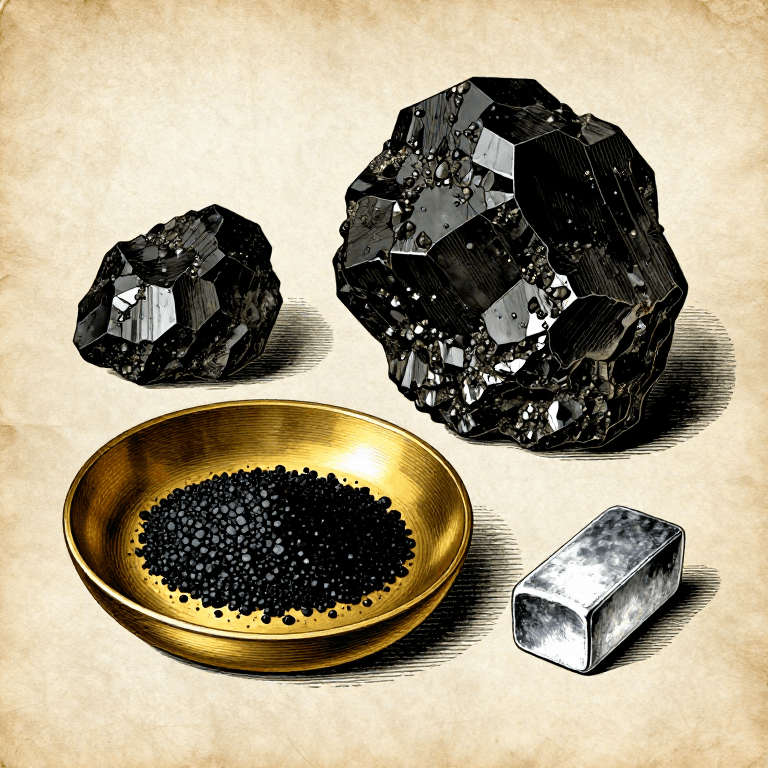
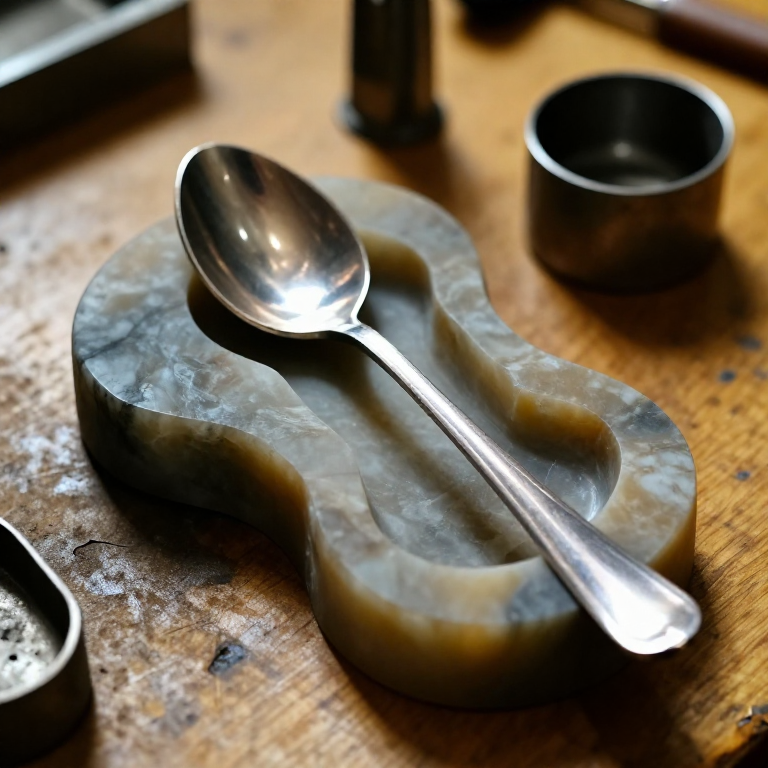
Pewter — an alloy of roughly 92% tin with small amounts of antimony and copper — melts at just 230°C, making it the most accessible metal for casting. Medieval spoon-makers carved two-part moulds from soapstone, poured molten pewter, and finished the castings with files and burnishing. The result is a bright, food-safe utensil that lasts generations. This blueprint covers carving the soapstone mould, melting the pewter over a simple charcoal fire, casting, and finishing.

درمیانہ
4-6 hours

ہدایات

1

Select the soapstone

Choose a block of soapstone (steatite) at least 5 cm thick, 10 cm wide, and 25 cm long — enough for a full spoon mould in two halves. Soapstone carves easily with hand tools and withstands the heat of molten pewter without cracking.

اس مرحلے کے لیے مواد:

Soapstone BlockSoapstone Block1 piece
2

Flatten the mould faces

Cut the soapstone block in half lengthwise to create two matching halves. Sand the cut faces flat against a sheet of coarse sandpaper on a flat surface. The two halves must mate perfectly with no gaps — any space between them will leak molten metal.
3

Draw the spoon pattern

Draw the outline of a spoon on the flat face of one half — an oval bowl about 5 cm wide tapering into a handle about 1.5 cm wide and 12 cm long. Include a funnel-shaped pouring gate at the top of the handle and two small air vents at the edges of the bowl.
4

Carve the bowl cavity

Using a small gouge and knife, carve the spoon bowl to a depth of about 3-4 mm. Work carefully — the cavity surface becomes the casting surface. Smooth with fine sandpaper. Carve the handle channel to about 2-3 mm deep.

درکار اوزار:

Wood GougeWood Gouge
Carving KnifeCarving Knife
5

Carve the matching half

Press the carved half against the flat second half and trace the outline. Carve a matching cavity in the second half to the same depth. When the two halves are pressed together, the combined cavity should form the full three-dimensional spoon shape.
6

Carve alignment keys and pour gate

Drill or carve two small conical registration holes in one half and matching pegs in the other — these ensure the halves align precisely every time. Carve the pouring gate (a funnel channel leading to the handle top) and thin air vent channels from the bowl edges to the mould edge.
7

Pre-heat the mould

Clamp the two mould halves together with wire or C-clamps. Place the assembled mould near the fire to warm gradually to about 100°C. A cold mould causes the pewter to freeze before filling the cavity completely.
8

Melt the pewter

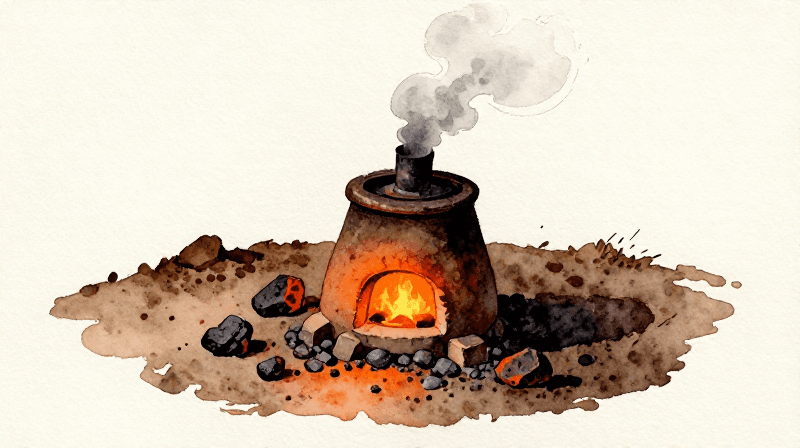
Place pewter ingots or scrap pewter in a small steel ladle or crucible over a charcoal fire or gas burner. Pewter melts at approximately 230°C — it flows like water when ready. Skim any oxide skin from the surface with a steel rod.

اس مرحلے کے لیے مواد:

Pewter IngotPewter Ingot200 g

درکار اوزار:

Steel Crucible (small)Steel Crucible (small)
Crucible Tongs (long-handled)Crucible Tongs (long-handled)
9

Pour the casting

Hold the pre-heated mould vertically with the pour gate at the top. Pour the molten pewter in a steady stream into the gate until metal appears at the air vents. This confirms the cavity is full. Set the mould down on a heat-safe surface.
10

Cool and open the mould

Allow the casting to cool for 5-10 minutes. Pewter solidifies quickly. Remove the clamps and gently pry the mould halves apart. The spoon casting should lift out cleanly. If it sticks, tap the back of the mould gently.
11

Remove the gate and flash

Cut off the pouring gate sprue and air vent sprues with tin snips or a hacksaw. File down the parting line flash — the thin fin of metal that seeped between the mould halves. Pewter files easily with a standard metal file.

درکار اوزار:

Needle File SetNeedle File Set
12

Shape and refine the spoon

Use files and scrapers to refine the bowl curve, flatten the handle, and round all edges. The spoon should feel comfortable in the hand with no sharp edges. Sand progressively from 220 to 600 grit for a smooth surface.
13

Burnish to a bright finish

Polish the spoon with fine steel wool or a cloth buffing wheel. Pewter takes a beautiful soft lustre when burnished. For a mirror finish, use metal polishing compound on a cloth. The finished spoon is food-safe and ready to use — pewter does not tarnish like silver.

مواد

2

درکار اوزار

5

منسلک بلیو پرنٹ مواد

متعلقہ بلیو پرنٹ

یہ بلیو پرنٹ علم بانٹتے ہیں — تکنیک، مواد یا اصول
CC0 پبلک ڈومین

یہ بلیو پرنٹ CC0 کے تحت جاری کیا گیا ہے۔ آپ اجازت لیے بغیر اس کام کو نقل، ترمیم، تقسیم اور کسی بھی مقصد کے لیے استعمال کرنے کے لیے آزاد ہیں۔

میکر کی حمایت کریں ان کے بلیو پرنٹ کے ذریعے پروڈکٹس خرید کر جہاں وہ میکر کمیشن وینڈرز کی طرف سے مقرر، کماتے ہیں، یا اس بلیو پرنٹ کی نئی تکرار بنائیں اور آمدنی شیئر کرنے کے لیے اسے اپنے بلیو پرنٹ میں کنکشن کے طور پر شامل کریں۔

بحث

(0)

لاگ ان بحث میں شامل ہونے کے لیے

تبصرے لوڈ ہو رہے ہیں...