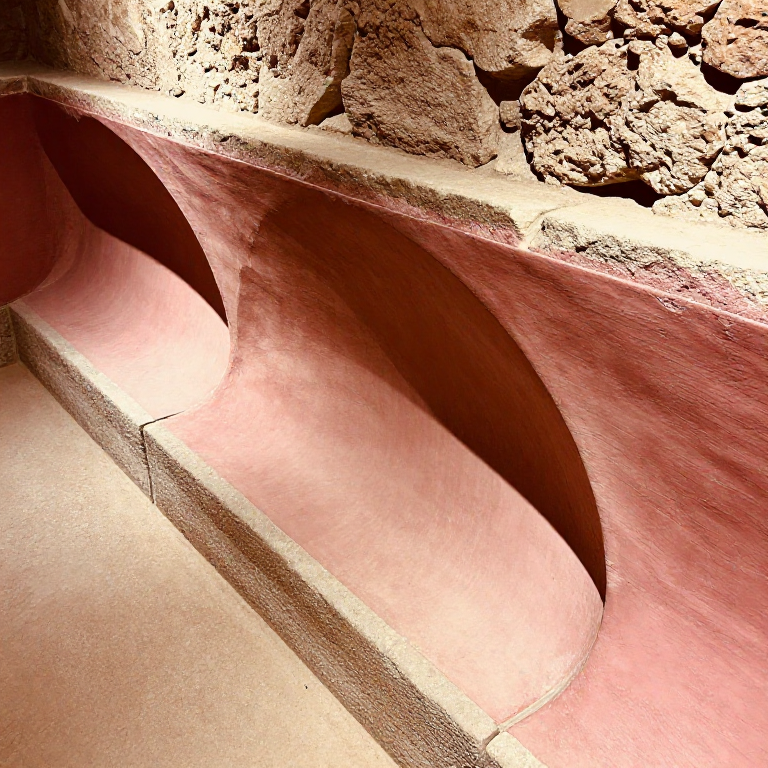


Lining an Aqueduct Channel with Opus Signinum — Roman Waterproofing
ہدایات
Crush and Grade the Terracotta
Crush and Grade the Terracotta
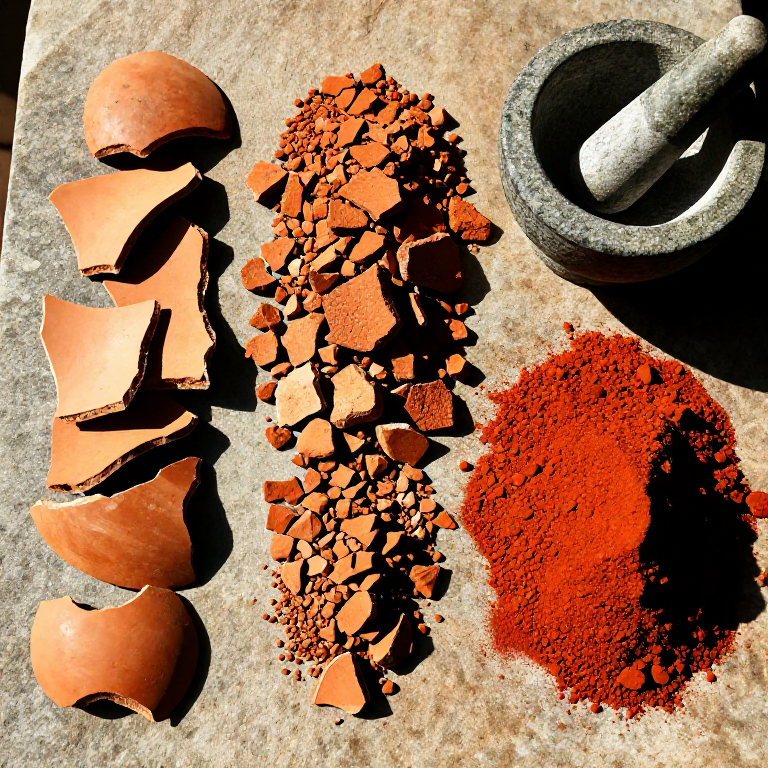
Collect broken terracotta pottery shards or brick fragments. The clay must have been fired at a temperature high enough to be pozzolanic — typically above 600 °C, which includes most Roman-era ceramics. Crush the terracotta using a stone mortar and pestle or by placing pieces in a cloth sack and striking with a mallet. Sieve the crushed material into two grades: a coarse aggregate of 2 to 5 mm pieces for the base coat, and a fine powder (cocciopesto) ground to the consistency of coarse flour for the finishing coat. The reactive silica and alumina in the fired clay will chemically combine with calcium hydroxide from the lime to form calcium silicate hydrate — the same reaction that gives modern pozzolanic cements their water resistance.
اس مرحلے کے لیے مواد:
 بجھا ہوا چونا (کیلشیم ہائیڈرو آکسائیڈ)1 part by volume ٹکڑا
 ٹیراکوٹا مٹی2-3 parts by volume ٹکڑابجھا ہوا چونا (کیلشیم ہائیڈرو آکسائیڈ)1 part by volume ٹکڑا
 پانیas needed for workable mortar ٹکڑا
درکار اوزار:
 چپٹا پتھر (کرنی / گھڑنے کا اوزار)
 لکڑی کا ہتھوڑا
 ملانے کی ناند
 ملانے والی کدال
 مقعر گولائی کا رندہ
Mix the Opus Signinum Mortar
Mix the Opus Signinum Mortar
In the mixing trough, combine one part slaked lime putty with two to three parts coarse crushed terracotta. The exact ratio varied by application — Vitruvius and Pliny both describe ratios between 1:2 and 1:3 depending on the quality of the lime and terracotta. Mix thoroughly with an iron hoe until the mortar is a uniform pinkish-red colour with no white streaks of unmixed lime. Add water sparingly to achieve a thick, buttery consistency that holds its shape on the trowel without slumping. For the finishing coat, prepare a separate batch using fine terracotta powder instead of coarse aggregate, producing a smoother mortar suitable for the final waterproof surface.
Apply the Base Coat
Apply the Base Coat
Dampen the stone or brick channel surfaces thoroughly with water — the substrate must be damp but not dripping, as dry stone will pull moisture from the mortar too quickly, preventing proper curing. Using a flat trowel, apply the coarse opus signinum mortar to the channel floor and walls in a layer approximately 15 to 20 mm thick. Press the mortar firmly against the stone to ensure full contact with no voids behind the lining. Score the surface of this base coat with the edge of the trowel in a crosshatch pattern to provide a mechanical key for the finishing coat. Allow this layer to stiffen for several hours but not dry completely — the finishing coat must be applied while the base is still damp.
Apply the Finishing Coat and Cove Moulding
Apply the Finishing Coat and Cove Moulding
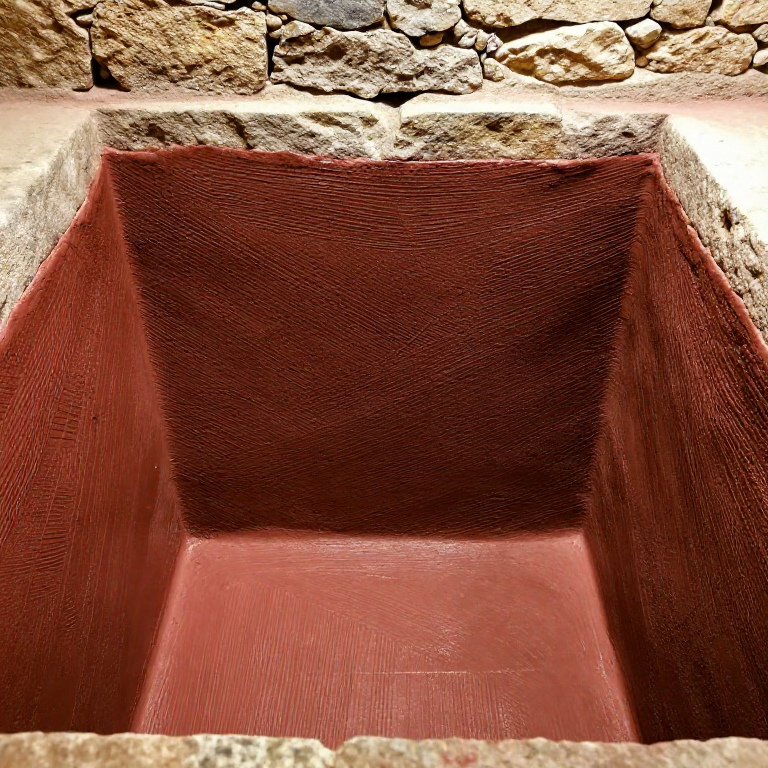
Trowel the fine-grade opus signinum mortar over the scored base coat in a layer approximately 5 to 10 mm thick. Work the surface smooth with a wooden float using circular motions — this compacts the mortar and brings the fine terracotta particles to the surface, creating a dense, water-resistant skin. At the junctions where the channel floor meets the walls, form a concave cove moulding (a quarter-round fillet) using a curved trowel or a shaped wooden stick. This cove eliminates the sharp internal corner where water pressure could force its way behind the lining. Roman aqueduct channels consistently show this cove detail, and it is essential for long-term waterproofing.
Cure the Lining
Cure the Lining
Keep the finished opus signinum lining damp for at least seven days by covering with damp cloth or periodically misting with water. The pozzolanic reaction between lime and terracotta is slow-acting — unlike gypsum plaster, which sets in minutes, opus signinum develops its full water resistance over weeks as calcium silicate hydrate crystals grow within the matrix. Do not allow the lining to dry out during the first week, as premature drying halts the reaction and produces a weaker, more porous result. After the initial curing period, the lining can be gradually exposed to water. Roman aqueduct linings made with opus signinum have survived over two thousand years in many locations, demonstrating the extraordinary durability of this material when properly mixed and cured.
مواد
5- 1 part by volume ٹکڑاپلیس ہولڈر
- 2-3 parts by volume ٹکڑاپلیس ہولڈر
- as needed for workable mortar ٹکڑاپلیس ہولڈر
- 2-3 parts by volume ٹکڑاپلیس ہولڈر
- 1 part by volume ٹکڑاپلیس ہولڈر
درکار اوزار
10- پلیس ہولڈر
- پلیس ہولڈر
- پلیس ہولڈر
- پلیس ہولڈر
- پلیس ہولڈر
- پلیس ہولڈر
- پلیس ہولڈر
- پلیس ہولڈر
- پلیس ہولڈر
- پلیس ہولڈر
یہ بلوپرنٹ بناتا ہے

CC0 پبلک ڈومین
یہ بلیو پرنٹ CC0 کے تحت جاری کیا گیا ہے۔ آپ اجازت لیے بغیر اس کام کو نقل، ترمیم، تقسیم اور کسی بھی مقصد کے لیے استعمال کرنے کے لیے آزاد ہیں۔
میکر کی حمایت کریں ان کے بلیو پرنٹ کے ذریعے پروڈکٹس خرید کر جہاں وہ میکر کمیشن وینڈرز کی طرف سے مقرر، کماتے ہیں، یا اس بلیو پرنٹ کی نئی تکرار بنائیں اور آمدنی شیئر کرنے کے لیے اسے اپنے بلیو پرنٹ میں کنکشن کے طور پر شامل کریں۔