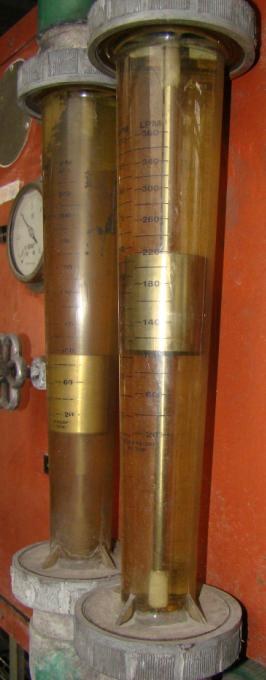


Rotameter
ہدایات
Make the tapered tube
Make the tapered tube
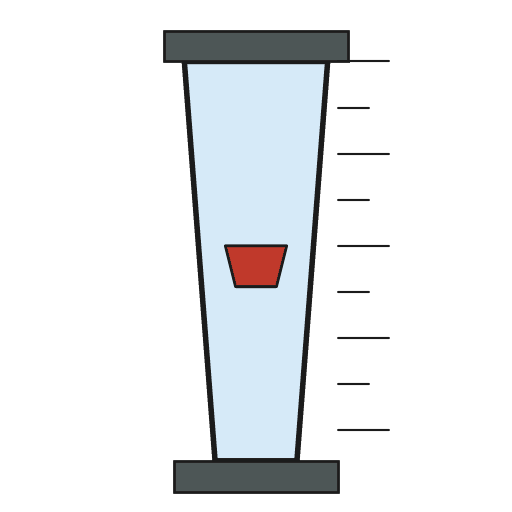
A vertical tube, wider at the top, and the taper is the calibration.
- Take a clear acrylic tube about 300 mm long and 25 mm bore.
- Bore or ream it to a slight taper — about 1 mm larger at the top than the bottom.
- Mount it truly vertical, checked in two planes.
- Fit inlet at the bottom and outlet at the top.
- Add stops so the float cannot escape at either end.
Vertical is not optional. The float's weight is the reference force the flow works against, and tilting the tube changes the component of gravity acting along it. A rotameter mounted even slightly off vertical reads high, and one mounted horizontally does not work at all — which is why they always appear on a plumb-vertical section of pipe.
A gentle taper gives a long scale and fine resolution over a narrow flow range; a steeper taper gives a wide range and coarse reading. That choice is the instrument's specification and it is made when the tube is cut.اس مرحلے کے لیے مواد:
 ایکریلک کی سلاخ1 ٹکڑا
 ایکریلک شیٹ1 شیٹ
درکار اوزار:
 بے تار مشق
 مشقوں کا سیٹ
 ریتیوں کا سیٹ
 مرکب گنیا
 ڈیجیٹل ورنیئر کیلیپر ۶ انچ
Make floats of different density and shape
Make floats of different density and shape
The float's weight sets the range; its shape decides how well it behaves.
- Turn one float from aluminium and one from brass, both to the same outside diameter.
- Give each a conical lower face so the flow centres it.
- Cut fine angled slots around the rim of one float so it spins as fluid passes.
- Weigh both and record.
The spinning is where the name comes from, and it is functional. Angled slots make the float rotate, which keeps it centred in the tube and stops it rubbing against the wall or sticking. A float that touches the glass reads erratically and wears a mark. Rotation is a bearing made of nothing.
The heavier brass float needs more flow to lift it, so the same tube covers a higher range. Swapping the float rather than the tube is how one instrument body serves several ranges — a genuinely elegant piece of product design.اس مرحلے کے لیے مواد:
 ایلومینیم کی گول سلاخ1 ٹکڑا
 پیتل کی گول سلاخ1 ٹکڑا
درکار اوزار:
ریتیوں کا سیٹ میز کا شکنجہ
 لوہا کاٹنے کی آری کا چوکھٹا اور پھلڈیجیٹل ورنیئر کیلیپر ۶ انچ
 ڈیجیٹل باورچی خانہ ترازو
Calibrate by weighing, and mark a direct scale
Calibrate by weighing, and mark a direct scale
Because the answer is read directly, the scale must be marked in real units.
- Set a flow, let the float settle, and mark its height on a strip beside the tube.
- Collect and weigh the output over a timed interval to get the true flow.
- Label that mark with the measured flow rate.
- Repeat at eight or ten points across the range.
- Examine the spacing of your marks.
اس مرحلے کے لیے مواد:
 ایلومینیم کی چپٹی سلاخ1 ٹکڑا
 خانہ دار کاغذ1 pad
درکار اوزار:
 اسٹاپ واچڈیجیٹل باورچی خانہ ترازوڈیجیٹل ورنیئر کیلیپر ۶ انچ
 مرکزی سنبہ
Break the calibration on purpose
Break the calibration on purpose
The float balances weight against drag, so anything changing either invalidates the scale.
- Calibrate with cold water and record several points.
- Repeat with hot water at the same flows and compare.
- Swap to the heavier float without changing the scale and note the error.
- Tilt the tube five degrees and read again.
درکار اوزار:
اسٹاپ واچ پکوان کا تھرمامیٹرڈیجیٹل باورچی خانہ ترازومرکب گنیا
Reading versus computing, and history
Reading versus computing, and history
Karl Küppers patented the variable-area flow meter in 1908 in Aachen, and Felix Meyer commercialised it — the firm Rota gave the instrument its common name. It spread because it needs no power, no secondary instrument and no computation, which in a plant full of pipes is worth a great deal.
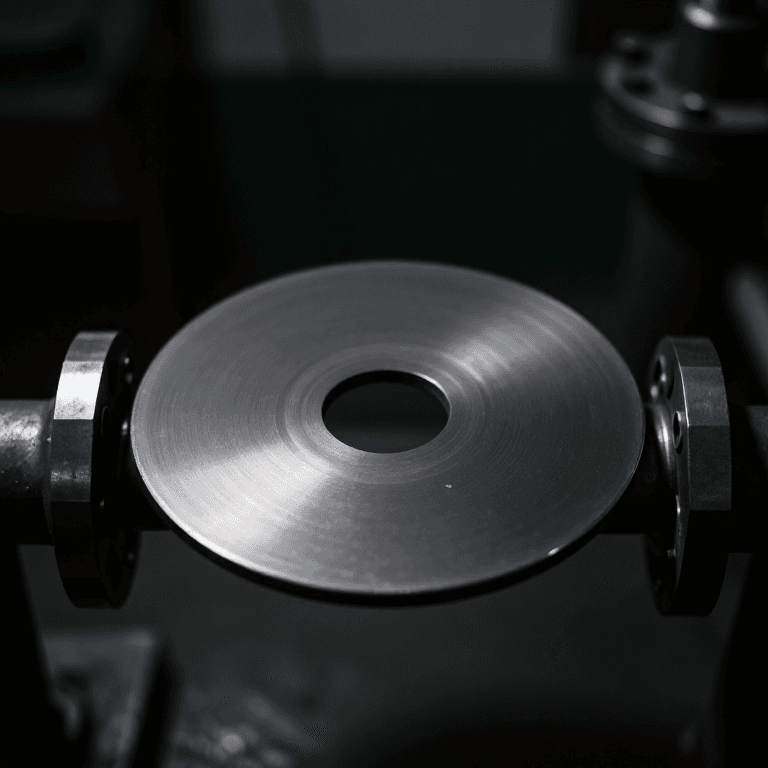
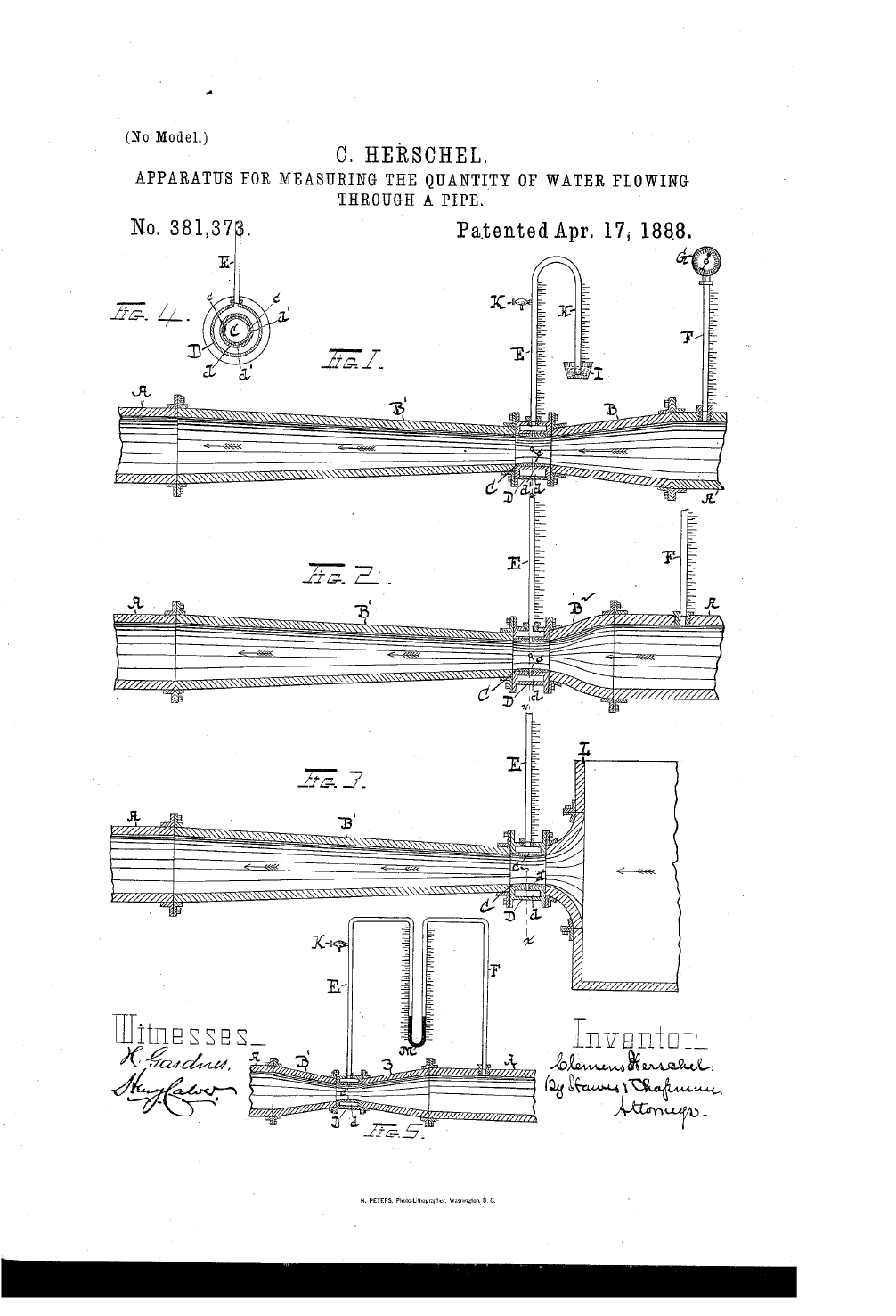
The three flow meters in this catalogue answer the same question three ways. The Venturi and the orifice plate both hold the AREA fixed and let the pressure drop vary with flow — so they produce a differential that must be square-rooted to become a reading. The rotameter holds the pressure drop across the float essentially CONSTANT and lets the area vary instead. That inversion is why its scale is linear and readable, and it is a genuinely different idea rather than a refinement of the other two.
Where each belongs: orifice plate for cheap, standardised, high-volume metering where a control system will do the arithmetic. Venturi for large continuous lines where pumping energy matters. Rotameter for local indication where a human needs to see the flow — laboratory gas lines, medical oxygen, chemical dosing. The rotameter is the one you fit when the reader is a person rather than a computer.
Its honest limits: vertical mounting only; calibration tied to one fluid at one density; the tube must be transparent, so it is unsuited to very high pressures or opaque service; and it cannot easily produce an electrical output for a control loop without added parts. For local reading it is close to perfect and for remote control it is the wrong choice.
مواد
6- 1 ٹکڑاپلیس ہولڈر
- 1 شیٹپلیس ہولڈر
- 1 ٹکڑاپلیس ہولڈر
- 1 ٹکڑاپلیس ہولڈر
- 1 ٹکڑاپلیس ہولڈر
- 1 padپلیس ہولڈر
درکار اوزار
11- 1 vendor sell this, none ship to you yetپلیس ہولڈر
- پلیس ہولڈر
- پلیس ہولڈر
- پلیس ہولڈر
- پلیس ہولڈر
- پلیس ہولڈر
- پلیس ہولڈر
- پلیس ہولڈر
- پلیس ہولڈر
- پلیس ہولڈر
- پلیس ہولڈر
یہ بلوپرنٹ بناتا ہے
متعلقہ بلیو پرنٹ
یہ بلیو پرنٹ علم بانٹتے ہیں — تکنیک، مواد یا اصول

CC0 پبلک ڈومین
یہ بلیو پرنٹ CC0 کے تحت جاری کیا گیا ہے۔ آپ اجازت لیے بغیر اس کام کو نقل، ترمیم، تقسیم اور کسی بھی مقصد کے لیے استعمال کرنے کے لیے آزاد ہیں۔
میکر کی حمایت کریں ان کے بلیو پرنٹ کے ذریعے پروڈکٹس خرید کر جہاں وہ میکر کمیشن وینڈرز کی طرف سے مقرر، کماتے ہیں، یا اس بلیو پرنٹ کی نئی تکرار بنائیں اور آمدنی شیئر کرنے کے لیے اسے اپنے بلیو پرنٹ میں کنکشن کے طور پر شامل کریں۔