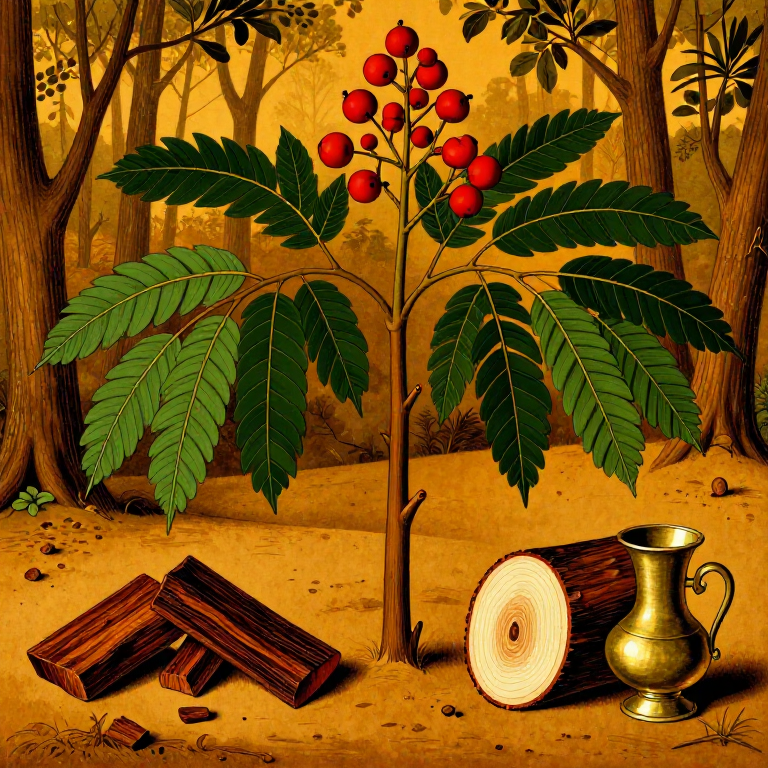


ಶ್ರೀಗಂಧ ಮರದ ಕೊಯ್ಲು ಮತ್ತು ಹೃದಯ ಕಾಷ್ಠ ಸಂಸ್ಕರಣೆ — ಕರ್ನಾಟಕದ ಶ್ರೀಗಂಧ
ಕರ್ನಾಟಕದ ಅತ್ಯಮೂಲ್ಯ ಶ್ರೀಗಂಧ ಮರದ (Santalum album) ಹೃದಯ ಕಾಷ್ಠವನ್ನು ಕೊಯ್ಲು ಮಾಡುವ ಮತ್ತು ಸಂಸ್ಕರಿಸುವ ಸಂಪೂರ್ಣ ಮಾರ್ಗದರ್ಶಿ. ಭಾರತೀಯ ಶ್ರೀಗಂಧವು ದಕ್ಷಿಣ ಭಾರತದ ಸ್ಥಳೀಯ ಮರವಾಗಿದ್ದು, ಕರ್ನಾಟಕವು ಅದರ ಪ್ರಮುಖ ಬೆಳೆಯುವ ಪ್ರದೇಶವಾಗಿದೆ. ಕರ್ನಾಟಕ ರಾಜ್ಯದಲ್ಲಿ ಎಲ್ಲಾ ಶ್ರೀಗಂಧ ಮರಗಳು ಸರ್ಕಾರದ ಆಸ್ತಿಯಾಗಿವೆ — ಖಾಸಗಿ ಭೂಮಿಯಲ್ಲಿ ಬೆಳೆದಿದ್ದರೂ ಸಹ.
ಈ ಮಾರ್ಗದರ್ಶಿಯು ಮರದ ಜೀವಶಾಸ್ತ್ರ, ಅರೆ-ಪರಾವಲಂಬಿ ಸ್ವಭಾವ, ಹೃದಯ ಕಾಷ್ಠದ ಬೆಳವಣಿಗೆ (15-30+ ವರ್ಷಗಳು), ಸರ್ಕಾರಿ ಪರವಾನಗಿ ಅವಶ್ಯಕತೆಗಳು, ಮರವನ್ನು ಬೇರುಸಮೇತ ಕಿತ್ತಲು (ಕಡಿಯುವುದಲ್ಲ — ಬೇರಿನ ಕಾಷ್ಠದಲ್ಲಿ ಅತಿ ಹೆಚ್ಚು ಶ್ರೀಗಂಧ ತೈಲವಿರುತ್ತದೆ), ರಸಕಾಷ್ಠವನ್ನು ಕೆತ್ತಿ ಹೃದಯ ಕಾಷ್ಠವನ್ನು ಬೇರ್ಪಡಿಸುವುದು, ದರ್ಜೆ ನಿರ್ಣಯ, ಒಣಗಿಸುವುದು ಮತ್ತು ಸಂಗ್ರಹಣೆ ಹಂತಗಳನ್ನು ಒಳಗೊಂಡಿದೆ. ಶ್ರೀಗಂಧ ತೈಲದ ಮುಖ್ಯ ಸಂಯುಕ್ತಗಳಾದ ಆಲ್ಫಾ-ಸ್ಯಾಂಟಲೋಲ್ (>40%) ಮತ್ತು ಬೀಟಾ-ಸ್ಯಾಂಟಲೋಲ್ (>16%) ಅದರ ವಿಶಿಷ್ಟ ಸುಗಂಧಕ್ಕೆ ಕಾರಣವಾಗಿವೆ.
ہدایات
ಶ್ರೀಗಂಧ ಮರದ ಜೀವಶಾಸ್ತ್ರವನ್ನು ಅರ್ಥಮಾಡಿಕೊಳ್ಳುವುದು
ಶ್ರೀಗಂಧ ಮರದ ಜೀವಶಾಸ್ತ್ರವನ್ನು ಅರ್ಥಮಾಡಿಕೊಳ್ಳುವುದು
ಭಾರತೀಯ ಶ್ರೀಗಂಧ (Santalum album) ದಕ್ಷಿಣ ಭಾರತದ ಸ್ಥಳೀಯ ಸದಾಹರಿತ ಮರವಾಗಿದೆ. ಇದು ಅರೆ-ಪರಾವಲಂಬಿ (hemiparasite) ಆಗಿದ್ದು, ಅದರ ಬೇರುಗಳು ಸಮೀಪದ ಆತಿಥೇಯ ಮರಗಳ ಬೇರುಗಳಿಗೆ ಸೇರಿಕೊಂಡು (haustoria ಮೂಲಕ) ನೀರು ಮತ್ತು ಪೋಷಕಾಂಶಗಳನ್ನು ಪಡೆಯುತ್ತವೆ. ಮರವು 12-15 ಮೀಟರ್ ಎತ್ತರಕ್ಕೆ ಬೆಳೆಯುತ್ತದೆ. ಮರದ ಎರಡು ಪ್ರಮುಖ ಭಾಗಗಳು: ರಸಕಾಷ್ಠ (sapwood) — ತಿಳಿ ಬಣ್ಣದ, ಸುಗಂಧರಹಿತ ಹೊರ ಭಾಗ; ಮತ್ತು ಹೃದಯ ಕಾಷ್ಠ (heartwood) — ಕಂದು ಬಣ್ಣದ, ಸುಗಂಧಭರಿತ ಒಳ ಭಾಗ. ಹೃದಯ ಕಾಷ್ಠವು 15-30+ ವರ್ಷಗಳ ನಂತರವೇ ಸಾಕಷ್ಟು ಬೆಳೆಯುತ್ತದೆ.
ಪ್ರಬುದ್ಧ ಮರಗಳನ್ನು ಗುರುತಿಸುವುದು
ಪ್ರಬುದ್ಧ ಮರಗಳನ್ನು ಗುರುತಿಸುವುದು
ಕೊಯ್ಲಿಗೆ ಯೋಗ್ಯವಾದ ಶ್ರೀಗಂಧ ಮರವು ಕನಿಷ್ಠ 15 ವರ್ಷ ಹಳೆಯದಾಗಿರಬೇಕು, ಆದರೆ 20-30+ ವರ್ಷಗಳ ಮರಗಳು ಉತ್ತಮ ಹೃದಯ ಕಾಷ್ಠವನ್ನು ಹೊಂದಿರುತ್ತವೆ. ಕಾಂಡದ ಸುತ್ತಳತೆ ನೆಲಮಟ್ಟದಿಂದ 1.3 ಮೀಟರ್ ಎತ್ತರದಲ್ಲಿ ಕನಿಷ್ಟ 30 ಸೆಂ.ಮೀ. ಇರಬೇಕು. ಮರದ ತೊಗಟೆಯನ್ನು ಸ್ವಲ್ಪ ಕೆರೆದು ವಾಸನೆ ಪರೀಕ್ಷೆ ಮಾಡಬಹುದು — ಪ್ರಬುದ್ಧ ಮರವು ವಿಶಿಷ್ಟ ಸಿಹಿ, ಮರದ ಸುಗಂಧವನ್ನು ಹೊರಸೂಸುತ್ತದೆ. ಒಣಗಿದ, ರೋಗಗ್ರಸ್ತ ಅಥವಾ ಸತ್ತ ಮರಗಳು ಕೂಡ ಕೊಯ್ಲಿಗೆ ಯೋಗ್ಯ — ಶ್ರೀಗಂಧ ಹೃದಯ ಕಾಷ್ಠವು ಮರ ಸತ್ತ ನಂತರವೂ ಸುಗಂಧವನ್ನು ಉಳಿಸಿಕೊಳ್ಳುತ್ತದೆ.
ಸರ್ಕಾರಿ ಪರವಾನಗಿ ಮತ್ತು ಕಾನೂನು ಅವಶ್ಯಕತೆಗಳು
ಸರ್ಕಾರಿ ಪರವಾನಗಿ ಮತ್ತು ಕಾನೂನು ಅವಶ್ಯಕತೆಗಳು
ಕರ್ನಾಟಕ ರಾಜ್ಯದಲ್ಲಿ ಎಲ್ಲಾ ಶ್ರೀಗಂಧ ಮರಗಳು ಸರ್ಕಾರದ ಆಸ್ತಿ — ಖಾಸಗಿ ಭೂಮಿಯಲ್ಲಿ ಬೆಳೆದಿದ್ದರೂ ಸಹ. ಕರ್ನಾಟಕ ಅರಣ್ಯ ಇಲಾಖೆಯಿಂದ ಕಡಿಯುವ ಅನುಮತಿ (felling permit) ಪಡೆಯಲೇಬೇಕು. ಮರವನ್ನು ಅನಧಿಕೃತವಾಗಿ ಕಡಿಯುವುದು ಅಥವಾ ಸಾಗಿಸುವುದು ಕಠಿಣ ಶಿಕ್ಷಾರ್ಹ ಅಪರಾಧ (Karnataka Forest Act, 1963 ಮತ್ತು Indian Forest Act, 1927 ಅಡಿಯಲ್ಲಿ). ಕೇರಳದ ಮರಯೂರ್ ಪ್ರದೇಶದಲ್ಲಿ ಮಾತ್ರ ಸ್ವಲ್ಪ ಭಿನ್ನ ನಿಯಮಗಳಿವೆ. ಸಾಗಾಣಿಕೆಗೆ ಪ್ರತ್ಯೇಕ transit pass ಬೇಕಾಗುತ್ತದೆ.
درکار اوزار:
 نقل و حمل کا پروانہ
 سرکاری کٹائی کا اجازت نامہ
ಕೊಯ್ಲು ತಂಡ ಮತ್ತು ಉಪಕರಣಗಳ ಸಿದ್ಧತೆ
ಕೊಯ್ಲು ತಂಡ ಮತ್ತು ಉಪಕರಣಗಳ ಸಿದ್ಧತೆ
ಶ್ರೀಗಂಧ ಮರವನ್ನು ಬೇರುಸಮೇತ ಕಿತ್ತಲಾಗುತ್ತದೆ — ಕಡಿಯುವುದಿಲ್ಲ. ಏಕೆಂದರೆ ಬೇರಿನ ಕಾಷ್ಠದಲ್ಲಿ (root wood) ಅತ್ಯಧಿಕ ಶ್ರೀಗಂಧ ತೈಲ ಅಂಶವಿರುತ್ತದೆ. ಈ ಕೆಲಸಕ್ಕೆ 4-6 ಕೆಲಸಗಾರರ ತಂಡ ಬೇಕಾಗುತ್ತದೆ. ಉಪಕರಣಗಳನ್ನು ಮೊದಲೇ ಸಿದ್ಧಪಡಿಸಿ: ಅಗೆಯುವ ಸಲಕರಣೆಗಳು, ಕೊಡಲಿ, ಗರಗಸ, ಮತ್ತು ಹೊರೆ ಸಾಗಿಸುವ ವ್ಯವಸ್ಥೆ.
درکار اوزار:
 جڑ کاٹنے والے اور کدال کا سیٹ
 کلہاڑی
 دو آدمیوں کی عرضی آری
 بیلچہ
بیلچہ بھاری کام کی رسی
ಮರವನ್ನು ಬೇರುಸಮೇತ ಕಿತ್ತಲು — ಅಗೆಯುವ ಪ್ರಕ್ರಿಯೆ
ಮರವನ್ನು ಬೇರುಸಮೇತ ಕಿತ್ತಲು — ಅಗೆಯುವ ಪ್ರಕ್ರಿಯೆ
ಮರದ ಸುತ್ತಲೂ 1-1.5 ಮೀಟರ್ ವ್ಯಾಸದ ವೃತ್ತಾಕಾರದಲ್ಲಿ ಅಗೆಯಲು ಪ್ರಾರಂಭಿಸಿ. ಆಳವಾಗಿ ಅಗೆಯುತ್ತಾ ಬೇರುಗಳನ್ನು ಬಹಿರಂಗಗೊಳಿಸಿ. ಪ್ರತಿಯೊಂದು ಪ್ರಮುಖ ಬೇರನ್ನು ಹುಡುಕಿ ಅದನ್ನು ಅದರ ಅತ್ಯಂತ ತುದಿಯಲ್ಲಿ ಕತ್ತರಿಸಿ — ಬೇರಿನ ಎಲ್ಲ ಕಾಷ್ಠವನ್ನು ಸಂಗ್ರಹಿಸಲು. ಆತಿಥೇಯ ಮರಗಳ ಬೇರುಗಳಿಗೆ ಸೇರಿಕೊಂಡ haustoria ಸಂಪರ್ಕಗಳನ್ನು ಎಚ್ಚರಿಕೆಯಿಂದ ಕತ್ತರಿಸಿ. ಎಲ್ಲಾ ಬೇರುಗಳನ್ನು ಬಿಡಿಸಿದ ನಂತರ ಮರವನ್ನು ಮೆಲ್ಲನೆ ಓರೆ ಮಾಡಿ ನೆಲಕ್ಕೆ ಹಾಕಿ.
درکار اوزار:
جڑ کاٹنے والے اور کدال کا سیٹبیلچہ جڑ کاٹنے کا کلہاڑابھاری کام کی رسی
ಕೊಂಬೆಗಳು ಮತ್ತು ತೊಗಟೆ ತೆಗೆಯುವುದು
ಕೊಂಬೆಗಳು ಮತ್ತು ತೊಗಟೆ ತೆಗೆಯುವುದು
ಮರವನ್ನು ನೆಲಕ್ಕೆ ಹಾಕಿದ ನಂತರ, ಮೊದಲು ಎಲ್ಲಾ ಕೊಂಬೆಗಳನ್ನು ಕಡಿಯಿರಿ. ನಂತರ ತೊಗಟೆಯನ್ನು (bark) ತೆಗೆಯಿರಿ. ತೊಗಟೆಯ ಕೆಳಗೆ ರಸಕಾಷ್ಠ (sapwood) ಕಾಣಿಸುತ್ತದೆ — ಇದು ತಿಳಿ ಬಣ್ಣದ, ಸುಗಂಧರಹಿತ ಕಾಷ್ಠ. ತೊಗಟೆ ತೆಗೆಯುವಾಗ ಹೃದಯ ಕಾಷ್ಠಕ್ಕೆ ಹಾನಿಯಾಗದಂತೆ ಎಚ್ಚರ ವಹಿಸಿ. ಸಣ್ಣ ಕೊಂಬೆಗಳಲ್ಲಿ ಹೃದಯ ಕಾಷ್ಠ ಕಡಿಮೆ ಅಥವಾ ಇಲ್ಲ — ಇವುಗಳಲ್ಲಿ ಬಹುತೇಕ ರಸಕಾಷ್ಠ ಮಾತ್ರ.
درکار اوزار:
کلہاڑی دو دستوں والا چھیلنے کا چاقودو آدمیوں کی عرضی آری
ರಸಕಾಷ್ಠವನ್ನು ಕೆತ್ತಿ ಹೃದಯ ಕಾಷ್ಠ ಬೇರ್ಪಡಿಸುವುದು
ರಸಕಾಷ್ಠವನ್ನು ಕೆತ್ತಿ ಹೃದಯ ಕಾಷ್ಠ ಬೇರ್ಪಡಿಸುವುದು
ಇದು ಅತ್ಯಂತ ಮುಖ್ಯ ಹಂತ. ರಸಕಾಷ್ಠ (sapwood) — ತಿಳಿ ಬಣ್ಣದ ಹೊರ ಪದರ — ವನ್ನು ಎಚ್ಚರಿಕೆಯಿಂದ ಕೆತ್ತಿ (chip away) ಹೃದಯ ಕಾಷ್ಠವನ್ನು ಬಹಿರಂಗಗೊಳಿಸಿ. ಹೃದಯ ಕಾಷ್ಠವು ಕಂದು-ಗಾಢ ಕಂದು ಬಣ್ಣದ್ದು, ಸ್ಪಷ್ಟ ಸಿಹಿ ಸುಗಂಧ ಹೊಂದಿರುತ್ತದೆ. ಕೆತ್ತುವಾಗ ಹೃದಯ ಕಾಷ್ಠಕ್ಕೆ ಹಾನಿಯಾಗದಂತೆ ಜಾಗ್ರತೆ ವಹಿಸಿ — ಪ್ರತಿ ಗ್ರಾಮ್ ಅಮೂಲ್ಯ. ಬೇರಿನ ಭಾಗದಲ್ಲಿ ಹೃದಯ ಕಾಷ್ಠವು ಅತ್ಯಧಿಕ ಸಾಂದ್ರತೆಯಲ್ಲಿದ್ದು ಅತ್ಯಮೂಲ್ಯವಾಗಿದೆ.
درکار اوزار:
 لکڑی کی رنداں کا سیٹ
 لکڑی کا ہتھوڑادو دستوں والا چھیلنے کا چاقو
ಹೃದಯ ಕಾಷ್ಠವನ್ನು ದರ್ಜೆ ನಿರ್ಣಯ ಮಾಡುವುದು
ಹೃದಯ ಕಾಷ್ಠವನ್ನು ದರ್ಜೆ ನಿರ್ಣಯ ಮಾಡುವುದು
ಹೃದಯ ಕಾಷ್ಠವನ್ನು ಮೂರು ದರ್ಜೆಗಳಾಗಿ ವಿಂಗಡಿಸಿ. A-ದರ್ಜೆ: ಬೇರಿನ ಮತ್ತು ಬುಡದ ಕಾಷ್ಠ — ಅತ್ಯಂತ ಕಗ್ಗತ್ತಲು ಬಣ್ಣ, ಅತ್ಯಧಿಕ ತೈಲ ಅಂಶ (4-6%), ಅತ್ಯಮೂಲ್ಯ. B-ದರ್ಜೆ: ಕಾಂಡದ ಮಧ್ಯಭಾಗದ ಕಾಷ್ಠ — ಉತ್ತಮ ಸುಗಂಧ, ಮಧ್ಯಮ ತೈಲ ಅಂಶ. C-ದರ್ಜೆ: ಮೇಲಿನ ಕಾಂಡ ಮತ್ತು ದಪ್ಪ ಕೊಂಬೆಗಳ ಕಾಷ್ಠ — ತಿಳಿ ಬಣ್ಣ, ಕಡಿಮೆ ತೈಲ ಅಂಶ. ದರ್ಜೆ ನಿರ್ಣಯವು ಬಣ್ಣ (ಗಾಢವಾದಷ್ಟು ಉತ್ತಮ), ಸುಗಂಧದ ತೀವ್ರತೆ, ಮತ್ತು ಕಾಷ್ಠದ ಸಾಂದ್ರತೆಯ ಆಧಾರದ ಮೇಲೆ ಮಾಡಲಾಗುತ್ತದೆ.
درکار اوزار:
 نشان دہی کی پرچیاں (درجہ A، B، C)
ಶ್ರೀಗಂಧ ತೈಲದ ಸಂಯುಕ್ತಗಳನ್ನು ಅರ್ಥಮಾಡಿಕೊಳ್ಳುವುದು
ಶ್ರೀಗಂಧ ತೈಲದ ಸಂಯುಕ್ತಗಳನ್ನು ಅರ್ಥಮಾಡಿಕೊಳ್ಳುವುದು
ಶ್ರೀಗಂಧ ತೈಲವು ಹೃದಯ ಕಾಷ್ಠ ಮತ್ತು ಬೇರಿನಲ್ಲಿ 4-6% ಇಳುವರಿ ನೀಡುತ್ತದೆ. ತೈಲದ ಪ್ರಮುಖ ಸುಗಂಧ ಸಂಯುಕ್ತಗಳು: ಆಲ್ಫಾ-ಸ್ಯಾಂಟಲೋಲ್ (alpha-santalol, >40%) ಮತ್ತು ಬೀಟಾ-ಸ್ಯಾಂಟಲೋಲ್ (beta-santalol, >16%). ಈ ಸಂಯುಕ್ತಗಳು ಶ್ರೀಗಂಧದ ವಿಶಿಷ್ಟ ಸಿಹಿ, ಮರದ, ಕೆನೆ ಸುಗಂಧಕ್ಕೆ ಕಾರಣವಾಗಿವೆ. ಬೇರಿನ ಕಾಷ್ಠದಲ್ಲಿ ಅತ್ಯಧಿಕ ತೈಲ ಅಂಶವಿರುವುದರಿಂದಲೇ ಮರವನ್ನು ಕಡಿಯದೆ ಬೇರುಸಮೇತ ಕಿತ್ತಲಾಗುತ್ತದೆ. ಐತಿಹಾಸಿಕವಾಗಿ ಈ ತೈಲವನ್ನು ದೇವಾಲಯ ಕೆತ್ತನೆ, ಸುಗಂಧ ದ್ರವ್ಯ, ಮತ್ತು ಆಯುರ್ವೇದ ಔಷಧದಲ್ಲಿ ಬಳಸಲಾಗಿದೆ.
ಹೃದಯ ಕಾಷ್ಠವನ್ನು ತೂಕ ಮಾಡುವುದು
ಹೃದಯ ಕಾಷ್ಠವನ್ನು ತೂಕ ಮಾಡುವುದು
ಪ್ರತಿ ದರ್ಜೆಯ ಹೃದಯ ಕಾಷ್ಠವನ್ನು ಪ್ರತ್ಯೇಕವಾಗಿ ತೂಕ ಮಾಡಿ ದಾಖಲಿಸಿ. ಪ್ರಬುದ್ಧ ಮರವೊಂದು (20-30+ ವರ್ಷ) ಸಾಮಾನ್ಯವಾಗಿ 15-40 ಕೆ.ಜಿ. ಹೃದಯ ಕಾಷ್ಠವನ್ನು ನೀಡುತ್ತದೆ (ಮರದ ಗಾತ್ರ ಮತ್ತು ವಯಸ್ಸಿನ ಆಧಾರದ ಮೇಲೆ). ಪ್ರಸ್ತುತ ಮಾರುಕಟ್ಟೆ ಬೆಲೆ: ದರ್ಜೆ ಮತ್ತು ಗುಣಮಟ್ಟದ ಆಧಾರದ ಮೇಲೆ ಕೆ.ಜಿ.ಗೆ $100-300+. ಸರ್ಕಾರಿ ಹರಾಜಿನಲ್ಲಿ ಅಧಿಕೃತ ತೂಕ ಮತ್ತು ದರ್ಜೆ ನಿರ್ಣಯ ಮಾಡಲಾಗುತ್ತದೆ.
درکار اوزار:
 پلیٹ فارم ترازو
 ریکارڈ کی کتاب
ಆರಂಭಿಕ ಒಣಗಿಸುವಿಕೆ
ಆರಂಭಿಕ ಒಣಗಿಸುವಿಕೆ
ಹೃದಯ ಕಾಷ್ಠದ ತುಂಡುಗಳನ್ನು ನೆರಳಿನಲ್ಲಿ ಒಣಗಿಸಿ — ನೇರ ಸೂರ್ಯನ ಬೆಳಕು ಕಾಷ್ಠವನ್ನು ಬಿರುಕು ಮಾಡಬಹುದು ಮತ್ತು ಬಾಷ್ಪಶೀಲ ತೈಲ ಅಂಶಗಳನ್ನು ಆವಿಯಾಗಿಸಬಹುದು. ಕಾಷ್ಠವನ್ನು ಗಾಳಿ ಚೆನ್ನಾಗಿ ಬೀಸುವ ಸ್ಥಳದಲ್ಲಿ ನೆಲದಿಂದ ಮೇಲೆ ಎತ್ತಿ ಇಡಿ (stacking racks ಬಳಸಿ). ತುಂಡುಗಳ ನಡುವೆ ಸಾಕಷ್ಟು ಜಾಗ ಬಿಡಿ. ಒಣಗಿಸುವ ಅವಧಿ 2-4 ವಾರಗಳು, ತೇವಾಂಶ 12-15% ಕ್ಕೆ ಇಳಿಯುವವರೆಗೆ. ಮಳೆಯಿಂದ ರಕ್ಷಿಸಿ.
درکار اوزار:
 لکڑی چننے کا ریک
 نمی پیما
ರಸಕಾಷ್ಠದ ಚಿಪ್ಸ್ ಸಂಗ್ರಹಣೆ
ರಸಕಾಷ್ಠದ ಚಿಪ್ಸ್ ಸಂಗ್ರಹಣೆ
ಕೆತ್ತಿ ತೆಗೆದ ರಸಕಾಷ್ಠದ ಚಿಪ್ಸ್ಗಳನ್ನು ವ್ಯರ್ಥವಾಗಿ ಬಿಸಾಡಬೇಡಿ. ರಸಕಾಷ್ಠವು ಹೃದಯ ಕಾಷ್ಠಕ್ಕಿಂತ ಕಡಿಮೆ ಮೌಲ್ಯದ್ದಾಗಿದ್ದರೂ, ಇದನ್ನು ಕೆಲವು ಉಪಯೋಗಗಳಿಗೆ ಬಳಸಬಹುದು: ಕೆಳಮಟ್ಟದ ಊದುಬತ್ತಿ ತಯಾರಿಕೆ, ಮಿಶ್ರಿತ ಶ್ರೀಗಂಧ ಪುಡಿ, ಅಥವಾ ಸಸ್ಯ ಗೊಬ್ಬರ. ಚಿಪ್ಸ್ಗಳನ್ನು ಪ್ರತ್ಯೇಕ ಚೀಲಗಳಲ್ಲಿ ಸಂಗ್ರಹಿಸಿ.
اس مرحلے کے لیے مواد:
 جوٹ کی جمع کرنے والی بوری3 ٹکڑے
ಸಂಗ್ರಹಣಾ ನಿಯಂತ್ರಿತ ಪರಿಸ್ಥಿತಿಗಳು
ಸಂಗ್ರಹಣಾ ನಿಯಂತ್ರಿತ ಪರಿಸ್ಥಿತಿಗಳು
ಒಣಗಿದ ಹೃದಯ ಕಾಷ್ಠವನ್ನು ನಿಯಂತ್ರಿತ ಪರಿಸ್ಥಿತಿಗಳಲ್ಲಿ ಸಂಗ್ರಹಿಸಿ. ತಾಪಮಾನ: 20-25 ಡಿಗ್ರಿ ಸೆಲ್ಸಿಯಸ್. ಆರ್ದ್ರತೆ: 50-60%. ನೇರ ಸೂರ್ಯನ ಬೆಳಕಿನಿಂದ ದೂರ ಇಡಿ. ಗೆದ್ದಲು ಮತ್ತು ಕೀಟಗಳಿಂದ ರಕ್ಷಿಸಿ — ಆದಾಗ್ಯೂ ಶ್ರೀಗಂಧ ಕಾಷ್ಠವು ನೈಸರ್ಗಿಕ ಕೀಟ-ನಿರೋಧಕ ಗುಣಗಳನ್ನು ಹೊಂದಿದೆ. ಕಾಷ್ಠವನ್ನು ನೆಲದಿಂದ ಮೇಲೆ, ಮರದ ಪ್ಯಾಲೆಟ್ಗಳ ಮೇಲೆ ಇಡಿ. ಸರಿಯಾಗಿ ಸಂಗ್ರಹಿಸಿದ ಶ್ರೀಗಂಧ ಹೃದಯ ಕಾಷ್ಠವು ದಶಕಗಳ ಕಾಲ ತನ್ನ ಸುಗಂಧವನ್ನು ಉಳಿಸಿಕೊಳ್ಳುತ್ತದೆ.
درکار اوزار:
 ذخیرے کا لکڑی کا پیلٹ
 نمی پیما
ಅಂತಿಮ ದಾಖಲಾತಿ ಮತ್ತು ಮಾರಾಟ ಮಾರ್ಗಗಳು
ಅಂತಿಮ ದಾಖಲಾತಿ ಮತ್ತು ಮಾರಾಟ ಮಾರ್ಗಗಳು
ಸಂಪೂರ್ಣ ಕೊಯ್ಲಿನ ದಾಖಲೆಗಳನ್ನು ಸಿದ್ಧಪಡಿಸಿ: ಮರದ ಸ್ಥಳ, ಪರವಾನಗಿ ಸಂಖ್ಯೆ, ಕೊಯ್ಲು ದಿನಾಂಕ, ಒಟ್ಟು ಹೃದಯ ಕಾಷ್ಠ ತೂಕ, ದರ್ಜೆವಾರು ತೂಕ. ಕರ್ನಾಟಕದಲ್ಲಿ ಎಲ್ಲಾ ಶ್ರೀಗಂಧವನ್ನು ಸಾಮಾನ್ಯವಾಗಿ ಸರ್ಕಾರಿ ಹರಾಜಿನ ಮೂಲಕ ಮಾರಾಟ ಮಾಡಲಾಗುತ್ತದೆ. Karnataka Soaps and Detergents Limited (KSDL) ಮತ್ತು ಇತರ ಅಧಿಕೃತ ಖರೀದಿದಾರರು ಮುಖ್ಯ ಮಾರಾಟ ಮಾರ್ಗಗಳು. ಅನಧಿಕೃತ ಮಾರಾಟ ಕಠಿಣ ಶಿಕ್ಷಾರ್ಹ.
درکار اوزار:
 دستاویزی فائل
مواد
2- پلیس ہولڈر
- 1 ٹکڑاپلیس ہولڈر
درکار اوزار
19- پلیس ہولڈر
- پلیس ہولڈر
- پلیس ہولڈر
- پلیس ہولڈر
- پلیس ہولڈر
- پلیس ہولڈر
- پلیس ہولڈر
- پلیس ہولڈر
- پلیس ہولڈر
- پلیس ہولڈر
- پلیس ہولڈر
- پلیس ہولڈر
- پلیس ہولڈر
- پلیس ہولڈر
- پلیس ہولڈر
- پلیس ہولڈر
- پلیس ہولڈر
- پلیس ہولڈر
- پلیس ہولڈر
یہ بلوپرنٹ بناتا ہے

CC0 پبلک ڈومین
یہ بلیو پرنٹ CC0 کے تحت جاری کیا گیا ہے۔ آپ اجازت لیے بغیر اس کام کو نقل، ترمیم، تقسیم اور کسی بھی مقصد کے لیے استعمال کرنے کے لیے آزاد ہیں۔
میکر کی حمایت کریں ان کے بلیو پرنٹ کے ذریعے پروڈکٹس خرید کر جہاں وہ میکر کمیشن وینڈرز کی طرف سے مقرر، کماتے ہیں، یا اس بلیو پرنٹ کی نئی تکرار بنائیں اور آمدنی شیئر کرنے کے لیے اسے اپنے بلیو پرنٹ میں کنکشن کے طور پر شامل کریں۔