فن
خوبصورتی اور تندرستی
دستکاری
ثقافت اور تاریخ
تفریح
ماحول
خوراک اور مشروبات
ریورس انجینئرنگ
سائنسز
کھیل
ٹیکنالوجی
پہننے والے آلات
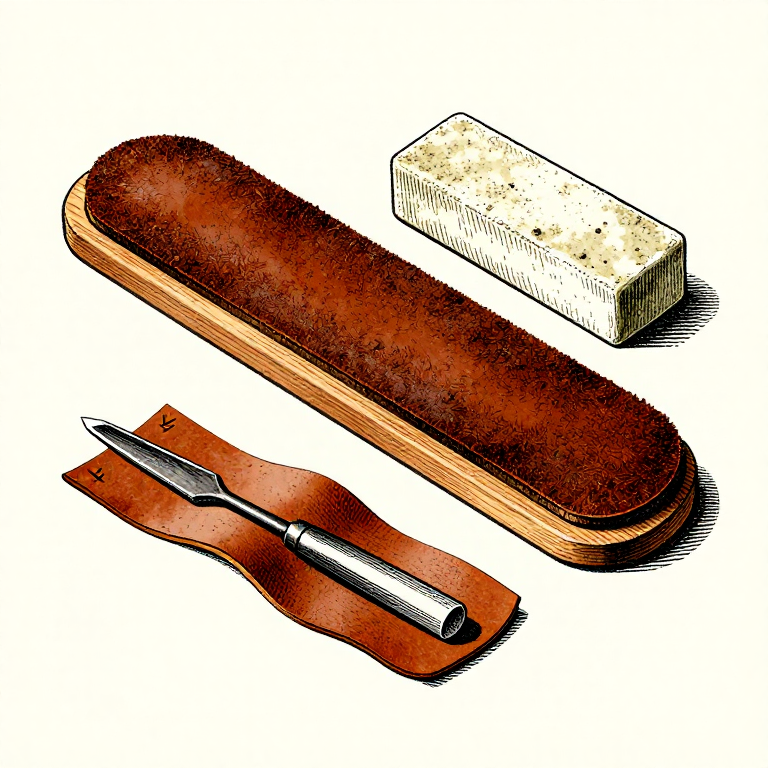


Stropping: A Strip of Leather That Outperforms Another Stone
A strop is leather charged with a fine abrasive compound, and it does two jobs no stone does well: it removes the last remnant of the wire edge without tearing it, and it brings a working edge back to sharp without removing measurable metal.
The second is what makes it valuable. A carver who strops every few minutes may go weeks between stones, because the edge never gets far enough from sharp to need one. The tool lasts decades longer for exactly the same reason.
This rung makes a strop — the whole thing is a board, a piece of leather and some compound — and covers the one rule that matters: strop AWAY from the edge, always.
نیا سیکھنے والا
3 hours
ہدایات
1
1
Make the strop
Make the strop
Glue a strip of vegetable-tanned leather, rough side up, to a flat hardwood board about 300 x 60 mm. Press it flat under weights until the glue cures.
Rough side up because the nap holds the compound. Vegetable-tanned because chrome-tanned leather carries salts that will spot a carbon steel blade. The board matters as much as the leather — a strop that flexes is a strop that rounds your edge, which is the one thing stropping must not do.
Leave the other face bare. A clean, uncharged leather surface is useful for the final few passes once the compound has done its work.
اس مرحلے کے لیے مواد:
 چمڑا1 ٹکڑا
 سخت لکڑی کا تختہ1 ٹکڑا
 لکڑی کا گوند1 ٹکڑا
درکار اوزار:
 سوتی کپڑا
2
2
Charge it, and do not overdo it
Charge it, and do not overdo it
Rub the compound bar across the leather until the surface is evenly coloured, then work it in with a finger or a smooth offcut. A charged strop looks uniformly tinted, not caked.
Too much compound builds a soft layer that the edge sinks into, and that layer rounds the apex — the exact failure stropping is supposed to avoid. Recharge when the surface goes shiny and stops cutting, which on a hand-tool strop is every few months, not every session.
Compound grades run from coarse to fine; a single fine compound around one micrometre is enough for nearly all workshop tools. Keep one strop per grade if you use more than one, and never mix them on one surface.
درکار اوزار:
 چمڑے کا سان پٹہسوتی کپڑا
 چمکانے کا لیپ
3
3
Stroke away from the edge — every time, without exception
Stroke away from the edge — every time, without exception
Lay the bevel flat on the leather and draw the blade BACKWARDS, spine first, away from the cutting edge. Then turn it over and do the same on the other side. Light pressure, ten to twenty passes a side.
Pushing edge-first into leather does two things and both are bad: the edge digs in and cuts the strop, and the leather rolls up ahead of it and folds the apex over. A blade that came off the finish stone sharp will come off a wrongly-stropped strop blunt.
Keep the bevel flat. Lifting the spine as you draw back is the other common fault; it rounds the edge into a convex profile a little more with every pass, and after a few months the tool needs a full regrind to recover.
درکار اوزار:
چمڑے کا سان پٹہ چھینی سیٹ - ترچھا کنارہ
 باورچی خانے کی چھری
4
4
Strop often, sharpen seldom
Strop often, sharpen seldom
Make stropping the thing you do between cuts rather than a stage of sharpening. Twenty passes takes fifteen seconds and restores an edge that has only just started to dull.
The economics are plain: a strop removes a fraction of a micrometre and a coarse stone removes tens of micrometres. Every trip to the stone shortens the tool. A chisel kept sharp by stropping will outlive the maker; one allowed to go blunt and then reground each time will be worn out in a career.
It stops working when the edge has real damage — a nick, a rolled section, a flat you can see under the lamp. At that point go back to the stone and follow the progression. Stropping maintains an edge; it does not create one.
درکار اوزار:
چمڑے کا سان پٹہ دھار سیدھی کرنے کی پٹی اور مسالہ
 مکبر لوپ
مواد
3- 1 ٹکڑاپلیس ہولڈر
- 1 ٹکڑاپلیس ہولڈر
- 1 ٹکڑاپلیس ہولڈر
متعلقہ بلیو پرنٹ
یہ بلیو پرنٹ علم بانٹتے ہیں — تکنیک، مواد یا اصول
CC0 پبلک ڈومین
یہ بلیو پرنٹ CC0 کے تحت جاری کیا گیا ہے۔ آپ اجازت لیے بغیر اس کام کو نقل، ترمیم، تقسیم اور کسی بھی مقصد کے لیے استعمال کرنے کے لیے آزاد ہیں۔
میکر کی حمایت کریں ان کے بلیو پرنٹ کے ذریعے پروڈکٹس خرید کر جہاں وہ میکر کمیشن وینڈرز کی طرف سے مقرر، کماتے ہیں، یا اس بلیو پرنٹ کی نئی تکرار بنائیں اور آمدنی شیئر کرنے کے لیے اسے اپنے بلیو پرنٹ میں کنکشن کے طور پر شامل کریں۔