فن
خوبصورتی اور تندرستی
دستکاری
ثقافت اور تاریخ
تفریح
ماحول
خوراک اور مشروبات
ریورس انجینئرنگ
سائنسز
کھیل
ٹیکنالوجی
پہننے والے آلات

The Heat Pipe: Evaporation, Condensation and a Wick That Pumps
A sealed copper tube with the air pumped out, a few millilitres of water, and a wick lining the wall. Heat one end and the water there boils even at room temperature; the vapour rushes to the cool end, condenses and gives up its heat; the wick soaks the liquid back. It carries heat many times better than a solid copper rod of the same size, with nothing moving.
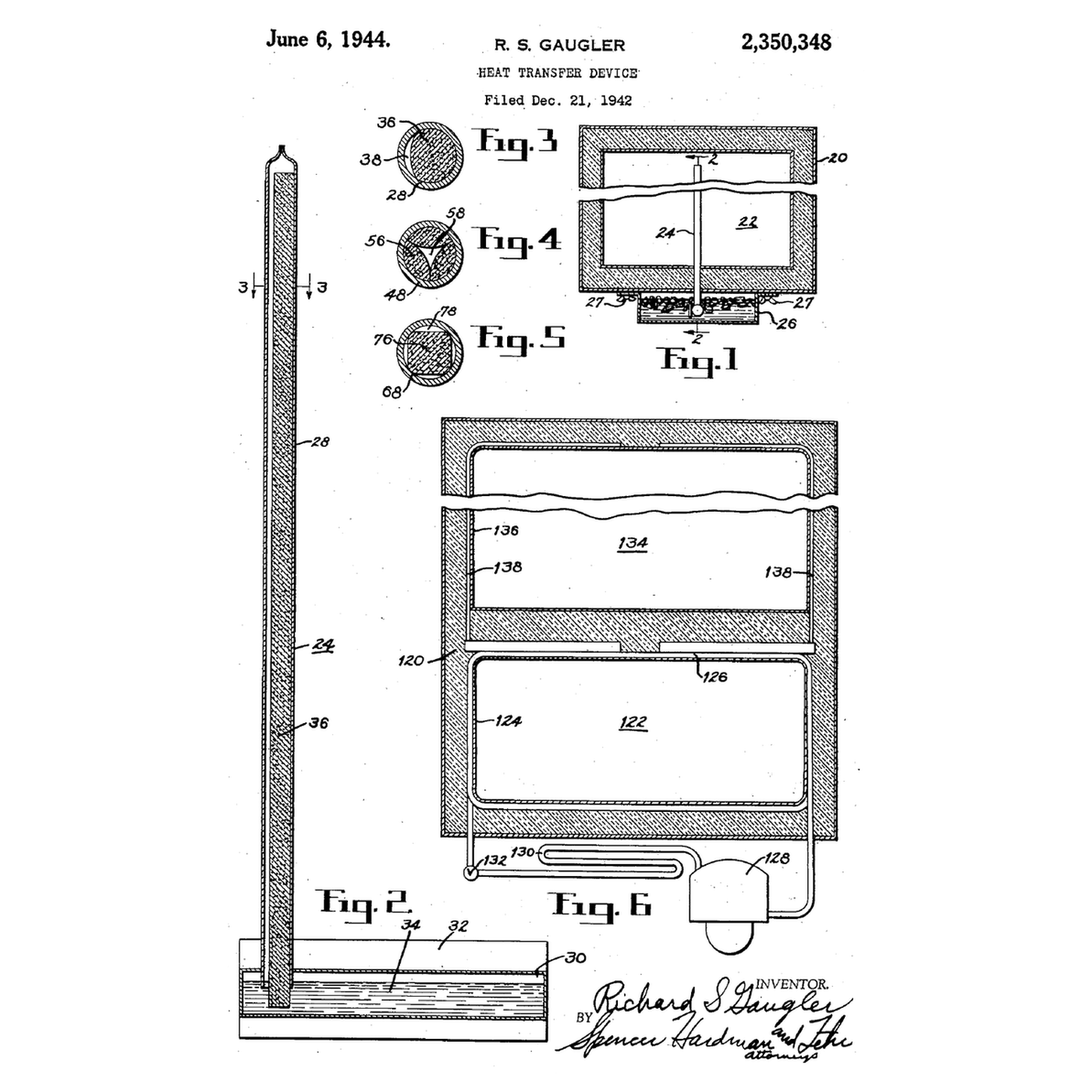
Richard Gaugler of General Motors patented the capillary-wick heat transfer device in 1944, for a refrigerator; George Grover at Los Alamos filed the patent that named and developed the heat pipe in 1963, with sodium pipes running near 1,100 K. Today one sits in almost every laptop.
This rung works out what a wick can lift, and builds a water heat pipe from copper tube and stainless mesh to race against an empty tube.
اعلیٰ
About 5 hours
ہدایات
1
1
The cycle
The cycle
Blockly ورک اسپیس
Loading Blockly workspace...
2
2
What the wick can lift, and what copper cannot carry
What the wick can lift, and what copper cannot carry
Jupyter نوٹ بک لوڈ ہو رہی ہے…
3
3
Make the pipe
Make the pipe
Cut 300 mm of 10 mm copper tube and two 300 mm strips of fine stainless mesh. Roll the mesh into a sleeve that springs out against the inside wall — two layers — so it touches the wall everywhere and leaves the core open.
Crimp one end flat in the vise, fold it, and seal it with solder and plumbing flux. Add about 3 ml of distilled water with a syringe: enough to wet the wick, not to fill the tube.
**Purge the air:** clamp the tube upright in the vise, open end up, and heat the bottom gently with the torch until steam jets steadily out of the top for half a minute — the steam carries the air out. Wearing gloves and goggles, crimp the open end shut in the vise while it is still steaming, then solder it. Air left inside is the commonest reason a home-made heat pipe fails (Grover's own sodium pipes had to be baked to drive out hydrogen).
Make a second tube identical in every way but empty of water — the control.
اس مرحلے کے لیے مواد:
 تانبے کی نلکی0.6 میٹر
 غذائی درجے کی زنگ ناخور فولادی جالی0.02 sqm
 کشید کیا ہوا پانی10 ملی لیٹر
 ٹن-سیسے کا ٹانکہ30 گرام
درکار اوزار:
 نلی کاٹنے کا اوزار
 میز کا شکنجہ
 پروپین مشعل
 چمڑے کے کام کے دستانے
 شفاف حفاظتی عینک
 پلمبنگ کا فلکس
4
4
Race it against the empty tube
Race it against the empty tube
Tape a temperature probe to the top end of each tube. Stand both tubes upright with their bottom 50 mm in a jug of hot water at about 70 °C — never heat a sealed pipe with a flame again: its pressure climbs steeply above 100 °C.
Watch the two top ends. The heat pipe's top rises within seconds to within a few degrees of the water; the empty tube's top barely moves. That is the notebook's comparison, in your hand.
Now turn the heat pipe over: hot end at the TOP, dipping the upper end into a shallow tray of hot water, cold end below. The wick must now lift the liquid against gravity. Its performance drops, and if your wick is coarse or poorly seated it stops — the dry-out in the cycle's last line.
اس مرحلے کے لیے مواد:
 پانی2 لیٹر
درکار اوزار:
 شیشے کی بجلی کی کیتلی
 پیمائشی جگ
 درجہ حرارت کا محسوسہ
 باورچی خانے کا تھرمامیٹر
 اسٹاپ واچ
5
5
It carries no better than copper: find out why
It carries no better than copper: find out why
The usual reasons a heat pipe does not work, in order.
Flow
Loading...
6
6
History and context
History and context
**US 2,350,348, 'Heat Transfer Device', Richard S. Gaugler of Dayton, Ohio, assignor to General Motors; filed 21 December 1942, granted 6 June 1944.** A sealed tube with a sintered *"porous capillary structure"* that carries the liquid *"upwardly or in any direction without any forced circulation and without any moving parts"* — proposed to cool the inside of a refrigerator.
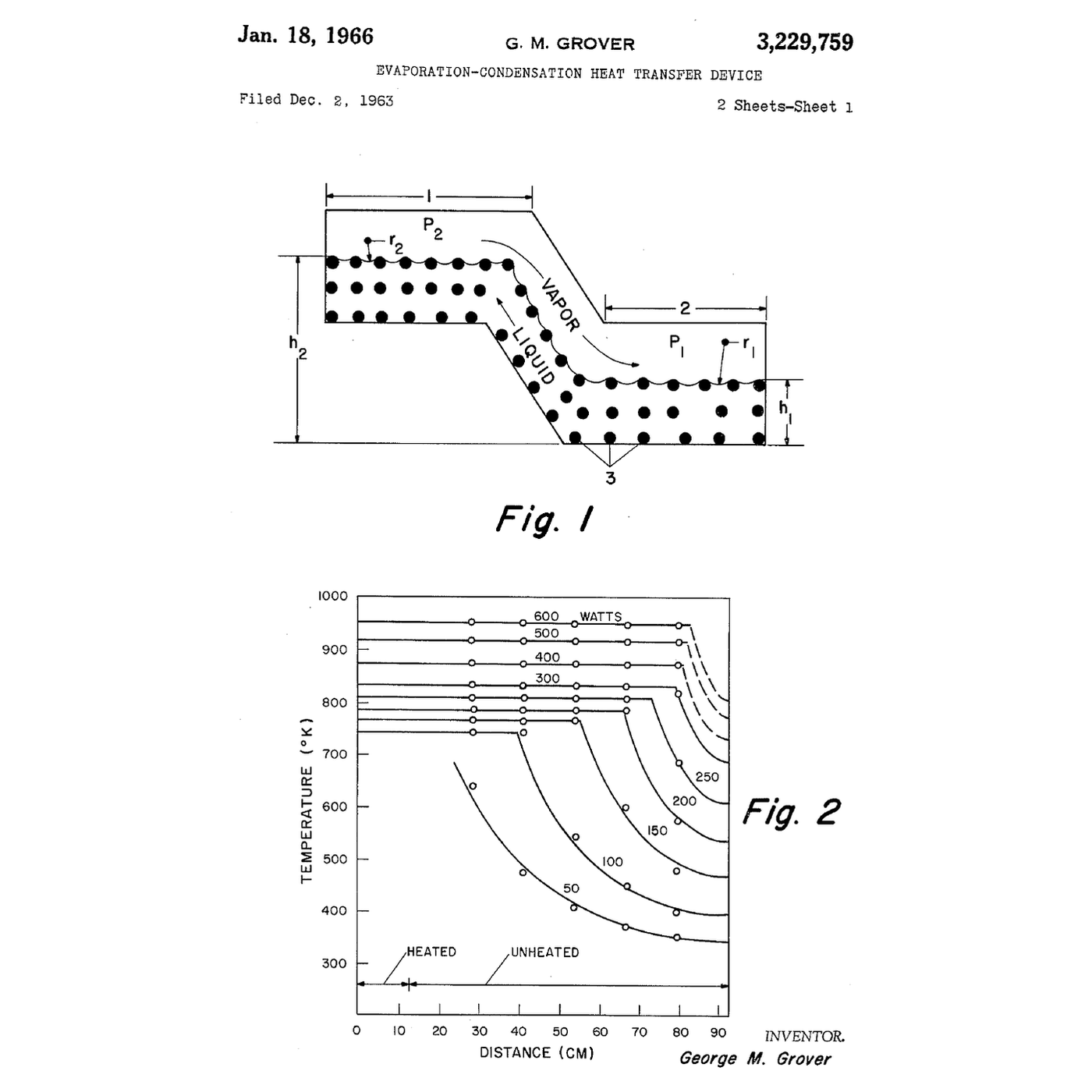
**US 3,229,759, 'Evaporation-Condensation Heat Transfer Device', G. M. Grover; filed 2 December 1963, granted 18 January 1966.** Grover's specification describes a sodium pipe of 347 stainless steel, 3/4 inch outside and 5/8 inch inside, 12 inches long, with a wick of five layers of 100-mesh 304 screen and 15 g of sodium, run at about 1,100 K; it also sets out the capillary pumping condition the notebook uses.
**Honest limits.** A heat pipe works only between the freezing point and the critical point of its fluid, and best in a narrower band. It has a maximum heat load, set by the wick, above which it dries out. It fails silently if it leaks or holds air. And it moves heat; it does not get rid of it — the cold end still needs a fin or a fan.
مواد
5- 0.6 میٹرپلیس ہولڈر
- پلیس ہولڈر
- 10 ملی لیٹرپلیس ہولڈر
- 30 گرامپلیس ہولڈر
- 2 لیٹرپلیس ہولڈر
درکار اوزار
11- پلیس ہولڈر
- پلیس ہولڈر
- پلیس ہولڈر
- پلیس ہولڈر
- پلیس ہولڈر
- پلیس ہولڈر
- پلیس ہولڈر
- پلیس ہولڈر
- 6 vendors sell this, none ship to you yetپلیس ہولڈر
- پلیس ہولڈر
- پلیس ہولڈر
متعلقہ بلیو پرنٹ
یہ بلیو پرنٹ علم بانٹتے ہیں — تکنیک، مواد یا اصول
Counterflow: The Same Area Does More When the Streams Run Opposite
Emma کی طرف سے
میکانکس
36
0
0
0
0
0
The Water-Tube Boiler: Put the Water in the Tubes
Martin کی طرف سے
میکانکس
23
0
0
0
0
0
Vapour-Compression Refrigeration
Emma کی طرف سے
ٹیکنالوجی
39
0
0
0
5
0
Absorption Refrigerator
Volt کی طرف سے
ٹیکنالوجی
51
0
0
0
0
0
Soldering a Wire Joint: Not the Same Job as Soldering a Board
Volt کی طرف سے
ٹیکنالوجی
38
0
0
0
0
0
Regenerative Cooling
Emma کی طرف سے
خلا
76
0
0
0
0
0
CC0 پبلک ڈومین
یہ بلیو پرنٹ CC0 کے تحت جاری کیا گیا ہے۔ آپ اجازت لیے بغیر اس کام کو نقل، ترمیم، تقسیم اور کسی بھی مقصد کے لیے استعمال کرنے کے لیے آزاد ہیں۔
میکر کی حمایت کریں ان کے بلیو پرنٹ کے ذریعے پروڈکٹس خرید کر جہاں وہ میکر کمیشن وینڈرز کی طرف سے مقرر، کماتے ہیں، یا اس بلیو پرنٹ کی نئی تکرار بنائیں اور آمدنی شیئر کرنے کے لیے اسے اپنے بلیو پرنٹ میں کنکشن کے طور پر شامل کریں۔