فن
خوبصورتی اور تندرستی
دستکاری
ثقافت اور تاریخ
تفریح
ماحول
خوراک اور مشروبات
ریورس انجینئرنگ
سائنسز
کھیل
ٹیکنالوجی
پہننے والے آلات



The Reversible Sad-Iron Stand: Feet That Lock to the Board
A hot iron has to rest somewhere between strokes. On a board that tips, the stand can slide off with it.
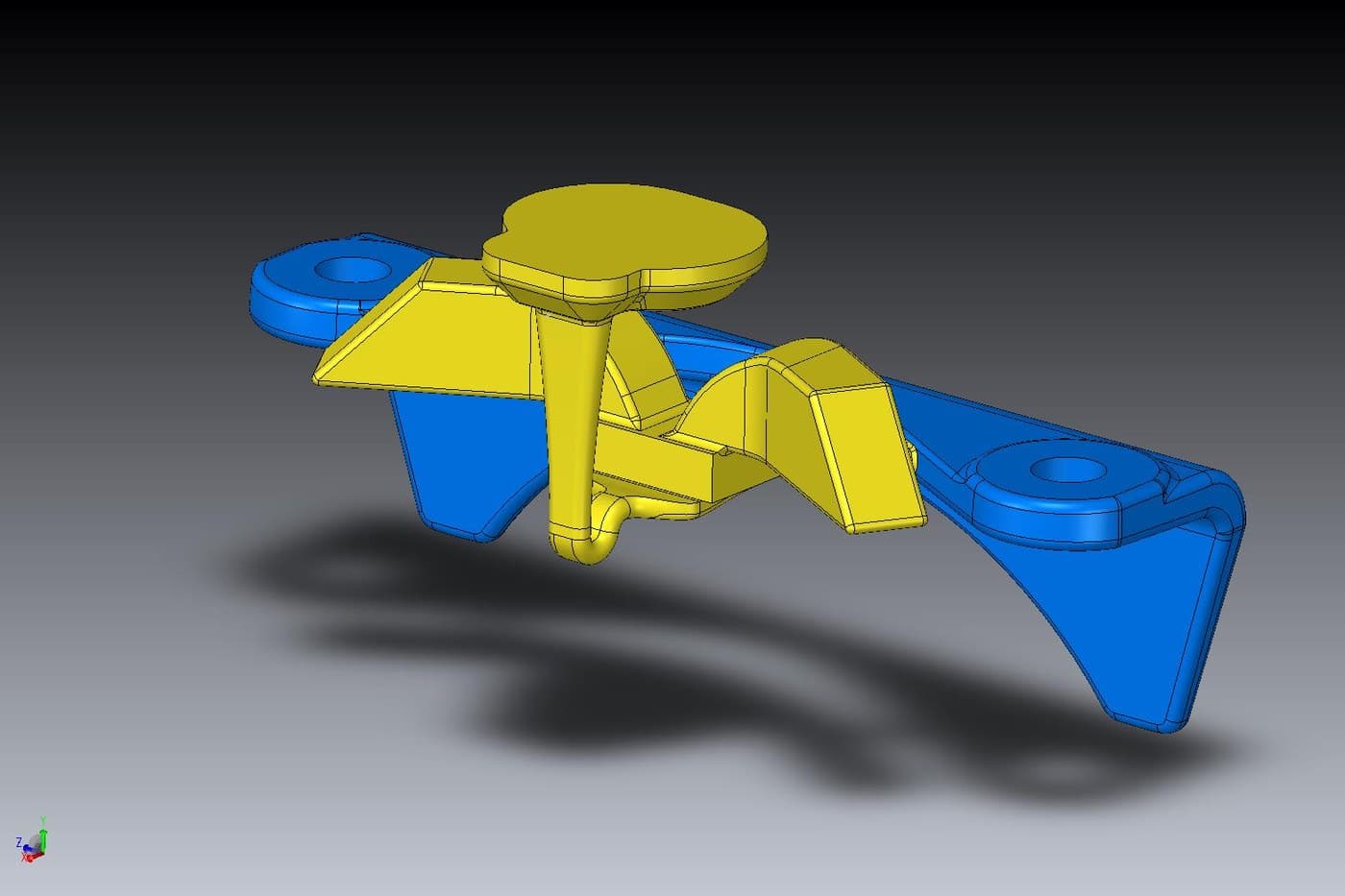
Susan T. Inesly of New York received US 148,706, dated 17 March 1874 (filed 10 December 1873), for a sad-iron holder "constructed with feet on one side and a vertical rim or flange on its other, whereby said holder can be reversed to present either face for supporting the iron". Bars screwed to the ironing board take the feet, so the holder "is not liable to slide off the same if the board be tilted".
This rung works out the tilt at which a stand starts to slide, and the force the bars must then take. You then make a stand with locating feet and test it on a tilted board.
نیا سیکھنے والا
About 2 hours
ہدایات
1
1
The tilt that starts a slide
The tilt that starts a slide
Jupyter نوٹ بک لوڈ ہو رہی ہے…
2
2
What the stand holds
What the stand holds
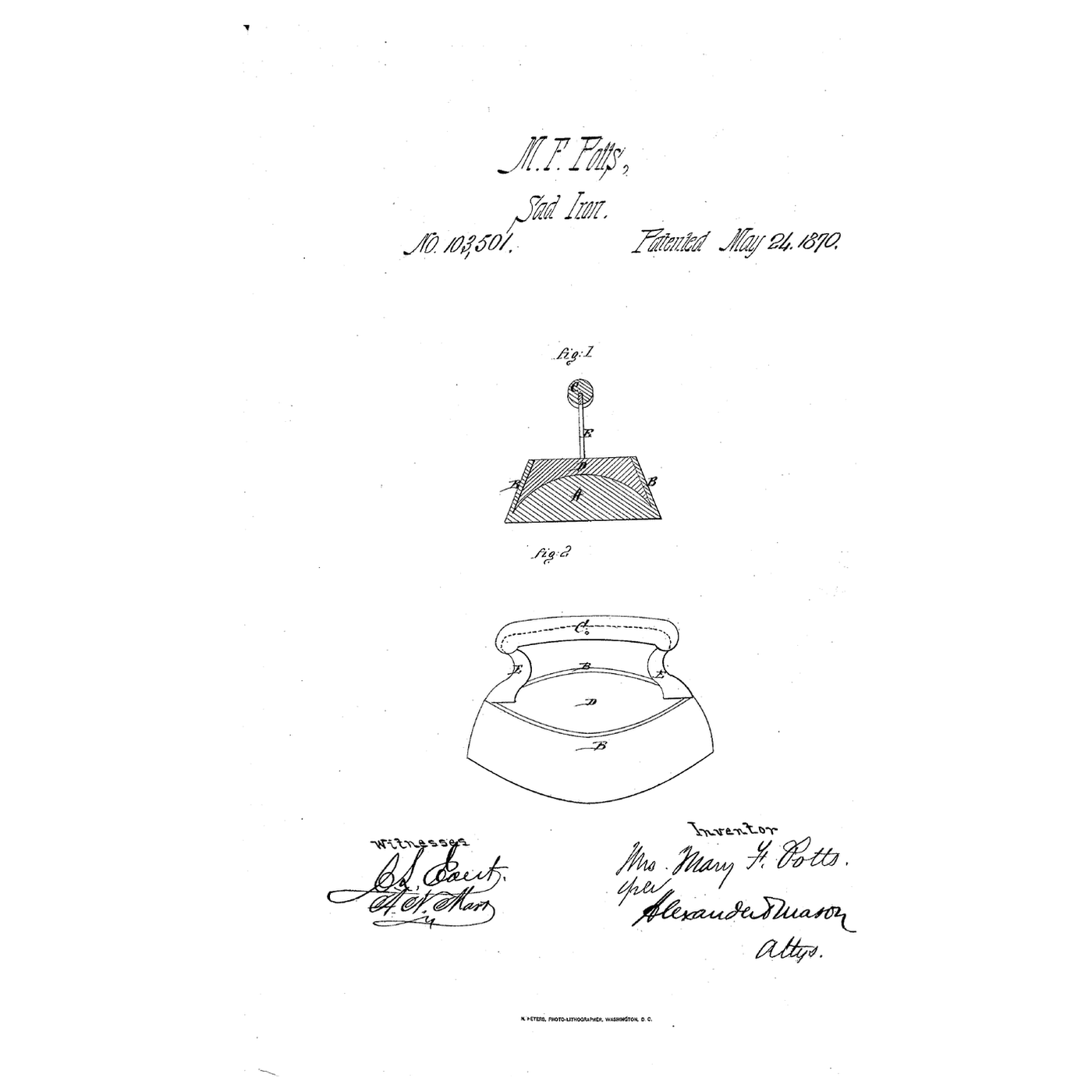
The embedded blueprint covers the sad iron itself: a heavy iron heated on the stove, set down between strokes.
3
3
Read US 148,706
Read US 148,706
"The object of this invention is to furnish a sad-iron holder which is capable of the uses of the ordinary holders, and which can be reversed or either side turned up to support the iron, while it may be securely held in place on an ironing board or table, if desired."
"The said brackets or bars D are intended to be used on ironing-boards for the purpose of preventing the holder from sliding off the same, as when putting on or taking off a skirt, when the board must be tilted; but for ordinary table-use they are not essential."
4
4
Make a stand with locating feet and tilt it
Make a stand with locating feet and tilt it
Cut an iron-shaped plate from steel sheet with the tin snips and file the edges smooth. Rivet two short folded strips under it as feet. Along the edge of the other face, rivet a strip bent up as a low rim, so the plate can be used either way up.
Screw two short wooden bars to a board, with holes drilled to take the feet.
First set the stand on the bare board, load it with a weight and tilt the board slowly. Read the angle on the protractor when it starts to slide; the tangent of that angle is your friction coefficient. Then drop the feet into the bars and tilt again. Compare with the notebook.
اس مرحلے کے لیے مواد:
 فولاد کی چادر1 ٹکڑا
 فولادی ریوٹ8 ٹکڑے
 چیڑ کا تختہ1 ٹکڑا
 لکڑی کے پیچ4 ٹکڑے
درکار اوزار:
 گرم برتن کا اسٹینڈ
 چادر کاٹنے کی قینچی
 دھات کی ریتی
 بے تار مشق
 زاویہ پیما
 بوجھ
 ریوٹ سیٹ
 ریوٹ کا ہتھوڑا
5
5
A stand that slides, rocks or scorches
A stand that slides, rocks or scorches
Iron stand troubleshooting.
Flow
Loading...
6
6
History and honest limits
History and honest limits
**Susan T. Inesly** of New York filed US 148,706 on 10 December 1873; it is dated 17 March 1874.
**Honest limits.** The notebook uses one friction coefficient for starting and sliding, and treats the stand as a block. A real stand can tip before it slides. The masses, friction values and angles are examples. Your tilt measurements are the measurement.
مواد
4- 1 ٹکڑاپلیس ہولڈر
- 8 ٹکڑےپلیس ہولڈر
- 1 ٹکڑاپلیس ہولڈر
- 4 ٹکڑےپلیس ہولڈر
درکار اوزار
8- پلیس ہولڈر
- پلیس ہولڈر
- پلیس ہولڈر
- 1 vendor sell this, none ship to you yetپلیس ہولڈر
- پلیس ہولڈر
- پلیس ہولڈر
- پلیس ہولڈر
- پلیس ہولڈر
متعلقہ بلیو پرنٹ
یہ بلیو پرنٹ علم بانٹتے ہیں — تکنیک، مواد یا اصول


CC0 پبلک ڈومین
یہ بلیو پرنٹ CC0 کے تحت جاری کیا گیا ہے۔ آپ اجازت لیے بغیر اس کام کو نقل، ترمیم، تقسیم اور کسی بھی مقصد کے لیے استعمال کرنے کے لیے آزاد ہیں۔
میکر کی حمایت کریں ان کے بلیو پرنٹ کے ذریعے پروڈکٹس خرید کر جہاں وہ میکر کمیشن وینڈرز کی طرف سے مقرر، کماتے ہیں، یا اس بلیو پرنٹ کی نئی تکرار بنائیں اور آمدنی شیئر کرنے کے لیے اسے اپنے بلیو پرنٹ میں کنکشن کے طور پر شامل کریں۔