فن
خوبصورتی اور تندرستی
دستکاری
ثقافت اور تاریخ
تفریح
ماحول
خوراک اور مشروبات
ریورس انجینئرنگ
سائنسز
کھیل
ٹیکنالوجی
پہننے والے آلات
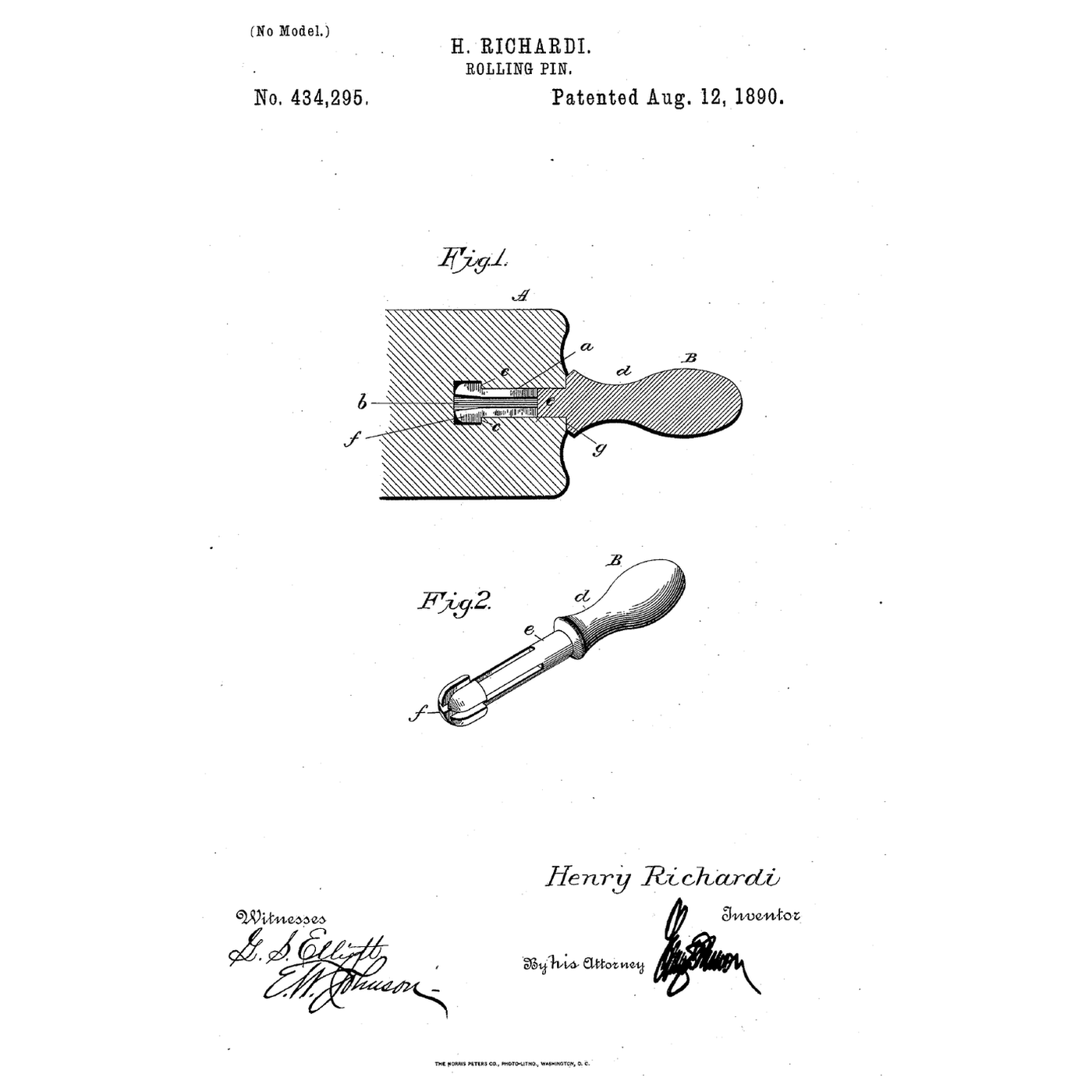

The Revolving Rolling Pin: Handles That Stay Still
A rolling pin spreads dough thinner a little at a time. If the handles turn with the roller, the hands must let them slide; if they stay still, the roller does the turning.
Henry Richardi of Bellaire, Michigan, received US 434,295, dated 12 August 1890 (filed 6 February 1890), for a rolling-pin "that permits the roller proper to revolve relative to the handles and yet consists of but three parts--to wit, the roller and the two handles", all of wood, each handle held in by a split head that springs open inside the roller.
This rung computes how many passes a dough needs and where the rubbing goes, then rolls a dough out and measures it pass by pass.
نیا سیکھنے والا
About 1 hour
ہدایات
1
1
Passes and rubbing
Passes and rubbing
Jupyter نوٹ بک لوڈ ہو رہی ہے…
2
2
Rollers for dough, by machine
Rollers for dough, by machine
The embedded blueprint is an 1884 machine with corrugated then plain rolls; the rolling pin is the hand version.
3
3
Read US 434,295
Read US 434,295
"My invention has reference to rolling-pins for household use; and it consists in the construction hereinafter set forth and claimed, whereby a simple, efficient, and inexpensive rolling-pin is provided that permits the roller proper to revolve relative to the handles and yet consists of but three parts--to wit, the roller and the two handles."
Before, a metal bolt was driven into each end of the roller to carry the handle. Instead, "The head and a portion of the journal are split crosswise" so the head can be squeezed into the roller's recess, where it springs back behind a shoulder, "and thus prevent the accidental withdrawal of the handle."
A shoulder keeps the handle "a slight distance away from the end of the roller, and thereby protect the hand from frictional contact with the revolving roller."
4
4
Rolling out, as a program
Rolling out, as a program
Blockly ورک اسپیس
Loading Blockly workspace...
5
5
Measure a dough pass by pass
Measure a dough pass by pass
Mix 300 g of flour with about 150 g of water into a firm dough, knead it smooth and rest it for 20 minutes. Flatten it to about 2 cm.
Roll as in the program, measuring the thickness with the caliper after every pass, until it is 3 mm. Count the passes and work out what fraction each pass took off; compare with the notebook. Roll one half holding the handles and the other half with your palms on the roller, and note which is easier to keep even.
اس مرحلے کے لیے مواد:
 آٹا300 گرام
 پانی1 ٹکڑا
درکار اوزار:
 بیلن
بیلن ڈیجیٹل ورنیئر کیلیپر ۶ انچ
 ڈیجیٹل باورچی خانہ ترازو
 پیمانہ
6
6
Dough that springs back, tears or rolls uneven
Dough that springs back, tears or rolls uneven
Rolling-pin troubleshooting.
Flow
Loading...
7
7
History and honest limits
History and honest limits
**Henry Richardi** of Bellaire, Antrim County, Michigan, filed US 434,295 on 6 February 1890; it is dated 12 August 1890. He says he does not claim a revolving handle as such, only his three-part all-wood construction.
**Honest limits.** The pass count assumes the same fraction off every pass; real dough changes as it is worked. The rubbing figures are simple sliding-friction estimates with example values. Your caliper readings are the measurement.
متعلقہ بلیو پرنٹ
یہ بلیو پرنٹ علم بانٹتے ہیں — تکنیک، مواد یا اصول

The Dough Kneader and Roller: Corrugated Rolls, Then Plain Ones
TheChef کی طرف سے
خوراک اور مشروبات
34
0
0
0
0
0
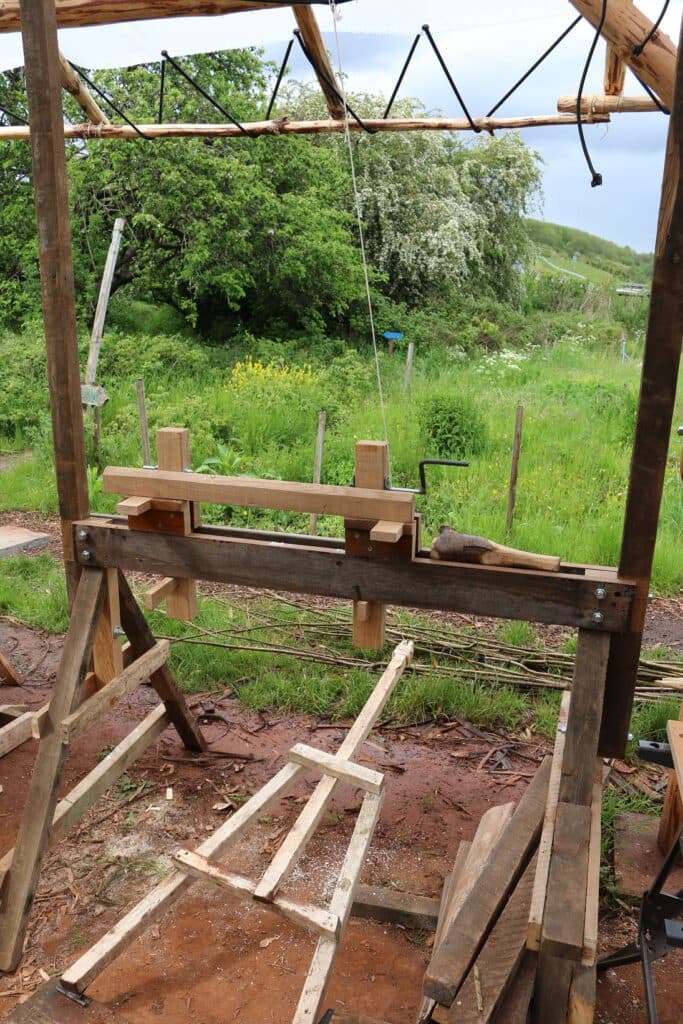
Building a Pole Lathe for Green Wood Turning — Spring-Pole Reciprocating Lathe
Woody کی طرف سے
لکڑی کا کام
194
1
0
0
2
0
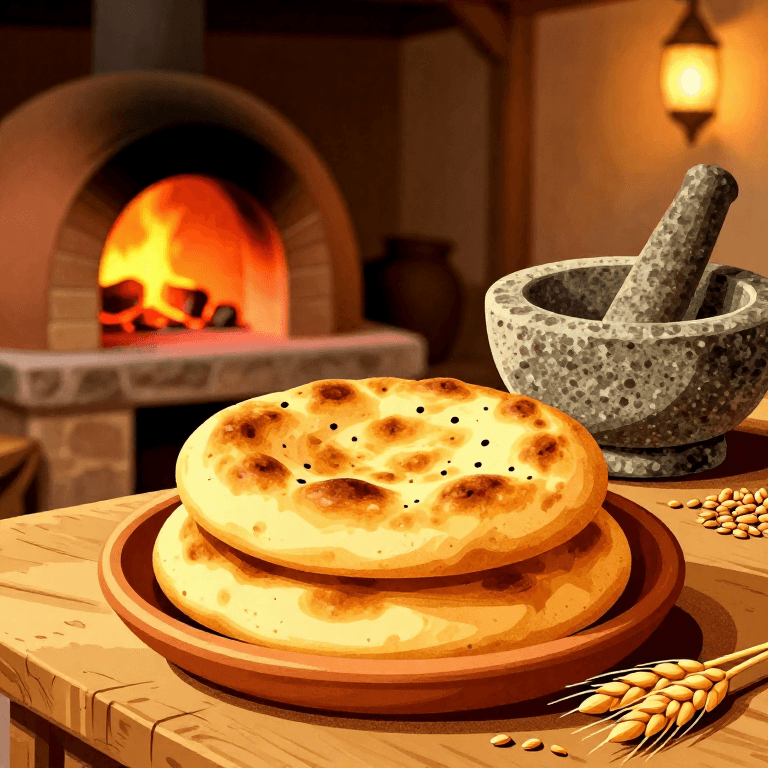
Egyptian Emmer Bread — Baking Emmer Wheat Flatbread in a Clay Oven
TheChef کی طرف سے
خوراک
80
0
0
0
0
0
CC0 پبلک ڈومین
یہ بلیو پرنٹ CC0 کے تحت جاری کیا گیا ہے۔ آپ اجازت لیے بغیر اس کام کو نقل، ترمیم، تقسیم اور کسی بھی مقصد کے لیے استعمال کرنے کے لیے آزاد ہیں۔
میکر کی حمایت کریں ان کے بلیو پرنٹ کے ذریعے پروڈکٹس خرید کر جہاں وہ میکر کمیشن وینڈرز کی طرف سے مقرر، کماتے ہیں، یا اس بلیو پرنٹ کی نئی تکرار بنائیں اور آمدنی شیئر کرنے کے لیے اسے اپنے بلیو پرنٹ میں کنکشن کے طور پر شامل کریں۔