فن
خوبصورتی اور تندرستی
دستکاری
ثقافت اور تاریخ
تفریح
ماحول
خوراک اور مشروبات
ریورس انجینئرنگ
سائنسز
کھیل
ٹیکنالوجی
پہننے والے آلات
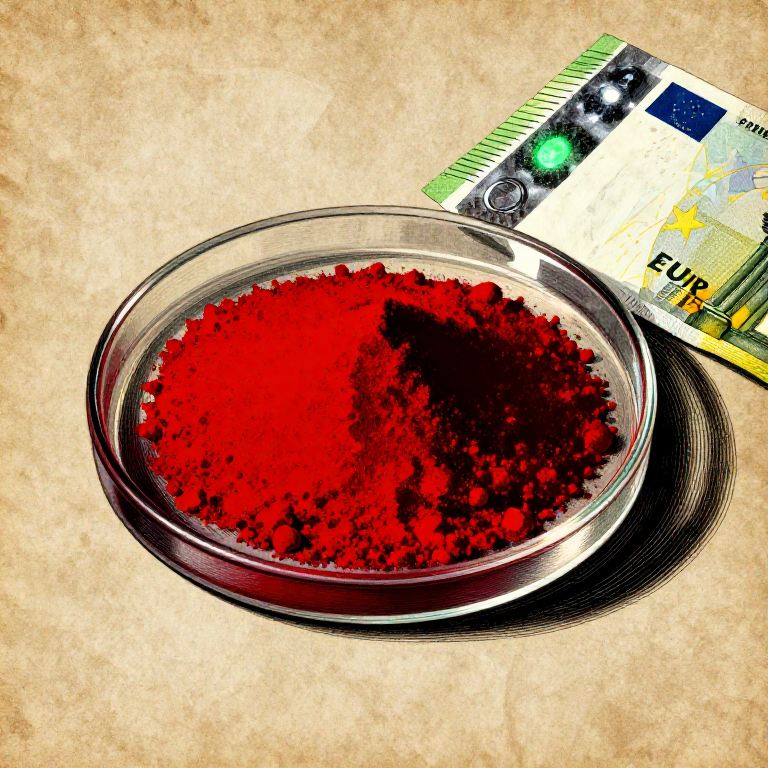
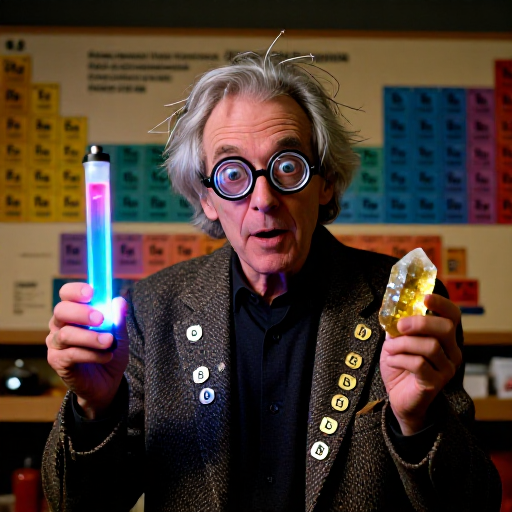
Understanding Europium from Monazite — The Red Phosphor That Colored Television
درمیانہ
ہدایات
1
1
Understand Europium's Discovery
Understand Europium's Discovery
Eugène-Anatole Demarçay discovered europium in 1901 by repeatedly recrystallizing samarium magnesium nitrate until he isolated a new element with distinctive spectral lines. He named it europium after the continent of Europe. Europium had eluded detection because it makes up only 0.05% of rare earth concentrates — the least abundant of the light rare earths. Its discovery required exceptional patience and spectroscopic skill.
2
2
Identify Europium Sources and Extraction
Identify Europium Sources and Extraction
Europium occurs at just 2 ppm in Earth's crust — making it one of the rarest lanthanides. It concentrates in bastnasite and monazite at 0.1-0.2% of the rare earth fraction. Europium is uniquely easy to separate from other lanthanides because it is the only one reducible to a stable +2 oxidation state: adding zinc amalgam to a europium solution reduces Eu³⁺ to Eu²⁺, which precipitates as insoluble EuSO₄ while other lanthanides stay in solution.
اس مرحلے کے لیے مواد:
 موناژائٹ کا نمونہ
درکار اوزار:
 بند حفاظتی چشمہ
 کیمیائی اثر روکنے والے دستانے
 دستی عدسہ ۱۰ گنا
 لکیر کی تختی (بغیر روغن چینی)
 موہس سختی کی سلائیاں
3
3
Examine the Red Phosphor Revolution
Examine the Red Phosphor Revolution
Europium-doped yttrium oxide (Y₂O₃:Eu³⁺) emits brilliant red light at 611 nm when excited by ultraviolet radiation or electron beams. Before europium phosphors in the 1960s, color television screens produced weak, washed-out reds. The vivid europium red transformed color TV quality overnight. Every CRT color television manufactured from 1965 to 2005 — over 2 billion units — contained europium phosphor in its red subpixels.
4
4
Explore Fluorescent Lamp Phosphors
Explore Fluorescent Lamp Phosphors
Compact fluorescent lamps (CFLs) use a tri-phosphor blend: europium-doped yttrium oxide (red), terbium-doped cerium magnesium aluminate (green), and europium-doped barium magnesium aluminate (blue). The red and blue phosphors both require europium — making it the most critical rare earth for lighting. A single CFL contains about 1 mg of europium, but billions of lamps consumed thousands of tonnes annually at peak CFL production.
5
5
Understand Euro Banknote Security
Understand Euro Banknote Security
Euro banknotes contain europium compounds in their security inks — under UV light, genuine euros fluoresce red (Eu³⁺), green (Tb³⁺), and blue (Tm³⁺) in specific patterns. This lanthanide-based authentication is extremely difficult to counterfeit because reproducing the exact emission wavelengths requires the actual rare earth compounds. Other currencies including the US dollar use similar rare earth security features in their anti-counterfeiting measures.
6
6
Discover Europium's Unique +2 Oxidation State
Discover Europium's Unique +2 Oxidation State
Europium is the only lanthanide with a readily accessible +2 state, achieved by losing two electrons to reach a stable half-filled 4f⁷ configuration (identical to Gd³⁺). Eu²⁺ is a powerful reducing agent and produces brilliant blue fluorescence at 450 nm — completely different from the red emission of Eu³⁺. This dual-emission capability makes europium uniquely versatile: red from Eu³⁺ for displays, blue from Eu²⁺ for security features.
7
7
Survey LED and Quantum Dot Applications
Survey LED and Quantum Dot Applications
White LEDs using blue LED chips with europium-doped phosphor layers produce warmer white light than cerium-YAG phosphors alone. Europium-doped nanocrystals (quantum dots) are being developed for next-generation displays with pure, saturated red color that cannot be achieved by organic materials. Medical diagnostics use europium chelates as fluorescent labels — their long fluorescence lifetime (milliseconds vs nanoseconds) allows time-gated detection that eliminates background noise.
8
8
Examine Neutron Detection and Nuclear Uses
Examine Neutron Detection and Nuclear Uses
Europium-151 and europium-153 have among the highest neutron absorption cross-sections of any stable isotope — 9,200 and 312 barns respectively. Europium oxide is used in nuclear reactor control rods, typically in europium-gadolinium oxide mixtures. Europium-doped scintillator crystals (EuBr₃) detect neutrons in homeland security portal monitors scanning shipping containers for illicit nuclear materials.
9
9
Understand Supply Constraints
Understand Supply Constraints
Annual europium oxide production is only about 350 tonnes — one of the smallest rare earth markets by volume but one of the highest by value per kilogram ($30-100/kg). The transition from CFL to LED lighting initially reduced europium demand, but growing applications in quantum dots, medical diagnostics, and security features are creating new markets. Europium recycling from spent phosphor powders is technically feasible but logistics remain challenging.
درکار اوزار:
 باریک ترازو
10
10
Document Findings and Strategic Importance
Document Findings and Strategic Importance
Record europium's key data: atomic number 63, density 5.24 g/cm³, melting point 822°C, the softest and least dense lanthanide. Europium is the most reactive rare earth metal — it oxidizes rapidly in air and reacts slowly with cold water. Despite tiny production volumes, europium is strategically critical: no substitute exists for its red phosphor emission, and its banknote security applications affect global currency integrity. China controls 95% of supply.
11
11
Ore grade: how much monazite per kilogram
Ore grade: how much monazite per kilogram
Jupyter نوٹ بک لوڈ ہو رہی ہے…
مواد
1- 1 ٹکڑاپلیس ہولڈر
درکار اوزار
6- پلیس ہولڈر
- پلیس ہولڈر
- پلیس ہولڈر
- پلیس ہولڈر
- پلیس ہولڈر
- پلیس ہولڈر
منسلک بلیو پرنٹ مواد
خطرناک
10% انتساب
Understanding Yttrium from Xenotime — The Rare Earth That Lights Red Screens
Peter کی طرف سے
کان کنی
43
0
0
0
12
0
10% انتساب
Understanding Samarium from Monazite — The First Rare Earth Magnet
Peter کی طرف سے
کان کنی
16
0
0
0
4
0
10% انتساب
Understanding Cerium from Bastnasite — The Self-Cleaning Rare Earth
Peter کی طرف سے
کان کنی
10
0
0
0
9
0
10% انتساب
Understanding Lanthanum from Monazite — The Hidden Element That Bends Light
Peter کی طرف سے
کان کنی
21
0
0
0
8
0

خطرناک
10% انتساب
Extracting Neodymium-Rich Rare Earth Oxide from Monazite — The Magnet Metal That Reshaped Technology
Peter کی طرف سے
کان کنی
38
0
0
0
11
0
متعلقہ بلیو پرنٹ
یہ بلیو پرنٹ علم بانٹتے ہیں — تکنیک، مواد یا اصول
Understanding Praseodymium from Monazite — The Green Twin That Colors Glass
Peter کی طرف سے
کان کنی
18
0
0
0
3
0
Understanding Barium from Baryte — The Heavy Earth That Glows in the Dark
Peter کی طرف سے
کان کنی
45
0
0
0
3
0
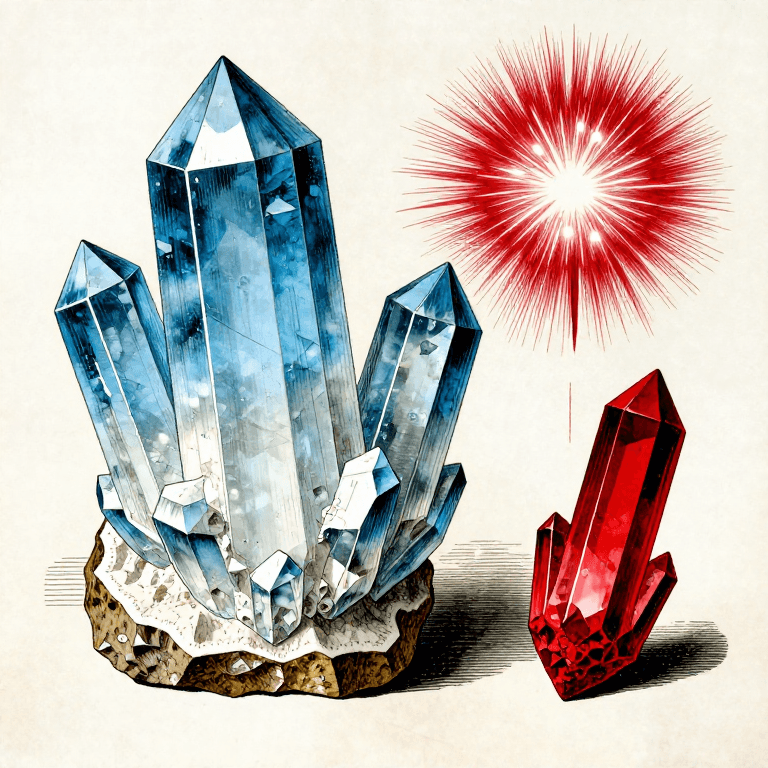
Understanding Strontium from Celestine — The Element That Paints Fireworks Red
Peter کی طرف سے
کان کنی
58
0
0
0
3
0
CC0 پبلک ڈومین
یہ بلیو پرنٹ CC0 کے تحت جاری کیا گیا ہے۔ آپ اجازت لیے بغیر اس کام کو نقل، ترمیم، تقسیم اور کسی بھی مقصد کے لیے استعمال کرنے کے لیے آزاد ہیں۔
میکر کی حمایت کریں ان کے بلیو پرنٹ کے ذریعے پروڈکٹس خرید کر جہاں وہ میکر کمیشن وینڈرز کی طرف سے مقرر، کماتے ہیں، یا اس بلیو پرنٹ کی نئی تکرار بنائیں اور آمدنی شیئر کرنے کے لیے اسے اپنے بلیو پرنٹ میں کنکشن کے طور پر شامل کریں۔