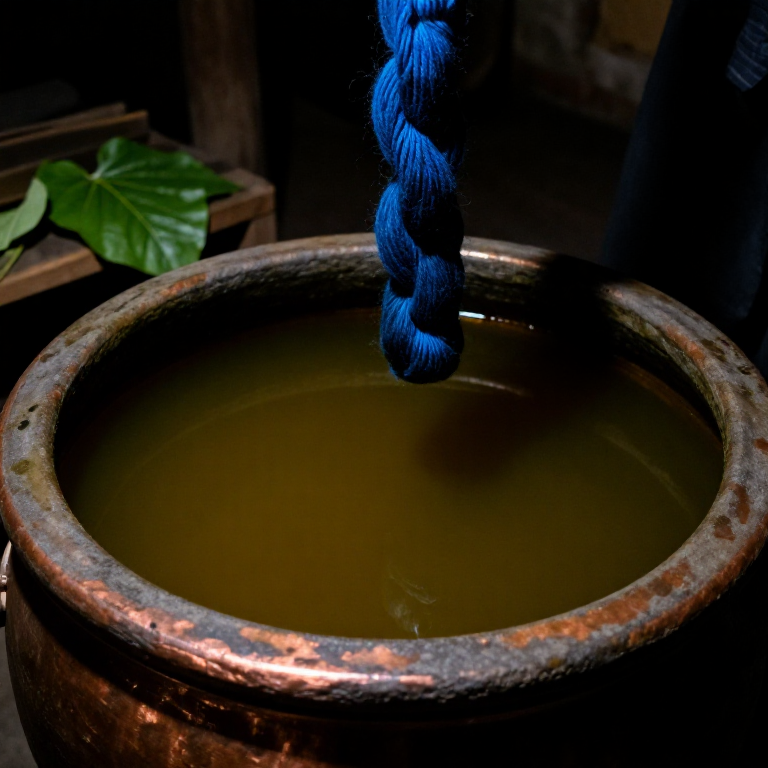

Dyeing Blue with a Woad Urine Vat — The Fermentation Method That Coloured Europe
Before synthetic indigo, before imported tropical indigo, Europe had woad (Isatis tinctoria) — and the only way to make woad dye wool blue was the fermentation vat. The chemistry is simple but extraordinary: indigo pigment is insoluble in water. It cannot bond to fibre in its natural state. To dye with indigo, you must first reduce it — remove oxygen from the molecule — which makes it soluble. Then the fibre absorbs the dissolved dye, and when exposed to air, the indigo re-oxidises inside the fibre and becomes insoluble again, permanently trapped.
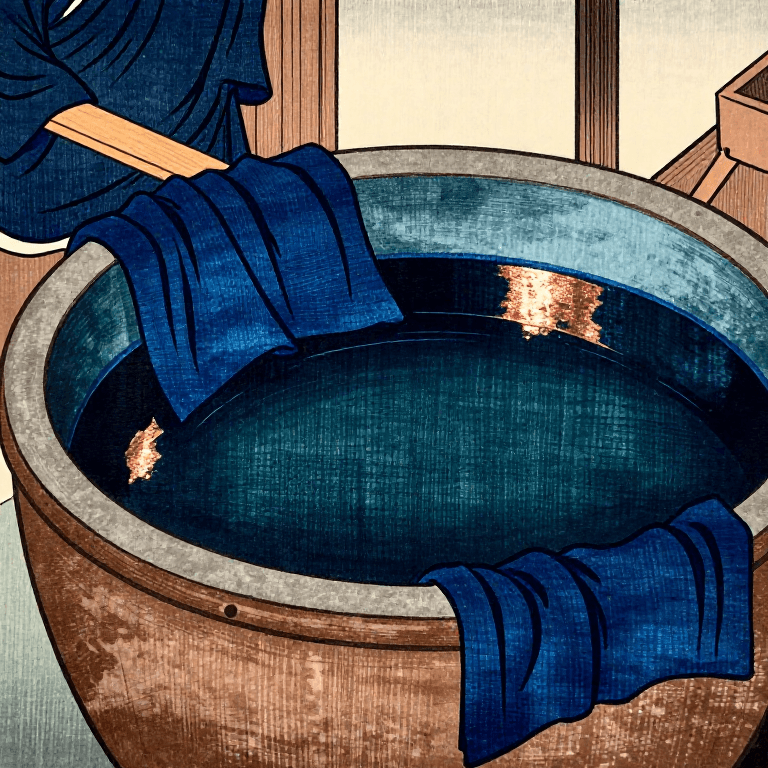
For over two thousand years, the reducing agent of choice was stale human urine. Urine contains urea, which bacteria convert to ammonia over days of standing. The ammonia creates an alkaline environment (pH 9-10) and the bacterial fermentation consumes oxygen, creating the anaerobic reducing conditions that convert insoluble indigo to soluble leuco-indigo. The vat literally ferments — bubbling, smelling powerfully of ammonia, developing a coppery sheen on the surface that dyers called the 'flower of the vat.' When that flower appears, the vat is ready.
This technique was practised from prehistoric times through the 19th century. Anglo-Saxon dyers, Viking textile workers, medieval European woad guilds in Toulouse, Thuringia, and Somerset — all used urine vats. Dyers' guilds in cities like Erfurt grew wealthy on woad. Public urine collection barrels stood on street corners. The smell was legendary, and dyers' quarters were always downwind of the town. Today, the same chemistry can be achieved with granular urea or a commercial reducing agent, but the fermentation vat remains the historically authentic method — and it works beautifully.
ہدایات
Obtain woad-extracted indigo pigment
Obtain woad-extracted indigo pigment
You need dried woad indigo pigment — the concentrated blue powder extracted from woad leaves by soaking, beating, and drying (see the companion blueprint 'Extracting Indigo Dye from Woad Leaves'). For a small vat to dye 100-200 g of wool, use 20-30 g of dried woad indigo pigment. If you cannot source woad indigo, natural indigo powder from Indigofera tinctoria works identically — the chemistry is the same molecule, just from a different plant. The darker and bluer the dried pigment, the stronger the dye.
اس مرحلے کے لیے مواد:
 ووڈ کے پتے30 گرام
Collect stale urine or prepare a urea solution
Collect stale urine or prepare a urea solution
The traditional method uses stale human urine that has been standing for 7-14 days in a covered (not sealed) container. During this time, bacteria convert the urea in the urine to ammonia — the liquid becomes strongly alkaline and smells powerfully of ammonia. You need about 5 litres for a small vat. The modern substitute is granular urea dissolved in warm water: 100 g urea per litre of water, with a tablespoon of washing soda (sodium carbonate) to raise the pH. Both methods provide the same chemistry: an alkaline, reducing environment.
اس مرحلے کے لیے مواد:
 پرانا پیشاب100 گرام
Set up the fermentation vessel
Set up the fermentation vessel
Use a large stoneware crock, food-grade plastic bucket, or stainless steel pot — anything non-reactive that holds at least 8 litres. The vessel must be covered but not sealed airtight, allowing fermentation gases to escape while keeping the surface shielded from air. A loose-fitting lid or a cloth tied over the opening works. Place the vessel in a warm location (25-35°C is ideal — a warm room, near a radiator, or outdoors in summer). The fermentation needs warmth to proceed. Work outdoors or in a well-ventilated outbuilding — the ammonia smell is intense.
درکار اوزار:
 بڑا سٹین لیس سٹیل کا دیگچہ
Combine the indigo pigment with the alkaline liquid
Combine the indigo pigment with the alkaline liquid
Grind the woad indigo pigment to a fine powder. Make a paste with a small amount of the stale urine or urea solution, then stir this paste into the full volume of alkaline liquid in the vessel. Stir gently but thoroughly — you want the indigo distributed evenly without introducing excess air (air re-oxidises the indigo, which is the opposite of what you need). The liquid will be a dark, murky blue-green. Add warm water if needed to reach about 6-8 litres total volume.
درکار اوزار:
 لکڑی کا چمچہ
Begin the fermentation — wait for the vat to reduce
Begin the fermentation — wait for the vat to reduce
Cover the vessel and leave it in a warm place. Stir gently once or twice a day, but minimally — each stir introduces oxygen. The bacteria in the urine (or present in the environment) begin consuming oxygen and fermenting organic matter, creating the anaerobic conditions needed to reduce the indigo. Over 3-7 days, the vat changes: the surface develops a coppery-bronze metallic sheen (the 'flower'), the liquid beneath the surface shifts from opaque blue to a clear yellow-green, and the smell intensifies. The yellow-green colour is the sign that the indigo has been reduced to leuco-indigo — the soluble form.
Test the vat — look for the flower and the green liquor
Test the vat — look for the flower and the green liquor
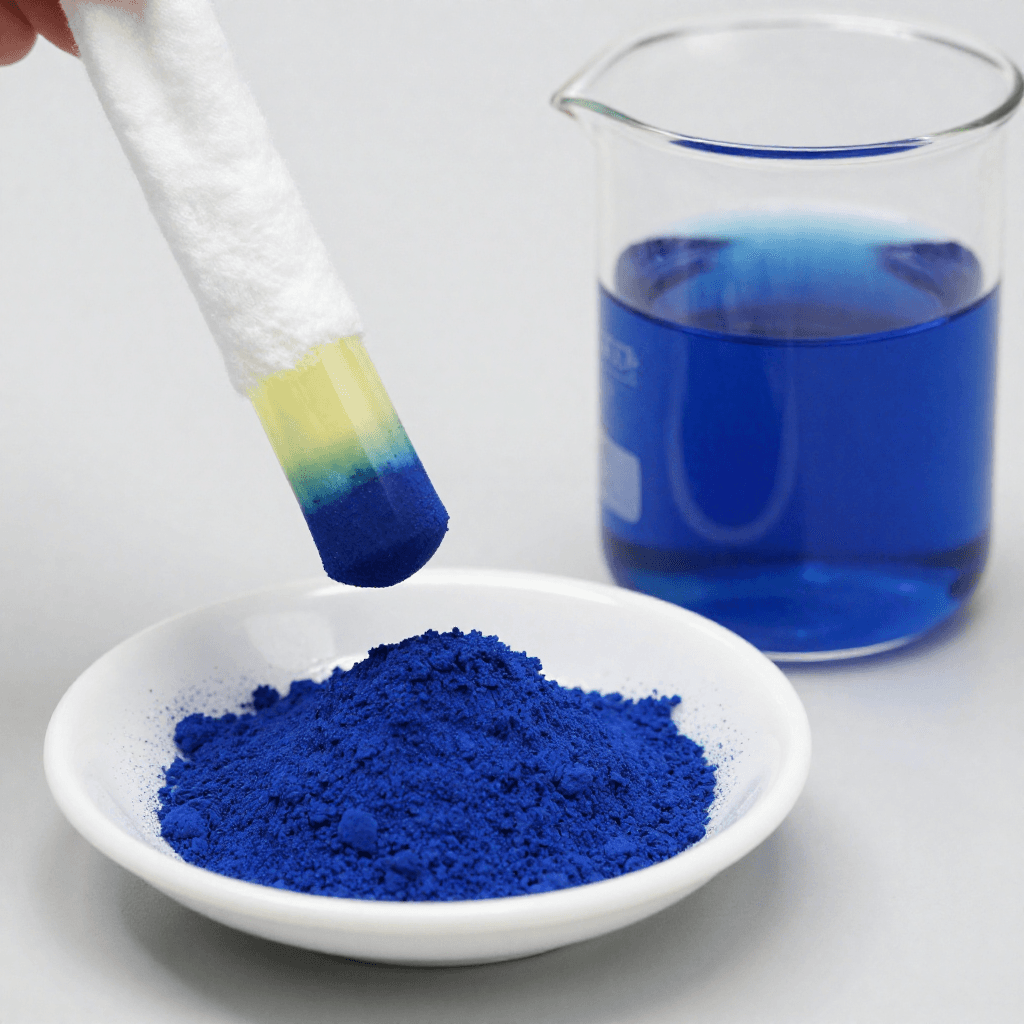
The vat is ready when three signs appear: (1) a metallic coppery sheen on the surface — this is oxidised indigo forming a thin film where the liquid meets air, (2) the liquid below the surface is clear yellow-green, not blue — this means the indigo is in its reduced, soluble state, and (3) the smell is strongly ammoniacal but with a distinct fermentation character. Dip a white cloth strip into the vat, hold it there for two minutes, then pull it out. If the cloth emerges yellow-green and turns blue within 30 seconds in the air, the vat is working. If the cloth is blue when you pull it out, the vat has too much air — it is not reduced. Stir less and wait another day.
Pre-wet the wool and lower it into the vat
Pre-wet the wool and lower it into the vat
Indigo does not need a mordant — it bonds mechanically within the fibre structure, not chemically to the protein. Pre-wet the wool in warm water, squeeze out the excess. Gently lower the wool into the vat, pushing it below the surface. Avoid splashing or agitation — every air bubble introduced into the vat re-oxidises some of the reduced indigo and weakens the dye bath. Submerge the wool completely and let it soak without stirring. Wear gloves — the alkaline liquid is harsh on skin.
اس مرحلے کے لیے مواد:
 اونی دھاگے کا لچھا100 گرام
Soak the wool in the vat for 15-30 minutes
Soak the wool in the vat for 15-30 minutes
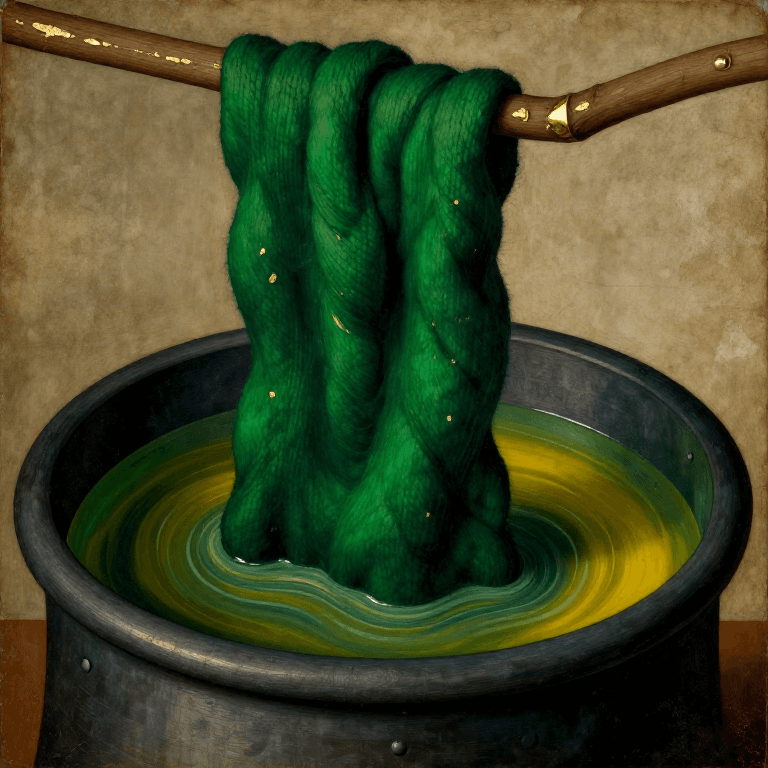
Leave the wool submerged for 15-30 minutes. Gently turn it once or twice, keeping it below the surface at all times. The reduced indigo (leuco-indigo) is penetrating the fibre — the wool will look yellow-green underwater, not blue. This is correct. The blue colour only appears after the wool is removed and exposed to air. Longer soaking gives deeper colour, but there is a practical limit — after about 30 minutes, the rate of absorption slows significantly.
Remove the wool and oxidise in the air
Remove the wool and oxidise in the air
Lift the wool from the vat slowly, letting excess liquid drain back into the vessel. Squeeze gently over the vat. Then spread the wool out on a rack or clothesline in the open air. Within seconds, the magic happens: the yellow-green wool turns blue-green, then deepens to blue as atmospheric oxygen re-oxidises the leuco-indigo back into insoluble indigo pigment — now trapped permanently inside the wool fibres. The oxidation takes 15-20 minutes for full colour development. This is the moment that has amazed dyers for thousands of years — colour appearing from air itself.
Repeat dipping for deeper blue
Repeat dipping for deeper blue
A single dip gives a pale to medium blue. For deeper colour, re-dip the wool: let it oxidise fully in air for 20 minutes, then submerge it in the vat again for another 15-30 minutes, and oxidise again. Each cycle adds another layer of indigo. Traditional dyers typically did 3-5 dips for a rich, deep blue. Medieval woad-dyed cloth was graded by the number of dips — each additional dip deepened the colour and increased the price. Very dark navy blue might require 8-10 dips over several days.
Final rinse and dry
Final rinse and dry
After the final dip and oxidation, rinse the wool in clean water — start with a vinegar rinse (1 tablespoon per litre) to neutralise the alkaline residue, then rinse with plain water until the water runs clear. Some surface indigo will rinse off as fine blue particles — this is normal. The bound indigo inside the fibre is permanent. Hang to dry in shade. Woad blue is one of the most lightfast and washfast of all natural dyes — properly dyed woad textiles from archaeological sites are still blue after a thousand years.
اس مرحلے کے لیے مواد:
 صفائی کے لیے سفید سرکہ50 ملی لیٹر
Maintain the vat for future dyeing sessions
Maintain the vat for future dyeing sessions
A fermentation vat is a living system — the bacteria keep working as long as they have food and warmth. After dyeing, cover the vat and keep it warm. Feed it periodically: add a cup of stale urine or a tablespoon of urea dissolved in water. If the vat stops reducing (the test cloth comes out blue instead of yellow-green), it may need more alkalinity — add washing soda — or more food for the bacteria. A well-maintained fermentation vat can run for weeks or months, dyeing batch after batch. Historical dye houses kept their vats running for years, carefully tended like sourdough starters.
مواد
4- 30 گرامپلیس ہولڈر
- 100 گرامپلیس ہولڈر
- 100 گرامپلیس ہولڈر
- 50 ملی لیٹرپلیس ہولڈر
درکار اوزار
2- پلیس ہولڈر
- پلیس ہولڈر
منسلک بلیو پرنٹ مواد
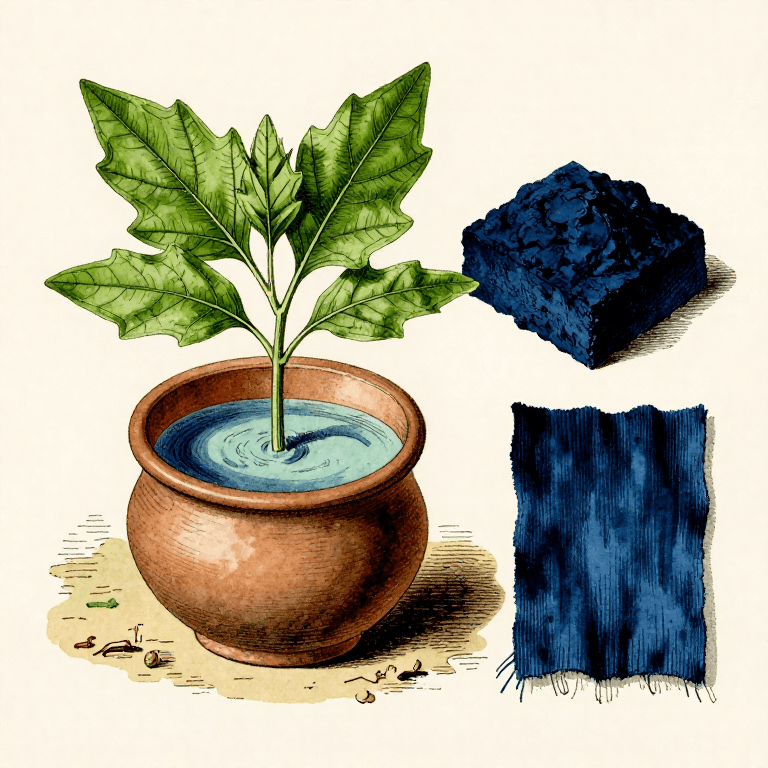
Extracting Indigo Dye from Woad Leaves — Vat Dyeing Blue
Charlie کی طرف سے
کپڑا اور چمڑا
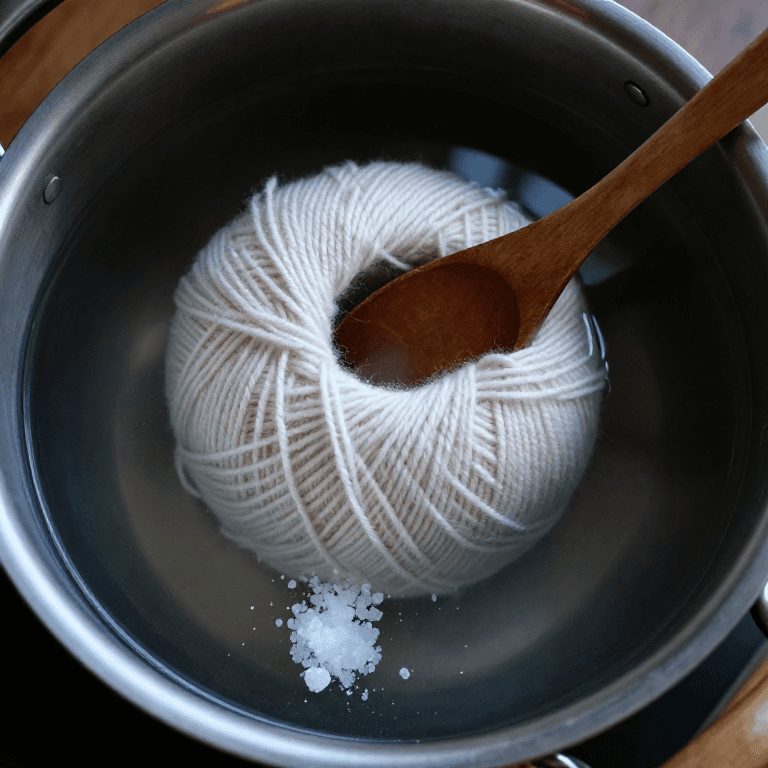
Mordanting Wool with Alum — The Foundation of Natural Dyeing
Tex کی طرف سے
کپڑا اور چمڑا
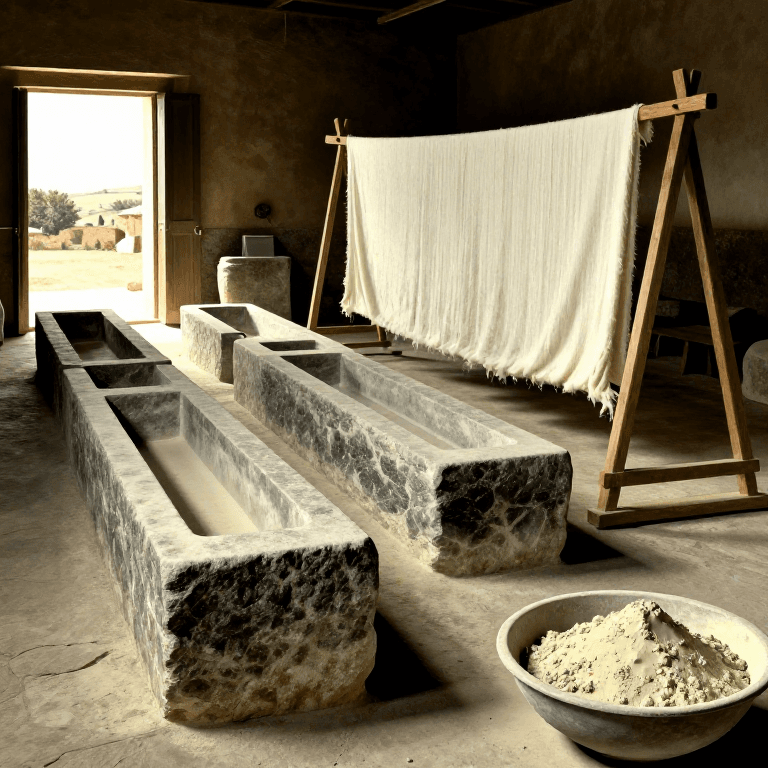
Cleaning Wool in a Fullery with Urine and Fuller's Earth — Roman Textile Processing
Tex کی طرف سے
کپڑا اور چمڑا
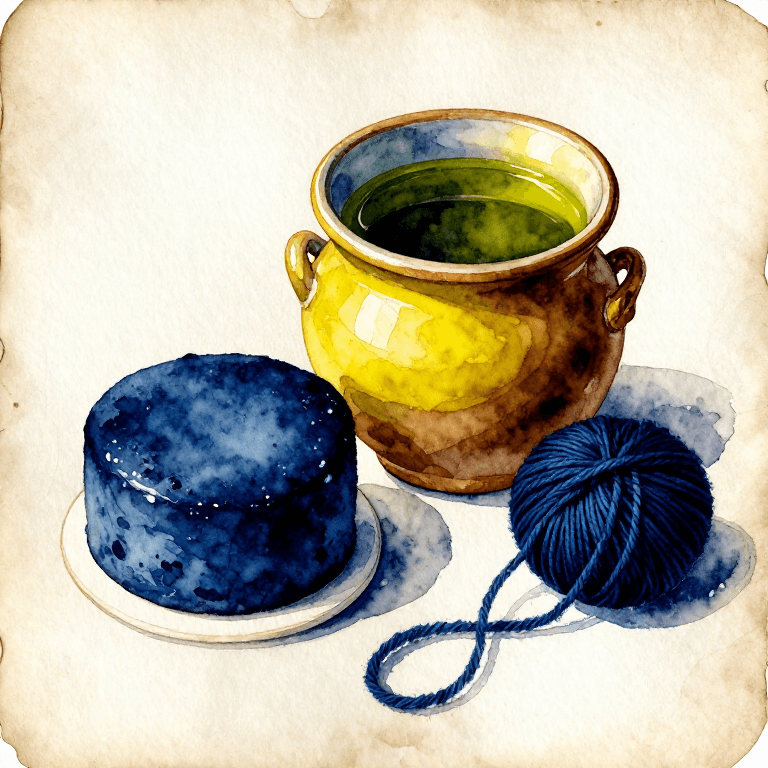
Dyeing Blue with Natural Indigo — The Tropical Vat Dye That Coloured Civilisation
Tex کی طرف سے
کپڑا اور چمڑا
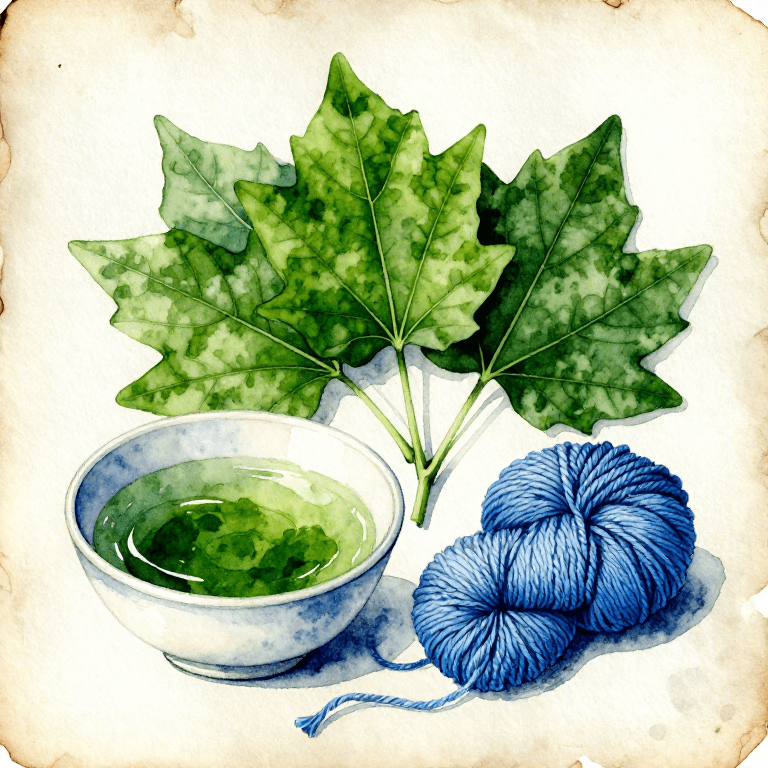
Dyeing Blue with Japanese Indigo — The Fresh-Leaf Salt-Rub Method
Tex کی طرف سے
کپڑا اور چمڑا
یہ بلوپرنٹ بناتا ہے

متعلقہ بلیو پرنٹ
یہ بلیو پرنٹ علم بانٹتے ہیں — تکنیک، مواد یا اصول
CC0 پبلک ڈومین
یہ بلیو پرنٹ CC0 کے تحت جاری کیا گیا ہے۔ آپ اجازت لیے بغیر اس کام کو نقل، ترمیم، تقسیم اور کسی بھی مقصد کے لیے استعمال کرنے کے لیے آزاد ہیں۔
میکر کی حمایت کریں ان کے بلیو پرنٹ کے ذریعے پروڈکٹس خرید کر جہاں وہ میکر کمیشن وینڈرز کی طرف سے مقرر، کماتے ہیں، یا اس بلیو پرنٹ کی نئی تکرار بنائیں اور آمدنی شیئر کرنے کے لیے اسے اپنے بلیو پرنٹ میں کنکشن کے طور پر شامل کریں۔