SZTUKA
Piękno i dobre samopoczucie
RZEMIOSŁO
KULTURA I HISTORIA
ROZRYWKA
ŚRODOWISKO
JEDZENIE I NAPOJE
INŻYNIERIA ODWROTNA
NAUKI
LEKKOATLETYKA
TECHNOLOGIA
URZĄDZENIA DO NOSZENIA
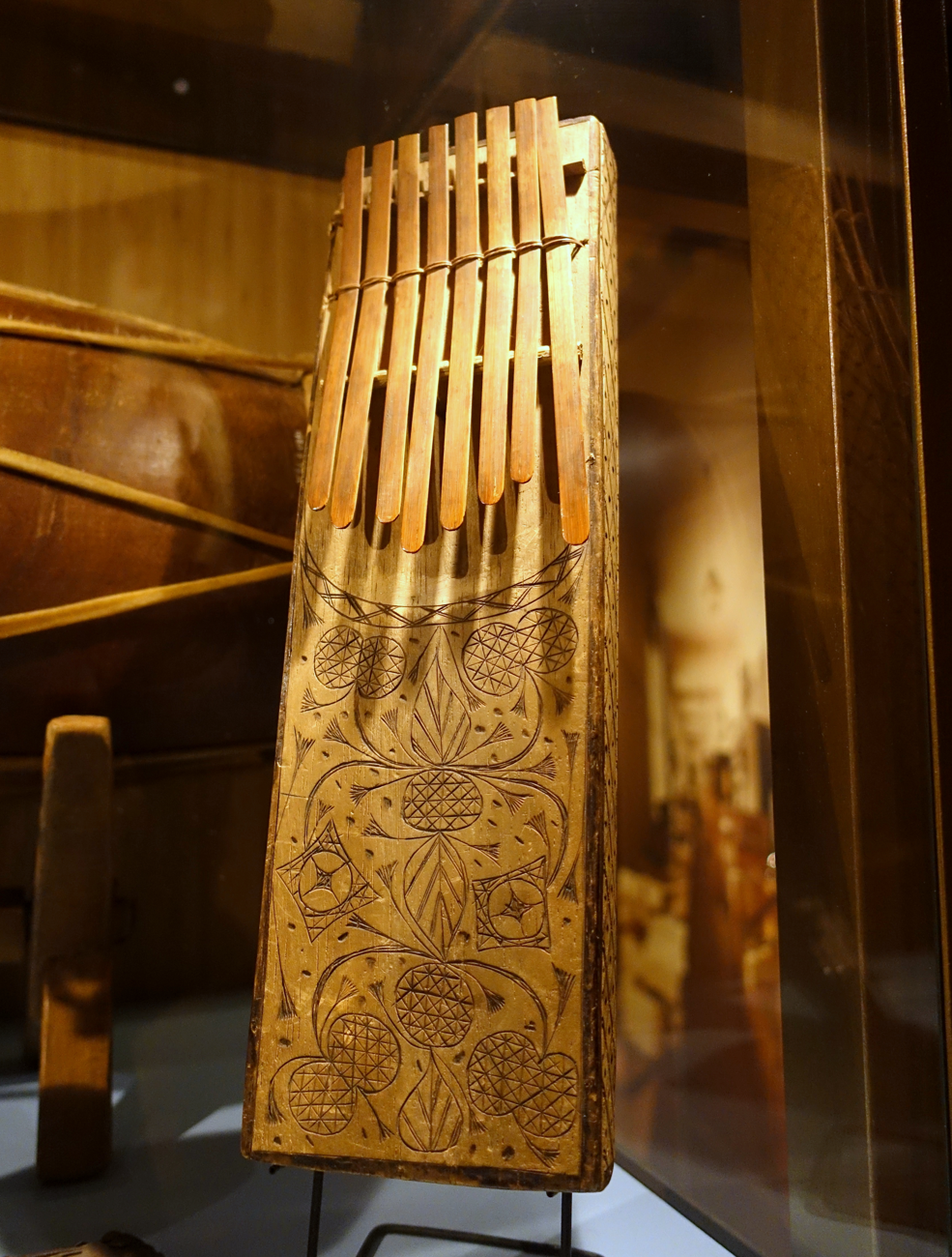
Etnografiska museet, Stockholm · CC0 1.0 (Public Domain Dedication)


Making an Mbira — The African Thumb Piano
Make an mbira: a hardwood board fitted with a row of tuned metal tongues you pluck with your thumbs, often set in a gourd with rattling buzzers. Cut and tune the metal keys, mount them over a bridge, and play. A buildable project in the plucked metal tongue — many jaw-harp tongues made into a keyboard.
Średniozaawansowany
A few hours over a couple of sessions
Instrukcje
1
1
Tongues you pluck with your thumbs
Tongues you pluck with your thumbs
The mbira is a hardwood board carrying a row of tuned metal tongues (keys). You press each key down with a thumb and let it spring back, plucking out the note — many springy tongues laid out like a keyboard.
2
2
Prepare the soundboard
Prepare the soundboard
Shape a flat hardwood soundboard — the harder and more resonant the wood, the brighter the ring.
Materiały do tego kroku:
 Deska z bloodwood1 sztuka
Potrzebne narzędzia:
 Nóż snycerski sloyd
3
3
Make the metal keys
Make the metal keys
Cut and flatten springy steel into a set of thin tongues (keys) of graduated length — longer keys for low notes, shorter for high. File the tips smooth.
Materiały do tego kroku:
 Taśma ze stali sprężynowej2 sztuk
Potrzebne narzędzia:
 Pilnik do metalu
4
4
Build the bridge and pressure bar
Build the bridge and pressure bar
Fix a hardwood bridge across the board and a straight pressure bar just above it. The keys clamp between them, held down at one end and free to spring at the other.
Materiały do tego kroku:
 Stalowy drut sprężynowy 0,032"1 sztuka
Potrzebne narzędzia:
 Szydło
5
5
Mount and tune the keys
Mount and tune the keys
Slide each key under the pressure bar. Push a key IN (shorter free end) to raise its note, or OUT (longer free end) to lower it — that is how you tune an mbira, by sliding not filing.
6
6
Add a gourd and buzzers
Add a gourd and buzzers
Rest the board in a big hollow gourd to make it louder, and fix loose bottle-caps or shells to the board so they buzz — the shimmering rattle is part of the mbira's voice.
Materiały do tego kroku:
 Dojrzała tykwa1 sztuka
7
7
Play with your thumbs
Play with your thumbs
Hold the mbira in both hands and pluck the keys downward with your thumbs (and one key up with a finger), weaving the interlocking patterns of Shona music.
8
8
Compendium — the plucked tongue, multiplied
Compendium — the plucked tongue, multiplied
The mbira is a lamellophone: an instrument of thin tongues (lamellae) fixed at one end and free to vibrate at the other. Pluck a tongue and it springs back and forth at a pitch set by how long, thick and stiff its free part is — short, stiff tongues buzz fast and sound high; long ones vibrate slowly and sound low. That is exactly the tongue of the jaw harp, only here there is a whole tuned SET of them side by side, so instead of one drone you have a keyboard you can play melodies and interlocking parts on. You tune each key not by filing but by sliding it under the pressure bar to lengthen or shorten its free end — longer is lower, shorter is higher. The hardwood board and the gourd it sits in amplify the quiet tongues, and loose buzzers add the shimmering rattle (a deliberate mirliton) that Shona players prize. Made across southern Africa for well over a thousand years — the Shona mbira, the kalimba, the many 'thumb pianos' — it is the ancestor of the modern kalimba, and its cousin is the free reed of the sheng, a tongue set vibrating by breath rather than by a thumb.
Materiały
4- 1 sztukaZastępnik
- 2 sztukZastępnik
- 1 sztukaZastępnik
- 1 sztukaZastępnik
Wymagane narzędzia
3- Zastępnik
- Zastępnik
- Zastępnik
Powiązane blueprinty
Te blueprinty dzielą się wiedzą — technikami, materiałami lub zasadami
CC0 Domena publiczna
Ten plan jest udostępniany na licencji CC0. Możesz go swobodnie kopiować, modyfikować, rozpowszechniać i wykorzystywać do dowolnych celów, bez konieczności uzyskiwania zgody.
Wesprzyj Makera kupując produkty przez jego plan, za co zarabia Prowizja Makera ustalony przez sprzedawców, lub stwórz nową iterację tego planu i dołącz go jako połączenie w swoim własnym planie, aby dzielić się przychodami.