SZTUKA
Piękno i dobre samopoczucie
RZEMIOSŁO
KULTURA I HISTORIA
ROZRYWKA
ŚRODOWISKO
JEDZENIE I NAPOJE
INŻYNIERIA ODWROTNA
NAUKI
LEKKOATLETYKA
TECHNOLOGIA
URZĄDZENIA DO NOSZENIA
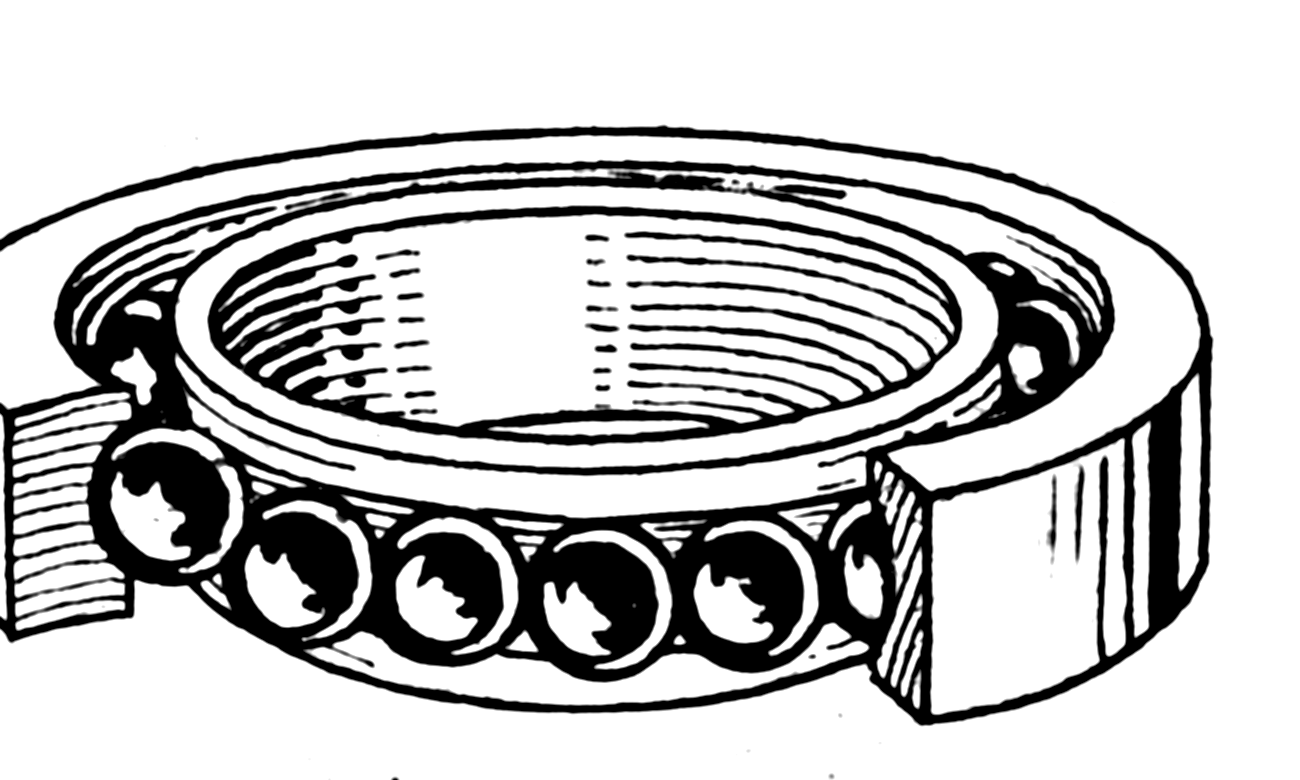


Ball Bearings: Races, Balls and Cage
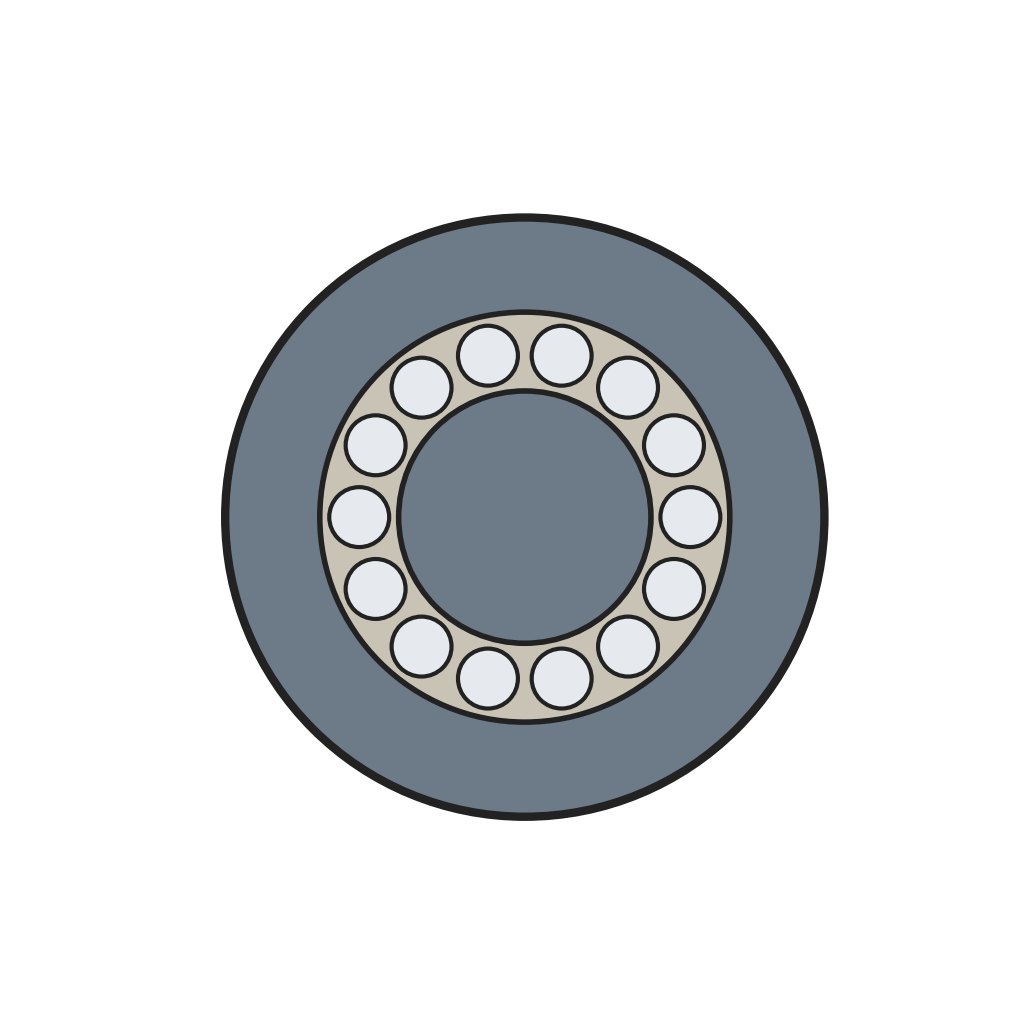
A ball bearing has four parts: an outer race, an inner race, the balls that roll between them, and a cage that keeps the balls evenly spaced. Almost all of it is steel, usually 52100 (1.5% chromium, 1% carbon), which can be made very hard and tough by heat treating; 440C stainless is used where rust is a problem. The races are turned from tubing, the balls are cold headed from thick wire, both are hardened, tempered, ground and lapped to an almost mirror finish, and the cage is stamped from thin sheet. Even an inexpensive bearing's balls may be out of round by no more than 25 millionths of an inch; precision bearings allow five millionths.
Zaawansowany
Factory process
Instrukcje
1
1
Turn the races
Turn the races
Cut the basic shape of both races from steel tubing on automatic lathe-like machines, leaving every dimension slightly oversize: the steel usually warps in heat treatment.
Materiały do tego kroku:
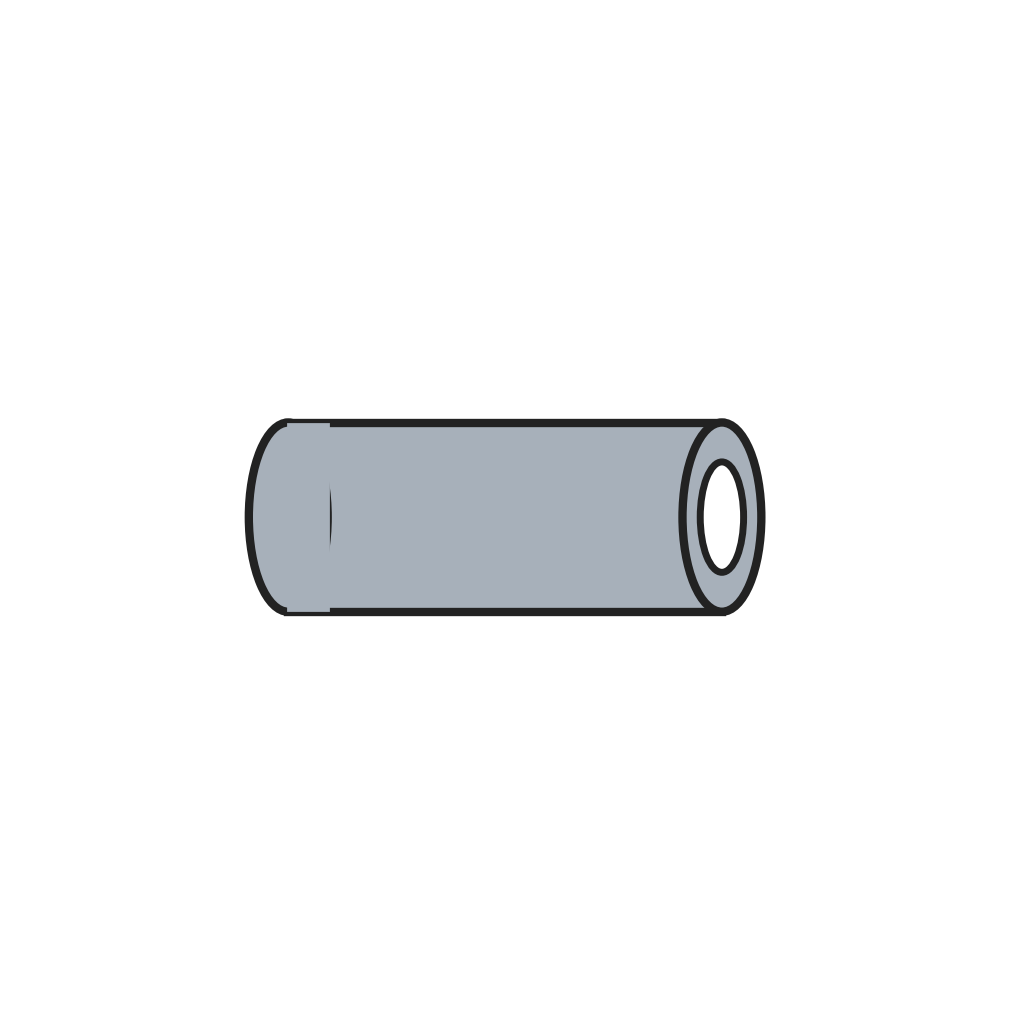 Rura ze stali łożyskowej (52100)1 as required
Potrzebne narzędzia:
 Tokarka automatyczna
2
2
Harden and temper the races
Harden and temper the races
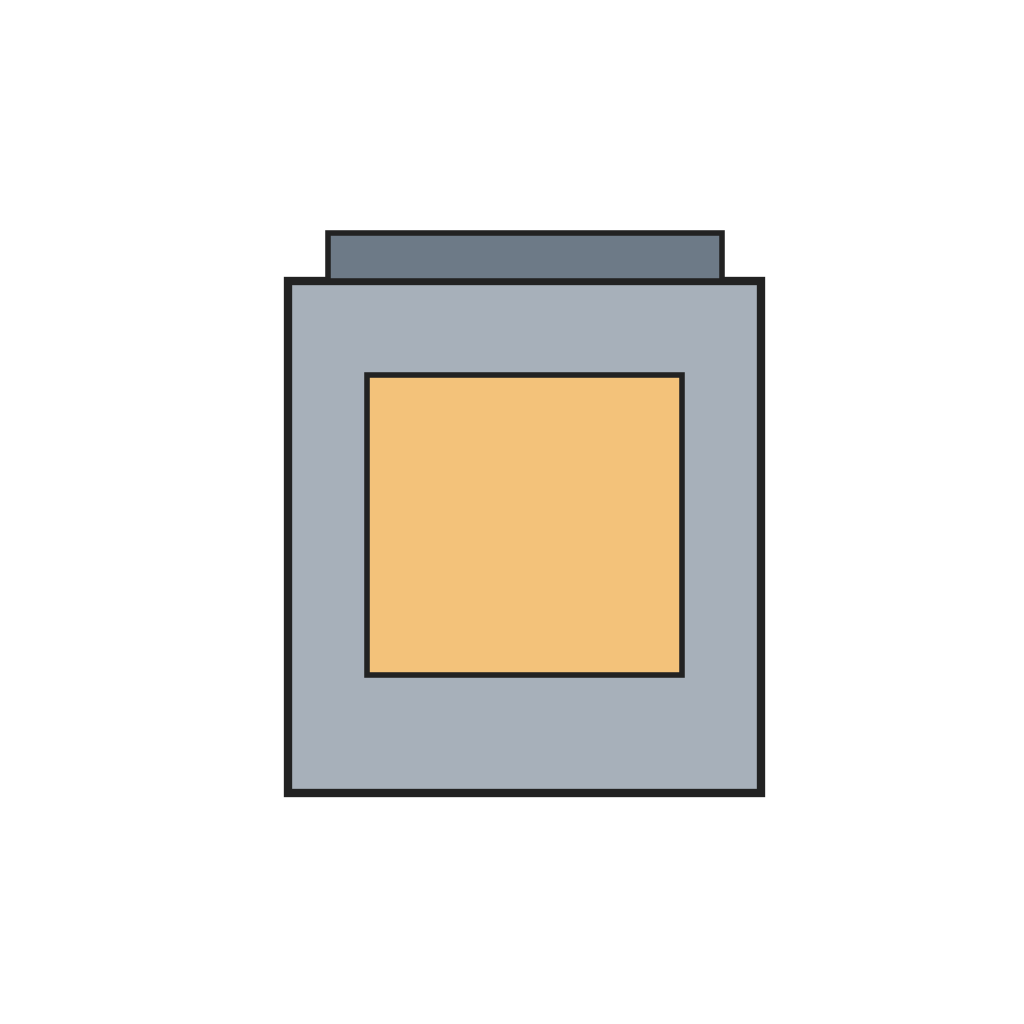
Heat to about 843 °C (1,550 °F) for up to several hours depending on size, then quench in oil: hard but brittle. Temper at about 149 °C (300 °F) and let cool in air: hard and tough.
Potrzebne narzędzia:
 Przelotowy piec hartowniczy z kąpielą olejową
 Piec do odpuszczania
3
3
Grind and lap the races
Grind and lap the races
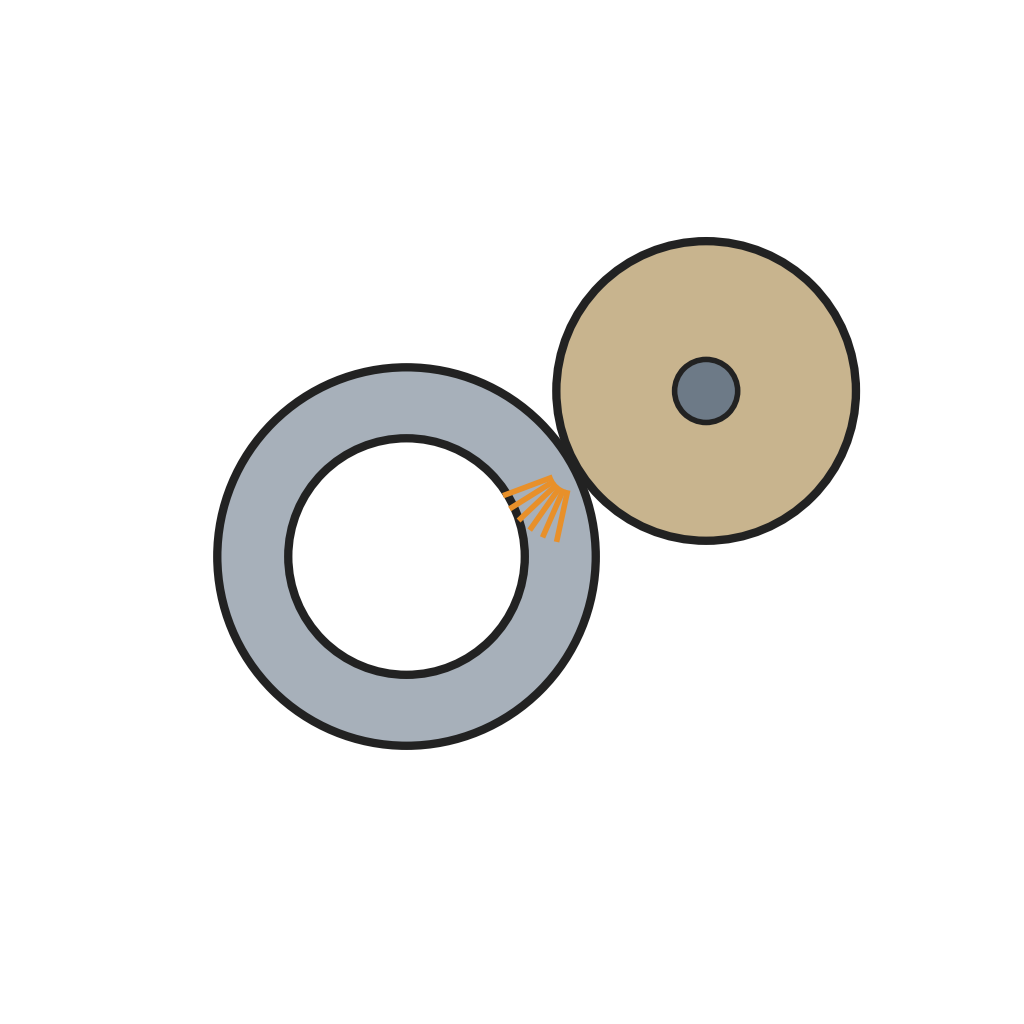
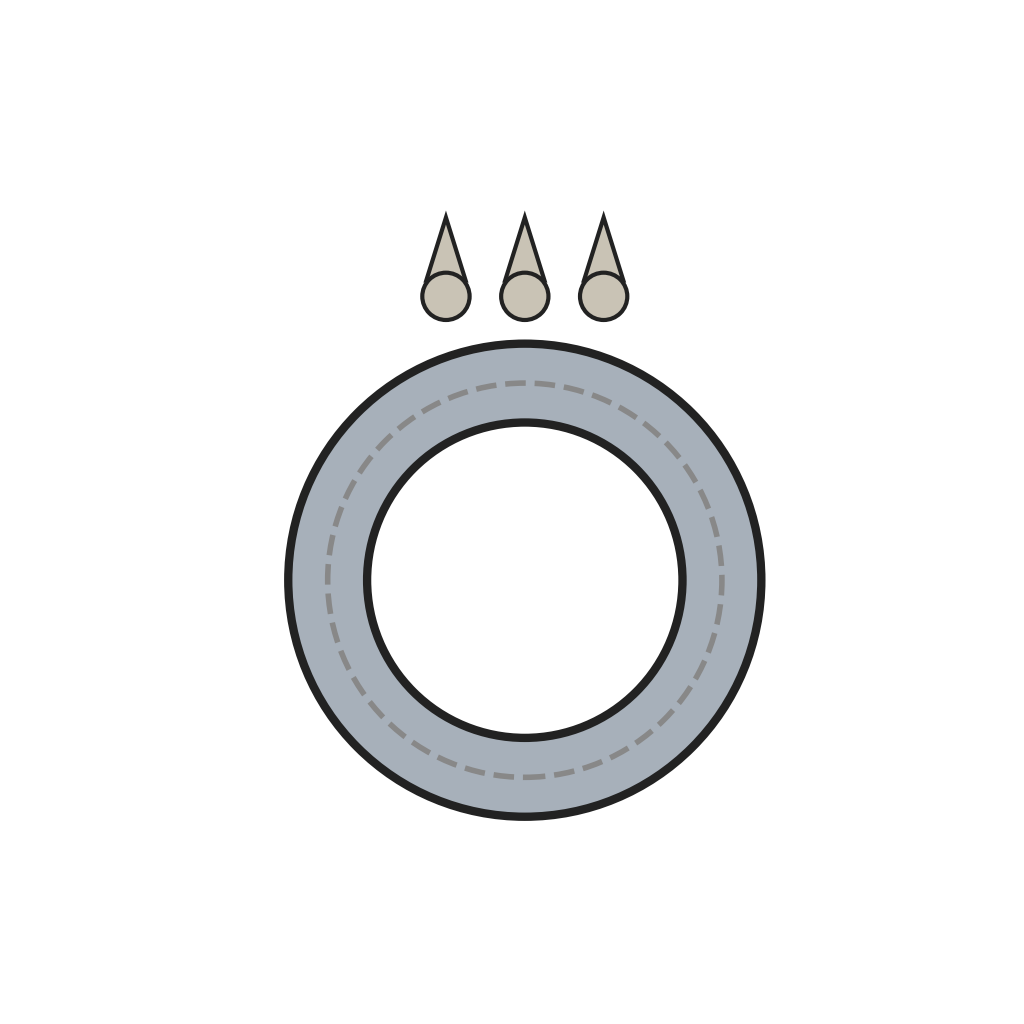
The hardened steel is too hard to cut, so grind almost every surface: the fitting surfaces round, the sides flat. Grind the ball track, then lap it for several hours with a very fine abrasive slurry to an almost mirror finish.
Potrzebne narzędzia:
 Szlifierka do pierścieni łożyskowych
 Docierarka do bieżni
 Pasta docierająca
4
4
Cold head the balls
Cold head the balls
Feed thick wire from a roll into a machine that cuts off a short piece and smashes both ends in toward the middle between two dies, without heating. The ball comes out with a ring of "flash" round its middle.
Materiały do tego kroku:
 Drut ze stali łożyskowej (52100)1 as required
Potrzebne narzędzia:
 Prasa do spęczania na zimno
5
5
Remove the flash
Remove the flash
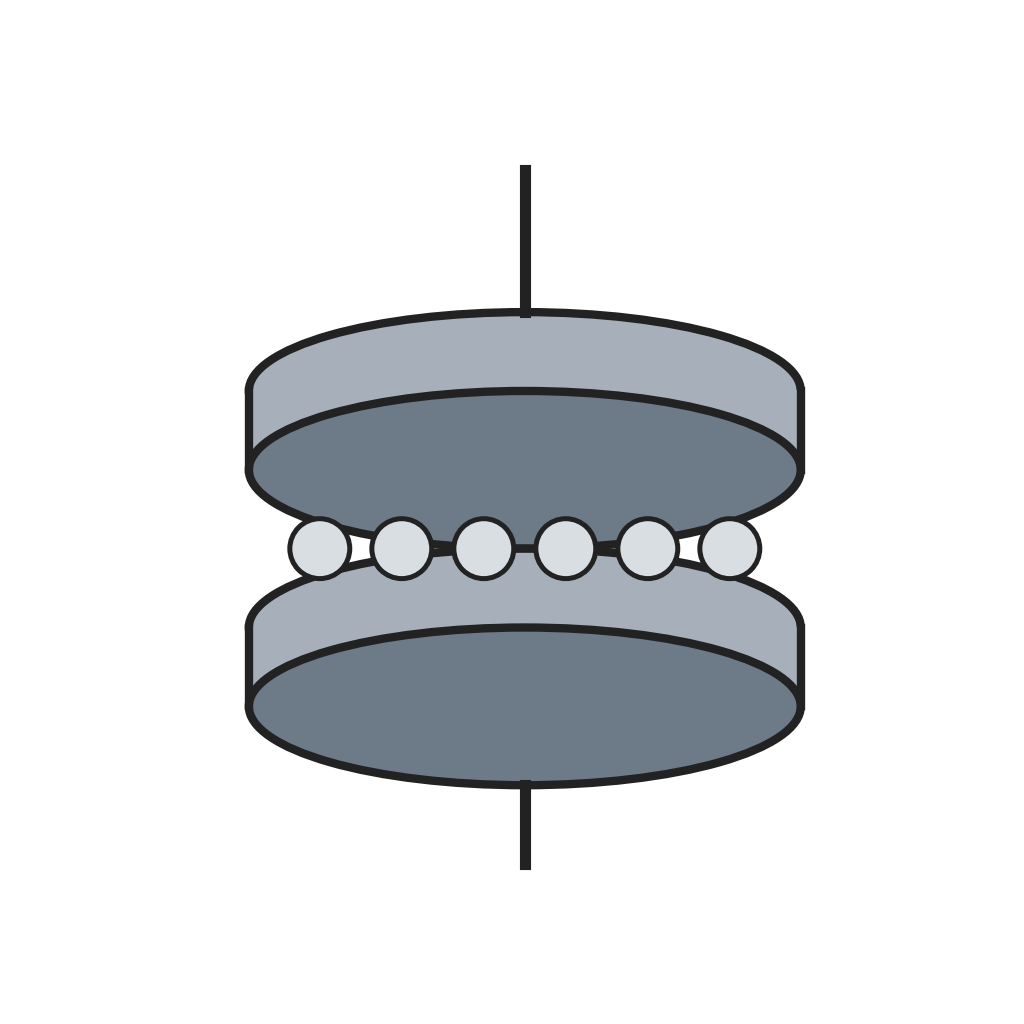
Run the balls many times round rough grooves between two cast-iron discs, one turning and one fixed, until the flash is gone and they are nearly round. Leave about 0.008 in (0.2 mm) for finishing.
Potrzebne narzędzia:
 Maszyna do okrawania kulek
6
6
Harden, grind and lap the balls
Harden, grind and lap the balls
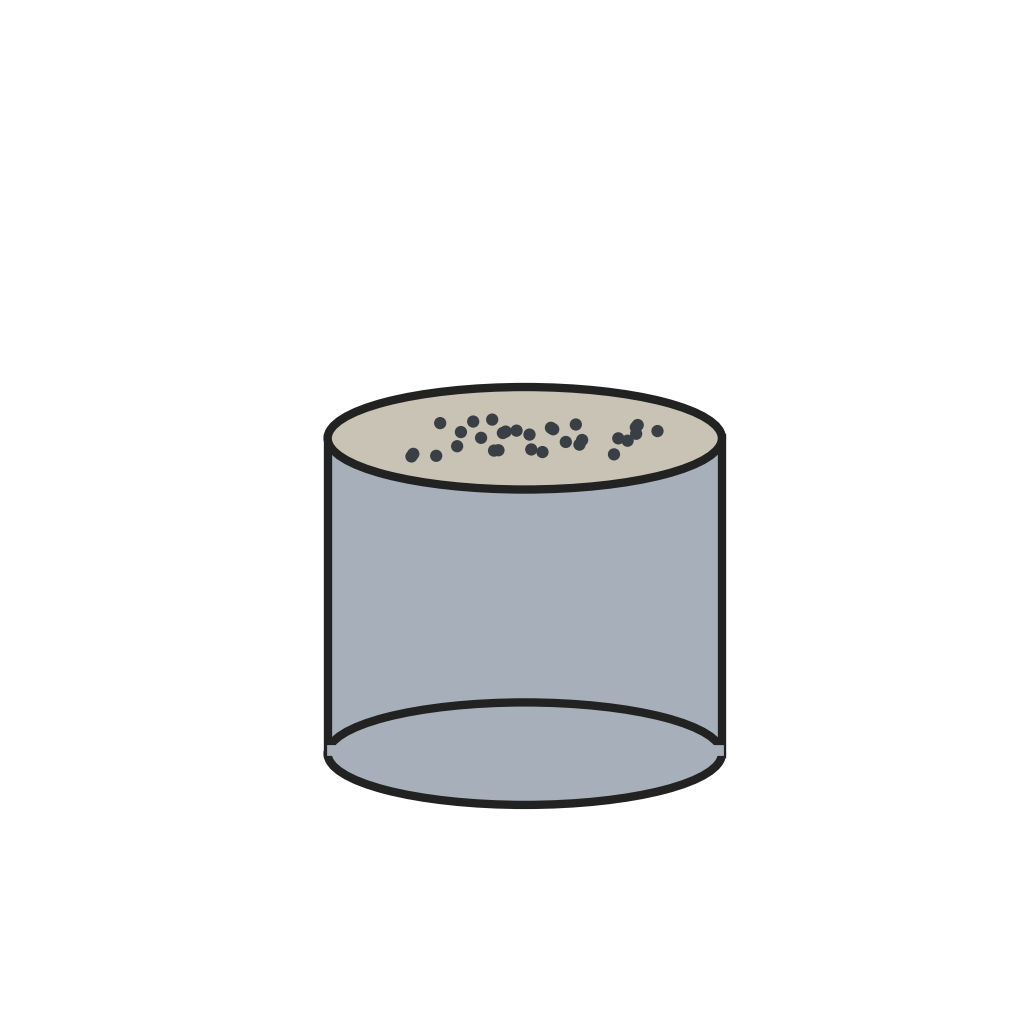
Heat treat and temper the balls like the races. Grind them in the same kind of disc machine with grinding wheels to within a few ten-thousandths of an inch, then lap them 8–10 hours on cast-iron wheels with lapping compound.
Potrzebne narzędzia:
Przelotowy piec hartowniczy z kąpielą olejowąPiec do odpuszczania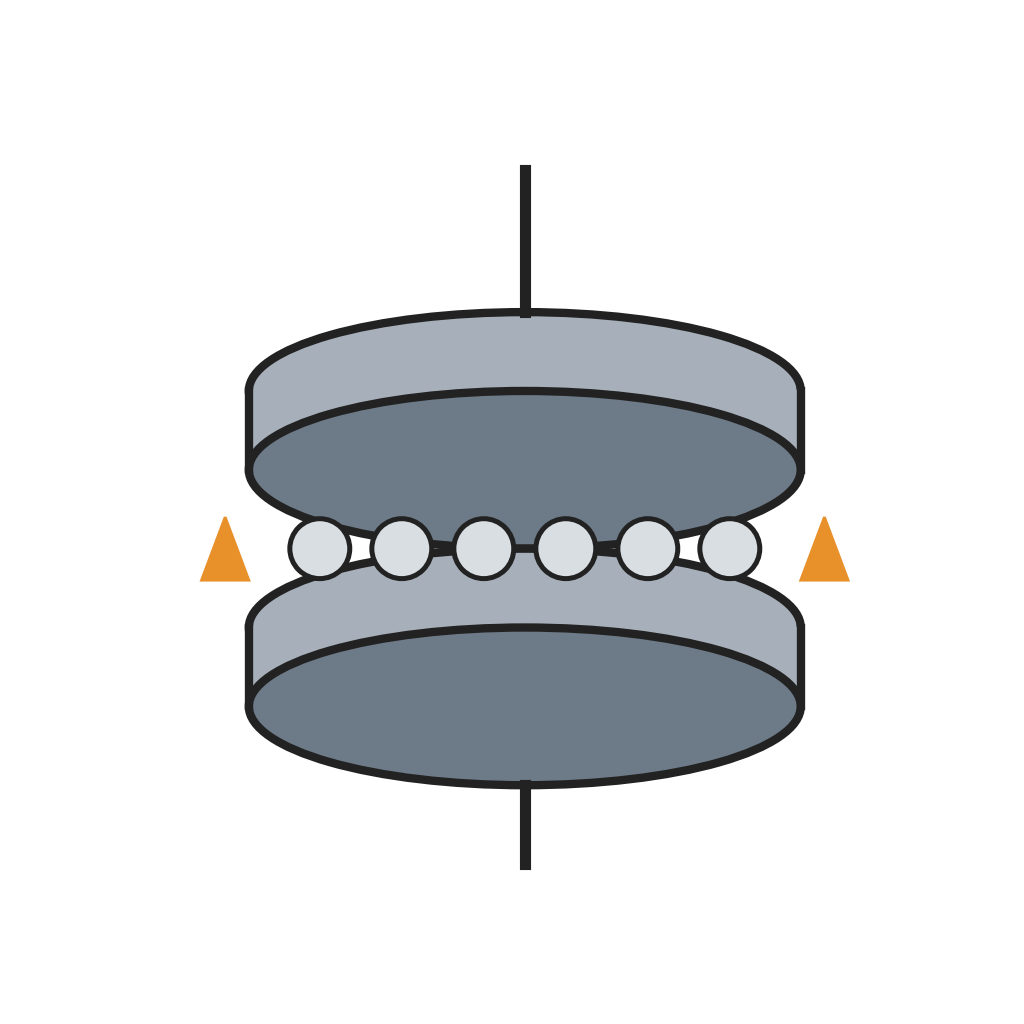 Szlifierka do kulek
 Docierarka do kulekPasta docierająca
7
7
Stamp the cage
Stamp the cage
Stamp the cage halves from thin steel sheet and bend them to shape in a die. (Plastic cages are injection moulded instead.)
Materiały do tego kroku:
 Blacha stalowa1 as required
Potrzebne narzędzia:
 Prasa do tłoczenia
8
8
Assemble
Assemble
Put the inner race inside the outer race, pushed as far to one side as it goes, and drop the balls into the gap opposite. Centre the races and spread the balls evenly, fit the cage (steel cages riveted, plastic ones snapped in) and coat the bearing with a thin film of petroleum jelly against rust.
Materiały do tego kroku:
 Nity stalowe1 as required
 Wazelina1 as required
Materiały
5- 1 as requiredZastępnik
- 1 as requiredZastępnik
- 1 as requiredZastępnik
- 1 as requiredZastępnik
- 1 as requiredZastępnik
Wymagane narzędzia
11- Zastępnik
- Zastępnik
- Zastępnik
- Zastępnik
- Zastępnik
- Zastępnik
- Zastępnik
- Zastępnik
- Zastępnik
- Zastępnik
Według tego planu powstaje


Powiązane blueprinty
Te blueprinty dzielą się wiedzą — technikami, materiałami lub zasadami
CC0 Domena publiczna
Ten plan jest udostępniany na licencji CC0. Możesz go swobodnie kopiować, modyfikować, rozpowszechniać i wykorzystywać do dowolnych celów, bez konieczności uzyskiwania zgody.
Wesprzyj Makera kupując produkty przez jego plan, za co zarabia Prowizja Makera ustalony przez sprzedawców, lub stwórz nową iterację tego planu i dołącz go jako połączenie w swoim własnym planie, aby dzielić się przychodami.