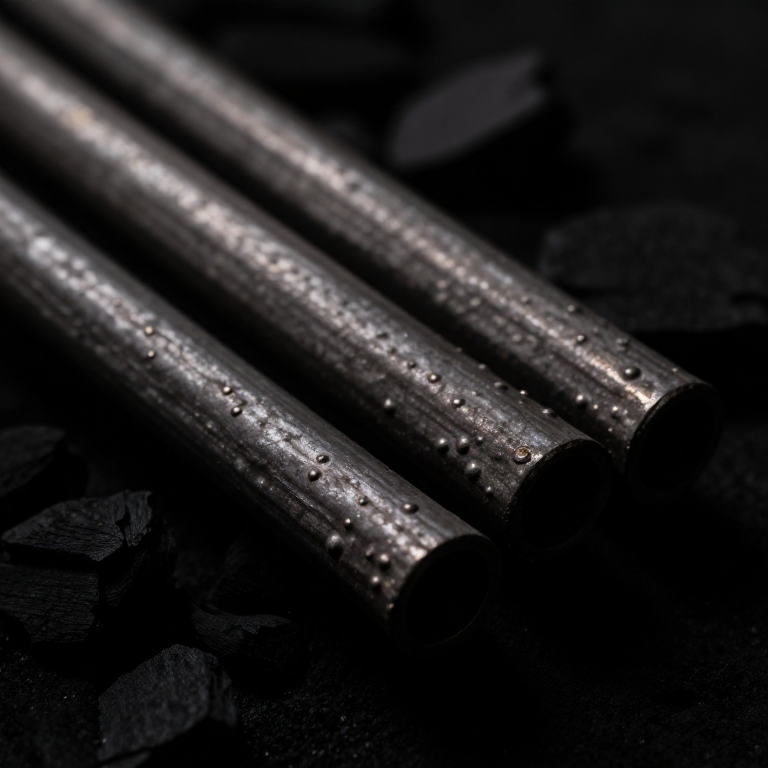


Making Blister Steel by Cementation — Carburizing Wrought Iron into Steel
Wrought iron bends but will not hold an edge; cast iron holds an edge but shatters. Steel — iron with just the right sliver of carbon — does both, and for centuries the great problem of metalworking was how to make it reliably. The cementation process, used across Europe from the 1600s, was the first method to manufacture steel in quantity from ordinary wrought iron bars.
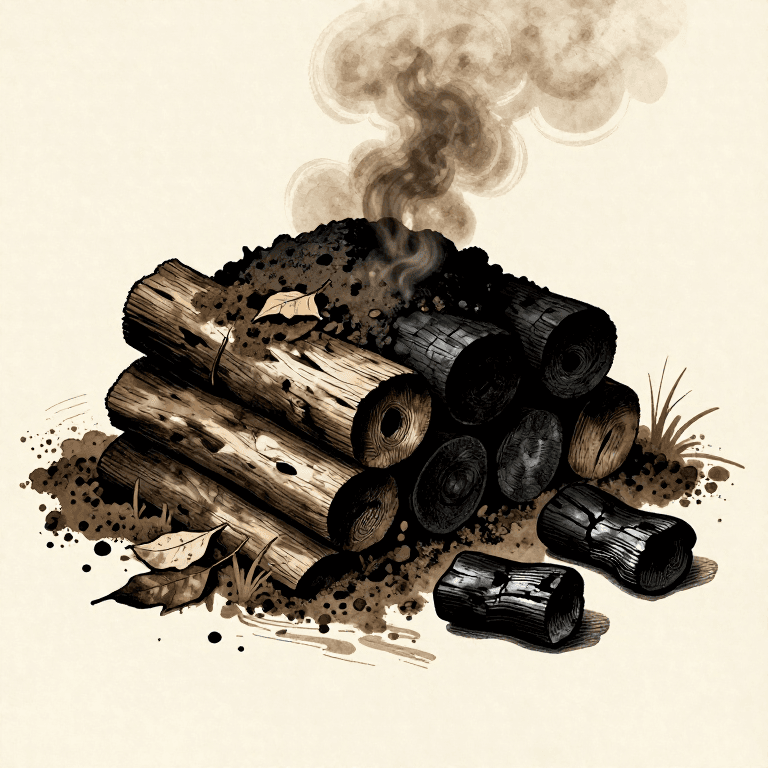
The idea is to add carbon to solid iron without ever melting it. Bars of wrought iron are packed in powdered charcoal inside a sealed stone chest and roasted for a week at a bright red heat. Over those days, carbon slowly creeps out of the charcoal and diffuses into the surface of the iron, turning the skin into steel. Gas trapped under the surface raises little blisters across the bars — which is why the product is called blister steel.
Blister steel is uneven, carbon-rich at the surface and soft in the core, so smiths refined it further: forge-welding and folding it into shear steel, or melting it in crucibles into perfectly uniform cast steel. But cementation was the foundation — the step that first made steel an industrial material rather than a rare treasure.
Instrukcje
Understand cementation
Understand cementation
Select wrought iron bars
Select wrought iron bars
Materiały do tego kroku:
 Pręty żelaza kutego20 kg
Build the cementation chest
Build the cementation chest
Materiały do tego kroku:
 Cegły szamotowe60 sztuk
Potrzebne narzędzia:
 Łopatka ogrodnicza
Crush the charcoal
Crush the charcoal
Materiały do tego kroku:
 Węgiel drzewny w kawałkach15 kg
Potrzebne narzędzia:
 Młotek
Pack iron and charcoal in layers
Pack iron and charcoal in layers
Seal the chest with clay
Seal the chest with clay
Materiały do tego kroku:
 Glina10 kg
Fire at red heat for days
Fire at red heat for days
Materiały do tego kroku:
 Węgiel kamienny bitumiczny200 kg
Let the carbon diffuse
Let the carbon diffuse
Recognise the blisters
Recognise the blisters
Potrzebne narzędzia:
 Kleszcze ciągarskie
Cool slowly and open
Cool slowly and open
Potrzebne narzędzia:
Kleszcze ciągarskieRefine into shear steel
Refine into shear steel
Potrzebne narzędzia:
MłotekTest that it is steel
Test that it is steel
Materiały do tego kroku:
 Woda5 litrów
Materiały
6- 20 kgZastępnik
- 60 sztukZastępnik
- Zastępnik
- 10 kgZastępnik
- Zastępnik
- 5 litrówZastępnik
Materiały z połączonych planów


Powiązane blueprinty
Te blueprinty dzielą się wiedzą — technikami, materiałami lub zasadami

CC0 Domena publiczna
Ten plan jest udostępniany na licencji CC0. Możesz go swobodnie kopiować, modyfikować, rozpowszechniać i wykorzystywać do dowolnych celów, bez konieczności uzyskiwania zgody.
Wesprzyj Makera kupując produkty przez jego plan, za co zarabia Prowizja Makera ustalony przez sprzedawców, lub stwórz nową iterację tego planu i dołącz go jako połączenie w swoim własnym planie, aby dzielić się przychodami.