Współpraca
SZTUKA
Piękno i dobre samopoczucie
RZEMIOSŁO
KULTURA I HISTORIA
ROZRYWKA
ŚRODOWISKO
JEDZENIE I NAPOJE
INŻYNIERIA ODWROTNA
NAUKI
LEKKOATLETYKA
TECHNOLOGIA
URZĄDZENIA DO NOSZENIA
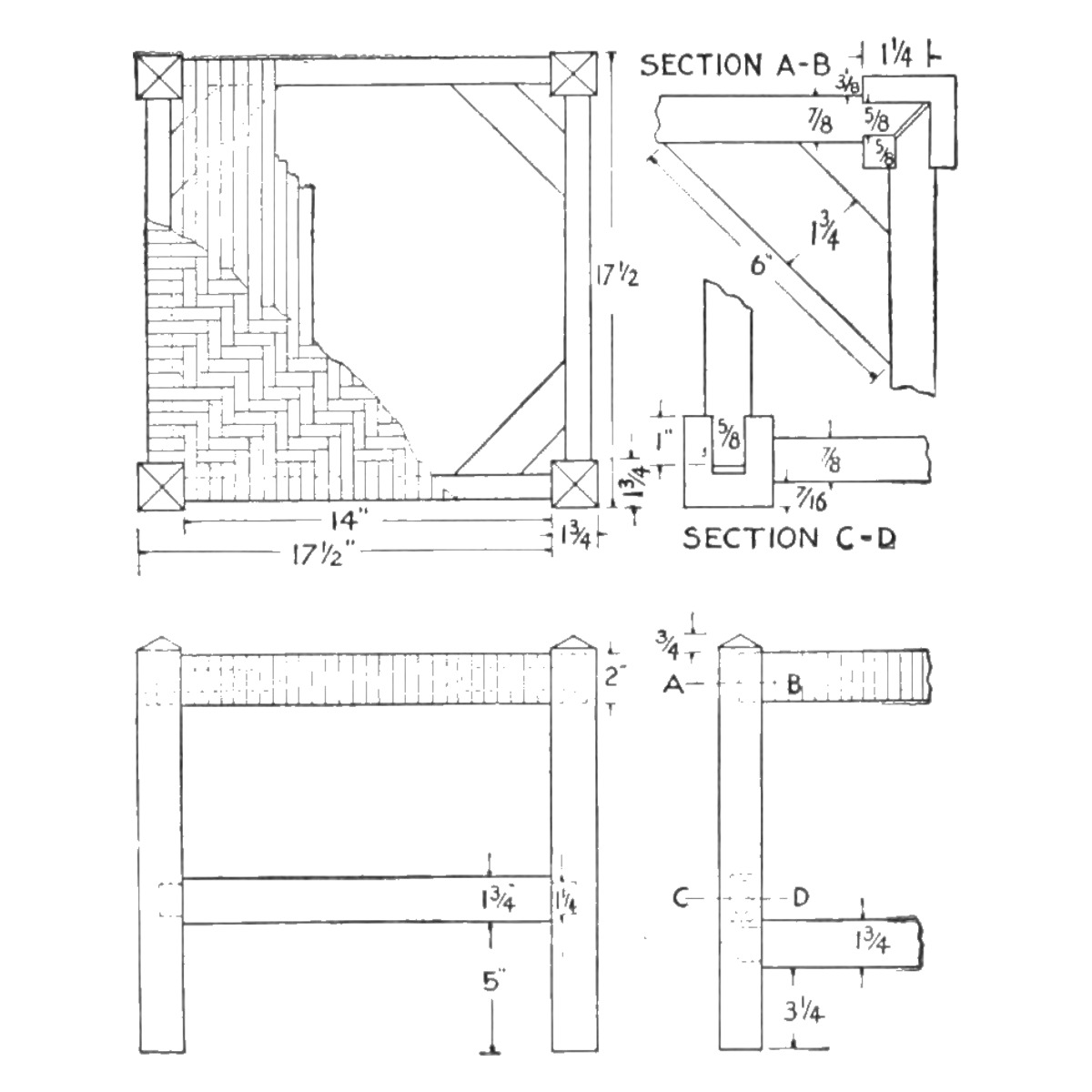


Woven-Top Stool: Mortised, Braced Frame With a Diagonal Reed Seat (Boy Mechanic, 1915)
Russel Dodsworth's stool from The Boy Mechanic, Book 2 (1915): a 17-1/2 in square mortise-and-tenon frame with corner braces, its top woven from wet reed in two layers, the second laid over-three-under-three so a diagonal pattern runs across the seat.
Średniozaawansowany
About 2 days
Instrukcje
1
1
His cutting list, and the weave
His cutting list, and the weave
Wczytywanie notatnika Jupyter…
2
2
Read The Boy Mechanic, Book 2
Read The Boy Mechanic, Book 2
The material: 4 legs, 1-3/4 by 1-3/4 by 16 in; 4 bottom rails, 7/8 by 1-3/4 by 16 in; 4 top rails, 7/8 by 2 by 16-1/2 in; 4 diagonal braces, 7/8 by 1-3/4 by 6 in.
3
3
Cut and mortise the frame
Cut and mortise the frame
Cut the parts to his list. Mortise the legs so the top rails come level; tenon the top rails on the sides only and bevel them at the ends. For the bottom rails, cut the mortises one above the other (5 in above the floor on his drawing) and tenon the rails on all sides. Cut the braces at 45 deg on each end.
Materiały do tego kroku:
 Deska z drewna liściastego4 sztuk
Potrzebne narzędzia:
 Piła ręczna
 Dłuta
 Pobijak drewniany
 Strug ręczny
 Ołówek
 Miara zwijana
4
4
Glue up
Glue up
Glue the frame together and glue the diagonal braces in place inside the top corners.
Materiały do tego kroku:
 Klej do drewna1 sztuka
Potrzebne narzędzia:
 Ścisk stolarski listwowyPobijak drewniany
5
5
Wrap the first layer
Wrap the first layer
Use a wet reed weaver and wrap one layer over the whole top, the strips close together and tightly wound.
Materiały do tego kroku:
 Rattan1 sztuka
Potrzebne narzędzia:
 Wiadro 20-litrowe
 Nóż do skóry
6
6
Weave the second layer
Weave the second layer
Start the second layer at right angles to the first. Strip 1: under one, then over three, under three, and so on by threes. Strip 2: under two, then over three, under three. Strip 3: under three, then over and under three. Strip 4: over one, then under three, over three. Strip 5: over two, then under and over three. Strip 6: over three, then by threes. Repeat the series of six across the top.
Materiały do tego kroku:
Rattan1 sztukaPotrzebne narzędzia:
Wiadro 20-litroweNóż do skóry7
7
Finish
Finish
Good white shellac makes the best finish for the seat; finish the frame to suit.
Materiały do tego kroku:
 Politura szelakowa1 sztuka
Potrzebne narzędzia:
 Pędzel szeroki
8
8
Troubleshooting
Troubleshooting
Stool troubleshooting.
Flow
Loading...
9
9
History and honest limits
History and honest limits
From "Woven-Top Stool" by Russel Dodsworth, Erie, Pa., in **The Boy Mechanic, Book 2**, Popular Mechanics, 1915 (Project Gutenberg 44585; checked on the archive.org scan boymechanicbook200chic2, p. 256). His caption names the weaver as reed; he gives no reed size or tenon lengths. Rattan reed as the weaver, the tools and metric figures are ours.
Materiały
4- 4 sztukZastępnik
- 1 sztukaZastępnik
- 1 sztukaZastępnik
- 1 sztukaZastępnik
Wymagane narzędzia
10- Zastępnik
- Zastępnik
- Zastępnik
- Zastępnik
- 1 vendor sell this, none ship to you yetZastępnik
- 1 vendor sell this, none ship to you yetZastępnik
- Zastępnik
- Zastępnik
- Zastępnik
- Zastępnik
Według tego planu powstaje
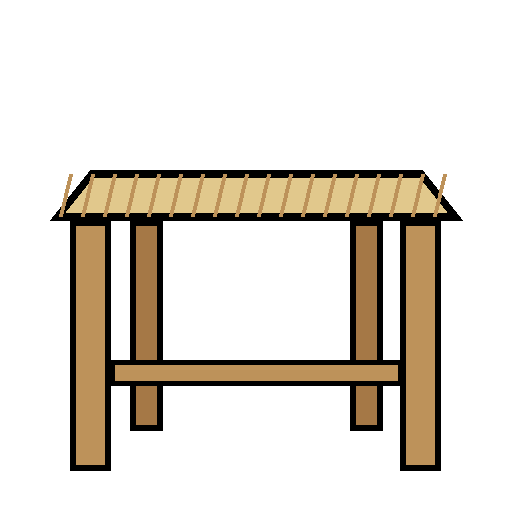
Powiązane blueprinty
Te blueprinty dzielą się wiedzą — technikami, materiałami lub zasadami
CC0 Domena publiczna
Ten plan jest udostępniany na licencji CC0. Możesz go swobodnie kopiować, modyfikować, rozpowszechniać i wykorzystywać do dowolnych celów, bez konieczności uzyskiwania zgody.
Wesprzyj Makera kupując produkty przez jego plan, za co zarabia Prowizja Makera ustalony przez sprzedawców, lub stwórz nową iterację tego planu i dołącz go jako połączenie w swoim własnym planie, aby dzielić się przychodami.