Współpraca
SZTUKA
Piękno i dobre samopoczucie
RZEMIOSŁO
KULTURA I HISTORIA
ROZRYWKA
ŚRODOWISKO
JEDZENIE I NAPOJE
INŻYNIERIA ODWROTNA
NAUKI
LEKKOATLETYKA
TECHNOLOGIA
URZĄDZENIA DO NOSZENIA
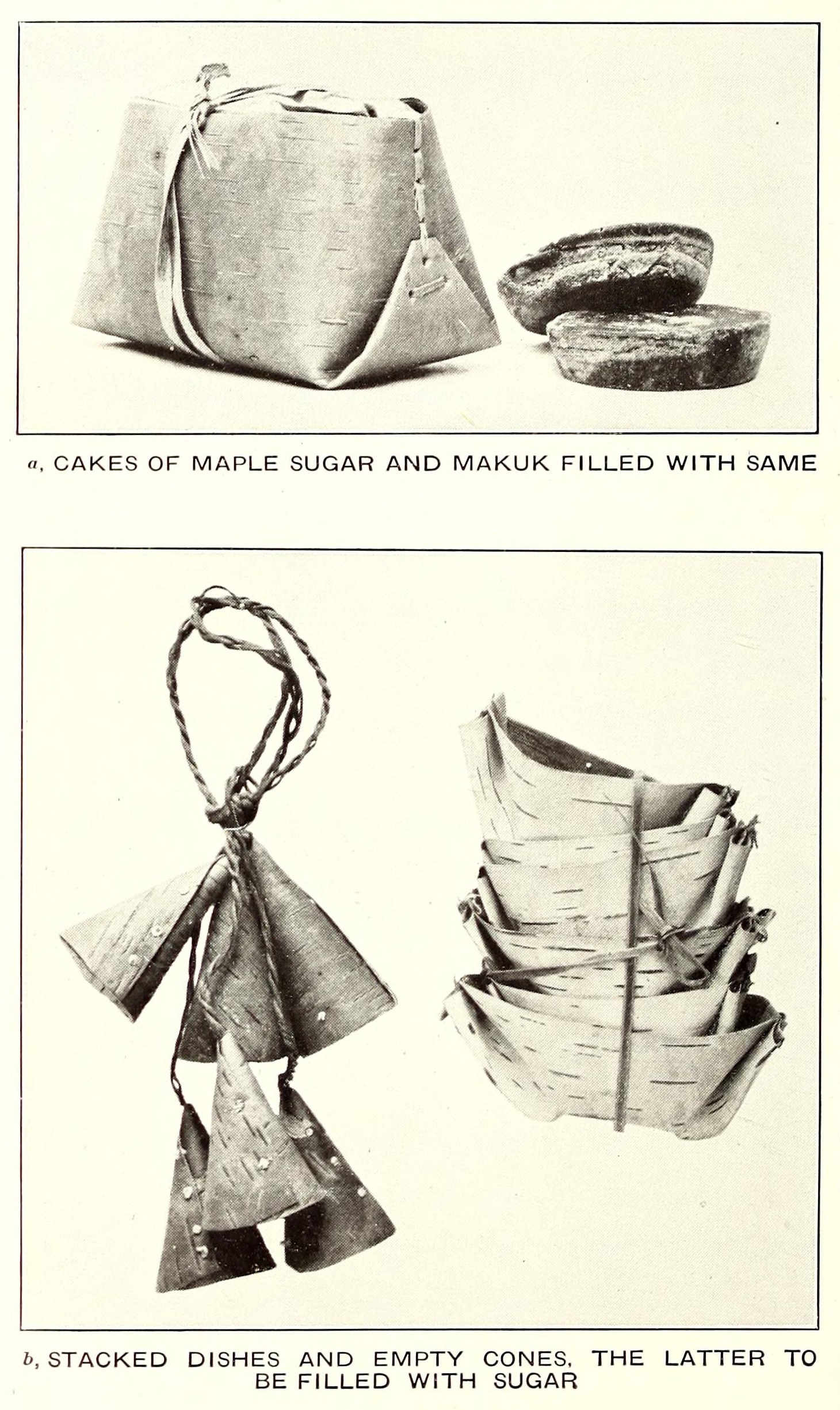


Chippewa Birch Bark Makuks, Dishes and Trays: Warmed Bark Folded and Sewn with Split Roots (Densmore, 1928)
The Chippewa (Ojibwe) birch-bark makuks, dishes and trays Frances Densmore recorded: bark warmed at the fire so it bends and holds its shape, everyday dishes about 10 in. long and 5 in. deep folded and held by a stitch or two at each end, and makuks and trays sewn with split roots and bound at the rim with basswood bark. Birch bark keeps food from spoiling.
Początkujący
An hour per dish, an afternoon per makuk
Instrukcje
1
1
Read Densmore
Read Densmore
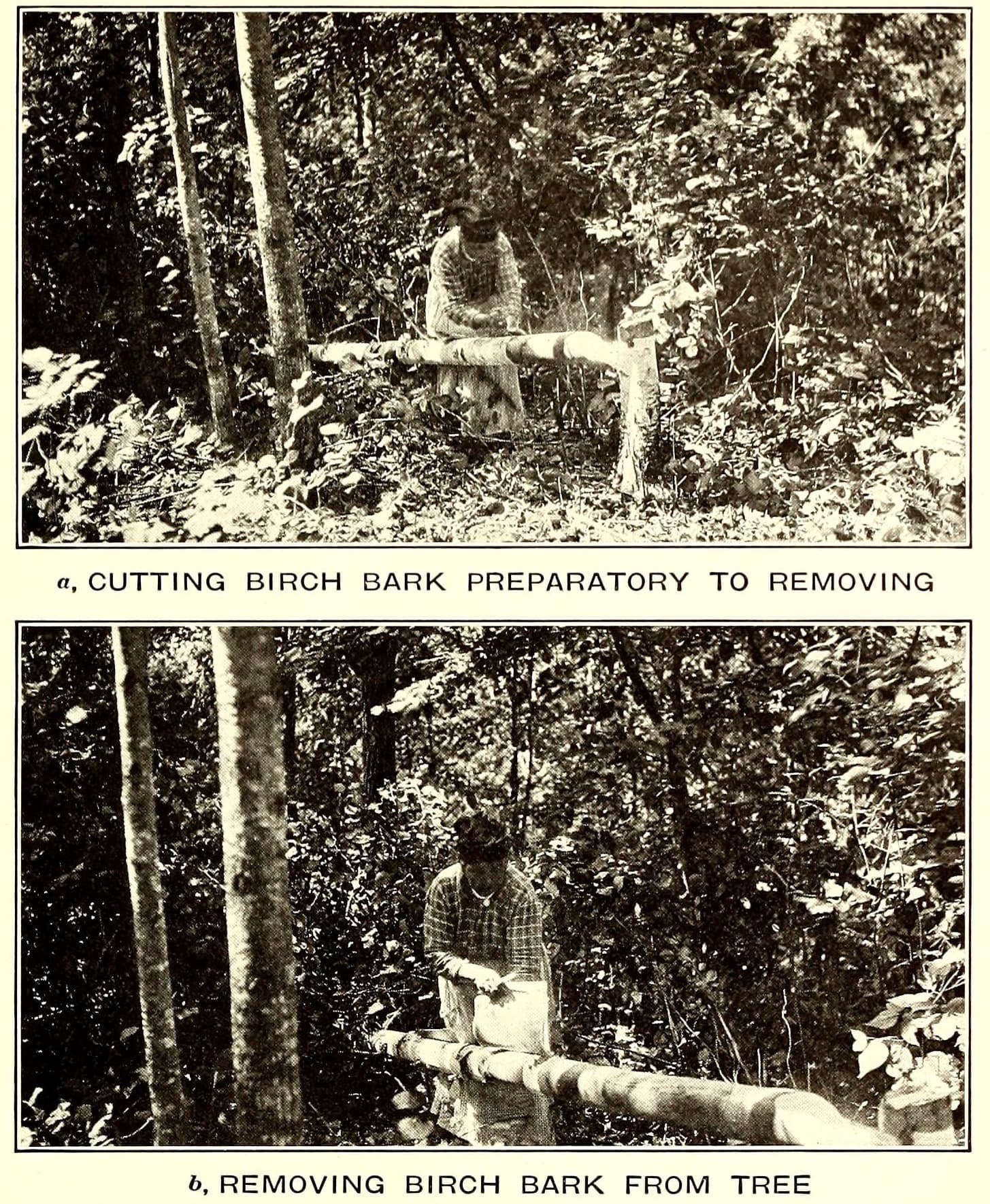
"Birch bark can be unrolled only by exposing it to the heat of a fire. When heated it becomes pliable, and retains any form in which it is placed when thus softened."
2
2
Warm the bark
Warm the bark
Pick bark of the right thickness: heavy for buckets and large makuks, thinner for dishes. Warm the sheet at the fire until it bends without cracking.
Materiały do tego kroku:
 Arkusze kory brzozowej1 sztuka
Potrzebne narzędzia:
 Palenisko
 Nóż
3
3
Folded dish
Folded dish
Fold the warm sheet up into a dish and fasten it with one or two stitches of split root at each end. Her common size: about 10 in. (25 cm) long and 5 in. (13 cm) deep. Ours: fold the corners in like a paper box and pierce the stitch holes with an awl. Tie dishes in bunches of ten to store.
Materiały do tego kroku:
 Rozszczepione korzenie drzew1 sztuka
Potrzebne narzędzia:
 SzydłoNóż
4
4
Tray
Tray
For a finer tray cut away the spare bark at the ends, sew the overlapping edges with split roots, and finish the top with a stiff strip of bark sewn firmly in place.
Materiały do tego kroku:
Arkusze kory brzozowej1 sztukaRozszczepione korzenie drzew1 sztukaPotrzebne narzędzia:
SzydłoNóż5
5
Makuk
Makuk
Sew a box-shaped makuk with split roots. Lay a thin strip of basswood bark round the top and sew it over and over with split roots, like a canoe rim. Sew a cover with slanting sides over the top. Sizes ran from about 1 lb to 20-30 lb of maple sugar. For a bucket, cover the seams with pitch and add a handle.
Materiały do tego kroku:
Arkusze kory brzozowej1 sztukaRozszczepione korzenie drzew1 sztuka Włókno łykowe lipy1 sztuka
 Klej ze smoły sosnowej1 sztuka
Potrzebne narzędzia:
SzydłoNóżPalenisko6
6
Troubleshooting
Troubleshooting
Birch bark container troubleshooting.
Flow
Loading...
7
7
History and honest limits
History and honest limits
From Frances Densmore, *Uses of Plants by the Chippewa Indians*, **44th Annual Report of the Bureau of American Ethnology** (1928), pp. 388-389 and plates (checked on the archive.org scan usesofplantsbych00dens). Other forms: berry makuks of about a quart with a fibre loop for the belt; storage makuks of 12 quarts or more with one side higher to lap over; an old round dish 9 in. across and 3 in. deep with folded sides and two rows of sweet grass at the rim. She gives no folding pattern: the fold, the awl and metric sizes are ours.
Materiały
4- 1 sztukaZastępnik
- 1 sztukaZastępnik
- 1 sztukaZastępnik
- 1 sztukaZastępnik
Według tego planu powstaje

Powiązane blueprinty
Te blueprinty dzielą się wiedzą — technikami, materiałami lub zasadami

CC0 Domena publiczna
Ten plan jest udostępniany na licencji CC0. Możesz go swobodnie kopiować, modyfikować, rozpowszechniać i wykorzystywać do dowolnych celów, bez konieczności uzyskiwania zgody.
Wesprzyj Makera kupując produkty przez jego plan, za co zarabia Prowizja Makera ustalony przez sprzedawców, lub stwórz nową iterację tego planu i dołącz go jako połączenie w swoim własnym planie, aby dzielić się przychodami.