SZTUKA
Piękno i dobre samopoczucie
RZEMIOSŁO
KULTURA I HISTORIA
ROZRYWKA
ŚRODOWISKO
JEDZENIE I NAPOJE
INŻYNIERIA ODWROTNA
NAUKI
LEKKOATLETYKA
TECHNOLOGIA
URZĄDZENIA DO NOSZENIA
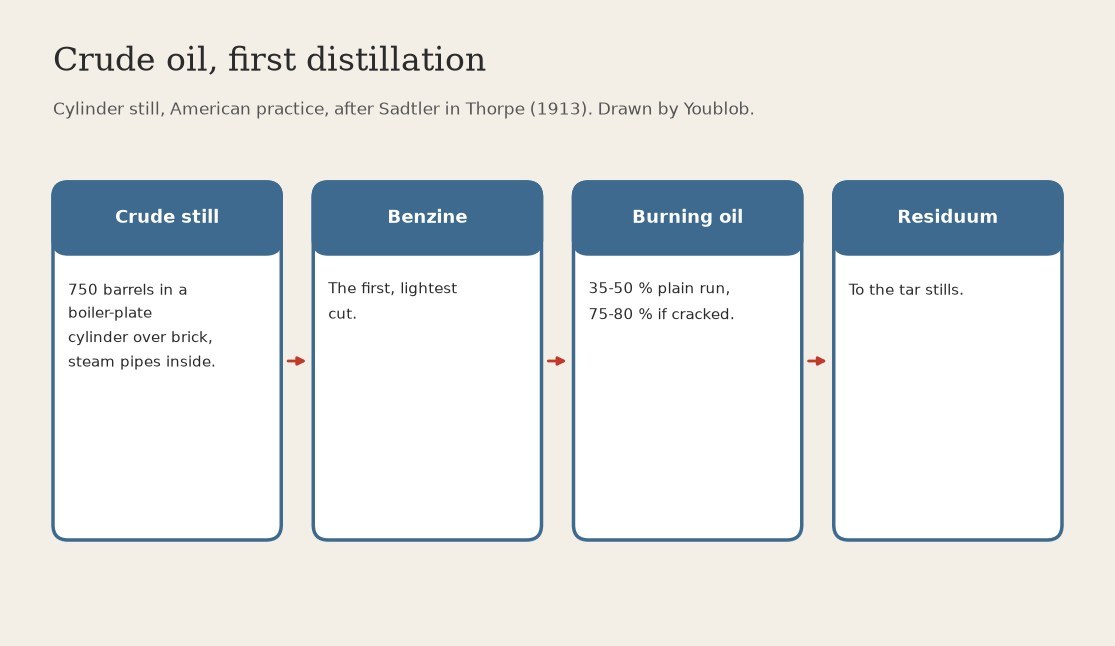


Crude Oil Distilled in a Cylinder Still: Benzine, Burning Oil and Residuum (Sadtler, in Thorpe 1913)
The first step of an American refinery around 1910: crude oil is boiled in a huge horizontal still and split into a light benzine cut, the burning oil that becomes kerosene, and a heavy residuum for the tar stills.
Variable: how hard you run the end of the distillation. Run as a plain fractional distillation, Pennsylvania crude gives 35 to 50 % burning oil and 20 to 30 % lubricating oils. Let the heavy vapours fall back on the hot oil and they crack: burning oil rises to 75 to 80 % and the residuum drops to 6 %.
Source: Sadtler, American Petroleum, in Thorpe's Dictionary of Applied Chemistry, vol. 4 (1913). Not given: the temperature or gravity at which each cut is switched. Crude oil vapour is highly flammable. Picture drawn by Youblob.
Zaawansowany
2 days
Instrukcje
1
1
Charge 750 barrels into the cylinder still
Charge 750 barrels into the cylinder still
The still is a boiler-plate cylinder, its lower half usually steel, 30 ft long and 12 ft 6 in across, lying in a brick furnace with its upper half open to the air. Charge it with crude oil: usually 750 barrels, often 1000. It carries closed and perforated steam pipes.
Materiały do tego kroku:
 Ropa naftowa750 barrel
Potrzebne narzędzia:
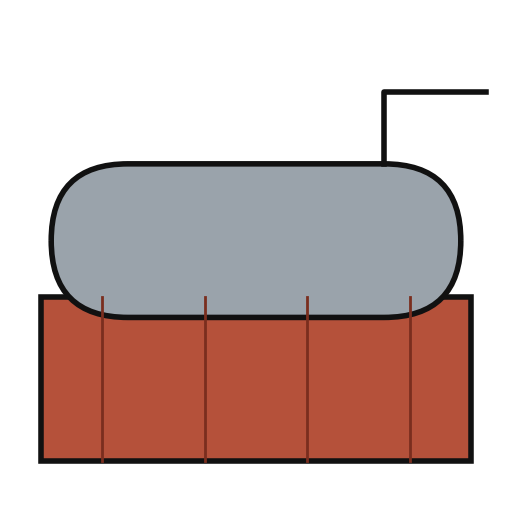 Poziomy alembik cylindryczny
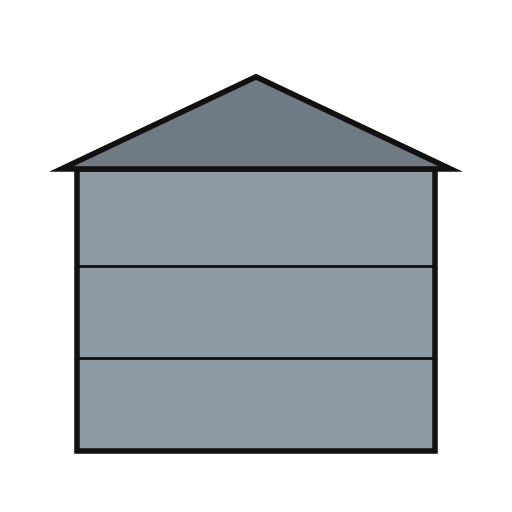 Zbiornik na ropę
2
2
Fire it, blow steam, condense in water-cooled coils
Fire it, blow steam, condense in water-cooled coils
Fire the furnace. Steam jetting from the perforated pipe helps carry the oil vapours over. The vapours condense in long pipe coils standing in tanks of flowing water, and run to the receiving house. A trap near each pipe end carries off the gas that will not condense; it can be burned under the boilers or stills to save fuel.
Potrzebne narzędzia:
Poziomy alembik cylindryczny Kocioł parowy
 Wężownica skraplacza
 Woda
3
3
Watch the run and switch receivers
Watch the run and switch receivers
The condenser pipes end in boxes with plate-glass sides, so you can see each run and take test portions to control the process. First comes the benzine distillate, then the burning oil distillate. Sadtler gives no temperatures or gravities for the switch. Ours: check test portions with a hydrometer.
Potrzebne narzędzia:
 AreometrZbiornik na ropę
4
4
Choose: plain run or cracking run
Choose: plain run or cracking run
Plain fractional distillation: 35 to 50 % burning oil and 20 to 30 % lubricating oils from Pennsylvania crude. Cracking: let the heavy vapours drop back on the hot oil, which the open upper half of the still helps late in the run; burning oil rises to 75 to 80 % and the residuum falls to 6 %.
Potrzebne narzędzia:
Poziomy alembik cylindryczny5
5
Send the residuum to the tar stills
Send the residuum to the tar stills
When the burning oil is off, run the fluid residuum out to the tar stills, of about 260 barrels, for the paraffin and lubricating oils. Benzine and burning oil go to their own tanks for refining.
Potrzebne narzędzia:
Zbiornik na ropęMateriały
1- 750 barrelZastępnik
Według tego planu powstaje
Powiązane blueprinty
Te blueprinty dzielą się wiedzą — technikami, materiałami lub zasadami

CC0 Domena publiczna
Ten plan jest udostępniany na licencji CC0. Możesz go swobodnie kopiować, modyfikować, rozpowszechniać i wykorzystywać do dowolnych celów, bez konieczności uzyskiwania zgody.
Wesprzyj Makera kupując produkty przez jego plan, za co zarabia Prowizja Makera ustalony przez sprzedawców, lub stwórz nową iterację tego planu i dołącz go jako połączenie w swoim własnym planie, aby dzielić się przychodami.