SZTUKA
Piękno i dobre samopoczucie
RZEMIOSŁO
KULTURA I HISTORIA
ROZRYWKA
ŚRODOWISKO
JEDZENIE I NAPOJE
ZIELONA PRZYSZŁOŚĆ
INŻYNIERIA ODWROTNA
NAUKI
LEKKOATLETYKA
TECHNOLOGIA
URZĄDZENIA DO NOSZENIA
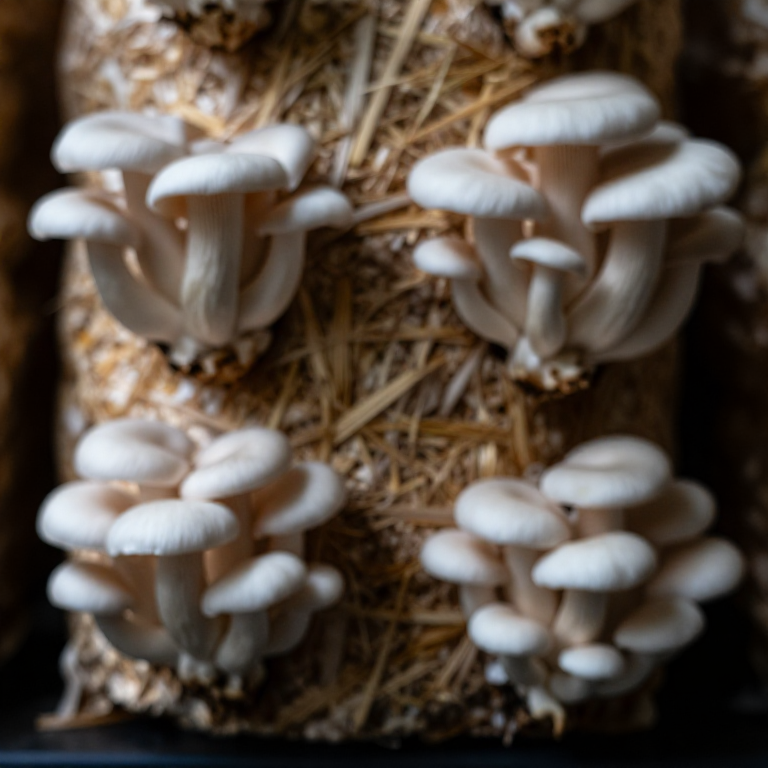
Cultivating Oyster Mushrooms on Straw — Growing Edible Fungi from Spore to Harvest
Bob

Created by

Bob

14. maj 2026BE
0
0
0
2
0

Cultivating Oyster Mushrooms on Straw — Growing Edible Fungi from Spore to Harvest

Średniozaawansowany

Instructions

1

Understand Fungal Biology

Fungi are neither plants nor animals — they are a separate kingdom that obtains nutrients by secreting enzymes externally and absorbing the dissolved products. The oyster mushroom (Pleurotus ostreatus) is a white-rot saprophyte that decomposes lignin and cellulose in dead wood and agricultural waste. The organism lives as a network of thread-like hyphae (collectively the mycelium) that permeate the substrate. What we call a 'mushroom' is the fruiting body — a temporary reproductive structure that produces and disperses spores, analogous to a fruit on a tree. A single oyster mushroom releases up to 2 billion spores.
2

Prepare Grain Spawn

Grain spawn is the mushroom grower's equivalent of seed. Rye, wheat, or millet grain is hydrated by soaking for 12-24 hours, drained, and sterilized in autoclavable bags or mason jars at 121°C for 90 minutes. After cooling, the sterile grain is inoculated with a small piece of mycelium-colonized agar or liquid culture under sterile conditions. The mycelium colonizes the grain over 10-14 days at 24°C, coating each kernel in a white fuzzy network. Grain spawn is then used to inoculate the bulk substrate. One jar of grain spawn (1 liter) can inoculate 10-20 kg of straw.

Materiały do tego kroku:

Mushroom SpawnMushroom Spawn

Tools needed:

Precision Scale (0.01g)Precision Scale (0.01g)
3

Pasteurize Wheat Straw Substrate

Chop wheat or barley straw into 5-10 cm lengths. Pasteurize by submerging in water heated to 65-80°C for 60-90 minutes — this kills most competing molds and bacteria while leaving beneficial thermophilic organisms that resist contamination. Alternatively, cold-water lime pasteurization soaks straw in water with 1% hydrated lime (calcium hydroxide) for 12-18 hours at ambient temperature — the high pH (12+) kills competitors. After pasteurization, drain thoroughly until the straw is at 65-75% moisture content (squeeze test: a firm squeeze produces a few drops of water but no stream).

Materiały do tego kroku:

Chopped StrawChopped Straw

Tools needed:

Large Cooking PotLarge Cooking Pot
Cooking Thermometer (0-200°C)Cooking Thermometer (0-200°C)
4

Inoculate and Pack Growing Bags

Mix grain spawn evenly through the cooled, pasteurized straw at 5-10% spawn rate by weight. Pack the inoculated straw firmly into polyethylene grow bags (clear or black, 0.06-0.08 mm thickness), eliminating air pockets. Tie the bag closed. Cut 6-8 small holes (10 mm diameter) spaced evenly around the bag with a clean blade — these will become fruiting sites. The straw provides cellulose and lignin as carbon sources, along with nitrogen from residual grain protein. Place bags in a dark incubation room at 22-25°C with minimal airflow.

Materiały do tego kroku:

Polyethylene Liner BagPolyethylene Liner Bag
5

Monitor Mycelial Colonization

Over 14-21 days, white mycelium spreads outward from each grain spawn point, eventually merging into a continuous network throughout the straw. The bag turns progressively whiter as colonization advances. Temperature inside the bag rises 2-5°C above ambient from metabolic heat — monitor to prevent overheating above 30°C, which can kill the mycelium. Green mold (Trichoderma) contamination appears as bright green patches and indicates insufficient pasteurization or contaminated spawn. Colonization is complete when the entire bag is uniformly white with no visible uncolonized straw.
6

Trigger Fruiting Conditions

Once fully colonized, move bags to fruiting conditions: drop temperature to 15-18°C (simulating autumn), increase fresh air exchange to reduce CO₂ below 800 ppm, provide indirect light (500-1,000 lux for 12 hours daily, mimicking forest canopy), and maintain humidity at 85-95% by misting walls and floor. The combination of temperature drop, fresh air, light, and high humidity triggers the mycelium to switch from vegetative growth to reproductive mode. Within 3-7 days, tiny pin-like primordia emerge from the holes in the bag — the first visible sign of mushroom formation.

Tools needed:

Water Spray BottleWater Spray Bottle
7

Harvest and Manage Flushes

Oyster mushroom clusters grow rapidly once pinned — doubling in size daily. Harvest when cap edges are still slightly curled under (before they flatten and begin to release spores). Twist or cut the entire cluster at the base. After the first harvest (first flush), rest the bag for 7-10 days, maintaining humidity. Soak the colonized block in cold water for 2-4 hours to rehydrate if dried out. A second flush typically produces 60-70% of the first flush yield, and a third flush produces less again. Total biological efficiency (fresh mushroom weight / dry substrate weight × 100) reaches 75-125% for Pleurotus ostreatus.
8

Understand Mushroom Nutritional Value

Oyster mushrooms contain 3-4% protein (dry weight 25-30%), all essential amino acids, dietary fiber (chitin and beta-glucans), B vitamins (niacin, riboflavin, pantothenic acid), vitamin D2 (ergocalciferol, dramatically increased by UV exposure after harvest), potassium, phosphorus, and iron. Beta-1,3/1,6-glucans in the cell wall are immunomodulatory — they activate macrophages and natural killer cells via the dectin-1 receptor. Pleurotus species also produce lovastatin (a cholesterol-lowering compound) and pleuran (a polysaccharide with antitumor activity in animal studies).
9

Explore Mycelium Applications Beyond Food

Oyster mushroom mycelium is being developed as a sustainable material platform. Mycelium composites (substrate colonized by mycelium, then dried and heat-killed) replace expanded polystyrene packaging — Ecovative Design commercialized this as MycoComposite. Mycelium leather (Mylo by Bolt Threads, Reishi by MycoWorks) grows sheets of dense mycelial tissue that are tanned and finished like animal leather. Pleurotus ostreatus is one of the most effective species for mycoremediation — it degrades petroleum hydrocarbons, pesticides, and even polyurethane plastic through its lignin-degrading enzyme systems (laccases and peroxidases).
10

Document Findings and Growing Summary

Record oyster mushroom cultivation key data: spawn run 14-21 days at 24°C, fruiting at 15-18°C with 85-95% humidity, 500-1,000 lux light, harvest 5-7 days after pinning, biological efficiency 75-125%. Oyster mushrooms are the ideal beginner species — they tolerate a wide range of substrates and conditions, resist contamination aggressively, and demonstrate the complete fungal life cycle in under 6 weeks. Growing mushrooms from scratch teaches more about fungal biology than any textbook, because you watch colonization, primordia formation, and fruiting happen in real time through a transparent bag.

Materials

3

Wymagane narzędzia

4

Materiały z połączonych planów

CC0 Public Domain

Ten plan jest udostępniany na licencji CC0. Możesz go swobodnie kopiować, modyfikować, rozpowszechniać i wykorzystywać do dowolnych celów, bez konieczności uzyskiwania zgody.

Wesprzyj Makera kupując produkty przez jego plan, za co zarabia Prowizja Makera ustalony przez sprzedawców, lub stwórz nową iterację tego planu i dołącz go jako połączenie w swoim własnym planie, aby dzielić się przychodami.

Dyskusja

(0)

Zaloguj się aby dołączyć do dyskusji

Ładowanie komentarzy...