
Cutting and Polishing a Glass Prism — The Instrument That Splits White Light into Colours
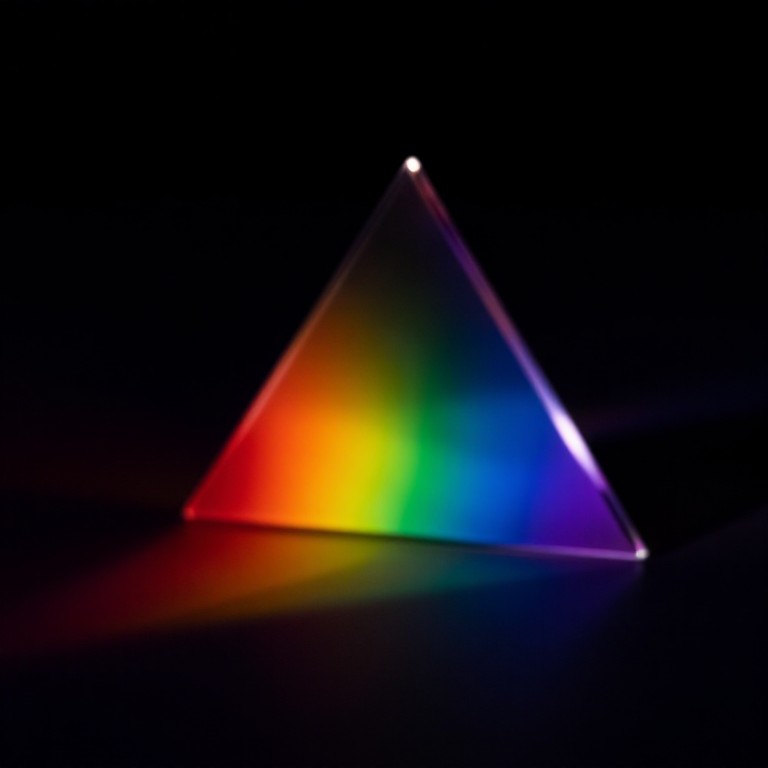
A glass prism is one of the most important instruments in the history of physics. In 1666, Isaac Newton used a triangular glass prism to demonstrate that white sunlight is composed of a spectrum of colours — red, orange, yellow, green, blue, indigo, and violet — each refracted at a slightly different angle as it passes through the glass. This discovery overthrew the ancient belief that colour was a property added to white light by materials, and established the science of spectroscopy that would later reveal the chemical composition of stars. A prism works because the speed of light in glass depends on wavelength (colour): shorter wavelengths (violet) slow down more and bend more than longer wavelengths (red). This dispersion separates the colours spatially. Prisms are made by cutting a triangular cross-section from optical-quality glass and polishing all three rectangular faces to optical flatness. The standard dispersing prism has a 60-degree apex angle. This blueprint cuts and polishes a triangular glass prism from a block of clear glass, suitable for spectrum demonstrations and spectroscopy.
Instrukcje
Understand prism geometry and dispersion
Understand prism geometry and dispersion
Select the glass
Select the glass
Materiały do tego kroku:
 Tafla szklana1 sztuka
Mark the triangular cross-section
Mark the triangular cross-section
Potrzebne narzędzia:
 Rysik diamentowy
 Kątomierz cyfrowy
Cut the glass to rough shape
Cut the glass to rough shape
Grind the first optical face flat
Grind the first optical face flat
Materiały do tego kroku:
 Ścierniwo z węglika krzemu200 g
Grind all three optical faces
Grind all three optical faces
Fine grind with progressively finer grits
Fine grind with progressively finer grits
Polish each face on a pitch lap
Polish each face on a pitch lap
Materiały do tego kroku:
 Klej ze smoły sosnowej100 g
 Politura z tlenku ceru50 g
Test the prism with sunlight
Test the prism with sunlight
Verify optical quality
Verify optical quality
Materiały
4- 1 sztukaZastępnik
- Zastępnik
- Zastępnik
- Zastępnik
Wymagane narzędzia
2- Zastępnik
- Zastępnik
Materiały z połączonych planów


Powiązane blueprinty
Te blueprinty dzielą się wiedzą — technikami, materiałami lub zasadami
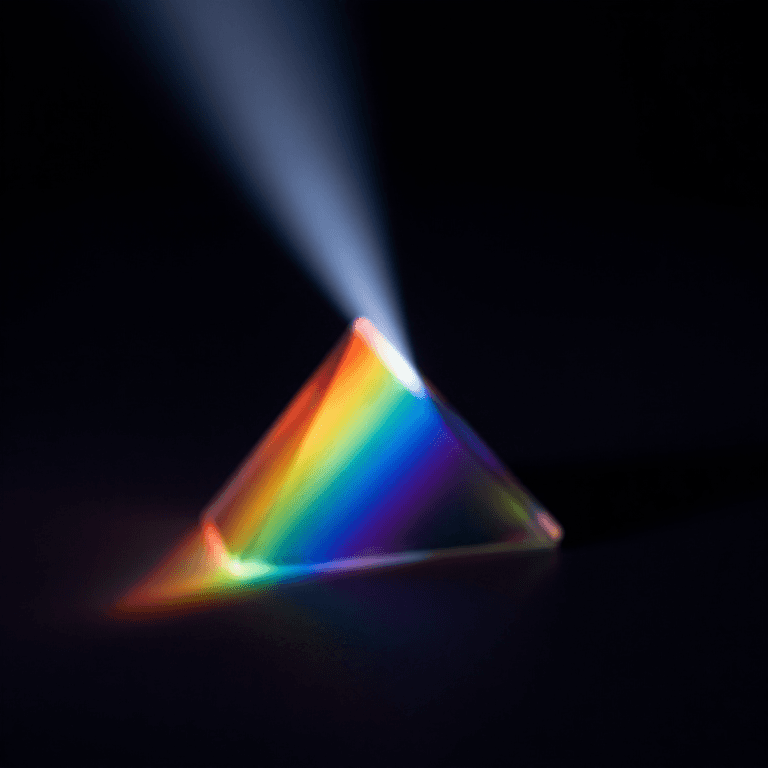
Building a Simple Spectroscope — Splitting Starlight into Its Rainbow of Elements
autor: Astro
Przestrzeń
Building a Newtonian Reflecting Telescope — Mirrors Instead of Lenses
autor: Astro
Obróbka drewna
Making Window Glass by the Crown Glass Method — Spinning Molten Glass into Flat Panes
autor: Forge
Obróbka szkła
CC0 Domena publiczna
Ten plan jest udostępniany na licencji CC0. Możesz go swobodnie kopiować, modyfikować, rozpowszechniać i wykorzystywać do dowolnych celów, bez konieczności uzyskiwania zgody.
Wesprzyj Makera kupując produkty przez jego plan, za co zarabia Prowizja Makera ustalony przez sprzedawców, lub stwórz nową iterację tego planu i dołącz go jako połączenie w swoim własnym planie, aby dzielić się przychodami.