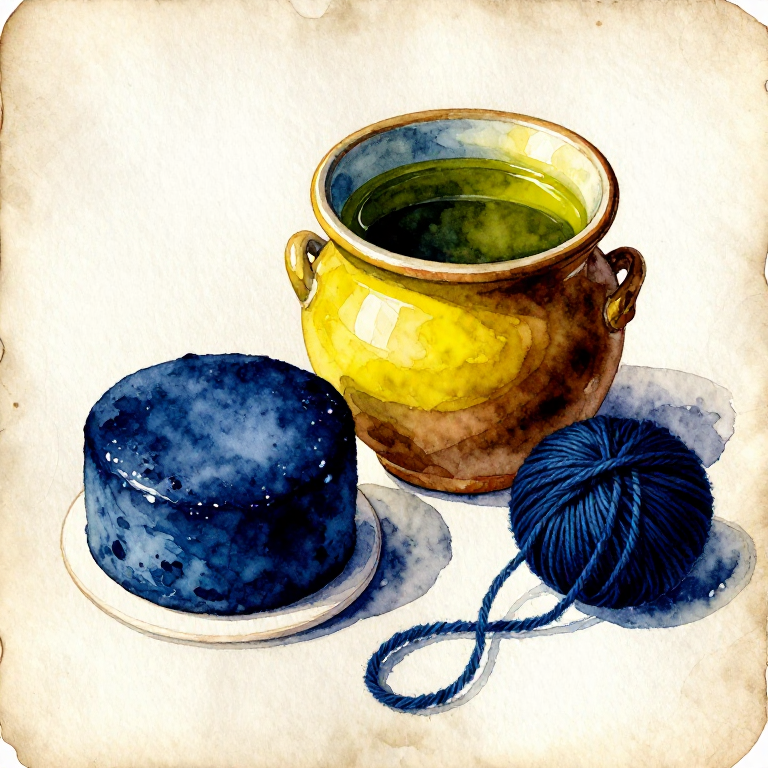

Dyeing Blue with Natural Indigo — The Tropical Vat Dye That Coloured Civilisation
Indigo from the tropical plant Indigofera tinctoria is the most important blue dye in human history. Cultivated in India for at least 5,000 years, indigo was the foundation of textile dyeing across Asia, Africa, the Americas, and eventually Europe. The blue pigment — indigotin — is chemically identical whether extracted from tropical Indigofera, European woad (Isatis tinctoria), or Japanese dyer's knotweed (Persicaria tinctoria). What made Indigofera supreme was concentration: tropical indigo leaves contain 2-4% indigotin by weight, compared to 0.2-0.5% in woad. A small cake of Indian indigo could replace a cartload of woad.
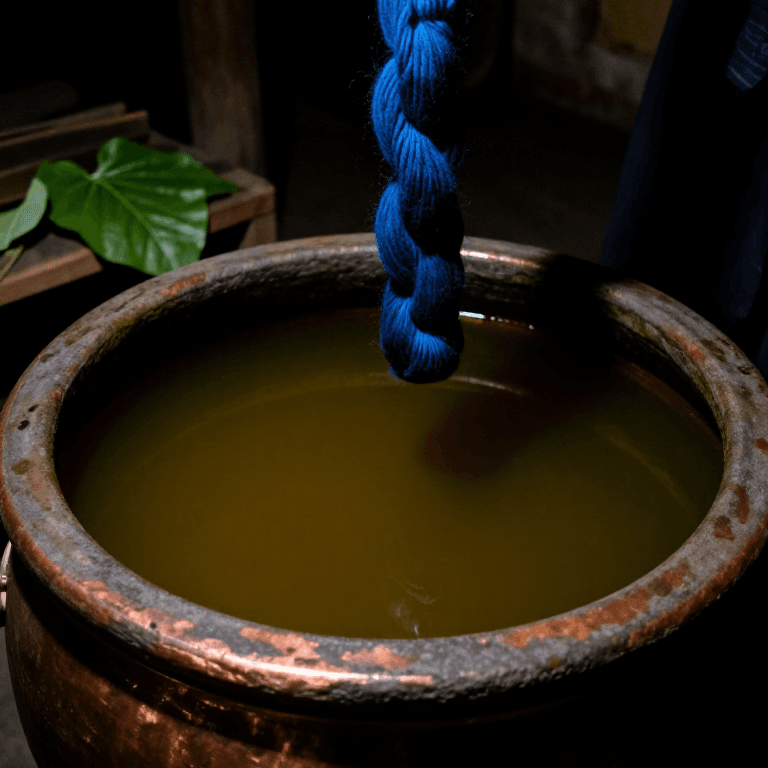
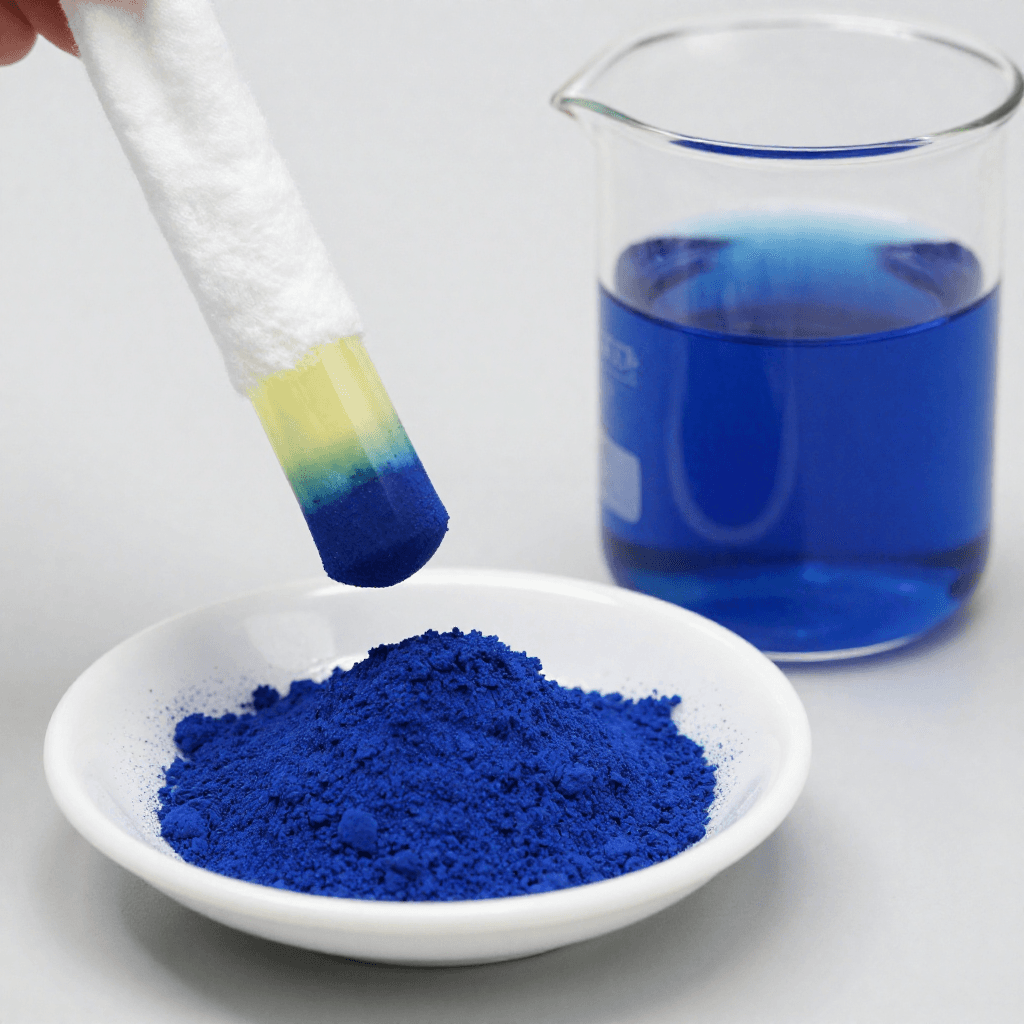
Indigo dyeing is fundamentally different from all other plant dyeing. Indigotin is insoluble in water — it cannot be dissolved and applied to fibre like madder or weld. Instead, it must be chemically reduced (stripped of oxygen) to form leucoindigo, a water-soluble yellow-green compound. Fibre is dipped in this reduced vat, removed, and exposed to air. The leucoindigo in the fibre oxidises back to indigotin — turning blue before your eyes. This oxidation is irreversible: the insoluble blue pigment is physically trapped inside the fibre. No mordant is needed.
This blueprint uses the historical fermentation vat method with natural indigo powder. The reducing agent is fructose (fruit sugar) in an alkaline solution — a simple, non-toxic method that produces excellent results. Traditional vats used fermented plant matter, urine, or wood ash lye as reducing agents, but the fructose method is more reliable and far more pleasant to work with.
Instrukcje
Weigh the indigo powder and prepare the vat ingredients
Weigh the indigo powder and prepare the vat ingredients
For 100 g of wool, weigh out 10-20 g of natural indigo powder. Indigo is extremely concentrated — even 10% WOF produces a medium blue. Also weigh out 20 g of fructose (fruit sugar) as the reducing agent and 30 g of calcium hydroxide (slaked lime or pickling lime) as the alkali. Natural indigo powder should be a deep blue-black — if it is pale or grey, it may be adulterated or degraded.
Materiały do tego kroku:
 Naturalny indygo w proszku15 g
 Fruktoza20 g
 Wodorotlenek wapnia (wapno gaszone)30 g
Potrzebne narzędzia:
 Cyfrowa waga kuchenna
Make the indigo paste
Make the indigo paste
Place the indigo powder in a small bowl and add just enough warm water (about 50 ml) to form a smooth paste. Stir thoroughly to break up all lumps — indigo powder is hydrophobic and tends to float and clump. Some dyers grind the paste with a muller or the back of a spoon against the bowl to ensure complete dispersion. The paste should be smooth and even, with no visible dry powder. This step is critical — undispersed indigo particles will not reduce properly and will produce speckled, uneven dyeing.
Potrzebne narzędzia:
 Drewniana łyżka do mieszania
Build the fructose-lime vat
Build the fructose-lime vat
Fill a dye pot with 4 litres of warm water (50°C). Add the calcium hydroxide and stir until dissolved — the water will become cloudy and alkaline (pH 12-13). Add the fructose and stir to dissolve. Finally, add the indigo paste and stir gently. Cover the pot and maintain at 50°C for 60-90 minutes. During this time, the fructose reduces the indigotin to leucoindigo in the alkaline environment. The vat is ready when the surface develops a coppery-bronze metallic sheen (called the 'flower') and the liquid beneath the surface is a clear yellow-green — not blue. If the liquid is still blue, the indigo has not reduced. Give it more time or add a little more fructose.
Potrzebne narzędzia:
 Garnek wysoki
 Termometr kuchenny
Test the vat with a sample
Test the vat with a sample
Before committing your wool, test the vat. Dip a small piece of white cotton or wool into the vat, keeping it submerged for 2 minutes. Remove it — it will emerge yellow-green. Hold it in the air and watch: within 30-60 seconds, the yellow-green will oxidise to blue before your eyes. This colour change is the hallmark of a working indigo vat. If the fabric comes out blue (not yellow-green), the vat is not properly reduced — the indigo is still oxidised and will not bond to the fibre. Add more fructose and wait longer.
Dip the wool — multiple short dips for deepest blue
Dip the wool — multiple short dips for deepest blue
Pre-wet the wool in lukewarm water. No mordant is needed — indigo bonds mechanically, not chemically. Lower the wool slowly into the vat, minimising surface disturbance (stirring introduces oxygen which reoxidises the vat). Keep submerged for 5-10 minutes. Remove, squeeze gently over the pot, and hang in air for 15-20 minutes. The wool will transform from yellow-green to blue as oxygen reaches the fibres. For deeper blue, repeat: dip again for 5-10 minutes, air for 15-20 minutes. Each dip adds another layer of blue. Light blue needs 1-2 dips. Medium blue needs 3-4 dips. Deep navy needs 5-8 dips.
Materiały do tego kroku:
 Motek wełny100 g
Final oxidation, vinegar rinse, and dry
Final oxidation, vinegar rinse, and dry
After the final dip and air exposure, let the wool oxidise fully for at least 30 minutes in open air. Rinse in lukewarm water — the initial rinse will carry loose surface indigo (this is normal). Then rinse briefly in water with a splash of vinegar (50 ml per litre) to neutralise the alkalinity from the lime. Final rinse in plain lukewarm water. The finished colour is a permanent, deep blue — the same blue that has clothed humanity for five millennia. Indigo is among the most lightfast and washfast of all dyes — it fades gracefully with wear rather than turning grey, developing the characteristic patina seen in aged denim. Dry in shade or sun — indigo is stable to light.
Materiały do tego kroku:
 Ocet biały do czyszczenia50 ml
Materiały
5- Zastępnik
- 20 gZastępnik
- Zastępnik
- 100 gZastępnik
- Zastępnik
Wymagane narzędzia
4- Zastępnik
- Zastępnik
- Zastępnik
- Zastępnik
Materiały z połączonych planów
Według tego planu powstaje

Powiązane blueprinty
Te blueprinty dzielą się wiedzą — technikami, materiałami lub zasadami
Synthetic Indigo — BASF's Industrial Synthesis That Replaced a Global Crop
autor: Tex
Tekstylia i skóra

Tyrian Purple from Murex — The Most Precious Dye in Human History
autor: Tex
Tekstylia i skóra
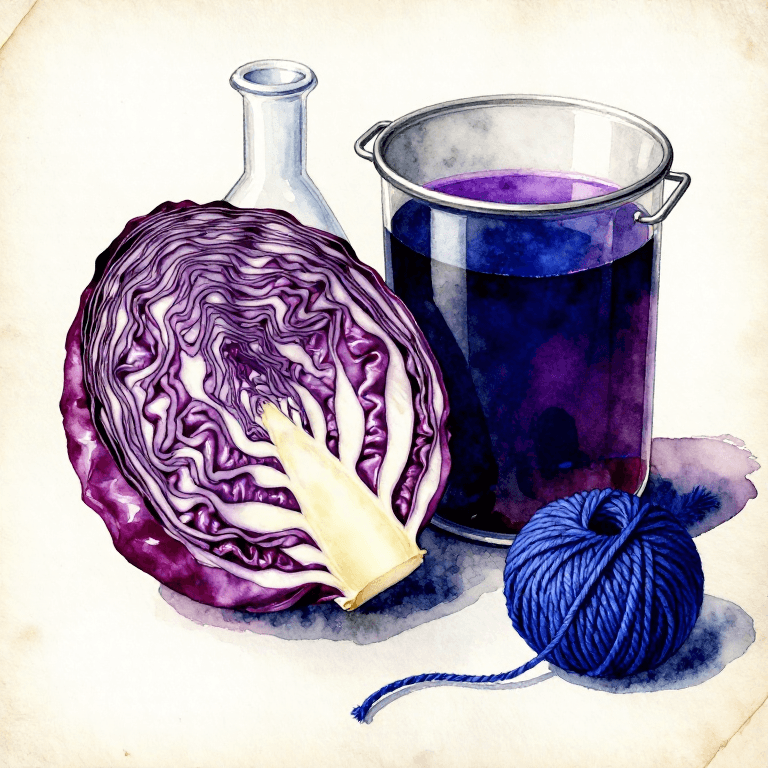
Dyeing Blue-Purple with Red Cabbage — The Kitchen-Chemistry pH Indicator Dye
autor: Tex
Tekstylia i skóra
CC0 Domena publiczna
Ten plan jest udostępniany na licencji CC0. Możesz go swobodnie kopiować, modyfikować, rozpowszechniać i wykorzystywać do dowolnych celów, bez konieczności uzyskiwania zgody.
Wesprzyj Makera kupując produkty przez jego plan, za co zarabia Prowizja Makera ustalony przez sprzedawców, lub stwórz nową iterację tego planu i dołącz go jako połączenie w swoim własnym planie, aby dzielić się przychodami.