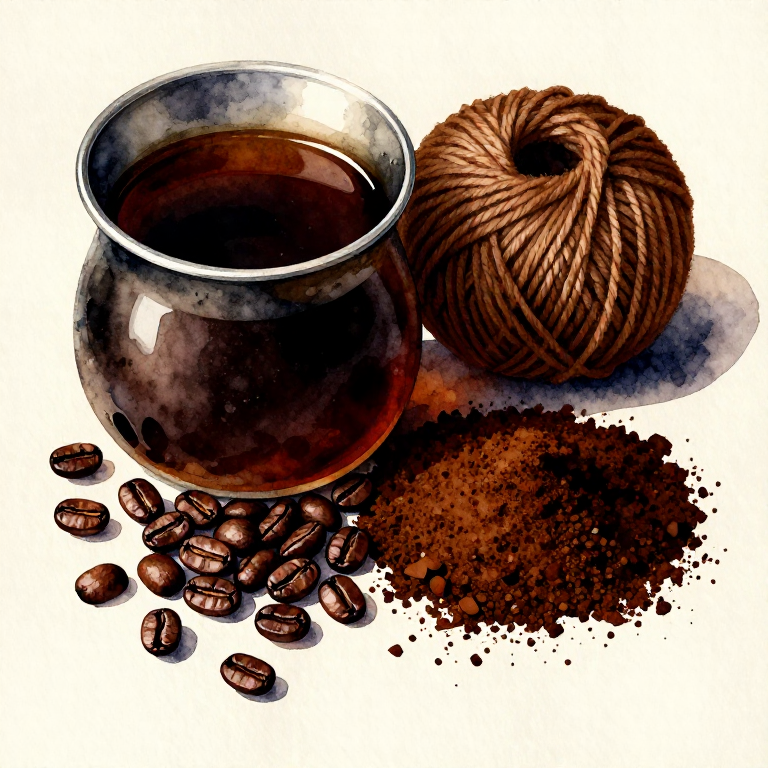


Barwienie w ciepły brąz kawą — uniwersalny barwnik do szafki kuchnej
Kawa (Coffea arabica i C. canephora/robusta) jest jednym z najszerzej dostępnych domowych materiałów barwnikowych we współczesnym świecie. Zużyta gęść kawy lub mocno parzona kawa produkuje ciepłe brązy na wełnie, bawełnie i innych włóknach naturalnych. Chociaż kawa nie jest historycznie znacząca jako barwnik tekstylny (rozprzestrzenianie się kawy poza Etiopią i Półwysep Arabski rozpoczęło się dopiero w XV-XVI wieku, a była zbyt cenna jako napój, aby marnować ją na barwienie), kawa stała się jednym z najpopularniejszych współczesnych barwników naturalnych ze względu na jej globalną dostępność, zerowe koszty (używając zużytej gęści) i przyjemny proces.
Brązowy kolor pochodzi z melanoidyn — złożonych brązowych polimerów tworzonych podczas reakcji Maillarda podczas prażenia ziaren kawy. Te barwniki są substancjowe — wiążą się z włóknami bez mordantu, choć wiązanie jest słabsze niż barwniki na bazie tanin. Świeża (nieużywana) gęść kawy daje silniejszy kolor niż gęść zużyta, a ciemne prażenie daje ciemniejszy brąz niż jasne prażenie. Kawa instant również działa i łatwo rozpuszcza się, co czyni ją najbardziej wygodną opcją.
Barwienie kawą jest doskonałym punktem wejścia dla osób, które nigdy nie próbowały naturalnego barwienia. Materiał jest w każdej kuchni, proces nie wymaga nic więcej niż garnek i wodę, zapach jest przyjemny, a wyniki — ciepły, znany brąz — są natychmiast satysfakcjonujące. Trwałość koloru i trwałość prania są umiarkowane, ale do projektów rzemieślniczych, przedmiotów dekoracyjnych i uczenia się podstaw naturalnego barwienia, kawę trudno pokonać.
Instrukcje
Przygotuj kąpiel barwnika kawą
Przygotuj kąpiel barwnika kawą
Użyj 200-300% WOF zużytej gęści kawy, lub 50-100% WOF świeżej gęści, lub 30-50 g instant kawy rozpuszczonej w wodzie. W przypadku 100 g wełny, najłatwiej przygotować bardzo mocną herbatę z kawy — użyj 50 g mielonej kawy w 2 litrach wody, a następnie dodaj do garnka kolejne 2 litry wody. Alternatywnie oszczędzaj zużytą gęść z codziennego parzenia (przechowuj w torebce w zamrażarce) aż do uzyskania 200-300 g. Ciemne prażenie daje najgłębszy brąz.
Materiały do tego kroku:
 Fusy z kawy200 g
Potrzebne narzędzia:
 Cyfrowa waga kuchenna
 Garnek wysoki
Gotuj gęść w 80°C przez 30 minut
Gotuj gęść w 80°C przez 30 minut
Jeśli używasz gęści (świeżej lub zużytej), dodaj do 4 litrów wody w garnku do barwienia i podgrzej do 80°C. Trzymaj przez 30 minut, czasami mieszając. Ciecz będzie ciemnym, bogatym brązem — znajomym kolorem mocnej kawy. Jeśli używasz instant kawy, po prostu rozpuść w gorącej wodzie — nie trzeba gotować. Gęść uwalnia pozostałe melanoidyny i taniny podczas tego gotowania.
Potrzebne narzędzia:
 Termometr kuchenny
 Drewniana łyżka do mieszania
Przesiej gęść
Przesiej gęść
Przesiej ciecz barwnika przez sitko o drobnych oczkach do czystego garnka. Gęść kawy jest bardzo drobna i będzie trwale przyklejać się do wełny, jeśli nie zostanie usunięta — przesiewaj ostrożnie. Aby uzyskać najczystsze wyniki, przesiej przez tkaninę muślinową lub papierowy filtr do kawy. Przesiana ciecz barwnika powinna być czysty, ciemny brąz.
Potrzebne narzędzia:
 Sitko o drobnych oczkach
Barwienie wełny w 80°C przez 45 minut
Barwienie wełny w 80°C przez 45 minut
Wstępnie namocz wełnę w letnią wodę przez 15 minut, delikatnie wyciśnij i opuść do kąpieli barwnika kawy w temperaturze pokojowej. Powoli ogrzewaj do 80°C i trzymaj przez 45 minut. Delikatnie obracaj co 10 minut. Mordant nie jest potrzebny — melanoidyny kawy wiążą się bezpośrednio z włóknami, choć morderowanie ałunem daje cieplejszy, bardziej złoty brąz. Bez mordentu, kolor jest chłodniejszy, szarobrązowy. Wełna będzie rozwijać ciepły, średni brąz — ton zależy od siły kawy i poziomu prażenia.
Materiały do tego kroku:
 Motek wełny100 g
Ozięb przez noc, płucz i suszę
Ozięb przez noc, płucz i suszę
Wyłącz ciepło i pozwól wełnie oziębnąć się w kąpieli barwnika przez noc. Usuń, delikatnie wyciśnij i płucz w letnią wodę aż do czystości. Ostateczny kolor to ciepły, znany brąz — kolor kawy z mlekiem. Trwałość prania jest umiarkowana — niektóre kolory będą uwalniane w początkowych praniach, ale rdzeń brązu pozostaje. Trwałość koloru jest umiarkowana. Tkaniny barwione kawą mają subtelnie przyjemny zapach kawy, gdy są ciepłe, który z czasem zanika. Aby uzyskać zabawny wariant, przepraszam brązową wełnę kawy indygiem, aby uzyskać głębokie tony oliwkowe. Susz w cieniu.
Materiały
2- 200 gZastępnik
- 100 gZastępnik
Wymagane narzędzia
5- Zastępnik
- Zastępnik
- Zastępnik
- Zastępnik
- Zastępnik
Materiały z połączonych planów
Według tego planu powstaje

Powiązane blueprinty
Te blueprinty dzielą się wiedzą — technikami, materiałami lub zasadami
CC0 Domena publiczna
Ten plan jest udostępniany na licencji CC0. Możesz go swobodnie kopiować, modyfikować, rozpowszechniać i wykorzystywać do dowolnych celów, bez konieczności uzyskiwania zgody.
Wesprzyj Makera kupując produkty przez jego plan, za co zarabia Prowizja Makera ustalony przez sprzedawców, lub stwórz nową iterację tego planu i dołącz go jako połączenie w swoim własnym planie, aby dzielić się przychodami.