SZTUKA
Piękno i dobre samopoczucie
RZEMIOSŁO
KULTURA I HISTORIA
ROZRYWKA
ŚRODOWISKO
JEDZENIE I NAPOJE
INŻYNIERIA ODWROTNA
NAUKI
LEKKOATLETYKA
TECHNOLOGIA
URZĄDZENIA DO NOSZENIA
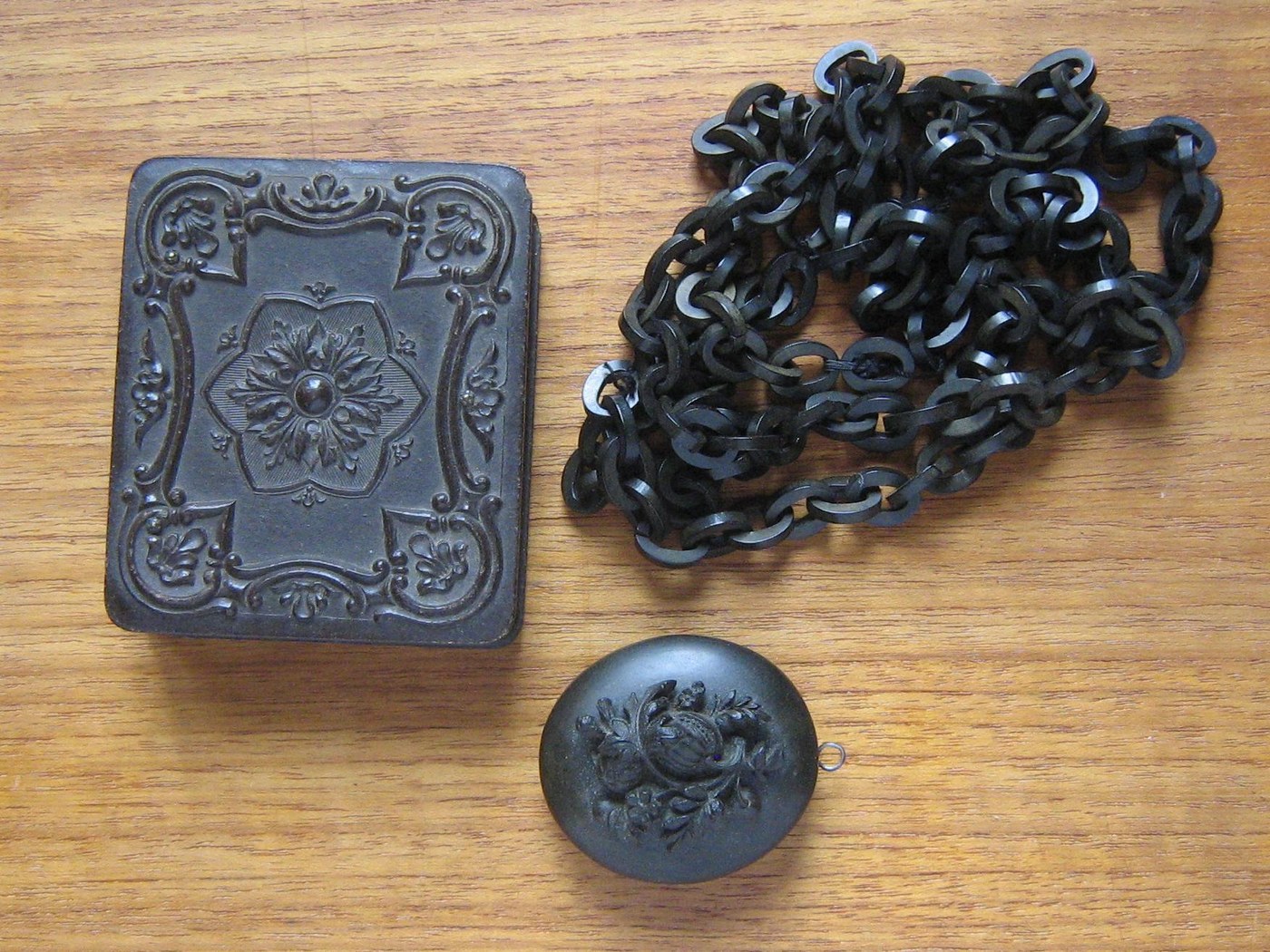


Ebonite (Hard Rubber)
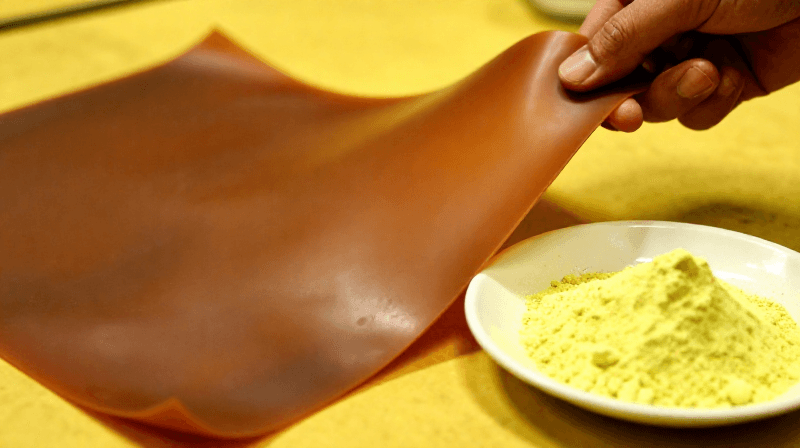
Vulcanised rubber is rubber with a few sulphur bridges between its chains. Keep adding sulphur and the bridges multiply until the chains cannot move at all: the soft, stretchy material turns into a hard black solid you can turn on a lathe, polish like ebony and use as an electrical insulator.
**US 8,075**, "Improvement in the Manufacture of India Rubber", Nelson Goodyear (brother of Charles), granted 6. May 1851, claims "the combining of india-rubber and sulphur… for making a hard and inflexible substance hitherto unknown": about equal parts by weight, heated to 260–275 °F for three to six hours. It was one of the first rigid materials made by chemically changing a natural polymer, over half a century before Bakelite.
**You turn a part from commercial ebonite rod and measure what the sulphur did** — its density, and its charge when rubbed. Curing ebonite needs a heated press and releases hydrogen sulphide, so the blueprint starts from finished rod; the notebook does the chemistry.
Średniozaawansowany
3 hours
Instrukcje
1
1
Cut the blank
Cut the blank
Clamp 20 mm ebonite rod in the vise between soft jaws. Saw off 60 mm. Ebonite chips like hard wood; saw slowly to avoid cracking the end.
Materiały do tego kroku:
 Pręt ebonitowy1 sztuka
Potrzebne narzędzia:
 Piła do metalu
 Imadło warsztatowe
 Linijka stalowa
 Okulary ochronne bezbarwne
2
2
Chuck and face
Chuck and face
Grip 20 mm of the blank in the lathe's 3-jaw chuck. Face the end square with a sharp HSS tool at about 800 rpm, light cuts.
Potrzebne narzędzia:
 Tokarka do metalu
 Zestaw dłut tokarskich (HSS)Okulary ochronne bezbarwne
 Maska przeciwpyłowa
3
3
Turn to 16 mm
Turn to 16 mm
Turn 40 mm of length down to 16.0 mm. Check with the caliper every pass. The chips smell of sulphur - that is the bonded sulphur you measure later.
Potrzebne narzędzia:
Tokarka do metaluZestaw dłut tokarskich (HSS) Suwmiarka cyfrowa 6 cali
4
4
Drill the bore
Drill the bore
Spot the centre with a centre drill, then drill 3 mm through 35 mm from the tailstock. Clear chips every 5 mm - ebonite heats and gums if packed.
Potrzebne narzędzia:
 Zestaw nawiertaków
 Komplet wierteł w kasecieTokarka do metalu
5
5
Taper the grip
Taper the grip
Set the compound to a shallow angle and taper 25 mm from 16 mm down to 10 mm. This is a fountain-pen grip section, the job ebonite still does today.
Potrzebne narzędzia:
Tokarka do metaluZestaw dłut tokarskich (HSS)Suwmiarka cyfrowa 6 cali6
6
Sand and polish
Sand and polish
At low speed, sand 400 then 800 grit, then run the Micro-Mesh grits in order. Finish with polishing compound on a cloth. Ebonite takes a deep gloss without lacquer.
Materiały do tego kroku:
 Papier ścierny2 arkuszy
 Pasta polerska5 g
Potrzebne narzędzia:
 Zestaw do szlifowania mikrosiatką (9 gradacji)Tokarka do metaluMaska przeciwpyłowa
7
7
Part off
Part off
Part off at 45 mm with the parting tool. Chamfer the cut end by hand with 800 grit.
Potrzebne narzędzia:
Zestaw dłut tokarskich (HSS)Tokarka do metalu8
8
Measure the density
Measure the density
Weigh the part. Drop it into 50 ml of water in the graduated cylinder and read the rise. Do the same with a bundle of rubber bands. Enter both in the notebook.
Materiały do tego kroku:
 Gumki recepturki1 opakowanie
Potrzebne narzędzia:
 Precyzyjna waga cyfrowa
 Cylinder miarowy
9
9
Rub it and pick up paper
Rub it and pick up paper
Tear tissue into 5 mm scraps. Rub the ebonite 10 strokes on wool felt and hold it 2 cm above the scraps. Repeat with an acrylic offcut. Count scraps lifted by each.
Materiały do tego kroku:
 Bibułka bezkwasowa1 arkusz
 Płyta akrylowa1 sztuka
Potrzebne narzędzia:
 Filc wełniany
10
10
The sulphur arithmetic
The sulphur arithmetic
Wczytywanie notatnika Jupyter…
11
11
History & Context
History & Context
**What the patent specifies:** rubber and sulphur in about equal parts (or 2 : 1 with magnesia or lime), 260–275 °F, three to six hours. **Modern build (derived):** commercial ebonite rod, typically 25–32 % sulphur - the notebook shows why more than about 32 % cannot bond.
Ebonite was named for ebony, which it replaced in combs, pipe stems and instrument parts. It became a standard insulator of the electrical age and is still preferred for fountain-pen feeds because ink wets it. Its limits: it softens with heat, fades to brown and smells of sulphur in sunlight as the surface oxidises, and is brittle under impact.
Materiały
6- 1 sztukaZastępnik
- 2 arkuszyZastępnik
- Zastępnik
- 1 opakowanieZastępnik
- 1 arkuszZastępnik
- 1 sztukaZastępnik
Wymagane narzędzia
14- Zastępnik
- Zastępnik
- Zastępnik
- Zastępnik
- Zastępnik
- Zastępnik
- Zastępnik
- Zastępnik
- Zestaw nawiertaków10% prowizjiZastępnik
- Zastępnik
- Zestaw do szlifowania mikrosiatką (9 gradacji)10% prowizjiZastępnik
- Zastępnik
- Zastępnik
- Zastępnik
Powiązane blueprinty
Te blueprinty dzielą się wiedzą — technikami, materiałami lub zasadami

CC0 Domena publiczna
Ten plan jest udostępniany na licencji CC0. Możesz go swobodnie kopiować, modyfikować, rozpowszechniać i wykorzystywać do dowolnych celów, bez konieczności uzyskiwania zgody.
Wesprzyj Makera kupując produkty przez jego plan, za co zarabia Prowizja Makera ustalony przez sprzedawców, lub stwórz nową iterację tego planu i dołącz go jako połączenie w swoim własnym planie, aby dzielić się przychodami.