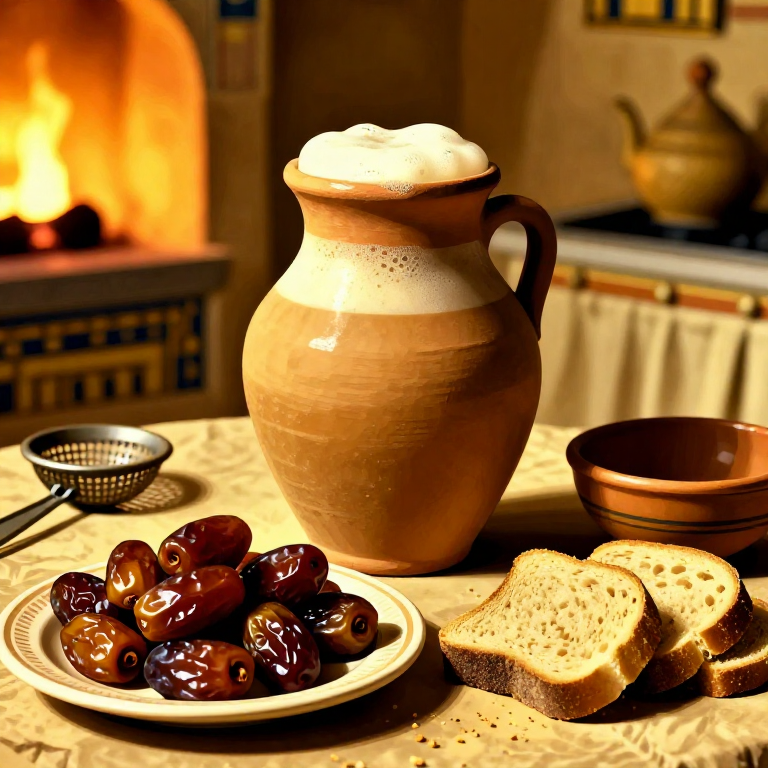


Egyptian Date Beer — Brewing Egyptian Date-Sweetened Beer
Instrukcje
Prepare the Bread Mash
Prepare the Bread Mash
Crumble lightly baked emmer wheat bread into small pieces and place it in a large ceramic vessel. The bread should be under-baked (pale, not fully crusted) so that active enzymes from the malt are not completely destroyed by heat. Archaeological residue analysis from beer jars at Hierakonpolis and Amarna confirms Egyptian beer was made from a bread-based mash. Pour approximately 2 liters of warm (not boiling) water over the bread and stir thoroughly to break up all lumps into a thick, porridge-like slurry. The residual amylase enzymes in the partially baked bread will begin converting remaining starches into fermentable sugars.
Materiały do tego kroku:
 Mąka pszenna pełnoziarnista500 g sztuka
 Woda3-4 litres sztuka
Potrzebne narzędzia:
 Glina
GlinaAdd Dates and Additional Water
Add Dates and Additional Water
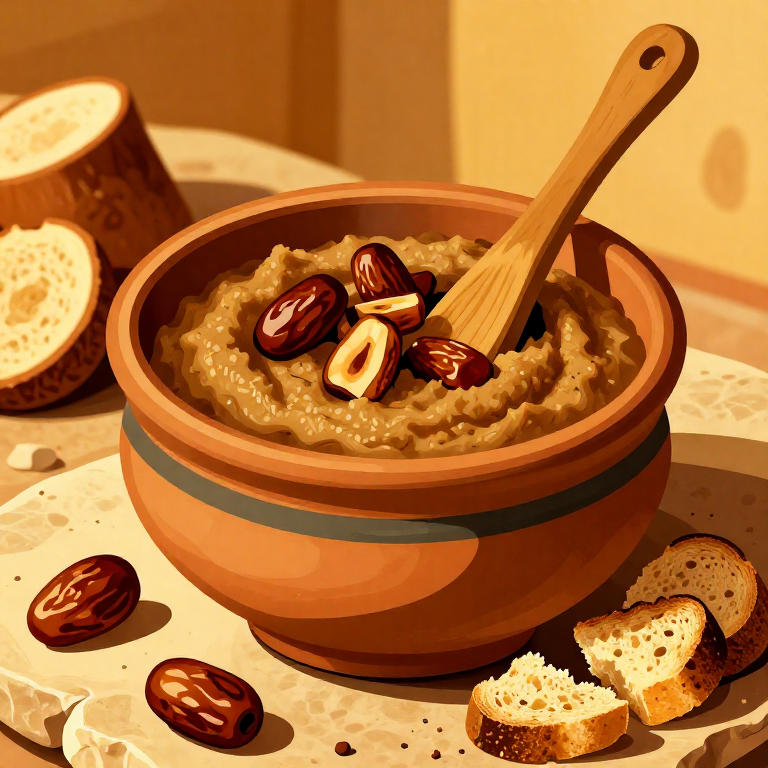
Chop the pitted dates into small pieces and add them to the bread mash. Dates (Phoenix dactylifera) contain approximately 60-70% sugar by dry weight, primarily glucose and fructose, which are directly fermentable by yeast without enzyme conversion. They also carry natural yeasts on their skin that can initiate fermentation. Stir the dates into the mash thoroughly and add remaining water to bring the total to a thin, soupy consistency. The mixture should be liquid enough to strain later but thick enough that the bread fragments are fully saturated. Date-sweetened beer is attested in Egyptian texts from the Old Kingdom onward, and date residues have been identified in beer vessels by chemical analysis.
Materiały do tego kroku:
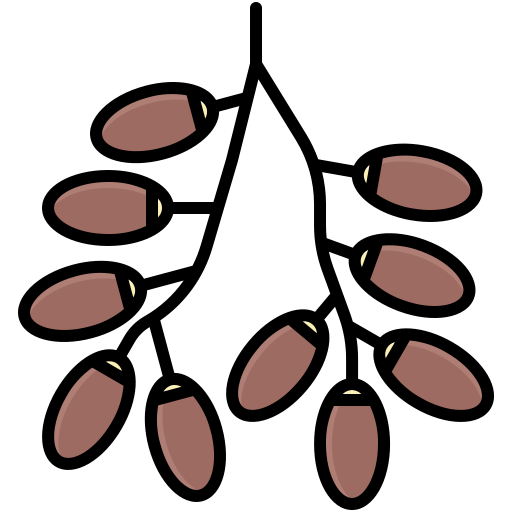 Daktyle (suszone)200-300 g sztukaWodaadditional as needed sztuka
Potrzebne narzędzia:
 Zestaw drewnianych łyżek
Initiate Fermentation
Initiate Fermentation
Cover the vessel with a loose cloth to keep out insects while allowing gas exchange, and place it in a warm location (25-30 degrees Celsius is ideal). Fermentation should begin within 12-24 hours, visible as bubbles rising through the mash surface and a sour, yeasty aroma developing. If natural fermentation does not start within 24 hours, add a small amount of bread yeast to inoculate the mash. In ancient Egypt, fermentation vessels were likely inoculated by reusing unwashed containers that harbored resident yeast cultures. The warm Egyptian climate (averaging 30-35 degrees Celsius during summer) accelerated fermentation significantly. Allow fermentation to proceed for 24-48 hours — longer fermentation produces a more sour, higher-alcohol beer.
Materiały do tego kroku:
 Kultura drożdży5 g sztuka
Potrzebne narzędzia:
 Płótno (do cedzenia)
Strain the Beer
Strain the Beer
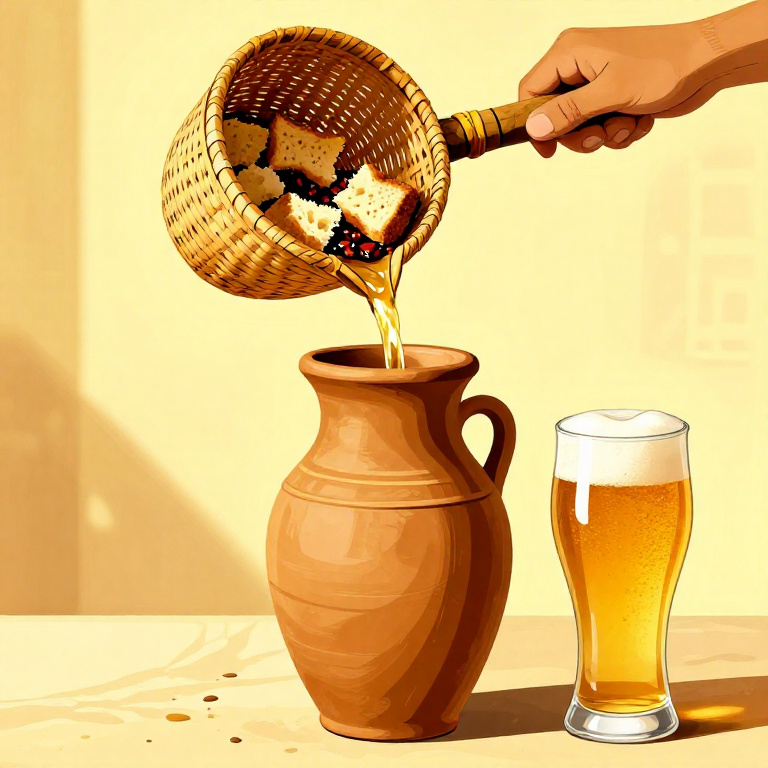
Once fermentation is active and the mash has a pleasantly sour, yeasty smell, strain the liquid through a woven basket strainer or a piece of loosely woven linen into a clean vessel. Press the solids firmly to extract as much liquid as possible. The resulting beer will be cloudy, tan to golden in color, with a thick, almost porridge-like consistency — quite different from modern clear beer. Egyptian brewery models and tomb paintings frequently depict the straining process, with workers pouring mash through basket filters into tall storage jars. The beer should taste mildly sweet from the dates, slightly sour from lactic acid fermentation, with a low alcohol content of approximately 3-5% ABV.
Potrzebne narzędzia:
Płótno (do cedzenia)Serve and Store the Beer
Serve and Store the Beer
Egyptian beer was consumed fresh, usually within 1-3 days of brewing, as it lacked the hops that preserve modern beer. Pour the strained beer into clean ceramic cups or bowls for serving. It should be thick and slightly effervescent, with a sweet-sour flavor. In ancient Egypt, beer was often drunk through long straws made from reed to filter out remaining sediment — this practice is depicted on cylinder seals and tomb reliefs. For short-term storage, seal the beer in a clay vessel with a mud stopper. Beer was so central to Egyptian society that it was offered to the gods in temples, included in tomb provisions, and used as payment — records from Deir el-Medina show workers received a daily ration of approximately 4-5 liters of beer.
Potrzebne narzędzia:
 Miska do picia
Materiały
6- 500 g sztukaZastępnik
- 3-4 litres sztukaZastępnik
- 200-300 g sztukaZastępnik
- 5 g sztukaZastępnik
- 500 g sztukaZastępnik
- 5 g (or rely on wild fermentation) sztukaZastępnik
Wymagane narzędzia
5- Zastępnik
- Zastępnik
- Zastępnik
- Zastępnik
- Zastępnik
CC0 Domena publiczna
Ten plan jest udostępniany na licencji CC0. Możesz go swobodnie kopiować, modyfikować, rozpowszechniać i wykorzystywać do dowolnych celów, bez konieczności uzyskiwania zgody.
Wesprzyj Makera kupując produkty przez jego plan, za co zarabia Prowizja Makera ustalony przez sprzedawców, lub stwórz nową iterację tego planu i dołącz go jako połączenie w swoim własnym planie, aby dzielić się przychodami.