Współpraca
SZTUKA
Piękno i dobre samopoczucie
RZEMIOSŁO
KULTURA I HISTORIA
ROZRYWKA
ŚRODOWISKO
JEDZENIE I NAPOJE
INŻYNIERIA ODWROTNA
NAUKI
LEKKOATLETYKA
TECHNOLOGIA
URZĄDZENIA DO NOSZENIA
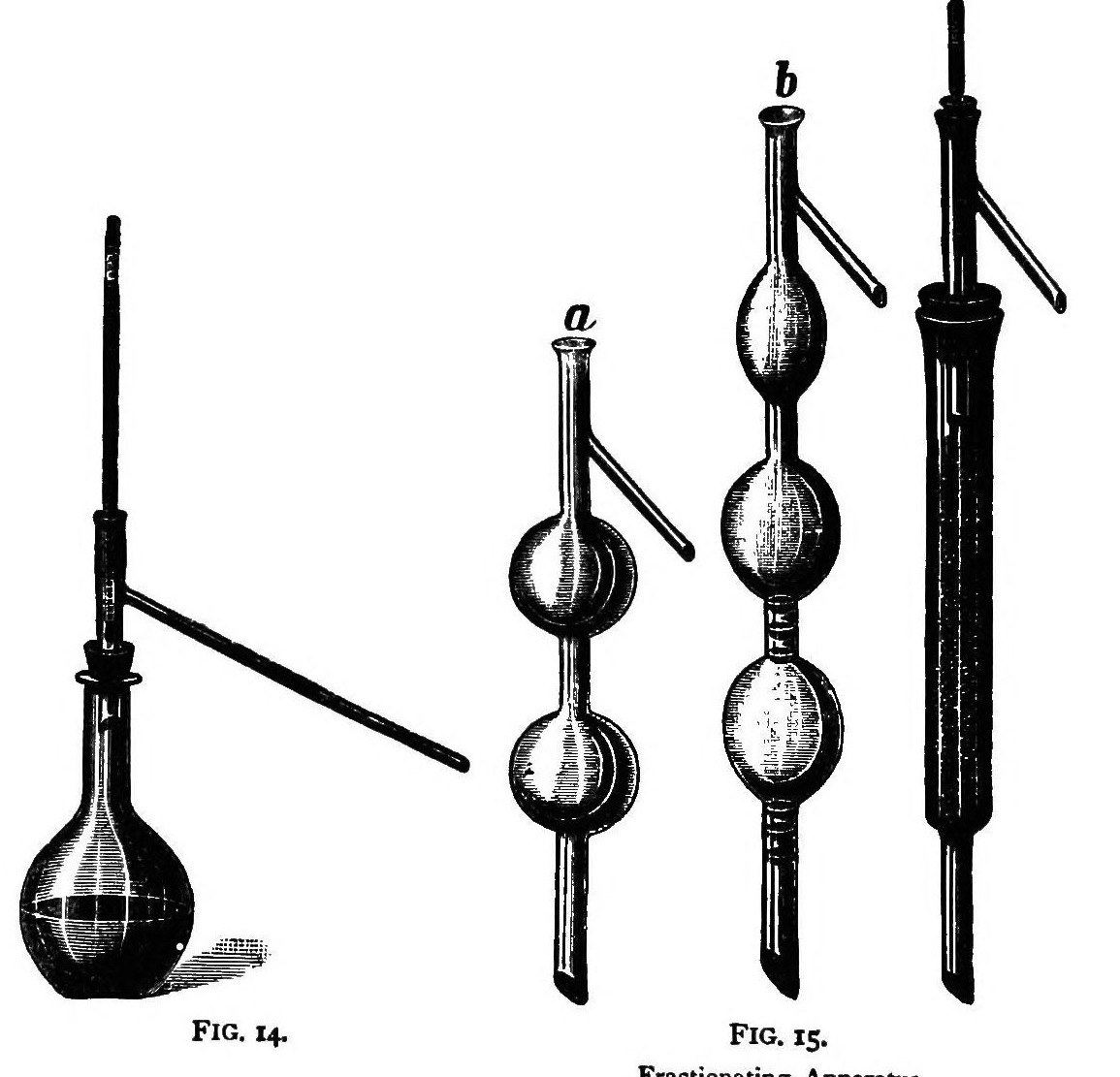


Fractionating Still: Hempel Bead Column on a Round Flask with Liebig Condenser (Gattermann, 1901)
The classic laboratory set-up for splitting a mixture of liquids by boiling point. A round flask is topped by a Hempel column, a tube packed with glass beads, with a side outlet near the top and a thermometer in a cork above it. The higher-boiling vapour condenses on the beads and runs back, so the vapour reaching the outlet is richer in the lower-boiling part; a Liebig condenser turns it to liquid in the receiver. One pass through it separates better than repeated distillations from a plain flask.
Result: a fractionating still for laboratory distillations at atmospheric pressure.
Source: L. Gattermann, The Practical Methods of Organic Chemistry (2nd American ed., 1901), pp. 16-24. Unknown: column and bead sizes. Picture: the book's Figs. 14-15.
Średniozaawansowany
Unknown
Instrukcje
1
1
Make the Hempel column
Make the Hempel column
Take a wide glass tube with a side outlet tube near its top and fill it with glass beads; the beads act like sieves, holding back the higher-boiling part. Fit it to a round, short-necked flask with a bored cork (or have it fused onto the bulb); flasks with the same neck width can share one cork. Choose a flask the charge will fill about two-thirds. Not given: sizes. Ours: a glass tube for the column body.
Materiały do tego kroku:
 Rurka szklana1 column
 Koraliki szklane1 packing
 Kolba kulista1 sztuka
 Korki2 sztuk
Potrzebne narzędzia:
 Wiertło do korków
2
2
Set the thermometer and condenser
Set the thermometer and condenser
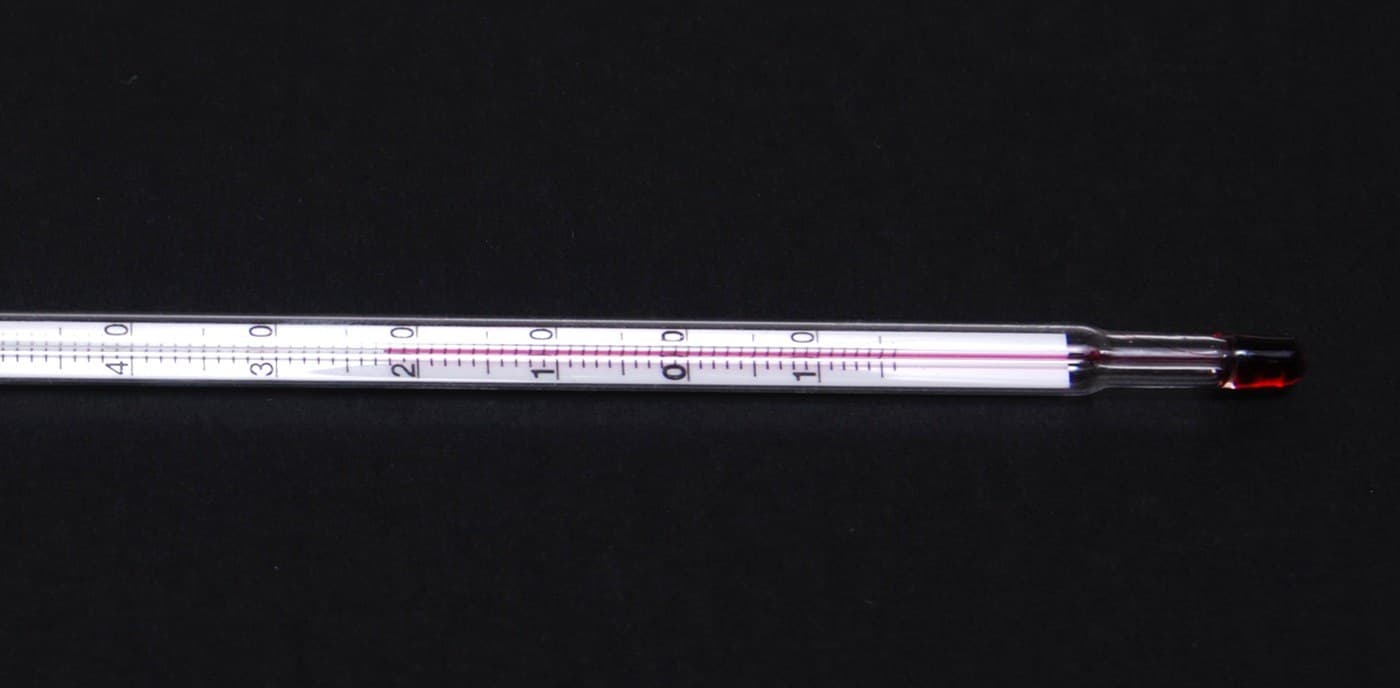
Pass the thermometer through a cork (not rubber) in the top of the column so its bulb sits level with the outlet, never down in the liquid. For liquids boiling up to 100° join the outlet to a Liebig condenser with a cork (long for very low boilers, short for high); from 100-200° cool the receiver with running water; above that a wide glass tube 50 cm long on the outlet is enough. If the vapour attacks cork, push the outlet far into the condenser instead. Clamp the apparatus above the outlet, never below it, or the hot glass may crack.
Materiały do tego kroku:
 Termometr laboratoryjny1 sztuka
 Chłodnica wodna1 sztuka
 Kolba Erlenmeyera2 receivers
Potrzebne narzędzia:
 Statyw laboratoryjnyWiertło do korków
3
3
Fractionate
Fractionate
Add a few bits of glass or platinum wire against bumping. Heat on the water-bath for liquids boiling up to about 80°, otherwise over a small free flame moved slowly to and fro under the flask, never above the liquid level, so the distillate falls into the receiver steadily in drops. With the Hempel column stop heating now and then so the liquid held in the beads can run back. Collect the first runnings, the main fraction at a steady temperature, and the last runnings in separate receivers; for a mixture, collect fractions over set ranges and distil them again.
Potrzebne narzędzia:
 Palnik BunsenaStatyw laboratoryjny
Materiały
7- 1 columnZastępnik
- 1 packingZastępnik
- 1 sztukaZastępnik
- 2 sztukZastępnik
- 1 sztukaZastępnik
- 1 sztukaZastępnik
- 2 receiversZastępnik
Wymagane narzędzia
3- Zastępnik
- Zastępnik
- Zastępnik
Według tego planu powstaje

Powiązane blueprinty
Te blueprinty dzielą się wiedzą — technikami, materiałami lub zasadami

CC0 Domena publiczna
Ten plan jest udostępniany na licencji CC0. Możesz go swobodnie kopiować, modyfikować, rozpowszechniać i wykorzystywać do dowolnych celów, bez konieczności uzyskiwania zgody.
Wesprzyj Makera kupując produkty przez jego plan, za co zarabia Prowizja Makera ustalony przez sprzedawców, lub stwórz nową iterację tego planu i dołącz go jako połączenie w swoim własnym planie, aby dzielić się przychodami.