Współpraca
SZTUKA
Piękno i dobre samopoczucie
RZEMIOSŁO
KULTURA I HISTORIA
ROZRYWKA
ŚRODOWISKO
JEDZENIE I NAPOJE
INŻYNIERIA ODWROTNA
NAUKI
LEKKOATLETYKA
TECHNOLOGIA
URZĄDZENIA DO NOSZENIA
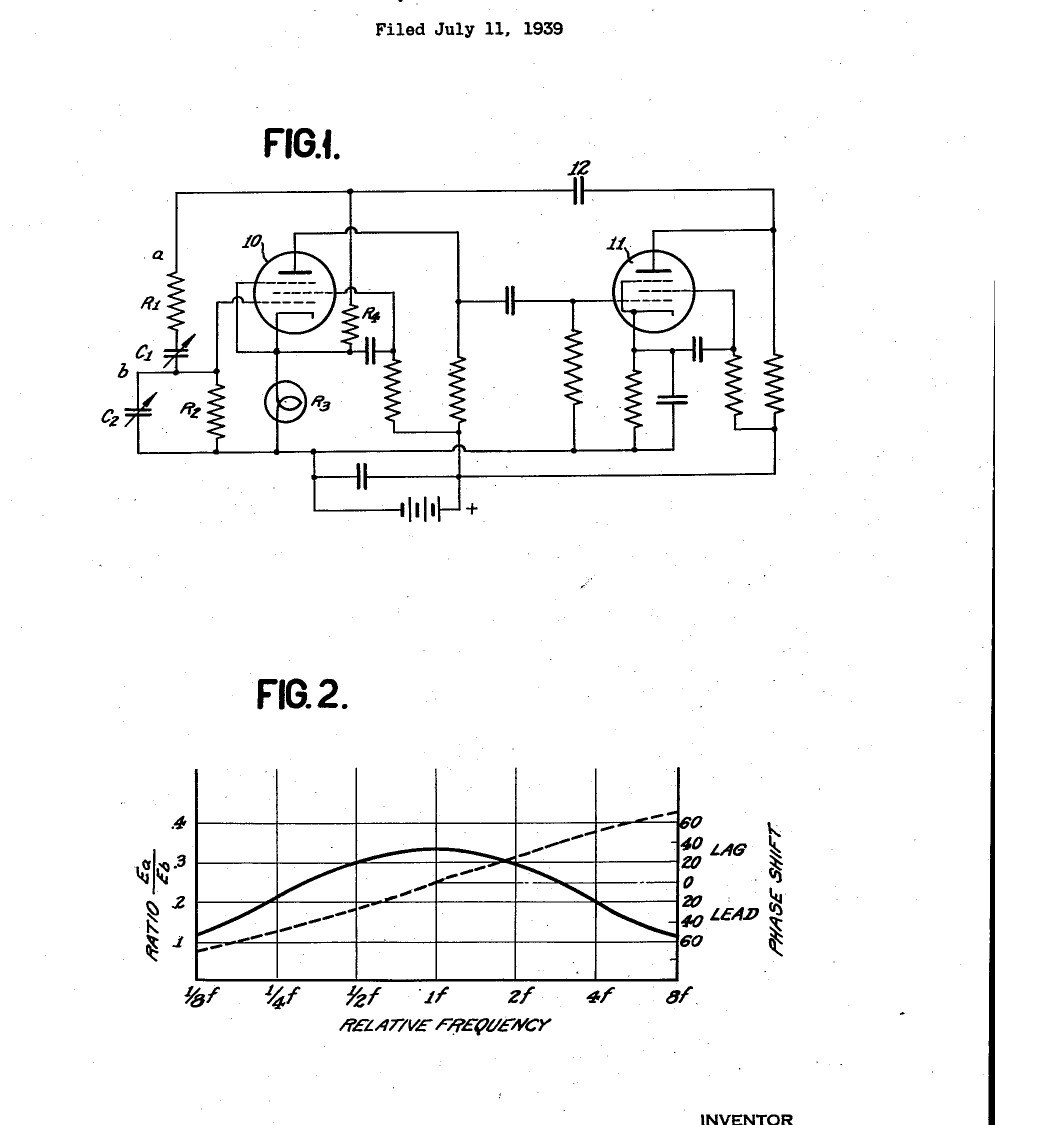
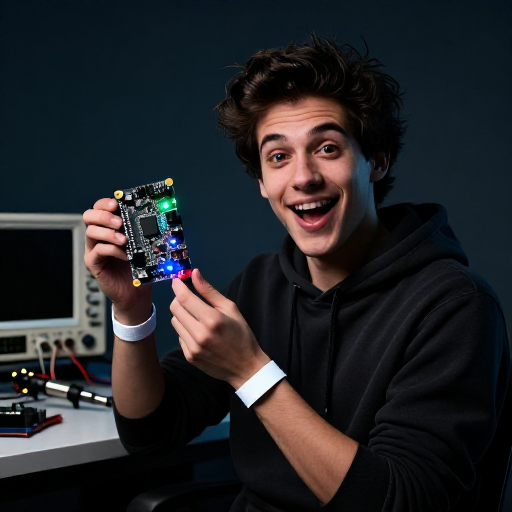

Function Generator: Resistance-Capacity Tuned Audio Oscillator with Lamp Amplitude Control (Hewlett, US 2,268,872, 1942)
The first Hewlett-Packard product: a test oscillator tuned by resistors and capacitors instead of coils. Two valve amplifiers feed their output back to their input through a series and a parallel R-C pair, which passes only one frequency in phase, so the circuit oscillates there. A second, negative feedback path through a small lamp holds the amplitude steady: as the swing grows the lamp warms, its resistance rises and the gain falls. One dial covers ten to one in frequency.
Result: a sine-wave signal generator covering 20 to 20,000 cycles in three ranges, about 0.25 % distortion.
Source: W. R. Hewlett, US 2,268,872 (1942). Unknown: valve types and component values. Picture: the patent drawing.
Zaawansowany
Unknown
Instrukcje
1
1
Build the two-stage amplifier
Build the two-stage amplifier
Wire two amplifying valves in cascade with resistance-capacity coupling, the first's anode to the second's grid, run as class A amplifiers. Not given: valve types, values, the supplies. Ours: pentode valves in sockets.
Materiały do tego kroku:
 Lampa pentodowa2 sztuk
 Podstawka lampowa2 sztuk
 Opór elektryczny1 zestaw
 Zestaw kondensatorów1 coupling and by-pass
 Obudowa aluminiowa1 case
 Drut lutowniczy1 as needed
Potrzebne narzędzia:
 Lutownica
2
2
Fit the tuning network
Fit the tuning network
From the second valve's anode, through a coupling capacitor, feed back to the first valve's grid through a resistor R1 in series with a variable capacitor C1, with a resistor R2 and variable capacitor C2 from the grid to ground. Make R1 = R2 and C1 = C2: the frequency is then 1/(2 pi R C), set by the capacitors, giving 10 to 1 on one dial. For the capacitors use a four-gang tuning capacitor with its sections paired in parallel. Switch three sets of resistors in for the ranges 20-200, 200-2000 and 2000-20,000 cycles. Ours: a rotary switch.
Materiały do tego kroku:
 Kondensator zmienny (dielektryk powietrzny)1 four-gangOpór elektryczny1 three sets of R1, R2
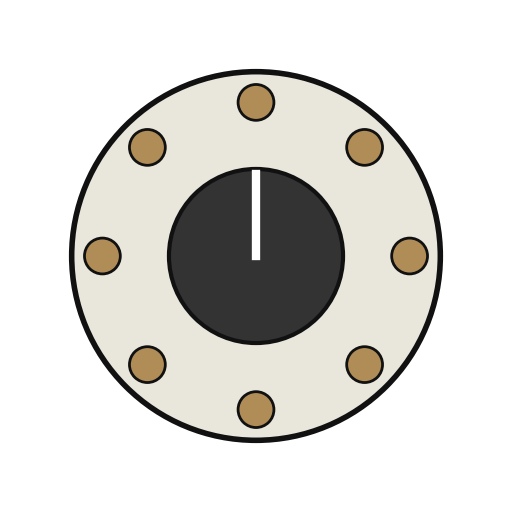 Przełącznik obrotowy1 range switch
Potrzebne narzędzia:
Lutownica Zestaw wkrętaków
3
3
Fit the lamp feedback and use it
Fit the lamp feedback and use it
From the same output, through the coupling capacitor, feed back to the first valve's cathode across a resistor R4 and a small incandescent lamp R3. As the oscillation grows, the lamp heats, its resistance rises, the negative feedback increases and the gain falls, so the amplitude settles below the point of grid current with no clipping. The negative feedback also steadies the gain against valve and supply changes. Take the output from the terminals; Hewlett's test unit held its output within about 10 % over 20-20,000 cycles, with about 0.25 % distortion and under 0.1 % frequency shift with supply changes.
Materiały do tego kroku:
 Żarówka1 small incandescent lampOpór elektryczny1 R4
 Zacisk bananowy2 output
Potrzebne narzędzia:
 Zasilacz prądu stałegoLutownica
Materiały
10- 2 sztukZastępnik
- 2 sztukZastępnik
- 1 R4Zastępnik
- 1 coupling and by-passZastępnik
- 1 caseZastępnik
- 1 as neededZastępnik
- 1 four-gangZastępnik
- 1 range switchZastępnik
- 1 small incandescent lampZastępnik
- Zastępnik
Według tego planu powstaje

CC0 Domena publiczna
Ten plan jest udostępniany na licencji CC0. Możesz go swobodnie kopiować, modyfikować, rozpowszechniać i wykorzystywać do dowolnych celów, bez konieczności uzyskiwania zgody.
Wesprzyj Makera kupując produkty przez jego plan, za co zarabia Prowizja Makera ustalony przez sprzedawców, lub stwórz nową iterację tego planu i dołącz go jako połączenie w swoim własnym planie, aby dzielić się przychodami.