
SZTUKA
Piękno i dobre samopoczucie
RZEMIOSŁO
KULTURA I HISTORIA
ROZRYWKA
ŚRODOWISKO
JEDZENIE I NAPOJE
INŻYNIERIA ODWROTNA
NAUKI
LEKKOATLETYKA
TECHNOLOGIA
URZĄDZENIA DO NOSZENIA
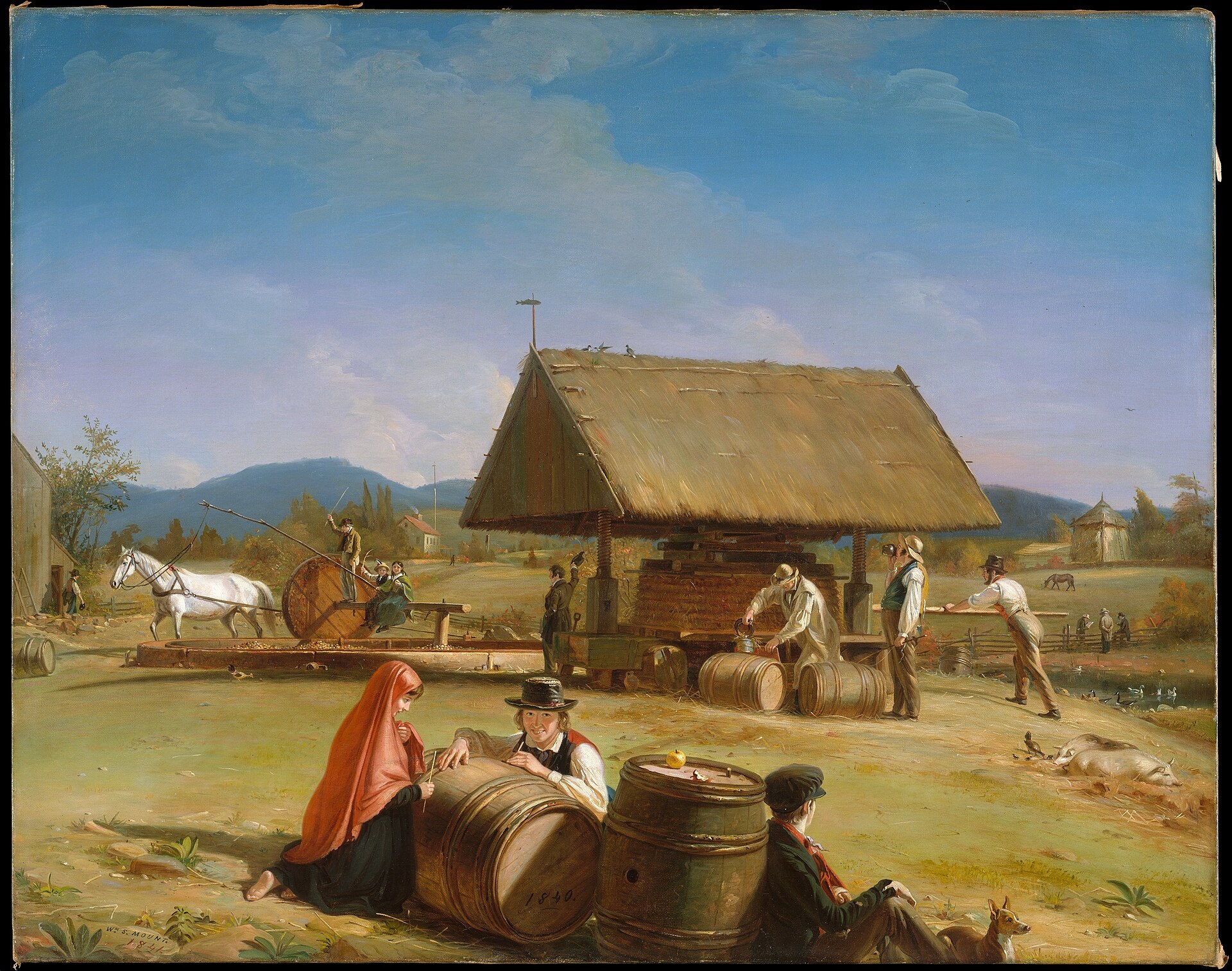
Hard Cider: Fresh Juice, a Pure Yeast Starter and a Cool Cellar (Alwood, USDA 1909)
Alchometer

Autor

Alchometer

18. listopad 2026GB
3
0
0
0
0

Hard Cider: Fresh Juice, a Pure Yeast Starter and a Cool Cellar (Alwood, USDA 1909)

William B. Alwood's cider for farm use, from the U.S. Department of Agriculture's Bulletin 129 (1909): juice straight from the press into clean casks, a pure yeast culture started three days before, a vent on the bung instead of a cotton plug, a cool cellar, one racking once the cider is bright, and bottling in June. He wrote that the results "establish clearly a method which any person of ordinary means can use".
Średniozaawansowany
About 8 months

Instrukcje

1

His measures and gravities

Wczytywanie notatnika Jupyter…
2

Read Alwood

"The following notes give in detail the operation of making cider in the simplest possible manner after cold weather begins ... The work was intended to approximate as closely as possible the conditions under which a farmer might ferment his cider for family use." (Bulletin 129, p. 10.)
3

Press the juice

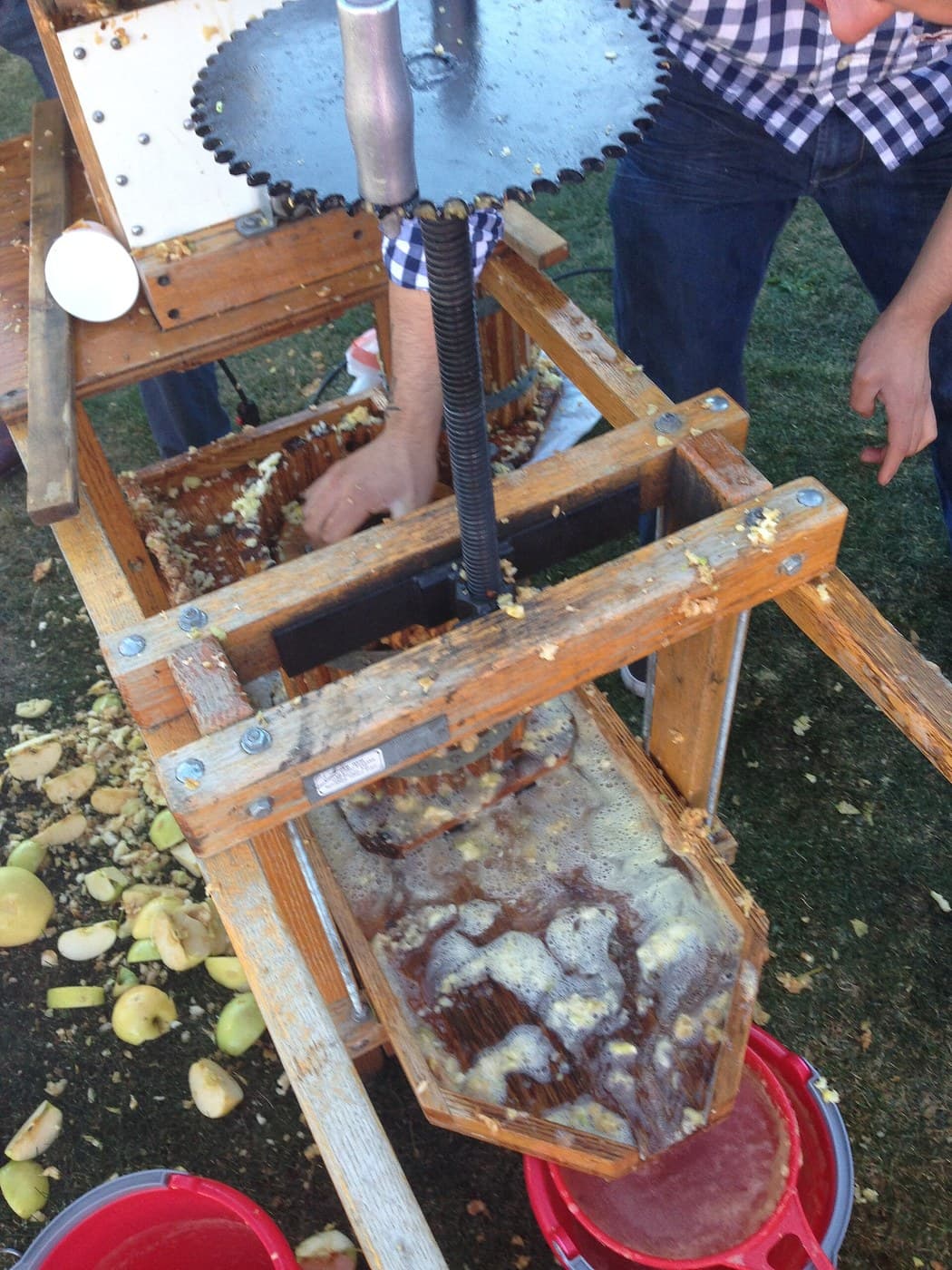
Alwood crushed and pressed 60 bushels of Winesap apples, "of a grade called unmerchantable, but ... not rotten nor soiled". His juice read 1.055 (13.6 Brix).
4

Prepare the casks

Steam each cask for twenty minutes, rinse with clean water and drain. Pour in one-half pint of 90 per cent alcohol, bung it tight, and leave it two weeks before use.

Potrzebne narzędzia:

Beczka drewnianaBeczka drewniana
Kocioł parowyKocioł parowy
WodaWoda
Etanol - klasa laboratoryjna, 95 %Etanol - klasa laboratoryjna, 95 %
Drewniany szpuntDrewniany szpunt
5

Start the yeast

Three days before pressing, boil 400 ml of apple juice in a flask in a water bath for fifteen minutes. Cool it and sow it with a pure wine yeast. It should be in full fermentation when used.

Materiały do tego kroku:

Moszcz jabłkowyMoszcz jabłkowy0.4 litr
Drożdże winiarskieDrożdże winiarskie1 sztuka

Potrzebne narzędzia:
Kolba ErlenmeyeraKolba Erlenmeyera
Łaźnia wodnaŁaźnia wodna
6

Fill and pitch

Fill the casks straight from the press; do not sulphur them. Add the yeast culture at once. Read the gravity: his was 1.055.

Materiały do tego kroku:

Moszcz jabłkowyMoszcz jabłkowy189 litrów

Potrzebne narzędzia:

Beczka drewnianaBeczka drewniana
AreometrAreometr
7

Fit the vent

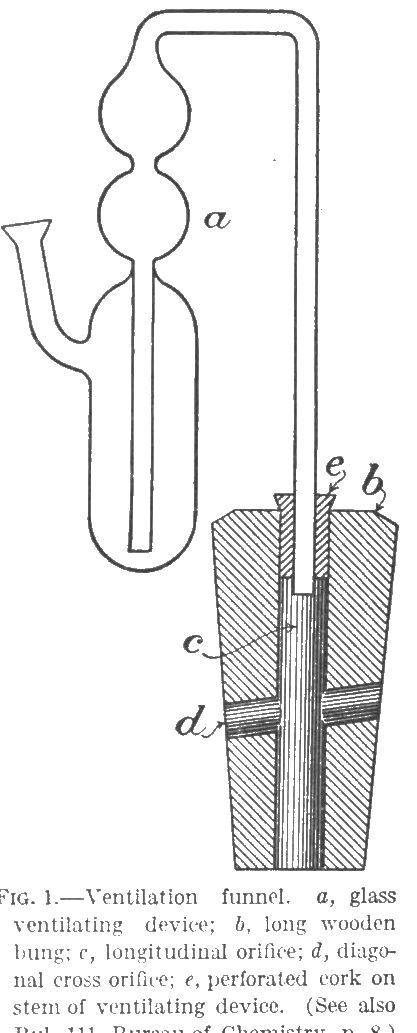
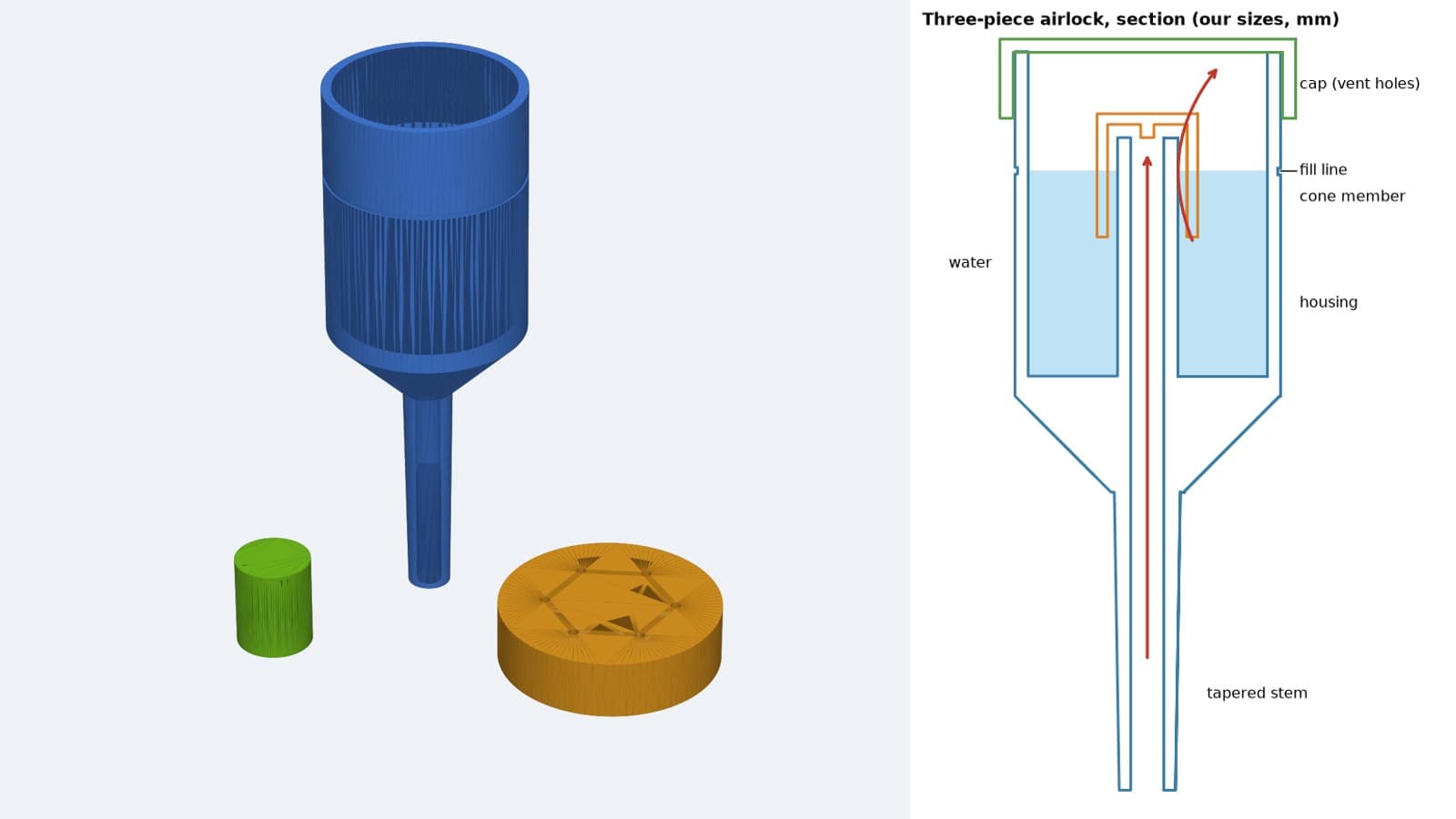
Do not plug with cotton: "if the cotton becomes the least bit damp, malferments readily find entrance". Put a vent funnel on a perforated cork in a long wooden bung, as his Fig. 1.
Krok 7 - Image 1

Potrzebne narzędzia:

Rurka fermentacyjnaRurka fermentacyjna
Drewniany szpuntDrewniany szpunt
KorkiKorki
8

Keep it cool

His cold storeroom stopped the fermentation; he moved the casks to a cellar at 13 to 14 °C. Through the winter he held the cellar at 11 to 14 °C. Check it with a thermometer.

Potrzebne narzędzia:

TermometrTermometr
9

Follow the gravity

Read the gravity every few weeks. His cask No. 3 went from 1.055 in October to 1.018 by 10 January.

Potrzebne narzędzia:

AreometrAreometr
TermometrTermometr
10

Rack when bright

Wait until the cider is "practically bright and free from sediment" (his: 13 January, at 10 °C). Wash fresh casks with warm water and burn one-third of a sulphur match in each; pour the cider in on the fumes.

Potrzebne narzędzia:

Beczka drewnianaBeczka drewniana
WodaWoda
Knot siarkowyKnot siarkowy
11

Draw off the dregs

Draw the cider down to within 1 inch (2.5 cm) of the bottom, through a funnel covered with a thin woven towel. Ours: with a siphon. About 2 quarts (1.9 litres) of dregs stayed in his cask.

Potrzebne narzędzia:

Rurka do syfonowaniaRurka do syfonowania
Lejek kuchennyLejek kuchenny
Ręcznik bawełniany do twarzyRęcznik bawełniany do twarzy
12

Keep the casks full

Top each cask up with cider of the same pressing. With the cask entirely full, a long bung bored crosswise under the vent funnel lets the gas out.

Potrzebne narzędzia:

Drewniany szpuntDrewniany szpunt
Rurka fermentacyjnaRurka fermentacyjna
13

Bottle in June

His final bottling was 25 June, at 1.006. Draw it into pint champagne bottles, cork them and tie the corks down. Use champagne bottles only: his unfiltered bottles opened "with high pressure".

Materiały do tego kroku:

Butelka do szampanaButelka do szampana1 sztuka
KorkiKorki1 sztuka

Potrzebne narzędzia:

Rurka do syfonowaniaRurka do syfonowania
Sznurek bawełnianySznurek bawełniany
14

Troubleshooting

What went wrong in Alwood's casks, and the fix.

Flow

Loading...
15

History and honest limits

**William B. Alwood**, *Enological Studies. I. Experiments in Cider Making Applicable to Farm Conditions*, USDA Bureau of Chemistry Bulletin No. 129 (1909), under H. W. Wiley. He filled three 50-gallon whisky barrels on 23 October 1907: No. 1 left to natural fermentation, No. 2 with yeast No. 73 (Sauternes), No. 3 with yeast No. 161 (Ahrweiler). He called No. 3 the "Finest cider ever handled here", and found the total acid "about right for a sprightly cider—namely, approximately 0.40 per cent". A 10-gallon keg left with a cotton plug turned to vinegar. His yeast cultures came from his own laboratory and are not sold today; a pure wine yeast takes their place. He does not say how he drew the cider off; ours is a siphon. The alcohol estimate in the notebook is ours.

Materiały

4

Wymagane narzędzia

16

Według tego planu powstaje

CC0 Domena publiczna

Ten plan jest udostępniany na licencji CC0. Możesz go swobodnie kopiować, modyfikować, rozpowszechniać i wykorzystywać do dowolnych celów, bez konieczności uzyskiwania zgody.

Wesprzyj Makera kupując produkty przez jego plan, za co zarabia Prowizja Makera ustalony przez sprzedawców, lub stwórz nową iterację tego planu i dołącz go jako połączenie w swoim własnym planie, aby dzielić się przychodami.

Dyskusja

(0)

Zaloguj się aby dołączyć do dyskusji

Ładowanie komentarzy...