SZTUKA
Piękno i dobre samopoczucie
RZEMIOSŁO
KULTURA I HISTORIA
ROZRYWKA
ŚRODOWISKO
JEDZENIE I NAPOJE
INŻYNIERIA ODWROTNA
NAUKI
LEKKOATLETYKA
TECHNOLOGIA
URZĄDZENIA DO NOSZENIA
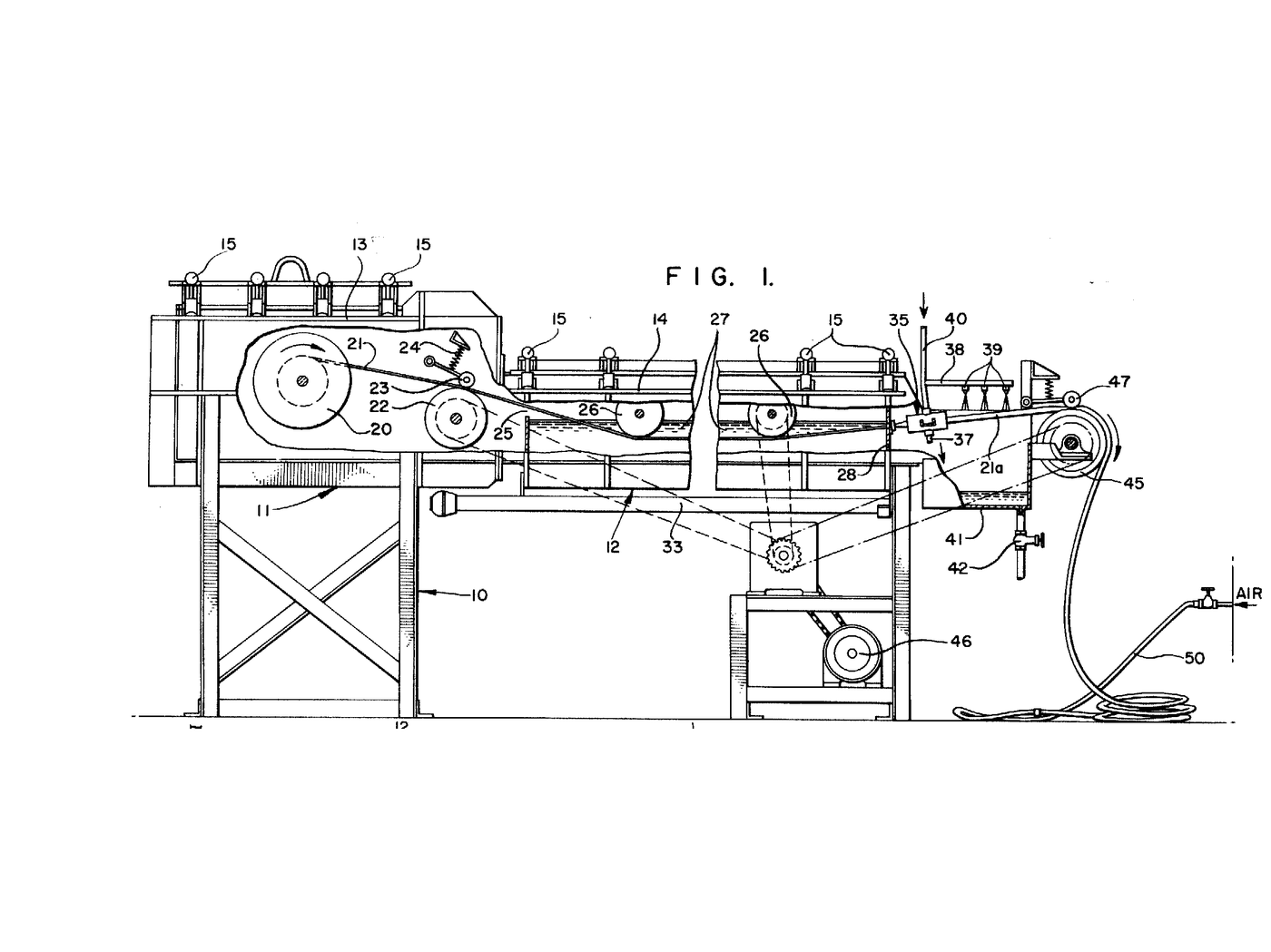


Heat-Shrink Tubing
Paul Cook founded Raychem in 1957 to use radiation chemistry: electron beams that cross-link polyethylene chains so the plastic no longer melts, only softens. Such a material has a memory. Stretch it while hot, cool it stretched, and it keeps the new size until heated again - then it shrinks back tight onto whatever is inside.
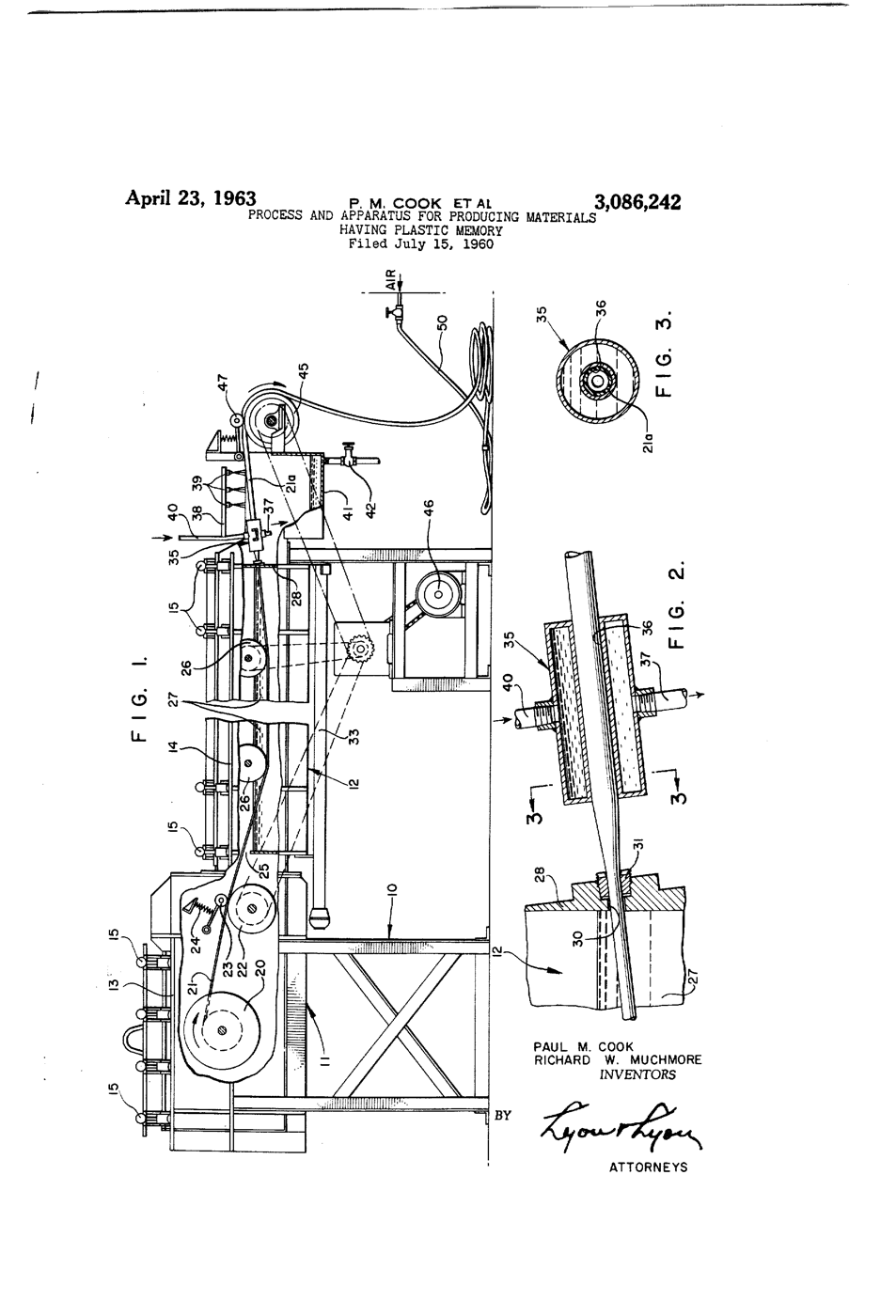
**US 3,086,242**, "Process and apparatus for producing materials having plastic memory", Cook and Muchmore, assigned to Raychem, filed 15. July 1960, granted 23. April 1963: tubing carried through a heated zone in a pressure vessel, expanded as it emerges, and cooled while expanded - "dimensionally heat-unstable tubing".
**You measure the memory and use it**: free-shrink a sample and check where the plastic went, then insulate a crimped wire splice.
Początkujący
1 hour
Instrukcje
1
1
Measure as supplied
Measure as supplied
Cut 40 mm of 2:1 heat-shrink. Measure its flattened width, its wall (pinch one wall in the caliper) and its length.
Materiały do tego kroku:
 Koszulka termokurczliwa1 sztuka
Potrzebne narzędzia:
 Nóż introligatorski
 Suwmiarka cyfrowa 6 cali
2
2
Shrink it free
Shrink it free
Hold it in the helping hands and heat evenly with the heat gun, keeping the gun moving, until it stops changing. Let it cool; measure inside diameter, wall and length again.
Potrzebne narzędzia:
 Opalarka
 Trzecia rękaSuwmiarka cyfrowa 6 cali
 Okulary ochronne bezbarwne
3
3
Crimp the splice
Crimp the splice
Slide 40 mm of heat-shrink onto one wire first. Strip 6 mm from both wire ends, push them into a butt splice and crimp each side. Tug each wire to 20 N on the spring scale - it must not pull out.
Materiały do tego kroku:
 Przewód montażowy1 metr
 Nieizolowana tulejka łącząca1 sztukaKoszulka termokurczliwa1 sztuka
Potrzebne narzędzia:
 Ściągacz izolacji
 Zaciskarka do końcówek
 Siłomierz (waga sprężynowa)
4
4
Shrink it on
Shrink it on
Centre the tube over the splice with 10 mm overlap onto the insulation each side. Heat from the middle outwards so air is pushed out, not trapped.
Potrzebne narzędzia:
Opalarka5
5
Test the insulation
Test the insulation
Wrap aluminium foil tightly round the shrunk sleeve. Set the multimeter to its highest resistance range and measure between the wire and the foil: it must read open circuit. Then check the wire end to end: near zero ohms.
Materiały do tego kroku:
 Folia aluminiowa1 arkusz
Potrzebne narzędzia:
 Multimetr
6
6
Shrink ratio and conservation
Shrink ratio and conservation
Wczytywanie notatnika Jupyter…
7
7
History & Context
History & Context
**What the patent specifies:** tubing heated, expanded under pressure as it leaves a vessel, and cooled while expanded, to give material with plastic memory. **Modern build (derived):** commercial 2:1 polyolefin heat-shrink.
Heat-shrink replaced tape on aircraft, military and then all wiring harnesses; the same memory idea gives shrink film and pipe-joint sleeves. Its limits: it must be slid on before the joint is made, overheating chars it, and a thin wall offers little protection from abrasion.
Materiały
4- 2 sztukZastępnik
- 1 metrZastępnik
- 1 sztukaZastępnik
- 1 arkuszZastępnik
Wymagane narzędzia
9- Zastępnik
- Zastępnik
- 1 vendor sell this, none ship to you yetZastępnik
- Zastępnik
- Zastępnik
- Zastępnik
- Zastępnik
- Zastępnik
- Zastępnik
Powiązane blueprinty
Te blueprinty dzielą się wiedzą — technikami, materiałami lub zasadami


CC0 Domena publiczna
Ten plan jest udostępniany na licencji CC0. Możesz go swobodnie kopiować, modyfikować, rozpowszechniać i wykorzystywać do dowolnych celów, bez konieczności uzyskiwania zgody.
Wesprzyj Makera kupując produkty przez jego plan, za co zarabia Prowizja Makera ustalony przez sprzedawców, lub stwórz nową iterację tego planu i dołącz go jako połączenie w swoim własnym planie, aby dzielić się przychodami.