SZTUKA
Piękno i dobre samopoczucie
RZEMIOSŁO
KULTURA I HISTORIA
ROZRYWKA
ŚRODOWISKO
JEDZENIE I NAPOJE
INŻYNIERIA ODWROTNA
NAUKI
LEKKOATLETYKA
TECHNOLOGIA
URZĄDZENIA DO NOSZENIA
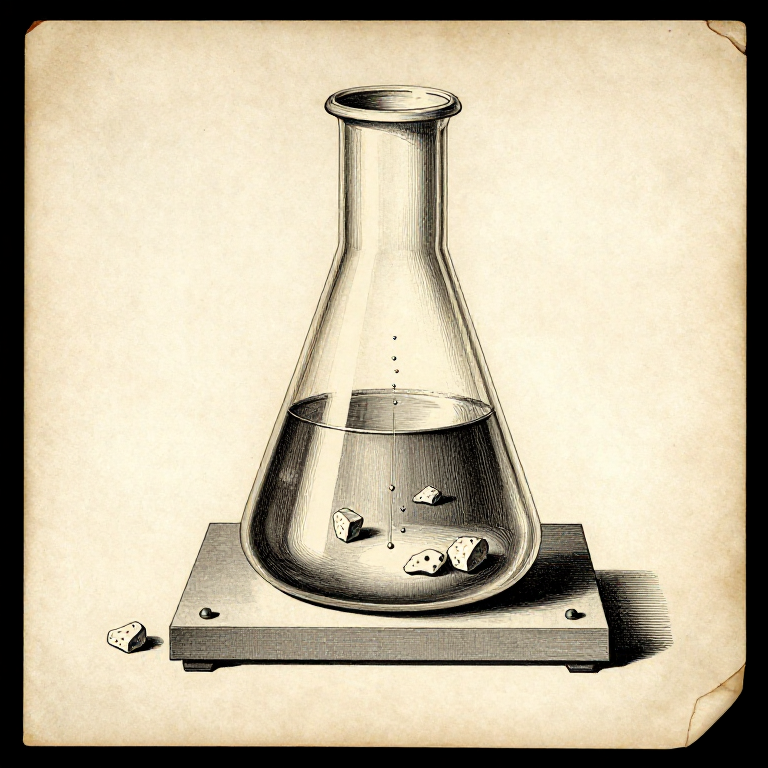

Heating and Stirring Without Bumping: Why the Flask Spat at You
A liquid heated in smooth glass can go ABOVE its boiling point without boiling, because a bubble needs somewhere to start and clean glass offers nowhere. When one finally does start, the whole superheated volume flashes into vapour at once.
That is bumping, and it throws the contents out of the vessel. It is most likely in exactly the situation where it matters most: clean new glassware, a quiet liquid, somebody watching closely from above.
The cure is to give bubbles somewhere to form, all the time, so that none of the liquid ever gets the chance to superheat. Boiling chips or a stirrer bar do that, and they are not optional extras.
Początkujący
2 hours
Instrukcje
1
1
Boiling chips or a stirrer bar, added COLD
Boiling chips or a stirrer bar, added COLD
Add boiling chips or a magnetic stirrer bar before heating starts. Their porous surface or their motion keeps a stream of small bubbles going, and small bubbles continuously are what prevents one enormous one suddenly.
Never add boiling chips to a liquid that is already hot. A superheated liquid given a nucleation site all at once does exactly what the chips were meant to prevent, and does it while your hand is over the vessel.
Chips are single-use. Once cooled, their pores fill with liquid and they stop working, so a flask reheated after cooling needs fresh ones — added, again, while it is cold.
Materiały do tego kroku:
 Woda destylowana1 litr
Potrzebne narzędzia:
 Kolba Erlenmeyera
 Płyta grzejna z mieszadłem magnetycznym
 Płyta grzejna
2
2
Heat the outside evenly, not one spot
Heat the outside evenly, not one spot
A hot plate heats the whole base; a flame heats a coin-sized patch to a temperature far above the liquid's boiling point. That hot spot is where superheating, decomposition and cracked glass all start.
A water or steam bath is better again for anything below 100 degrees: it cannot exceed the boiling point of its own water, so it physically cannot overheat the contents. Sand baths and oil baths do the same job at higher temperatures.
Use borosilicate, and never heat a vessel that is cracked, chipped or scratched. Thermal stress finds the flaw, and a flask that fails while hot empties its contents across the bench.
Materiały do tego kroku:
 Woda1 litr
Potrzebne narzędzia:
Płyta grzejna Zlewka borokrzemowa
 Łapa laboratoryjna (biureta/kolba)
 Gogle chemiczne
3
3
Stir the liquid, do not just heat it
Stir the liquid, do not just heat it
Hot liquid rises and cold sinks, so an unstirred vessel develops a hot layer at the bottom and a cool one above. The thermometer reads one of those and the reaction experiences the other.
A magnetic stirrer bar turns the whole volume over and makes the temperature you measure the temperature that is actually happening. It also keeps a suspension suspended, which matters whenever a solid is dissolving or reacting.
Match the bar to the vessel. A bar too long for a round-bottom flask will not spin, and a bar that has lost its grip on the field spins wildly, chips the glass, and grinds the solid you were trying to dissolve.
Materiały do tego kroku:
 Chlorek sodu (sól)1 sztukaWoda destylowana1 litr
Potrzebne narzędzia:
Płyta grzejna z mieszadłem magnetycznym Bagietka szklana
 Zlewka szklana
4
4
Never seal it, and never look straight down it
Never seal it, and never look straight down it
A heated closed vessel is a pressure vessel. Loosen every stopper, and use a watch glass resting loosely on a beaker rather than anything that seals — it keeps dust out and lets vapour go.
Never point the mouth of a heated tube or flask at yourself or anyone else, and never lean over one to look in. If a vessel does bump, what comes out goes straight up.
And keep the heating under control at the end: remove the heat before the last of the liquid goes, the same rule as evaporating. A dry vessel still on the plate reaches the plate's full temperature within a minute or two.
Potrzebne narzędzia:
 Szkiełko zegarkoweGogle chemiczneŁapa laboratoryjna (biureta/kolba)Płyta grzejna
Materiały
3- 2 litrówZastępnik
- 1 litrZastępnik
- 1 sztukaZastępnik
Wymagane narzędzia
9- Zastępnik
- Zastępnik
- Zastępnik
- Zastępnik
- Zastępnik
- Zastępnik
- Zastępnik
- Zastępnik
Powiązane blueprinty
Te blueprinty dzielą się wiedzą — technikami, materiałami lub zasadami

Niebezpieczne
Acid Into Water, Never Water Into Acid: Why the Order Is Not a Preference
autor: Charlie
Chemia
19
0
0
0
0
0

Filtering: Gravity, Vacuum, and Why the Filtrate Came Through Cloudy
autor: Charlie
Chemia
26
0
0
0
0
0
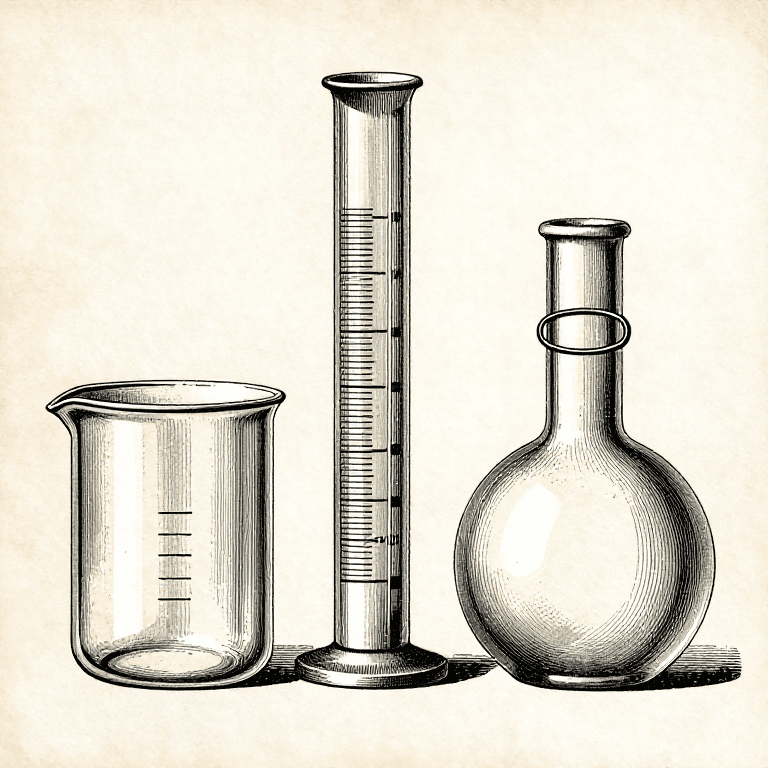
Making Up a Solution: Which Glassware Actually Measures, and Which Only Looks Like It
autor: Charlie
Chemia
24
0
0
0
0
0
CC0 Domena publiczna
Ten plan jest udostępniany na licencji CC0. Możesz go swobodnie kopiować, modyfikować, rozpowszechniać i wykorzystywać do dowolnych celów, bez konieczności uzyskiwania zgody.
Wesprzyj Makera kupując produkty przez jego plan, za co zarabia Prowizja Makera ustalony przez sprzedawców, lub stwórz nową iterację tego planu i dołącz go jako połączenie w swoim własnym planie, aby dzielić się przychodami.