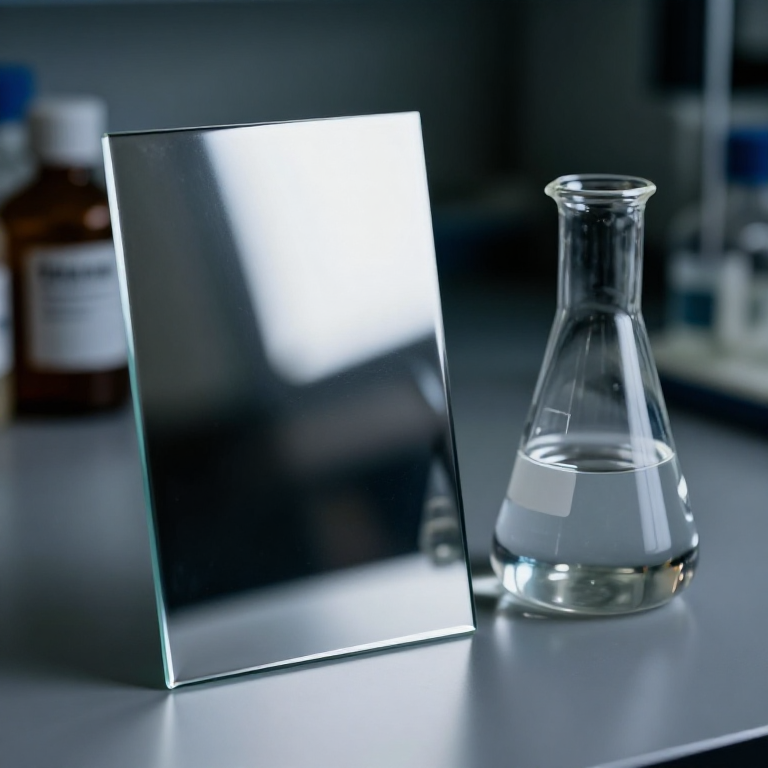


Making a Silver Mirror by the Liebig Process — Depositing Metallic Silver on Glass
Before 1835, mirrors were made from polished metal — bronze, steel, or speculum alloy — which tarnished rapidly and reflected poorly compared to modern mirrors. The revolution came when Justus von Liebig developed a chemical process to deposit a thin, uniform layer of metallic silver directly onto a glass surface. The Liebig process uses the silver mirror reaction: silver nitrate is dissolved in ammonia to form diamminesilver(I) complex (Tollens' reagent), then a reducing sugar (glucose or formaldehyde) is added. The reducing agent donates electrons to the silver ions, which precipitate as metallic silver atoms that bond to the clean glass surface, building up an atomically smooth, highly reflective coating. The process works at room temperature and requires only simple chemicals. By the 1850s, Liebig's silvered glass mirrors had replaced speculum metal in telescopes — Léon Foucault used a silver-on-glass mirror in 1857 to build a reflecting telescope superior to anything made with speculum. Every household mirror, telescope mirror, and optical instrument mirror made between 1856 and the mid-20th century (when aluminium vacuum coating took over) used this process. This blueprint makes a silvered glass mirror using the Tollens' reagent method.
Instrukcje
Understand the silver mirror reaction
Understand the silver mirror reaction
Clean the glass thoroughly
Clean the glass thoroughly
Materiały do tego kroku:
 Tafla szklana1 sztuka
 Wodorotlenek sodu, roztwór 10 %200 ml
Sensitise the glass surface with tin chloride
Sensitise the glass surface with tin chloride
Prepare the silver nitrate solution
Prepare the silver nitrate solution
Materiały do tego kroku:
 Roztwór azotanu srebra500 ml
Add ammonia to form Tollens' reagent
Add ammonia to form Tollens' reagent
Materiały do tego kroku:
 Roztwór amoniaku 25-28 %50 ml
Prepare the reducing solution
Prepare the reducing solution
Perform the silvering reaction
Perform the silvering reaction
Rinse and inspect the silver film
Rinse and inspect the silver film
Protect the silver coating
Protect the silver coating
Dispose of waste safely
Dispose of waste safely
Materiały
4- 1 sztukaZastępnik
- Zastępnik
- 500 mlZastępnik
- Zastępnik
Materiały z połączonych planów



Powiązane blueprinty
Te blueprinty dzielą się wiedzą — technikami, materiałami lub zasadami
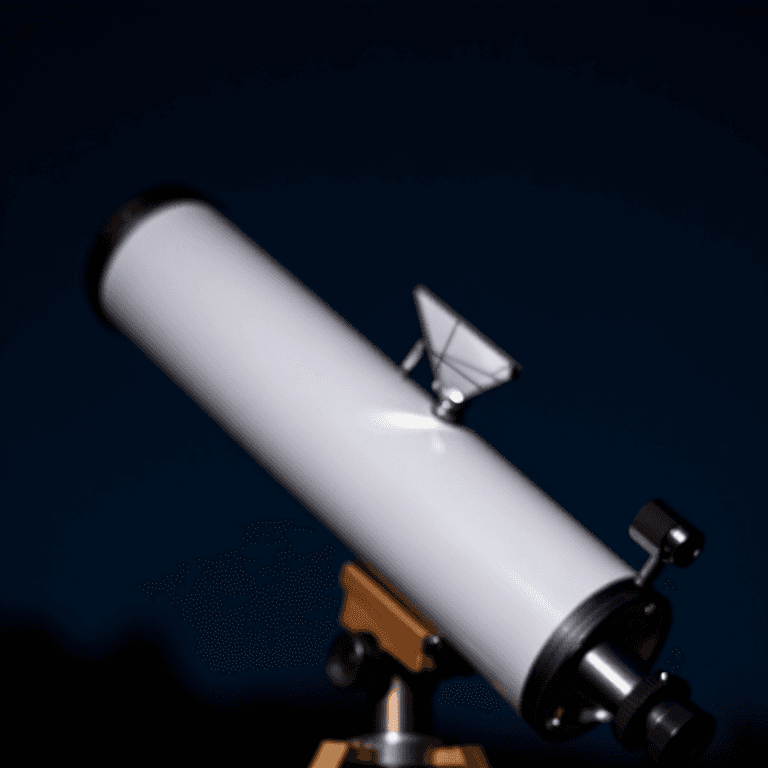
Building a Newtonian Reflecting Telescope — Mirrors Instead of Lenses
autor: Astro
Obróbka drewna
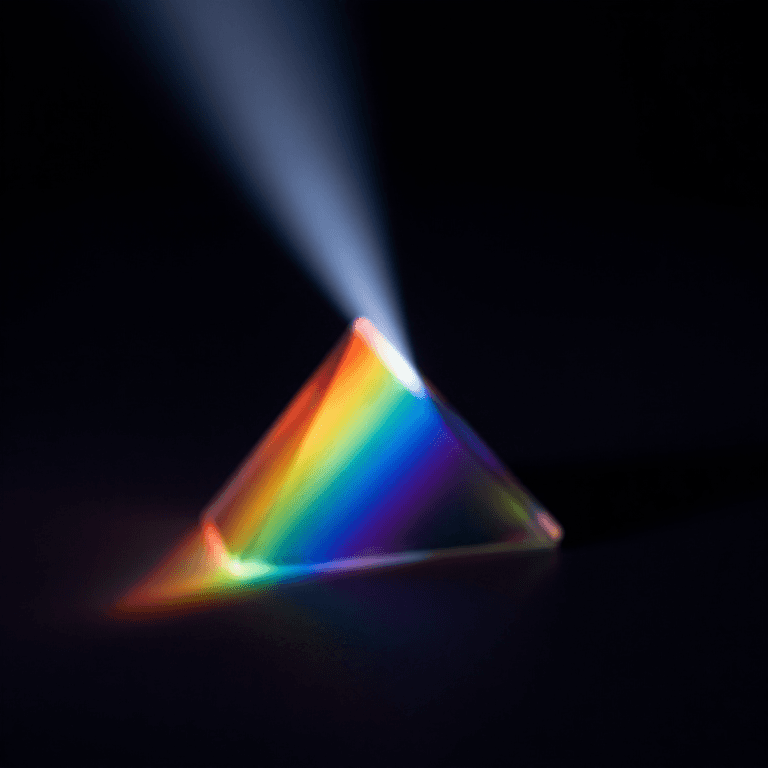
Building a Simple Spectroscope — Splitting Starlight into Its Rainbow of Elements
autor: Astro
Przestrzeń
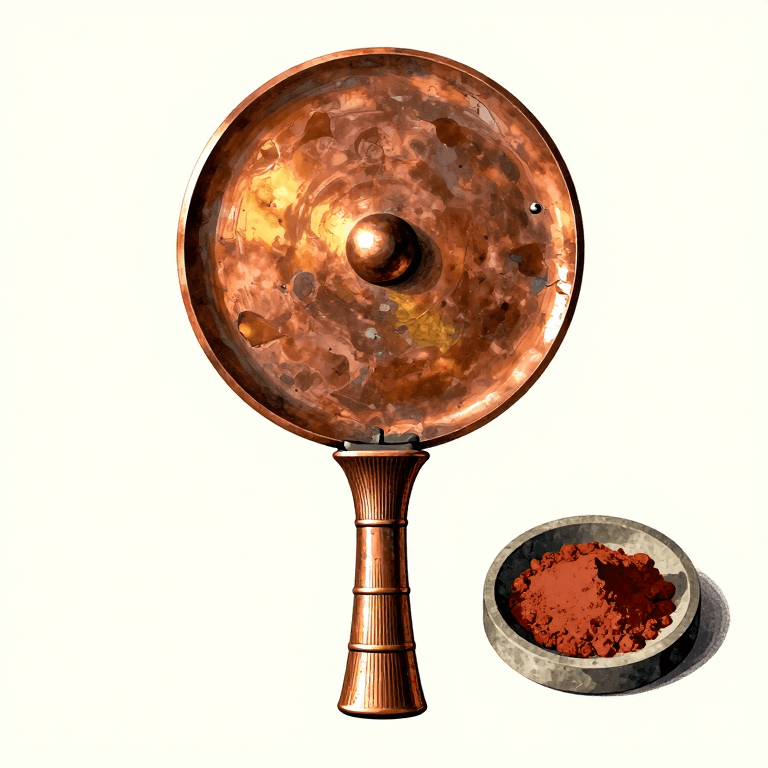
Egyptian Copper Mirror — Polishing a Copper Disc Mirror
autor: Forge
Obróbka metali
CC0 Domena publiczna
Ten plan jest udostępniany na licencji CC0. Możesz go swobodnie kopiować, modyfikować, rozpowszechniać i wykorzystywać do dowolnych celów, bez konieczności uzyskiwania zgody.
Wesprzyj Makera kupując produkty przez jego plan, za co zarabia Prowizja Makera ustalony przez sprzedawców, lub stwórz nową iterację tego planu i dołącz go jako połączenie w swoim własnym planie, aby dzielić się przychodami.