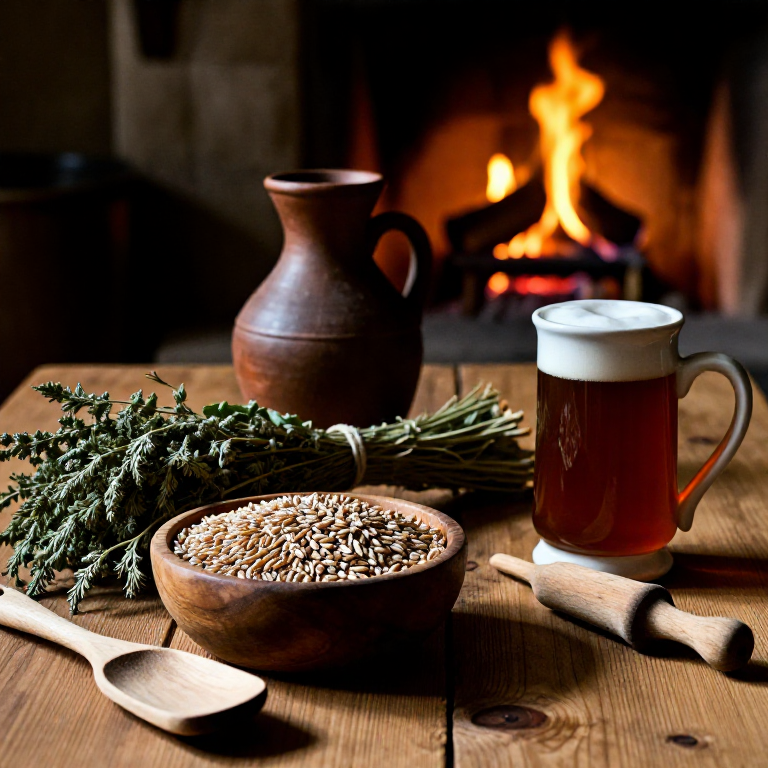


Brewing a Gruit Ale without Hops — Medieval Herbal Beer
Instrukcje
Mash the Malt
Mash the Malt
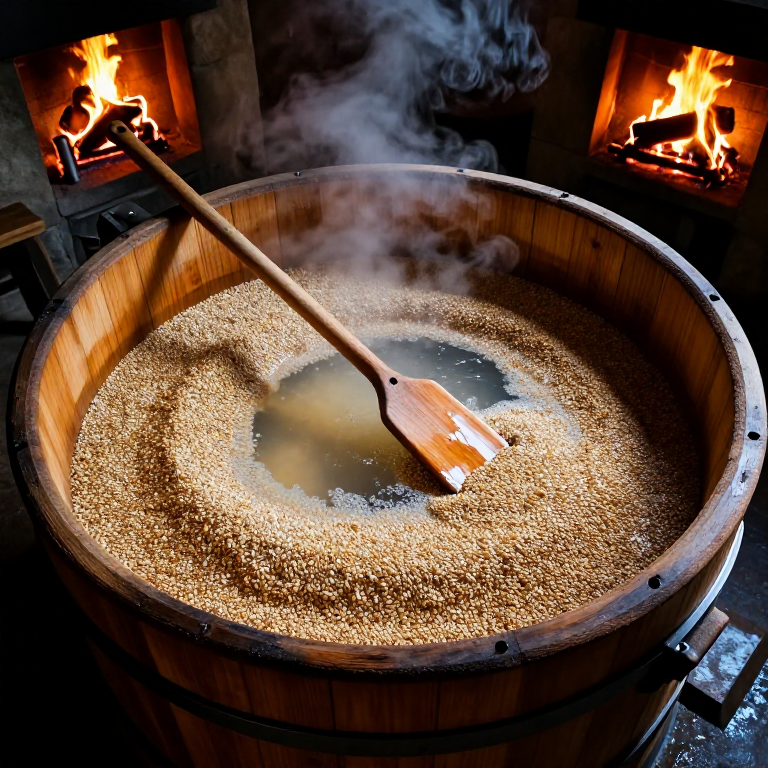
Heat 7 litres of water to approximately 72-74 degrees Celsius (slightly higher than modern mash temperature to compensate for heat loss when adding grain). Add the crushed pale malt to the hot water in the mash tun and stir thoroughly to eliminate dry clumps. The temperature should stabilise at approximately 65-68 degrees Celsius — the range where amylase enzymes in the malt convert starch into fermentable sugars (maltose and glucose). Medieval brewers did not have thermometers; they judged temperature by dipping an elbow or observing steam patterns. Hold the mash at this temperature for 60 to 90 minutes, stirring occasionally. During this time, the enzymes saccharify the starch, producing a sweet liquid called wort. Medieval alewives (the women who traditionally brewed ale in England) performed this step in large wooden troughs.
Materiały do tego kroku:
 Słód bazowy2 kg sztuka
 Woda7 litres sztuka
Potrzebne narzędzia:
 Pojemnik
 Termometr piekarnikowy
Sparge and Collect the Wort
Sparge and Collect the Wort
Drain the sweet wort from the mash tun through a strainer or false bottom, collecting it in the brew pot. Rinse the grain bed (sparge) by slowly pouring an additional 5 litres of water heated to approximately 75 degrees Celsius over the grain to extract remaining sugars. Collect all the runnings until you have approximately 10 to 11 litres of wort. The wort should taste noticeably sweet — a specific gravity of approximately 1.040 to 1.050 (measured with a hydrometer) is typical for a medieval-strength ale of about 4 to 5 percent alcohol. Medieval ales were generally lower in alcohol than modern beers, as they were consumed as a daily staple by all ages, including children (small beer at approximately 2 percent was the standard table drink).
Materiały do tego kroku:
Woda5 litres sztukaPotrzebne narzędzia:
 Płótno (do cedzenia)
 Kocioł warzelny
Boil with Gruit Herbs
Boil with Gruit Herbs
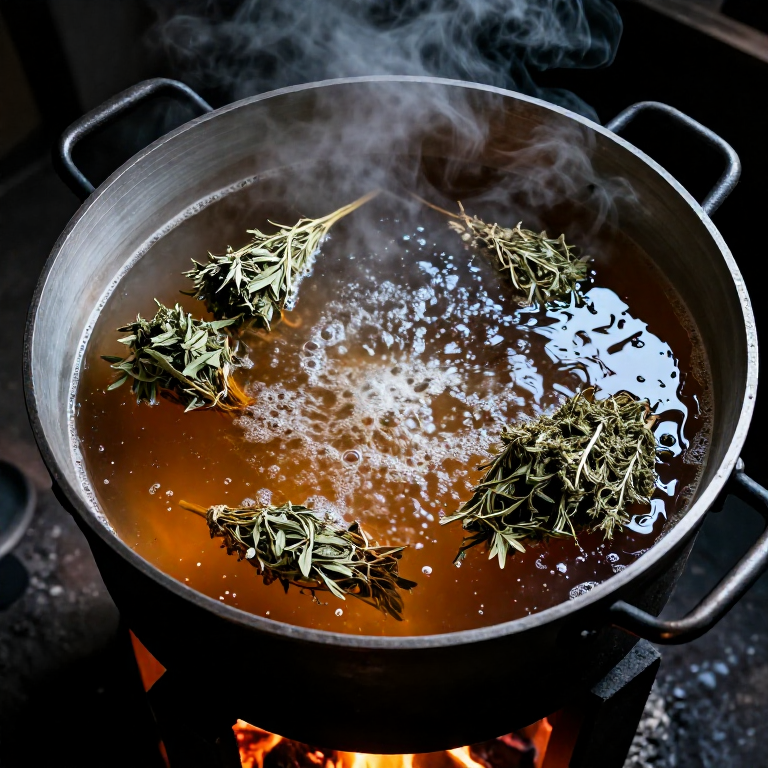
Bring the wort to a rolling boil in the brew pot. Add the gruit herbs: sweet gale, yarrow, and rosemary. Boil for 45 to 60 minutes — this sterilises the wort, extracts flavour and preservative compounds from the herbs, and coagulates proteins that would otherwise cause haze. Sweet gale contributes a resinous, slightly bitter flavour and mild preservative action from its essential oils (particularly myrcene). Yarrow adds a spicy, slightly astringent character and has been used in brewing since at least the Neolithic period (residue analysis of pottery from 3000 BC confirms yarrow in fermented beverages). The boiling also drives off unpleasant volatile compounds. Skim any foam that forms on the surface.
Materiały do tego kroku:
 Woskownica europejska15-20 g sztuka
 Krwawnik pospolity (Achillea millefolium)10-15 g sztuka
 Suszony rozmaryn5 g sztuka
Potrzebne narzędzia:
Kocioł warzelnyCool and Pitch Yeast
Cool and Pitch Yeast
Strain out the spent herbs and cool the wort as quickly as possible to approximately 20-22 degrees Celsius to prevent contamination by wild bacteria. Medieval brewers cooled wort in shallow open vessels (coolships) exposed to the air, which also inoculated the wort with wild yeasts — though most brewers also maintained a house yeast culture (barm) skimmed from previous batches. Transfer the cooled wort to a clean fermentation vessel and add (pitch) the ale yeast. Stir vigorously to aerate the wort, as yeast requires dissolved oxygen for the initial growth phase before switching to anaerobic fermentation. Seal the vessel with an airlock or loose-fitting lid that allows carbon dioxide to escape without admitting air.
Materiały do tego kroku:
 Kultura drożdży1 packet sztuka
Potrzebne narzędzia:
 Gaza serowarskaTermometr piekarnikowy
 Naczynie fermentacyjne (gąsior szklany)
Ferment and Serve
Ferment and Serve
Allow the ale to ferment at approximately 18-22 degrees Celsius for 5 to 10 days. Active fermentation will be visible within 12 to 24 hours as a thick, foamy head (kraeusen) forms on the surface — medieval brewers called this barm, and it was saved to pitch subsequent batches. When bubbling in the airlock slows to less than one bubble per minute, primary fermentation is complete. The ale can be served immediately (as medieval ales were — they were consumed fresh, within days of brewing) or transferred to a secondary vessel for 3 to 7 days of conditioning to clarify. Gruit ales have a complex, herbal character quite different from hopped beer — the absence of hops means there is no bitterness in the modern sense, but the gruit herbs provide their own balancing flavours, a slightly sweet maltiness, and a mild sedative-euphoric quality attributed to the myrcene in sweet gale.
Potrzebne narzędzia:
 Rurka fermentacyjna
 Areometr
 Butelki na piwo z bursztynowego szkła
Materiały
8- 2 kg sztukaZastępnik
- 7 litres sztukaZastępnik
- 15-20 g sztukaZastępnik
- 10-15 g sztukaZastępnik
- 5 g sztukaZastępnik
- 1 packet sztukaZastępnik
- 2 kg sztukaZastępnik
- 15-20 grams sztukaZastępnik
Wymagane narzędzia
11- Zastępnik
- Zastępnik
- Zastępnik
- Zastępnik
- Zastępnik
- Zastępnik
- Zastępnik
- Zastępnik
- Zastępnik
CC0 Domena publiczna
Ten plan jest udostępniany na licencji CC0. Możesz go swobodnie kopiować, modyfikować, rozpowszechniać i wykorzystywać do dowolnych celów, bez konieczności uzyskiwania zgody.
Wesprzyj Makera kupując produkty przez jego plan, za co zarabia Prowizja Makera ustalony przez sprzedawców, lub stwórz nową iterację tego planu i dołącz go jako połączenie w swoim własnym planie, aby dzielić się przychodami.