
Współpraca
SZTUKA
Piękno i dobre samopoczucie
RZEMIOSŁO
KULTURA I HISTORIA
ROZRYWKA
ŚRODOWISKO
JEDZENIE I NAPOJE
INŻYNIERIA ODWROTNA
NAUKI
LEKKOATLETYKA
TECHNOLOGIA
URZĄDZENIA DO NOSZENIA
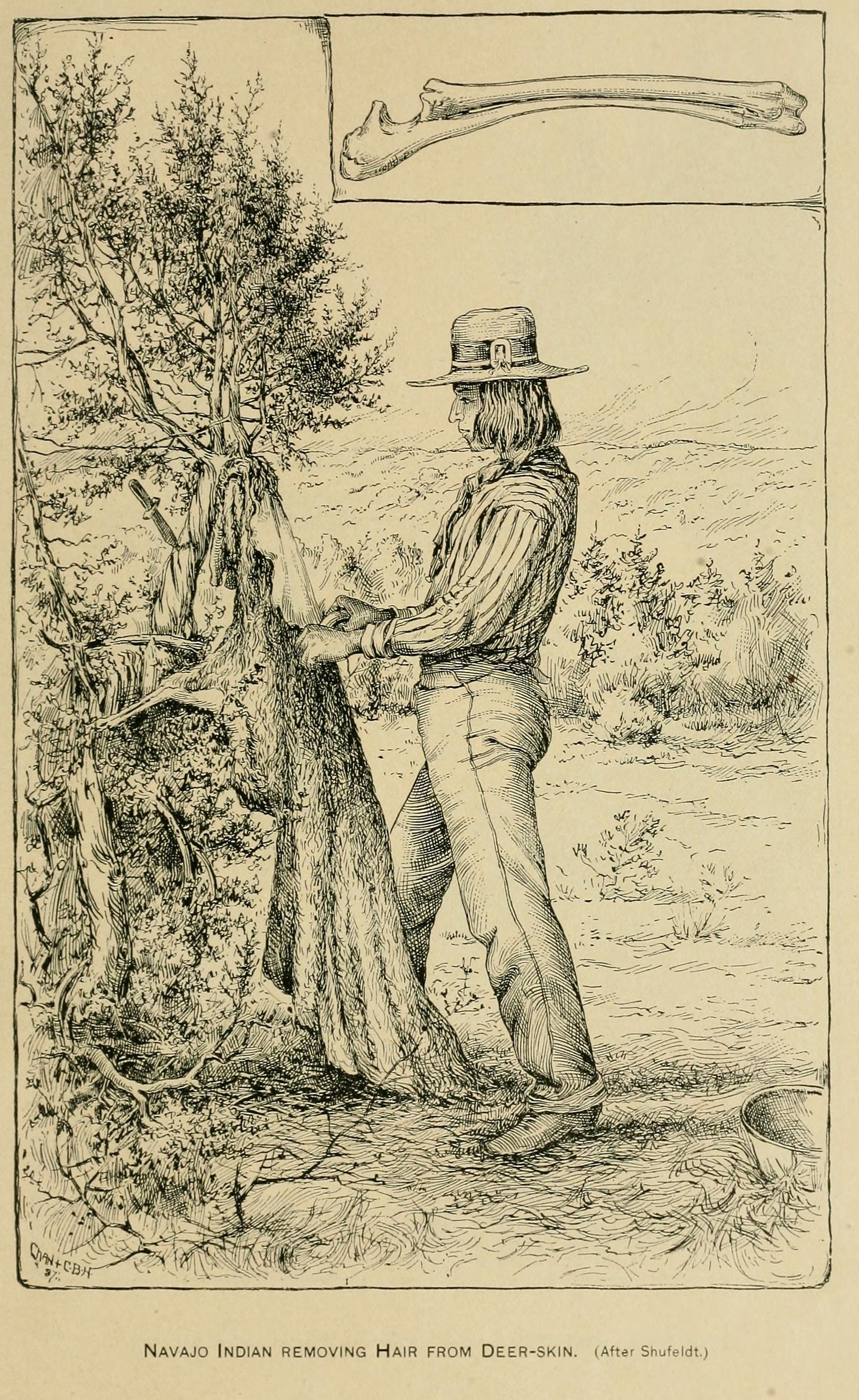
Navajo Buckskin: Hair Shaved with the Deer's Own Foreleg Bone, Brains Rubbed In, Wrung on a Tree, Worked Dry over the Feet (Shufeldt, 1888)
Tex

Autor

Tex

15. listopad 2026FO
4
0
0
0
0

Navajo Buckskin: Hair Shaved with the Deer's Own Foreleg Bone, Brains Rubbed In, Wrung on a Tree, Worked Dry over the Feet (Shufeldt, 1888)

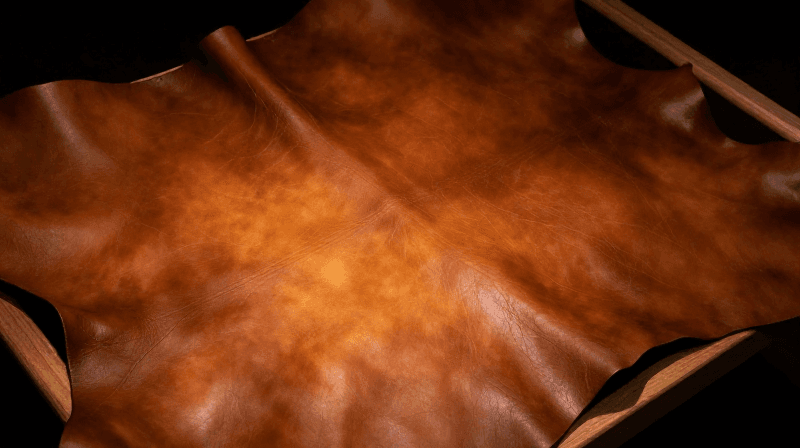
A Navajo (Diné) tanner's three-day buckskin, watched step by step by Dr. R. W. Shufeldt and printed by Otis Mason: the doe hide soaked overnight in a pit, the hair shaved off over a braced pine log with the deer's own ulna, the brains simmered and rubbed into the grain side, the hide wrung into a rope on a tree, dried hard, soaked again, and pulled over the bare feet in the sun until it dries velvet-soft.
Zaawansowany
Three days

Instrukcje

1

His measures

Wczytywanie notatnika Jupyter…
2

Read Shufeldt

"In a few short hours it be converted into the softest and most durable fabric in the country, a tanned buckskin."
3

Day 1: soak the hide, bake the head

Dig a hole about as big as a bushel (35 L), tramp the bottom hard, lay the fresh hide in hair side up and cover it with cold water. Put a kettle upside down on it, braced with the spade, against drying and dogs. Leave the skinned head (lower jaw off) overnight in the low ashes of the fire so the brains half-bake.

Materiały do tego kroku:

Skóra surowaSkóra surowa1 sztuka
WodaWoda1 sztuka

Potrzebne narzędzia:

SzpadelSzpadel
Czajnik żeliwnyCzajnik żeliwny
PaleniskoPalenisko
4

Day 2: set up the beam

Cut a small pine trunk about 6 in. (15 cm) thick at one end and 4 in. (10 cm) at the other. Bark one side of the thick half, notch the big end deeply and brace it against a low limb of a tree, smooth face toward you, the thin end on the ground about 2 ft (60 cm) from the trunk. Strew clean short hay around.

Materiały do tego kroku:

SianoSiano1 sztuka

Potrzebne narzędzia:

SiekieraSiekiera
NóżNóż
5

Flesh the hide

Wash the hide in clean water. With a sharp knife take every scrap of flesh and membrane off the flesh side, the ear cartilage too, and dip it in clear water.

Materiały do tego kroku:

WodaWoda1 sztuka

Potrzebne narzędzia:

NóżNóż
6

Shave the hair

Hang the hide over the log, the head skin caught between notch and limb. Shave off all hair and the dark outer skin, to the very edges and the backs of the ears, leaving the lower legs and tail. His scraper was the deer's own foreleg bones (ulna and radius), the thin back edge of the ulna sharpened with the knife, held at both ends like a spokeshave; a rib or a dull knife also serves. Two to four hours.

Potrzebne narzędzia:

Kobylica do mizdrowaniaKobylica do mizdrowania
MizdrownikMizdrownik
NóżNóż
7

Make the brain water

Wash the hide in several changes of cold water and leave it in the last. Split the baked skull with an ax, lift out the brains, clean them in tepid water, then simmer them in a little water on a low fire for over an hour. When you can hold your hand in it, rub the brains to paste between your palms and add about three times as much tepid water.

Materiały do tego kroku:

Mózg zwierzęcyMózg zwierzęcy1 sztuka
WodaWoda1 sztuka

Potrzebne narzędzia:

SiekieraSiekiera
Czajnik żeliwnyCzajnik żeliwny
PaleniskoPalenisko
8

Wring on the tree

Rinse the hide and wring it by hand. Pass the head and neck over a limb about 5-6 ft (1.5-1.8 m) up, fold the hide lengthwise and twist it into a rope, the tail end looped over a stick about 2 ft (60 cm) long. Twist with the stick until it is a hard coil at the limb, hook the stick under the limb and let it drip nearly an hour. Then pull it back by hand nearly to its full size.

Potrzebne narzędzia:

Wiosło drewnianeWiosło drewniane
9

Rub in the brains

Spread the hide flat, hair side up, and rub the brain water into the hair side only, with the open hand, fingers and knuckles, until the basin is empty ("to make it soft"). Fold the edges into a loose firm ball, wrap it and leave it in the sun about 15 minutes. Then open it over a bush in the sun to dry until dark, and keep it dry overnight. By morning it is hard and amber.

Potrzebne narzędzia:

Czajnik żeliwnyCzajnik żeliwny
10

Day 3: soak, wring, stretch dry

Soak it three hours in water with the chill off (some use cold spring water), rinse three or four times in cold water and wring it on the tree again, dripping nearly half an hour. On a canvas sheet in the sun, barefoot, throw the limp skin over your feet and pull it toward you with both hands, turn it, pull again, and work the edges, ears and legs until it dries velvet-soft and pale clay-coloured. Cut a dozen holes along the neck edge, stretch the neck across with a wooden awl through each, and give it a final hour in the sun.

Materiały do tego kroku:

WodaWoda1 sztuka

Potrzebne narzędzia:

Czajnik żeliwnyCzajnik żeliwny
Płótno bawełnianePłótno bawełniane
NóżNóż
11

Troubleshooting

Buckskin troubleshooting.

Flow

Loading...
12

History and honest limits

From R. W. Shufeldt's account, reprinted in Otis T. Mason, "Aboriginal Skin-Dressing", **Report of the U.S. National Museum for 1889** (1891), pp. 574-580 and Plates LXI-LXVI (checked on the archive.org scan aboriginalskindr00maso). The Navajo often used beef brains, earlier deer or buffalo. The tanner cut his mark, a leaf shape, under each ear; such hides then fetched $1.50 to $2. Metric figures are ours.

Materiały

4

Wymagane narzędzia

9

CC0 Domena publiczna

Ten plan jest udostępniany na licencji CC0. Możesz go swobodnie kopiować, modyfikować, rozpowszechniać i wykorzystywać do dowolnych celów, bez konieczności uzyskiwania zgody.

Wesprzyj Makera kupując produkty przez jego plan, za co zarabia Prowizja Makera ustalony przez sprzedawców, lub stwórz nową iterację tego planu i dołącz go jako połączenie w swoim własnym planie, aby dzielić się przychodami.

Dyskusja

(0)

Zaloguj się aby dołączyć do dyskusji

Ładowanie komentarzy...