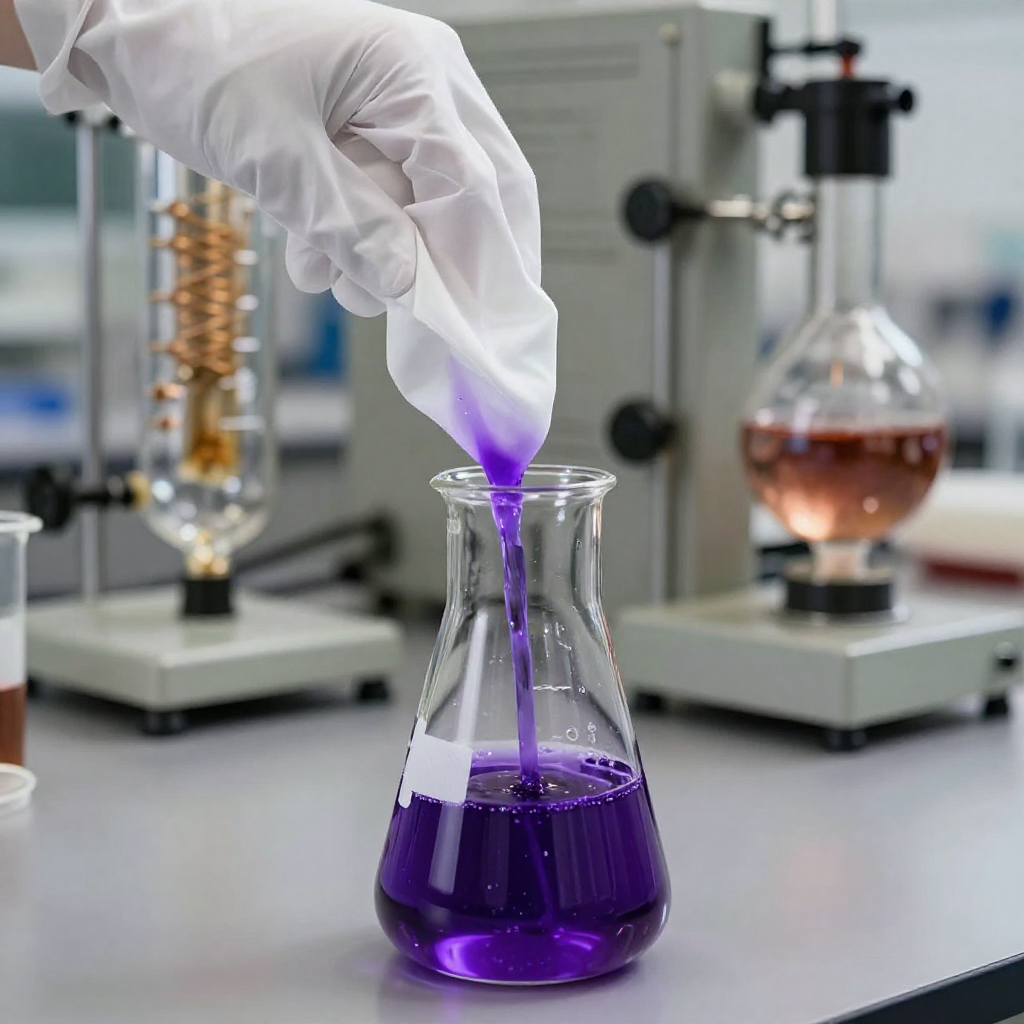


Perkin's Mauveine — The First Synthetic Aniline Dye from Coal Tar
In 1856, eighteen-year-old William Henry Perkin, a chemistry student at the Royal College of Chemistry in London, accidentally synthesized the first synthetic dye while attempting to make quinine from coal tar derivatives. His experiment failed to produce quinine, but the reddish-brown residue in his flask dissolved in alcohol to produce a vivid purple solution that dyed silk beautifully and resisted washing and sunlight. He called it 'mauveine' — the color mauve.
Perkin immediately recognized the commercial potential. Natural purple dyes were among the most expensive in the world: Tyrian purple from murex shells cost more than gold by weight, and orchil lichen dye faded rapidly. Perkin's mauveine was cheap, consistent, and permanent. At age nineteen, he patented the process, built a factory in Greenford, and began mass-producing synthetic dye. By 1859, mauveine was fashionable across Europe — Queen Victoria wore a mauveine-dyed silk gown to her daughter's wedding in 1858.
Perkin's discovery launched the synthetic dye industry and, with it, the entire field of organic chemistry. Within twenty years, German chemists had synthesized dozens of new colors — fuchsine, alizarin, methyl violet, Congo red, indigo — each cheaper and more permanent than its natural counterpart. The natural dye trade collapsed. India's indigo plantations, Turkey's madder fields, and Mexico's cochineal farms lost their markets to factories in Germany and England. By 1900, over 90% of the world's dyes were synthetic, all descended from Perkin's accidental purple.
Treści niebezpieczne
Ten blueprint zawiera niebezpieczne procedury. Zaloguj się i włącz niebezpieczne treści w ustawieniach konta, aby zobaczyć instrukcje krok po kroku.
Zaloguj sięWedług tego planu powstaje
Powiązane blueprinty
Te blueprinty dzielą się wiedzą — technikami, materiałami lub zasadami

CC0 Domena publiczna
Ten plan jest udostępniany na licencji CC0. Możesz go swobodnie kopiować, modyfikować, rozpowszechniać i wykorzystywać do dowolnych celów, bez konieczności uzyskiwania zgody.
Wesprzyj Makera kupując produkty przez jego plan, za co zarabia Prowizja Makera ustalony przez sprzedawców, lub stwórz nową iterację tego planu i dołącz go jako połączenie w swoim własnym planie, aby dzielić się przychodami.