SZTUKA
Piękno i dobre samopoczucie
RZEMIOSŁO
KULTURA I HISTORIA
ROZRYWKA
ŚRODOWISKO
JEDZENIE I NAPOJE
INŻYNIERIA ODWROTNA
NAUKI
LEKKOATLETYKA
TECHNOLOGIA
URZĄDZENIA DO NOSZENIA



Placing the Frets: The Rule of 18 Is Wrong, and by How Much
A fret is a fixed stopping point, so its position is not a matter of judgement: it follows from the scale length and from the tuning system, and it can be calculated to a tenth of a millimetre.
For centuries luthiers used a subtractive shortcut — each fret one eighteenth of the way along what is left — which is close to right and drifts. This rung computes the exact positions, measures how far the old rule strays, and then deals with the thing that makes an exactly fretted instrument play sharp anyway.
The whole rung is arithmetic on a board, which is why it is worth having before any wood is cut.
Średniozaawansowany
4 hours
Instrukcje
1
1
Scale length first, everything else follows
Scale length first, everything else follows
The scale length is the distance from the nut to the bridge — the full sounding length of an open string. Every fret position is a fraction of it, so it is chosen before anything is cut.
It is not free. A longer scale at the same pitch needs more tension, which means a stiffer neck and a stronger body but gives a brighter, more sustaining note. A shorter scale is slacker, warmer, and easier to stop under the finger.
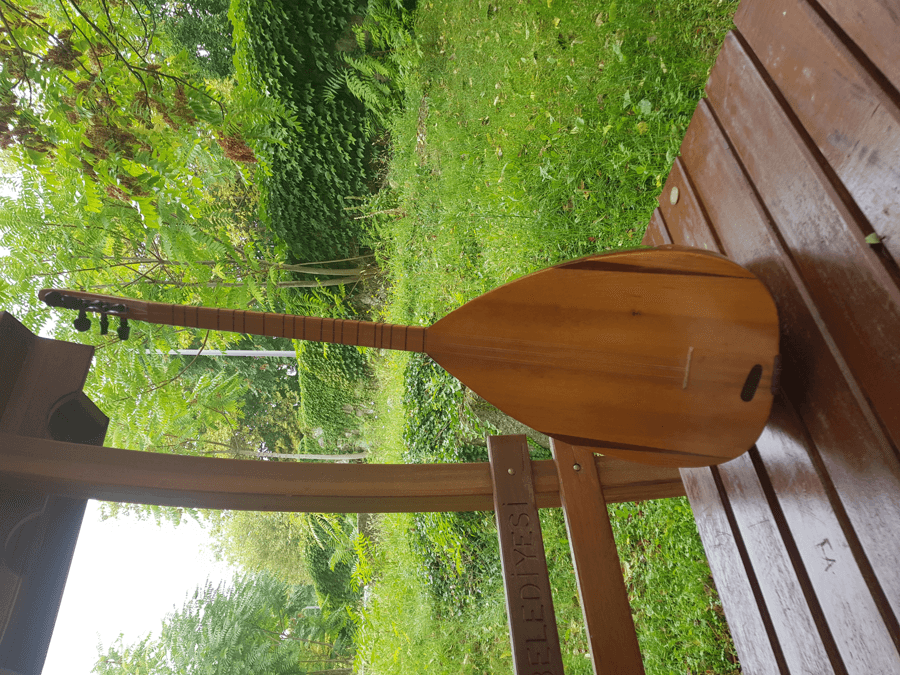
Typical values: a classical guitar around 650 mm, a steel-string around 645 or 630, a violin 328, a mandolin 350, a long-necked baglama 1000 and more.
Choose it from the pitch the instrument must reach and from the string that will be available, using the previous rung's equation. A scale chosen first and a string chosen afterwards is how an instrument ends up unplayably tight or hopelessly floppy.
Materiały do tego kroku:
 Klejony półfabrykat świerkowy1 sztuka
Potrzebne narzędzia:
 Linijka
 Suwmiarka cyfrowa 6 cali
2
2
Computing the positions
Computing the positions
Wczytywanie notatnika Jupyter…
Potrzebne narzędzia:
 Komputer stacjonarny
3
3
Marking and slotting
Marking and slotting
**Measure every fret from the nut, never from the fret before it.** Stepping off twelve successive distances accumulates twelve errors, and the far end of the neck is where it shows. This is the same discipline as any cumulative layout.
Mark with a knife rather than a pencil. A pencil line is a third of a millimetre wide and the fret has to sit on one specific side of it; a knife line is a starting groove for the saw as well.
**Cut the slots square and to depth.** A slot leaning even slightly puts the fret out of parallel, which is worse at the treble side than the bass. Use a saw whose kerf matches the fret tang — a slot that is too wide will not hold, and one too narrow will bow the neck backwards when the fret is pressed in.
Seat the frets, level them along the neck, then re-crown the tops. A fret that stands proud of its neighbours buzzes against the one below it, and no amount of correct arithmetic fixes it.
Materiały do tego kroku:
 Drut progowy1 sztukaKlejony półfabrykat świerkowy1 sztuka
Potrzebne narzędzia:
Linijka Zestaw pilników iglaków
 Zestaw szczelinomierzySuwmiarka cyfrowa 6 cali
4
4
Tied frets, and the instruments that do not use twelve
Tied frets, and the instruments that do not use twelve
Fixed metal frets are one solution and a recent one. Much of the catalogue uses the other.
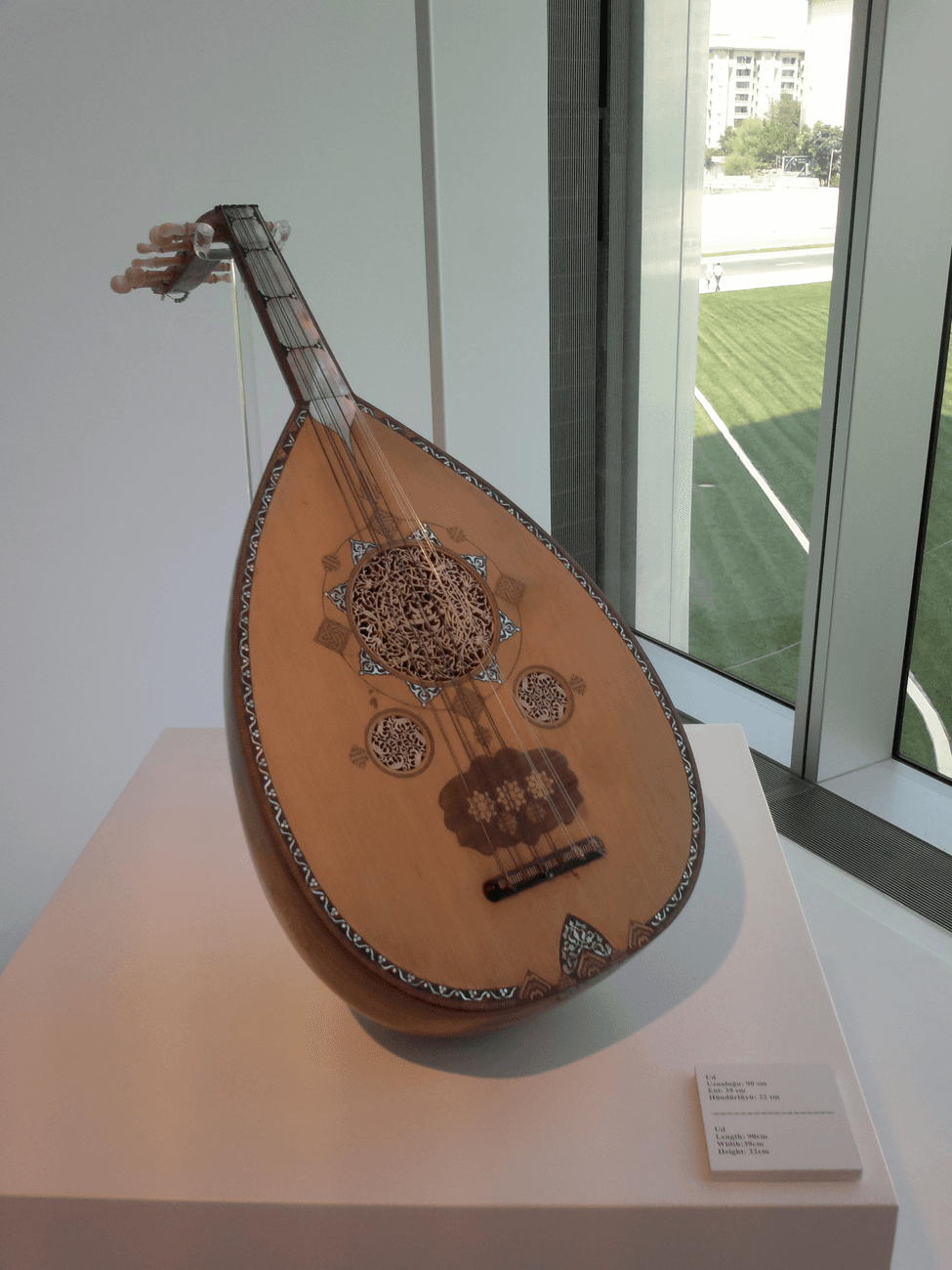
**Tied gut frets**, as on a lute, a baglama or a viol, are loops of gut knotted round the neck. They can be slid. That is not a compromise — it is what lets one instrument play in several tunings and several temperaments, and it is why the same neck can carry the quarter tones of a makam and the semitones of a Western scale on different days.
**Unequal fretting is normal outside Europe.** A baglama's frets are not twelve equal steps; they include intervals that do not exist on a piano, placed by tradition and by ear. Computing them as $2^{n/12}$ would be wrong — the arithmetic above is for equal temperament and equal temperament is a choice.
When copying an instrument from a tradition, measure the original's fret positions and reproduce those, rather than assuming the maker was approximating equal temperament and failing. They were not.
Materiały do tego kroku:
 Komplet strun gitarowych (akustyczne, brąz fosforowy)1 zestawKlejony półfabrykat świerkowy1 sztuka
Potrzebne narzędzia:
LinijkaSuwmiarka cyfrowa 6 cali Tuner chromatyczny i metronom (na klips)
Materiały
3- 1 sztukaZastępnik
- 1 sztukaZastępnik
- Zastępnik
Powiązane blueprinty
Te blueprinty dzielą się wiedzą — technikami, materiałami lub zasadami

CC0 Domena publiczna
Ten plan jest udostępniany na licencji CC0. Możesz go swobodnie kopiować, modyfikować, rozpowszechniać i wykorzystywać do dowolnych celów, bez konieczności uzyskiwania zgody.
Wesprzyj Makera kupując produkty przez jego plan, za co zarabia Prowizja Makera ustalony przez sprzedawców, lub stwórz nową iterację tego planu i dołącz go jako połączenie w swoim własnym planie, aby dzielić się przychodami.