SZTUKA
Piękno i dobre samopoczucie
RZEMIOSŁO
KULTURA I HISTORIA
ROZRYWKA
ŚRODOWISKO
JEDZENIE I NAPOJE
INŻYNIERIA ODWROTNA
NAUKI
LEKKOATLETYKA
TECHNOLOGIA
URZĄDZENIA DO NOSZENIA
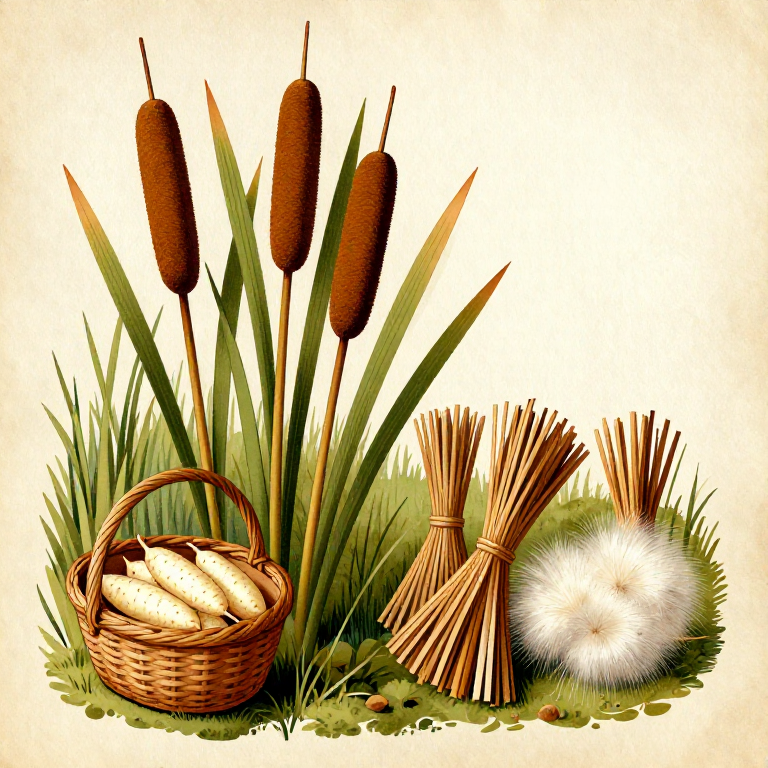


Collecting and Processing Cattail — The Supermarket of the Swamp
Cattail (Typha latifolia and related species) is arguably the single most useful wild plant to human survival. Every part is edible or useful: the starchy rhizomes provide carbohydrate-rich flour, the young shoots are eaten like asparagus, the pollen is a protein-rich flour supplement, the seed fluff provides insulation and tinder, and the long flat leaves are woven into mats, baskets, shelters, and cordage. Cattail grows in marshes, pond edges, ditches, and slow-moving waterways across every continent except Antarctica. Archaeological evidence from multiple sites shows cattail processing tools and residues dating back at least 30,000 years. This blueprint covers the complete seasonal cycle of cattail harvesting and processing — from spring shoots through summer pollen to autumn rhizome flour and winter insulation material — making it a foundational survival and primitive technology resource.
Początkujący
2-3 hours
Instrukcje
1
1
Identify Cattail in the Wild
Identify Cattail in the Wild
Cattail (Typha) grows in standing water or saturated soil at the edges of ponds, lakes, marshes, and slow streams. The plant is unmistakable when mature: 1.5 to 3 metres tall with long, flat, sword-like leaves and a distinctive brown cylindrical seed head (the 'cattail'). In spring before the seed head forms, identify it by its flat leaves that emerge in a tight basal fan from a thick, white rhizome in the mud.
Materiały do tego kroku:
 Roślina pałki wodnej (Typha)
2
2
Harvest Spring Shoots (Cossack Asparagus)
Harvest Spring Shoots (Cossack Asparagus)
In early spring when the new shoots are 20 to 40 cm tall, grasp the inner core at the base and pull upward with a twisting motion. The tender white inner shoot slides free from the outer leaves. This portion — called Cossack asparagus — is edible raw or cooked, with a mild cucumber-like flavour. Harvest only from clean water sources, as cattail bioaccumulates pollutants from contaminated water.
3
3
Collect Pollen in Early Summer
Collect Pollen in Early Summer
In early to midsummer, the upper portion of the flower spike produces bright yellow pollen before the familiar brown seed head develops. Bend the pollen head over a container and shake or tap vigorously. One large stand of cattail can yield several cups of pollen in a morning. The pollen is 10 to 20 percent protein and can be mixed with other flours for bread or used as a thickener in soups.
4
4
Harvest Rhizomes in Late Autumn or Winter
Harvest Rhizomes in Late Autumn or Winter
The starchy rhizomes are most calorie-dense from late autumn through early spring, when the plant has stored energy for winter. Wade into the shallows and follow the leaf base down into the mud. Grasp the horizontal rhizome (typically 1 to 3 cm in diameter) and pull it free from the sediment. Each plant connects to a network of rhizomes — follow the chain to harvest more.
Potrzebne narzędzia:
 Narzędzie do kopania (kamień, poroże, kij)
5
5
Wash and Peel the Rhizomes
Wash and Peel the Rhizomes
Rinse harvested rhizomes thoroughly in clean water to remove mud. Peel off the brown outer skin with a stone flake or your fingernails — the interior is white and starchy, similar to a thin potato. Fresh rhizomes can be roasted directly on coals like a root vegetable, or processed further into flour for storage.
6
6
Extract Starch for Flour
Extract Starch for Flour
Crush the peeled rhizomes in clean water using a stone mortar or your hands. The starchy fibres release a white suspension. Pour the milky water through a woven grass sieve or bundle of fibres to separate the starch water from the tough cellulose fibres. Let the starch water settle in a bark container or clay bowl for 2 to 3 hours — the white starch sinks to the bottom.
Potrzebne narzędzia:
 Moździerz kamiennyMoździerz kamienny
7
7
Dry the Starch into Flour
Dry the Starch into Flour
Carefully pour off the clear water above the settled starch. Spread the wet starch paste thinly on a flat stone or bark sheet in direct sunlight or near a fire to dry. Once fully dry, the starch cakes can be crumbled into a fine white flour. This cattail flour stores for months in a dry container and can be mixed with water to form flatbreads baked on hot stones.
Potrzebne narzędzia:
 Płyta kamienna
8
8
Harvest Leaves for Weaving Material
Harvest Leaves for Weaving Material
Cut mature cattail leaves at the base using a sharp stone flake or obsidian blade. Select the longest, widest leaves — they can reach 2 metres long and 2 cm wide. Harvest in late summer when leaves are fully grown but still green and flexible. Bundle the leaves and hang them in shade to dry slowly — rapid drying causes the leaves to curl and become brittle.
Potrzebne narzędzia:
 Odłupek kamienny
9
9
Prepare Leaves for Weaving
Prepare Leaves for Weaving
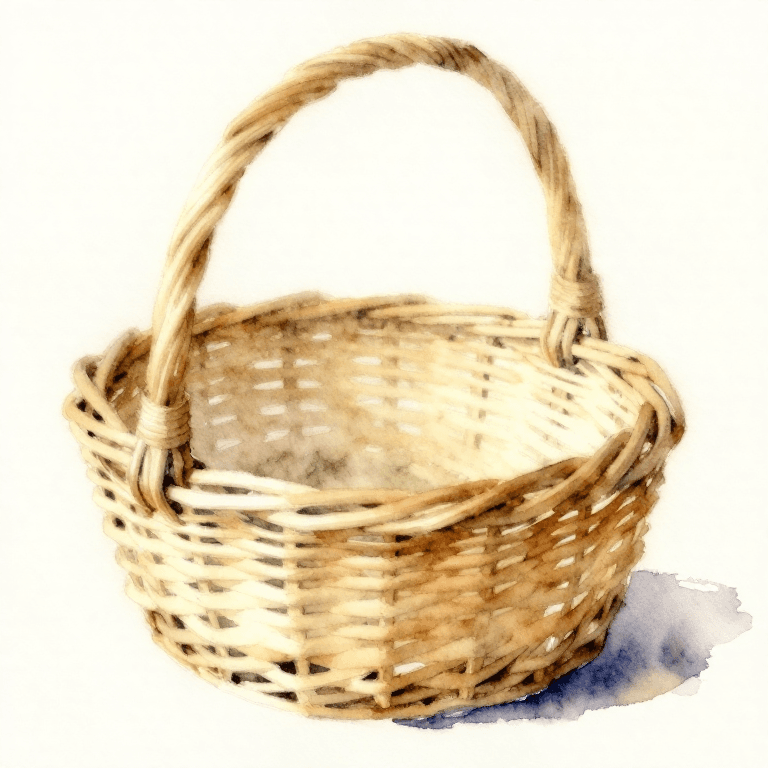
Before weaving, soak dried cattail leaves in water for 30 minutes to 1 hour to restore flexibility. The rehydrated leaves become pliable and can be woven, twisted, or plaited without cracking. Cattail leaves have long parallel fibres that give them excellent tensile strength along their length, making them ideal for mats, baskets, and simple bags.
10
10
Collect Seed Fluff for Insulation and Tinder
Collect Seed Fluff for Insulation and Tinder
In autumn and winter, the brown seed heads disintegrate into masses of fluffy seeds — each seed attached to fine, silky hairs that trap air. Pull apart the seed head and collect the fluff in a container. This material is one of nature's best insulators and an excellent fire tinder — it catches a spark instantly and flares into flame. Stuff the fluff into clothing or bedding for warmth in emergencies.
11
11
Process Leaf Fibres for Cordage
Process Leaf Fibres for Cordage
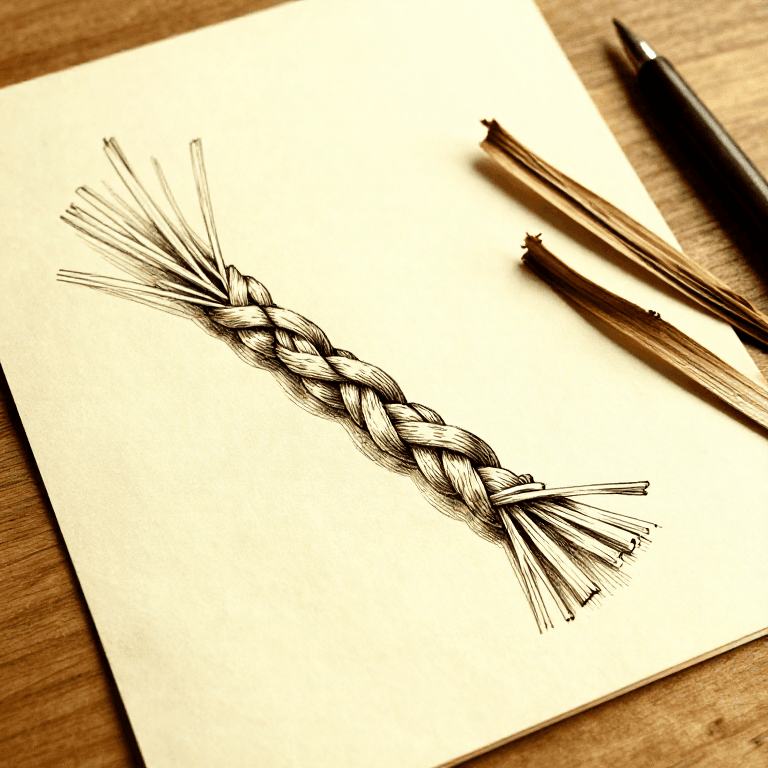
Select thick, mature cattail leaves and split them lengthwise into strips 3 to 5 mm wide. Let the strips dry partially — damp strips are easier to twist but fully dried strips hold their shape better. Twist two strips together using the reverse-wrap cordage technique to produce a surprisingly strong two-ply cord suitable for binding, snares, and light fishing line.
12
12
Store Processed Materials
Store Processed Materials
Keep cattail flour in a tightly sealed bark or clay container away from moisture. Store dried leaves in loose bundles hung from a shelter ceiling where air circulates. Keep seed fluff in a dry container — it compresses easily for transport and re-expands when removed. Dried pollen stores well in any sealed container. A single autumn harvest from a good cattail stand provides food, fibre, and tinder for months.
Potrzebne narzędzia:
 Gliniane naczynie do przechowywania
Materiały
1- 1 sztukaZastępnik
Wymagane narzędzia
5- Zastępnik
- Zastępnik
- Zastępnik
- Zastępnik
Powiązane blueprinty
Te blueprinty dzielą się wiedzą — technikami, materiałami lub zasadami


CC0 Domena publiczna
Ten plan jest udostępniany na licencji CC0. Możesz go swobodnie kopiować, modyfikować, rozpowszechniać i wykorzystywać do dowolnych celów, bez konieczności uzyskiwania zgody.
Wesprzyj Makera kupując produkty przez jego plan, za co zarabia Prowizja Makera ustalony przez sprzedawców, lub stwórz nową iterację tego planu i dołącz go jako połączenie w swoim własnym planie, aby dzielić się przychodami.