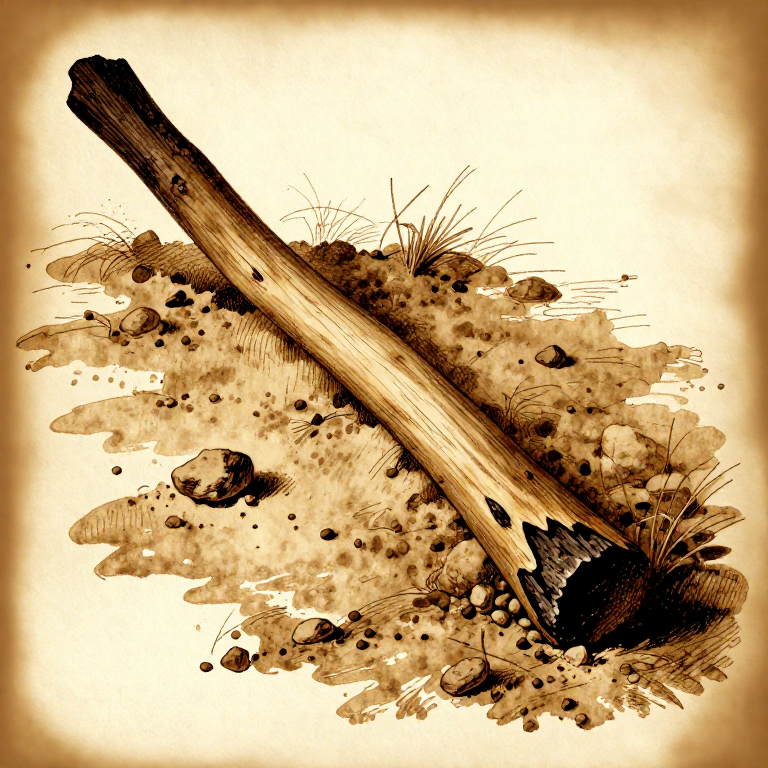


Making a Fire-Hardened Digging Stick — The First Farming Tool
Instrukcje
Select Hardwood
Select Hardwood
Select a straight hardwood sapling — oak, ash, hazel, or birch — 4-5 cm in diameter and 120-150 cm long
Materiały do tego kroku:
 Młodnik z drewna twardego1 sztuka
Strip Bark
Strip Bark
Strip all bark from the shaft using the back edge of a knife or a sharp stone flake
Potrzebne narzędzia:
 Nóż
NóżTrim Branches
Trim Branches
Trim any side branches flush with the main shaft so the surface is smooth
Potrzebne narzędzia:
NóżMark Working End
Mark Working End
Mark a line 30 cm from one end — everything below this line is the working tip zone
Carve Chisel Point
Carve Chisel Point
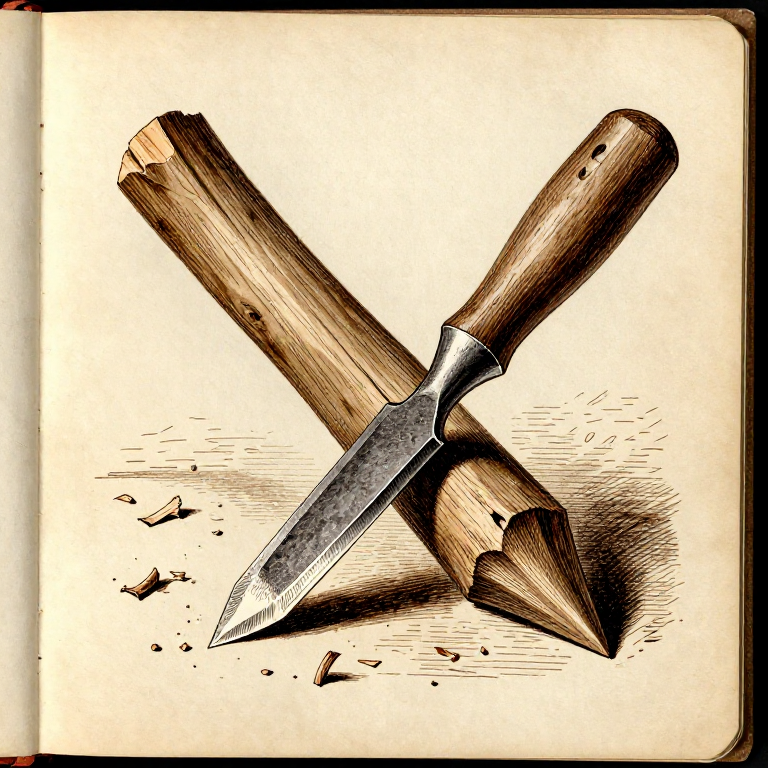
Carve the working end to a symmetrical chisel-point, removing wood evenly from both sides
Potrzebne narzędzia:
NóżShape Wedge Edge
Shape Wedge Edge
Shave the tip to a flat wedge shape, 2-3 cm wide at the cutting edge
Potrzebne narzędzia:
NóżSmooth Surfaces
Smooth Surfaces
Smooth all carved surfaces with a sandstone block, working along the grain
Potrzebne narzędzia:
 Piaskowiec (ścierny)
Build Fire
Build Fire
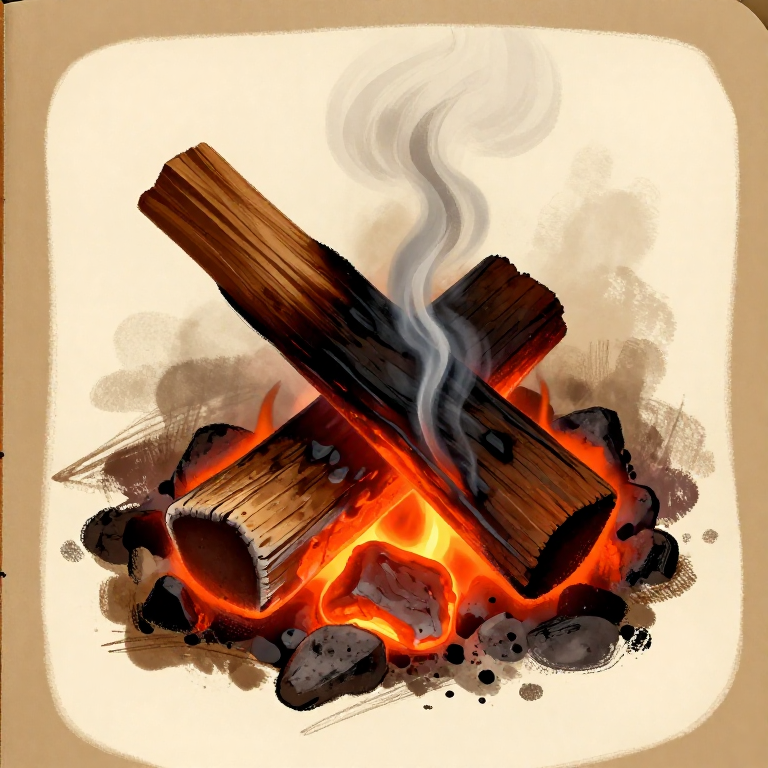
Build a small fire and allow it to burn down to a bed of glowing coals with no open flame
Materiały do tego kroku:
 Drewno opałowe1 wiązka
First Charring Pass
First Charring Pass
Hold the carved tip 10 cm above the coals, rotating the shaft slowly and steadily
Monitor Colour
Monitor Colour
Continue rotating until the surface chars evenly to a deep chestnut brown — not black ash
Scrape First Char
Scrape First Char
Remove from heat and scrape off the thin charred layer with the edge of a hammerstone
Potrzebne narzędzia:
 Tłuk kamienny
Second Hardening Pass
Second Hardening Pass
Return the tip to the coals for a second charring pass, rotating as before
Scrape Second Char
Scrape Second Char
Scrape off the second char layer — the wood beneath is now noticeably harder, dense, and glassy
Potrzebne narzędzia:
Tłuk kamiennyTest Hardness
Test Hardness
Test the hardened tip by pressing it firmly into packed earth — it should resist deformation
Carve Grip Notch
Carve Grip Notch
Carve a shallow grip notch 20 cm from the upper end for a secure handhold
Potrzebne narzędzia:
NóżFinal Smoothing
Final Smoothing
Smooth the full shaft with fine sandstone to remove any rough fibres or splinters
Potrzebne narzędzia:
Piaskowiec (ścierny)Seal with Fat
Seal with Fat
Rub a generous coat of rendered animal fat (tallow) into the entire wood surface to seal the grain
Materiały do tego kroku:
 Tłuszcz zwierzęcy (łój)1 łyżka stołowa
Test in Soil
Test in Soil
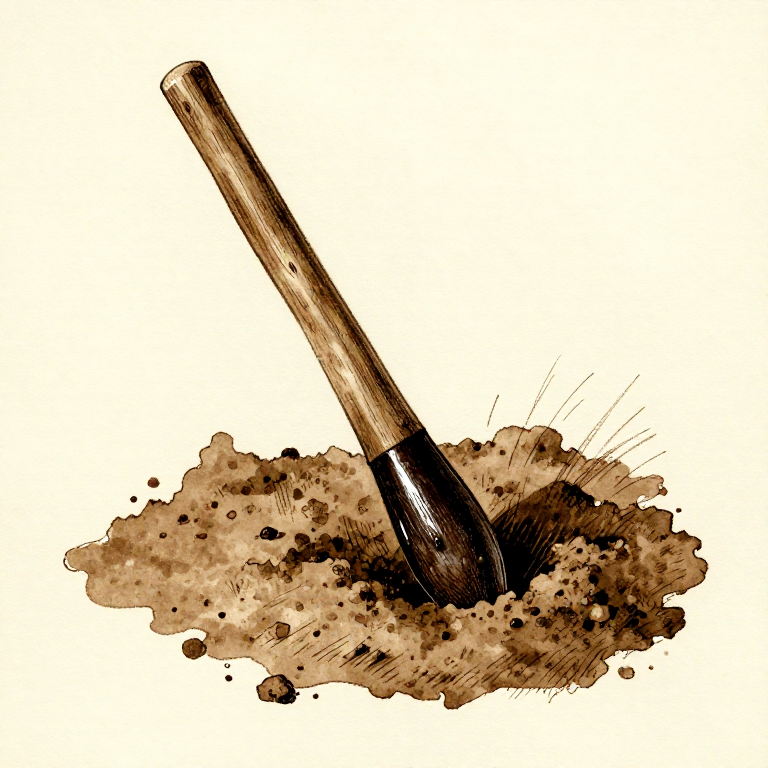
Test the finished digging stick in loose soil — push the tip in at 45° and lever upward to break the earth
Materiały
3- 1 sztukaZastępnik
- 1 wiązkaZastępnik
- 1 łyżka stołowaZastępnik
CC0 Domena publiczna
Ten plan jest udostępniany na licencji CC0. Możesz go swobodnie kopiować, modyfikować, rozpowszechniać i wykorzystywać do dowolnych celów, bez konieczności uzyskiwania zgody.
Wesprzyj Makera kupując produkty przez jego plan, za co zarabia Prowizja Makera ustalony przez sprzedawców, lub stwórz nową iterację tego planu i dołącz go jako połączenie w swoim własnym planie, aby dzielić się przychodami.