SZTUKA
Piękno i dobre samopoczucie
RZEMIOSŁO
KULTURA I HISTORIA
ROZRYWKA
ŚRODOWISKO
JEDZENIE I NAPOJE
INŻYNIERIA ODWROTNA
NAUKI
LEKKOATLETYKA
TECHNOLOGIA
URZĄDZENIA DO NOSZENIA
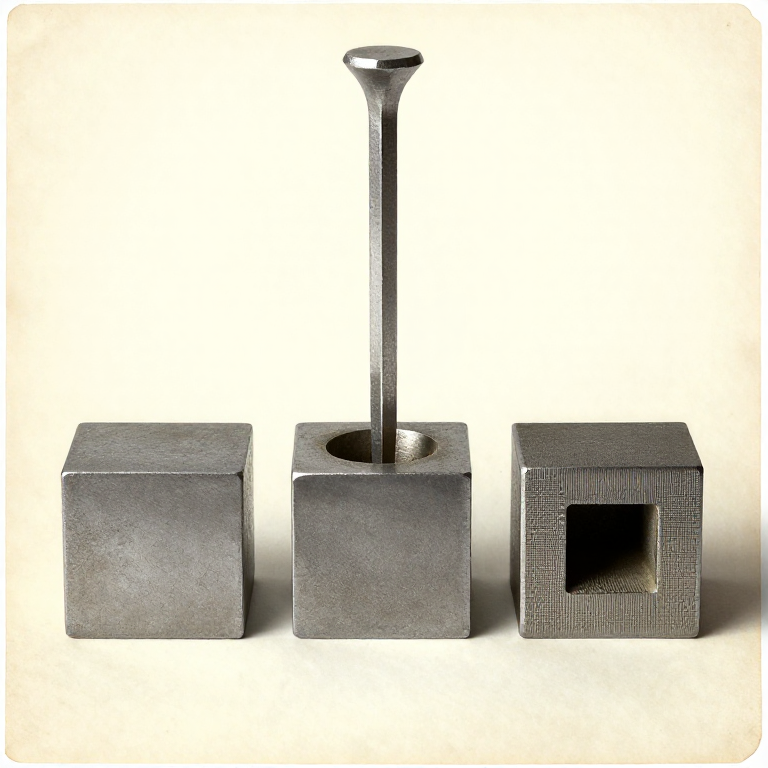


Punching and Drifting: A Hole Without Removing Metal
A drilled hole cuts metal away and severs the fibres running through the bar. A PUNCHED hole pushes the metal aside, so the grain flows around it — which is why a punched eye in a hammer head or an axe is stronger than a drilled one.
It also barely wastes any material. The slug punched out is tiny compared with what a drill turns into swarf, and the displaced metal thickens the area around the hole where the strength is wanted.
Punching makes the hole; DRIFTING opens it to final size and shape. They are two operations and doing the first without the second gives a ragged, undersized hole.
Średniozaawansowany
3 hours
Instrukcje
1
1
Punch from both sides, and go halfway each time
Punch from both sides, and go halfway each time
Mark the centre, drive the punch in from one face until you feel it bite deep — about halfway — then turn the work over and punch back through from the other side to meet it.
Punching all the way through from one side pushes a long tapered plug of metal ahead of the punch and bulges the far face badly. Meeting in the middle keeps both faces flat and produces a small neat slug.
You can see where to punch from the second side: the first punch raises a faint dark bulge on the far face. Centre on that and the two holes meet cleanly.
Materiały do tego kroku:
 Pręt ze stali niskowęglowej1 sztuka
 Węgiel drzewny w kawałkach1 sztuka
Potrzebne narzędzia:
 Przebijak na gorąco
 Kowadło
 Młotek kowalski
 Szczypce kowalskie
2
2
Cool the punch constantly, or you will lose it
Cool the punch constantly, or you will lose it
Dip the punch in water every few blows. A punch buried in hot steel soaks up heat fast, and once it softens it upsets, mushrooms and jams in the hole.
A pinch of coal dust or a drop of oil in the hole helps too: it turns to gas and the pressure helps push the punch back out. A punch that has stuck in hot steel is genuinely difficult to recover.
Work over the PRITCHEL hole or over the hardy hole for the final break-through, so the punch and the slug have somewhere to go. Punching against the solid anvil face damages the face, blunts the punch and refuses to break through.
Materiały do tego kroku:
 Woda1 sztukaPręt ze stali niskowęglowej1 sztuka
Potrzebne narzędzia:
Przebijak na gorącoKowadłoSzczypce kowalskie Rękawice skórzane z długim mankietem
3
3
Then drift it to size and shape
Then drift it to size and shape
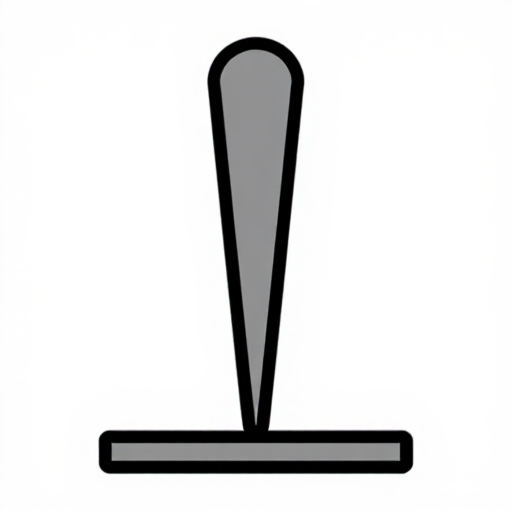
The punched hole is small and rough. Drive a DRIFT — a long tapered tool of the finished size and cross-section — through it to open it out, smooth the walls and set the final shape.
A drift is tapered at both ends and widest in the middle, so it passes right through and out rather than jamming. Drive it in from one side, then turn the work and drive it back the other way to even the hole up.
This is where a square or oval hole comes from — a hammer eye, an axe eye — and no drill will make one. Work hot, and expect the hole to close slightly as the piece cools, so drift to the size you want when hot rather than when cold.
Materiały do tego kroku:
Pręt ze stali niskowęglowej1 sztukaPotrzebne narzędzia:
 Przebijak rozszerzającyKowadłoMłotek kowalski
 Linijka
4
4
The hole distorts the bar — plan for it
The hole distorts the bar — plan for it
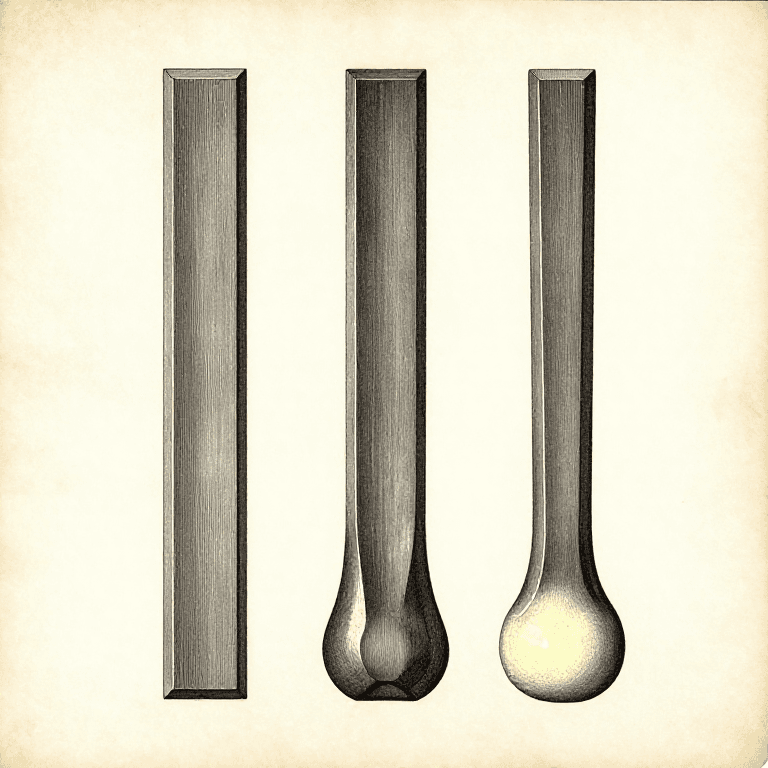
Displaced metal has to go somewhere. Punching a hole in a bar makes that part wider and slightly shorter, and it bulges the edges either side of the hole.
For a neat result, dress the sides back with the hammer after drifting and re-square the section. For a hammer or axe eye, the bulge is wanted — that is the extra material carrying the load around the eye.
Punch before you finish the outside shape, not after. A bar dressed to final size and then punched has to be dressed again, and the second dressing usually leaves it out of true.
Materiały do tego kroku:
Pręt ze stali niskowęglowej1 sztukaPotrzebne narzędzia:
Młotek kowalskiKowadło Gładzik kowalskiLinijka
Materiały
3- 1 sztukaZastępnik
- 1 sztukaZastępnik
- 1 sztukaZastępnik
Powiązane blueprinty
Te blueprinty dzielą się wiedzą — technikami, materiałami lub zasadami
CC0 Domena publiczna
Ten plan jest udostępniany na licencji CC0. Możesz go swobodnie kopiować, modyfikować, rozpowszechniać i wykorzystywać do dowolnych celów, bez konieczności uzyskiwania zgody.
Wesprzyj Makera kupując produkty przez jego plan, za co zarabia Prowizja Makera ustalony przez sprzedawców, lub stwórz nową iterację tego planu i dołącz go jako połączenie w swoim własnym planie, aby dzielić się przychodami.