

Building a Safety Bicycle — Chain Drive, Equal Wheels, and Personal Freedom
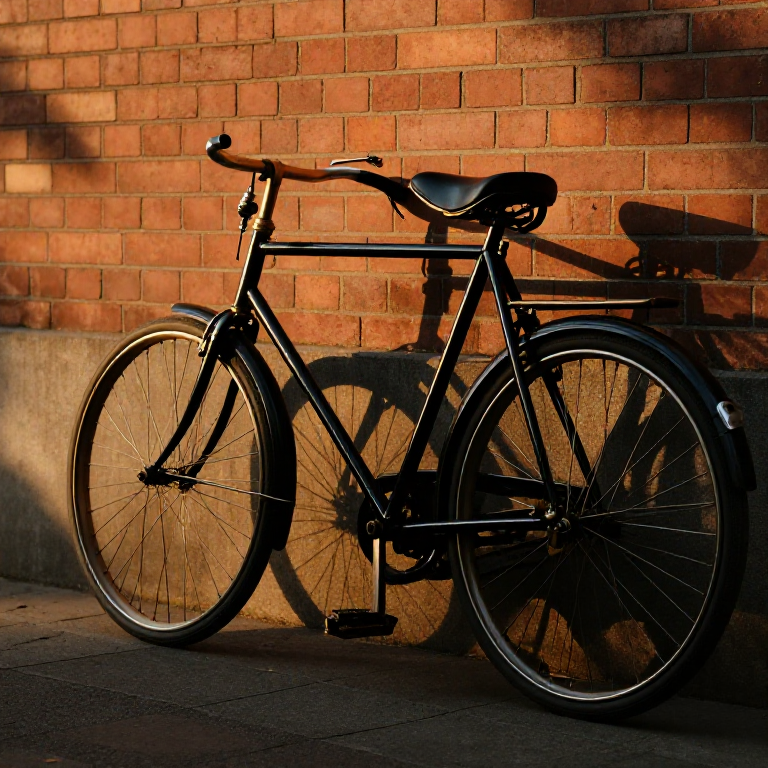
The bicycle that everyone rides today was settled in the 1880s and is still called, in the trade, the safety bicycle — to distinguish it from the terrifying high penny-farthing it replaced. Two equal wheels, a diamond frame, a chain driving the rear wheel, and soon air-filled tyres made cycling safe, fast, and available to ordinary people.
Each feature solves a problem. Equal wheels and a low frame mean you can put a foot down and cannot be pitched over the handlebars. The chain and gearing let a small wheel travel fast without the giant front wheel of the penny-farthing. The diamond frame, built of brazed steel tubes, is astonishingly light and strong for its weight. And Dunlop's pneumatic rubber tyres turned a bone-shaking ride into a smooth one.
The safety bicycle was more than transport. Cheap, simple, and needing no horse or fuel, it gave working people and especially women a freedom of movement they had never had — which is why it is often credited with as much social change as mechanical.
Instrukcje
Understand the safety design
Understand the safety design
Braze the diamond frame
Braze the diamond frame
Materiały do tego kroku:
 Rura stalowa konstrukcyjna4 metrów
Potrzebne narzędzia:
 Palnik do lutowania twardego
Build the wheels
Build the wheels
Materiały do tego kroku:
 Szprychy stalowe72 sztuk
 Obręcz rowerowa (aluminium)2 sztuk
Potrzebne narzędzia:
 Klucz do szprych
Fit pneumatic tyres
Fit pneumatic tyres
Materiały do tego kroku:
 Opona gumowa2 sztuk
Build the chain drive
Build the chain drive
Materiały do tego kroku:
 Łańcuch rolkowy1 sztuka
 Zębatka korby1 zestaw
 Zębatka łańcuchowa1 zestaw
Fit the bottom bracket and cranks
Fit the bottom bracket and cranks
Materiały do tego kroku:
 Łożyska kulkowe1 zestaw
Set up the steering
Set up the steering
Materiały do tego kroku:
 Kierownica1 sztuka
Fit brakes
Fit brakes
Materiały do tego kroku:
 Zacisk hamulcowy2 sztuk
Fit the saddle
Fit the saddle
Materiały do tego kroku:
 Siodło skórzane1 sztuka
Assemble and true
Assemble and true
Potrzebne narzędzia:
 Klucz hydrauliczny
Test and tune
Test and tune
Potrzebne narzędzia:
Klucz hydraulicznyAppreciate the freedom it gave
Appreciate the freedom it gave
Materiały
11- 4 metrówZastępnik
- 72 sztukZastępnik
- 2 sztukZastępnik
- 2 sztukZastępnik
- 1 sztukaZastępnik
- 1 zestawZastępnik
- 1 zestawZastępnik
- 1 zestawZastępnik
- 1 sztukaZastępnik
- 2 sztukZastępnik
- 1 sztukaZastępnik
Wymagane narzędzia
3- Zastępnik
- Zastępnik
- Zastępnik
Według tego planu powstaje

Powiązane blueprinty
Te blueprinty dzielą się wiedzą — technikami, materiałami lub zasadami

CC0 Domena publiczna
Ten plan jest udostępniany na licencji CC0. Możesz go swobodnie kopiować, modyfikować, rozpowszechniać i wykorzystywać do dowolnych celów, bez konieczności uzyskiwania zgody.
Wesprzyj Makera kupując produkty przez jego plan, za co zarabia Prowizja Makera ustalony przez sprzedawców, lub stwórz nową iterację tego planu i dołącz go jako połączenie w swoim własnym planie, aby dzielić się przychodami.