SZTUKA
Piękno i dobre samopoczucie
RZEMIOSŁO
KULTURA I HISTORIA
ROZRYWKA
ŚRODOWISKO
JEDZENIE I NAPOJE
INŻYNIERIA ODWROTNA
NAUKI
LEKKOATLETYKA
TECHNOLOGIA
URZĄDZENIA DO NOSZENIA
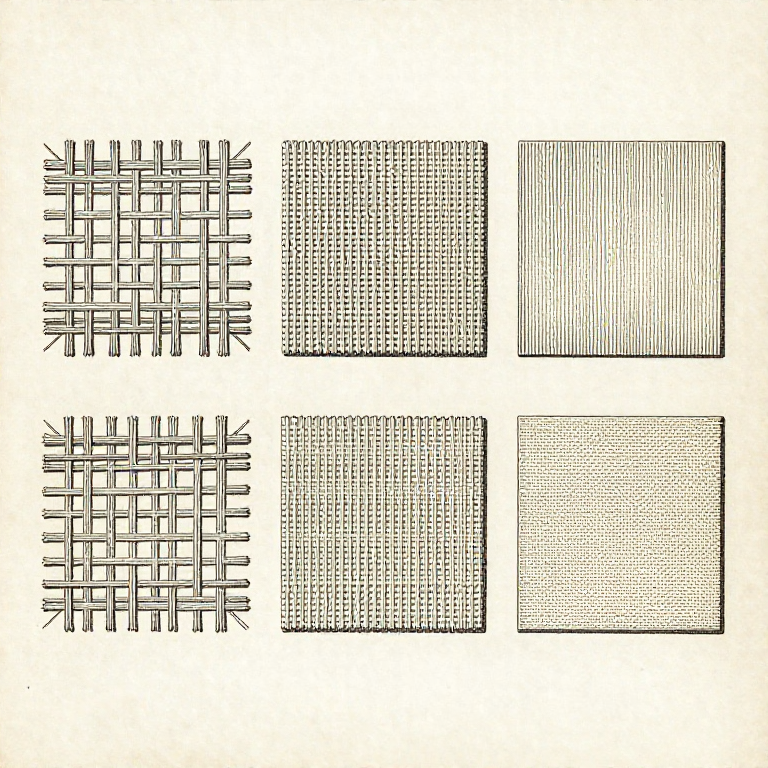


Sett: The One Number That Makes the Cloth
Sett is how many warp threads there are to the inch, and it is the decision that turns a yarn into a fabric. The same yarn at 8 ends per inch makes an open, floppy cloth; at 20 it makes a dense, stiff one. Neither is wrong, and only one of them is what you wanted.
The starting point is the yarn's **wraps per inch**, which is how many threads fit side by side with no room to interlace. The working sett is a fraction of that, and the fraction depends on the weave structure — plain weave needs the most room because it bends at every crossing.
After that, the answer comes from a sample, and the sample has to be washed.
Średniozaawansowany
4 hours
Instrukcje
1
1
From wraps per inch to a working sett
From wraps per inch to a working sett
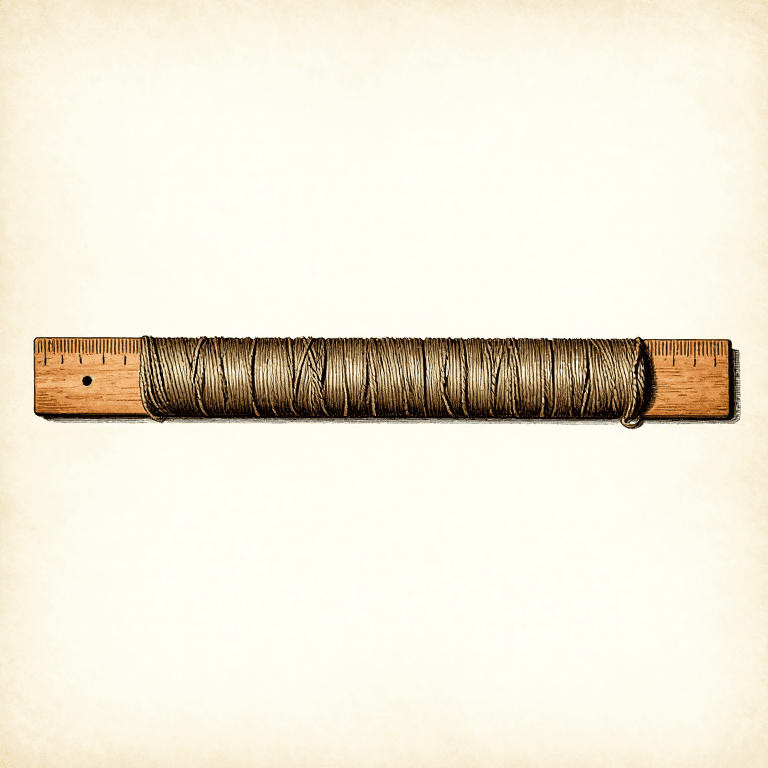
**Measure the wraps per inch** as the grist rung describes: wind the yarn round a ruler until the wraps touch without squeezing, count over an inch, and repeat in two more places. It is a surprisingly repeatable measurement if the yarn is not pulled tight.
**Then take a fraction of it**, and the fraction is the structure:
* **half** for a balanced plain weave, where warp and weft show equally
* **about two thirds** for a 2/2 twill
* **three quarters** for a satin or anything with long floats
* **a quarter or less** for weft-faced work — tapestry, rugs — where the weft is beaten down to cover the warp entirely
* **the full wraps per inch, or more** for warp-faced bands, where the warp covers the weft
**Those two extremes are the interesting ones.** A tapestry and an inkle band can be woven from the same yarn on the same loom and share nothing else: one hides the warp completely and the other hides the weft.
**Round to what the reed can do.** A reed has a fixed dents per inch, and the sett is set by how many ends are sleyed per dent — 2 per dent in a 10-dent reed is 20 ends per inch. That quantises the choice, which is usually a relief.
Materiały do tego kroku:
 Przędza wełniana niefarbowana1 sztuka
 Nić osnowowa bawełniana1 sztuka
Potrzebne narzędzia:
 Linijka stalowa
 Notatnik
2
2
The arithmetic, and what a sett costs
The arithmetic, and what a sett costs
Wczytywanie notatnika Jupyter…
Potrzebne narzędzia:
 Komputer stacjonarnyNotatnik
3
3
Reading a sample, and why it must be washed
Reading a sample, and why it must be washed
**Cloth on the loom is not cloth.** It is under tension, stretched in one direction and held flat. Cut it off and it relaxes; wash it and the threads bloom, shift and settle into each other. The change is large and it is the whole of what finishing means.
A woollen cloth can lose 10 to 20% in both directions and go from an open mesh to a solid fabric. A linen cloth softens dramatically and barely shrinks. Neither can be predicted from the cloth on the loom.
**So: weave, cut off, wash, dry, and only then judge.**
**Too open** — the cloth is sleazy, threads slide over each other, it has no body. More ends per inch.
**Too dense** — the cloth is board-stiff and the weft is hard to beat in straight. Fewer ends per inch.
**Right** — it drapes the way the finished thing should, and the warp and weft show in the proportion intended.
**Measure the sample before and after washing**, in both directions, and write the shrinkage down. That percentage is what the next project's warp length and width are calculated from, and it is specific to the yarn and the finishing.
Materiały do tego kroku:
Przędza wełniana niefarbowana1 sztukaNić osnowowa bawełniana1 sztukaPotrzebne narzędzia:
Linijka stalowa Waga precyzyjnaNotatnik
4
4
Warp sett and weft picks are two different numbers
Warp sett and weft picks are two different numbers
Sett is the warp. The weft has its own density — **picks per inch** — and it is controlled entirely by how hard the weaving is beaten.
**A balanced cloth has picks per inch equal to ends per inch.** Warp and weft show equally, and it is what most plain weave aims at.
**Weft-faced** cloth has many more picks than ends. The weft is beaten hard between widely spaced warps until it covers them completely. Tapestry, rag rugs, and most floor coverings.
**Warp-faced** cloth has fewer picks than ends. The warp is set so close that it hides the weft entirely. Inkle bands, tablet weaving, straps and belts — and it is why those traditions produce strong narrow things rather than cloth.
**Check the balance as you weave**, not at the end. Weave an inch, measure how many picks went in, and compare with the sett. Drifting one way or the other over a long piece is the commonest fault in a beginner's cloth, and it is invisible while it happens.
**A square marked on the cloth** is the classic check: lay in a contrasting thread, weave what looks like the same distance, and see whether the shape is square. If it is longer than it is wide, the beat is too light.
Materiały do tego kroku:
Nić osnowowa bawełniana1 sztukaPrzędza wełniana niefarbowana1 sztukaPotrzebne narzędzia:
Linijka stalowa Krosno podnóżkoweNotatnik
Materiały
2- Zastępnik
- 3 sztukZastępnik
Powiązane blueprinty
Te blueprinty dzielą się wiedzą — technikami, materiałami lub zasadami
CC0 Domena publiczna
Ten plan jest udostępniany na licencji CC0. Możesz go swobodnie kopiować, modyfikować, rozpowszechniać i wykorzystywać do dowolnych celów, bez konieczności uzyskiwania zgody.
Wesprzyj Makera kupując produkty przez jego plan, za co zarabia Prowizja Makera ustalony przez sprzedawców, lub stwórz nową iterację tego planu i dołącz go jako połączenie w swoim własnym planie, aby dzielić się przychodami.