SZTUKA
Piękno i dobre samopoczucie
RZEMIOSŁO
KULTURA I HISTORIA
ROZRYWKA
ŚRODOWISKO
JEDZENIE I NAPOJE
INŻYNIERIA ODWROTNA
NAUKI
LEKKOATLETYKA
TECHNOLOGIA
URZĄDZENIA DO NOSZENIA
Taste as You Go: The Five Dials You Can Actually Turn
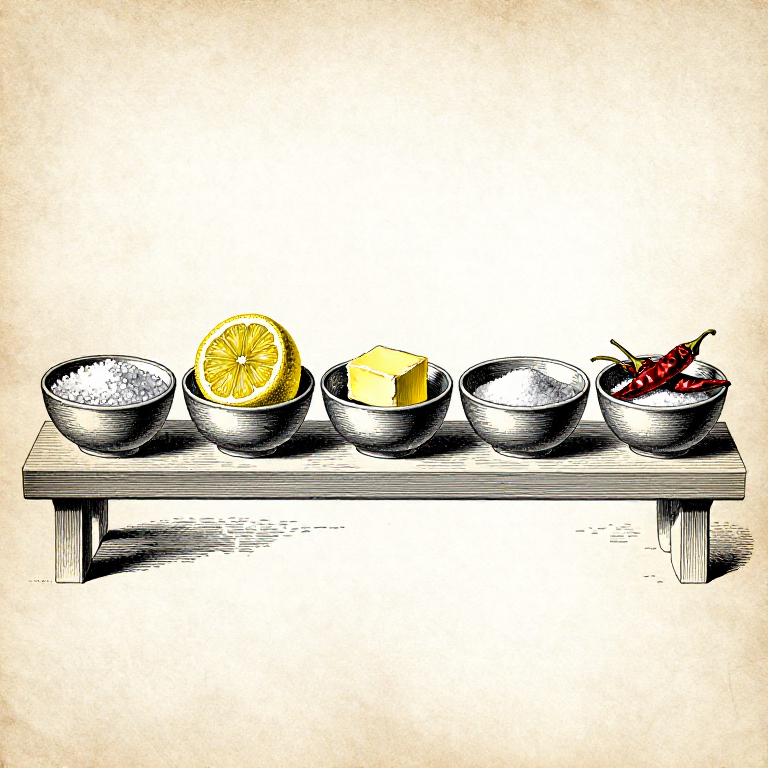
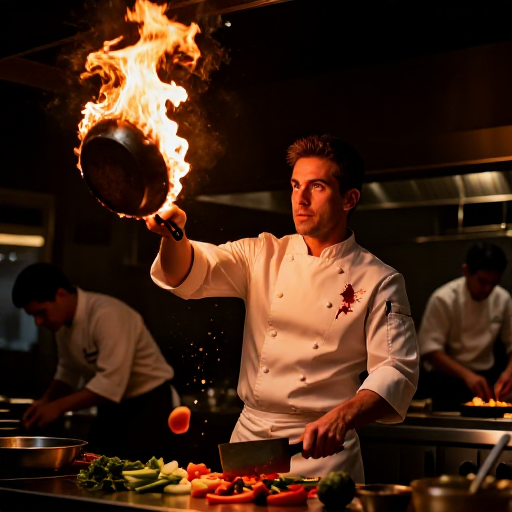
"Needs something" is the most common thing said over a pan, and it is almost always one of five things: SALT, ACID, FAT, SWEETNESS, or HEAT-as-in-chilli. Knowing the list turns a vague dissatisfaction into a decision.
Most of the time it is salt. The second most of the time it is acid — a squeeze of lemon or a splash of vinegar — and a dish that tastes flat and heavy despite being correctly salted is nearly always asking for it.
Tasting is a measurement, and the measurement rungs apply directly: taste at serving temperature, change one thing at a time, and adjust in small steps because you can always add and never take away.
Początkujący
2 hours
Instrukcje
1
1
Taste at the temperature it will be eaten
Taste at the temperature it will be eaten
Cold food tastes less salty and less sweet than the same food hot. A sauce corrected while lukewarm will be over-salted on a hot plate, and a chilled soup seasoned while warm will taste of nothing.
So bring the spoonful to serving temperature before judging it, or at least know which direction the error will run. For anything served cold, deliberately over-season slightly and check again once chilled.
Use a clean spoon every time — taste into a second spoon rather than returning the one that has been in your mouth to the pot. That is not fussiness; it is the same reason the chemistry batch insists on clean glassware.
Materiały do tego kroku:
 Chlorek sodu (sól)1 sztuka
Potrzebne narzędzia:
 Drewniana łyżka do mieszania
 Zestaw misek do mieszania
 Chochla
2
2
Work down the list in order
Work down the list in order
**Salt** first, because it makes everything else more detectable and because it is usually the answer. **Acid** second: lemon, vinegar, wine, yoghurt, a chopped tomato — it cuts richness and makes a heavy dish feel lighter without removing anything.
**Fat** third: butter, oil, cream. It carries aroma compounds that water cannot, rounds sharp edges, and gives the mouth something to hold onto. A thin-tasting sauce is often short of fat rather than of flavour.
**Sweetness** fourth, in small amounts, to balance acidity or bitterness rather than to make the dish sweet. **Chilli heat** last, because it is the hardest to take back and the easiest to add at the table.
Materiały do tego kroku:
 Sok z cytryny (świeży)1 sztuka
 Oliwa z oliwek extra virgin1 sztukaChlorek sodu (sól)1 sztuka
 Ziarna pieprzu czarnego1 sztuka
Potrzebne narzędzia:
Drewniana łyżka do mieszaniaChochla Duża misa szklana
3
3
One change at a time, in small steps
One change at a time, in small steps
Add one thing, stir, wait a moment, taste again. Add salt and lemon together and you have no idea which helped, and if it has gone wrong you do not know which to correct.
That is the change-one-thing-at-a-time rung, and it applies to a pan exactly as it does to a bench. A cook who adjusts three things at once learns nothing from a dish that came out well.
Small steps, because there is no reverse gear. Over-salted soup can be diluted, which weakens everything else too; over-chillied is very difficult; over-sweet is nearly impossible. Half of what you think you need, then taste again.
Materiały do tego kroku:
Chlorek sodu (sól)1 sztukaSok z cytryny (świeży)1 sztukaPotrzebne narzędzia:
Drewniana łyżka do mieszania Cyfrowa waga kuchenna
 Notatnik
4
4
Write down what it took
Write down what it took
When a dish comes out well, write down what you actually did — the weights, the pull temperature, the final adjustment, how long it rested. Otherwise the next attempt is a fresh experiment rather than a second run of a good one.
Write down the failures too, and why. "Too salty — used the fine salt in the kosher measure" is a line that prevents the same mistake for ever; "was too salty" prevents nothing.
That is the whole batch in one habit. Salt by weight, temperatures not times, one change at a time, taste at serving temperature — none of it is worth much unless what you learn survives until the next time you cook.
Potrzebne narzędzia:
NotatnikCyfrowa waga kuchenna Termometr błyskawiczny
Materiały
4- 1 sztukaZastępnik
- 1 sztukaZastępnik
- 1 sztukaZastępnik
- 1 sztukaZastępnik
Powiązane blueprinty
Te blueprinty dzielą się wiedzą — technikami, materiałami lub zasadami
Salt: Measure It by Weight, and Add It Early Enough to Travel
autor: TheChef
JEDZENIE I NAPOJE
1
0
0
0
0
0
A Knife Does the Work: The Grip, the Claw, and Why the Blunt One Cuts You
autor: TheChef
JEDZENIE I NAPOJE
0
0
0
0
0
0
One Reading Is Not a Measurement: Repeat It, and Look at the Spread
autor: Penny
Inżynieria
0
0
0
0
0
0
CC0 Domena publiczna
Ten plan jest udostępniany na licencji CC0. Możesz go swobodnie kopiować, modyfikować, rozpowszechniać i wykorzystywać do dowolnych celów, bez konieczności uzyskiwania zgody.
Wesprzyj Makera kupując produkty przez jego plan, za co zarabia Prowizja Makera ustalony przez sprzedawców, lub stwórz nową iterację tego planu i dołącz go jako połączenie w swoim własnym planie, aby dzielić się przychodami.