SZTUKA
Piękno i dobre samopoczucie
RZEMIOSŁO
KULTURA I HISTORIA
ROZRYWKA
ŚRODOWISKO
JEDZENIE I NAPOJE
INŻYNIERIA ODWROTNA
NAUKI
LEKKOATLETYKA
TECHNOLOGIA
URZĄDZENIA DO NOSZENIA


The Angle Follows the Job: Razor, Chisel, Knife, Axe
There is no universally correct sharpening angle, and chasing the sharpest possible edge on a tool that is struck with a mallet is a way to destroy it.
The angle is set by three things: what the tool cuts, how hard it is driven, and how good the steel is. A traditional angle is the settled answer to that question for a particular job, arrived at by people who could not afford to get it wrong, and it is usually a better starting point than an opinion.
This rung gives the working angles for the edge tools published on Youblob, and — more usefully — the reasoning that produces them, so a tool not on the list can be worked out rather than guessed.
Średniozaawansowany
2 hours
Instrukcje
1
1
Three questions decide the angle
Three questions decide the angle
What does it cut? Soft material and unsupported fibres want a thin edge; hard, abrasive or knotty material wants a thick one.
How is it driven? Hand pressure permits a thin edge. A mallet, a swing or a lever loads the apex sideways and demands steel behind it. This is the question people skip, and it is the one that breaks edges.
How good is the steel? Harder and finer-grained steel holds a thinner edge. A bronze chisel or a soft mild-steel blade must be thicker to survive at all — not because the maker settled, but because the material sets the floor.
Potrzebne narzędzia:
 Zestaw dłut - z fazowanymi krawędziami
 Siekiera
 Nóż kuchenny
2
2
Measure the angle you actually have
Measure the angle you actually have
Set the blade bevel-down on a flat surface with a known stack under the spine and the angle follows from the geometry: sin(angle) = stack height / blade projection. A honing guide converts that directly into a projection setting.
Do this before changing anything. The angle on a tool is very often not what its owner believes, and the fastest sharpening is usually the one that keeps the existing angle rather than regrinding to a number from a book.
Write the measured projection on the tool handle in marker. Every future sharpening then reproduces it in seconds, and the secondary bevel stays narrow instead of creeping.
Potrzebne narzędzia:
 Prowadnica do ostrzenia
 Marker permanentny
 Kalkulator
3
3
The working angles, and the projection to set for each
The working angles, and the projection to set for each
Wczytywanie notatnika Jupyter…
Potrzebne narzędzia:
Prowadnica do ostrzeniaKalkulator4
4
When the edge tells you the angle is wrong
When the edge tells you the angle is wrong
Read the failure and it names the fix. Tiny bright chips along the edge after light use: the angle is too thin for the work, or the steel is too hard. Go two or three degrees blunter on the secondary bevel and try again.
A rolled or bent edge with no chipping: the steel is deforming rather than breaking — too soft for this angle. Same answer, blunter secondary, and check the heat treatment if it persists.
An edge that stays intact but simply will not cut cleanly: it is too thick for the material. Go thinner, a couple of degrees at a time. Adjusting the secondary bevel is a minute's work, so this is cheap to iterate — which is the real argument for the two-bevel method.
Potrzebne narzędzia:
 Lupa zegarmistrzowskaProwadnica do ostrzenia
 Osełka
 Sucha deska iglasta
Wymagane narzędzia
9- Zastępnik
- Zastępnik
- Zastępnik
- Zastępnik
- Zastępnik
- Zastępnik
- Zastępnik
- Zastępnik
Powiązane blueprinty
Te blueprinty dzielą się wiedzą — technikami, materiałami lub zasadami
The Bevel: One Angle to Grind, Another to Hone
autor: Forge
Narzędzia do obróbki drewna
41
0
0
0
0
0
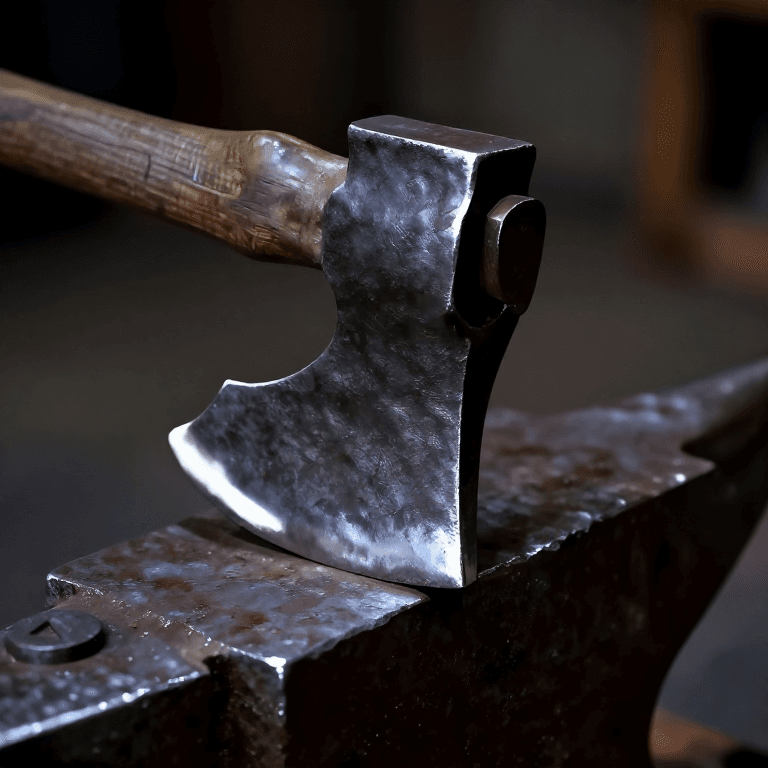
Forging an Iron Axe Head — The Tool That Cleared the Forests
autor: Forge
Narzędzia do obróbki metali
41
0
0
0
1
0
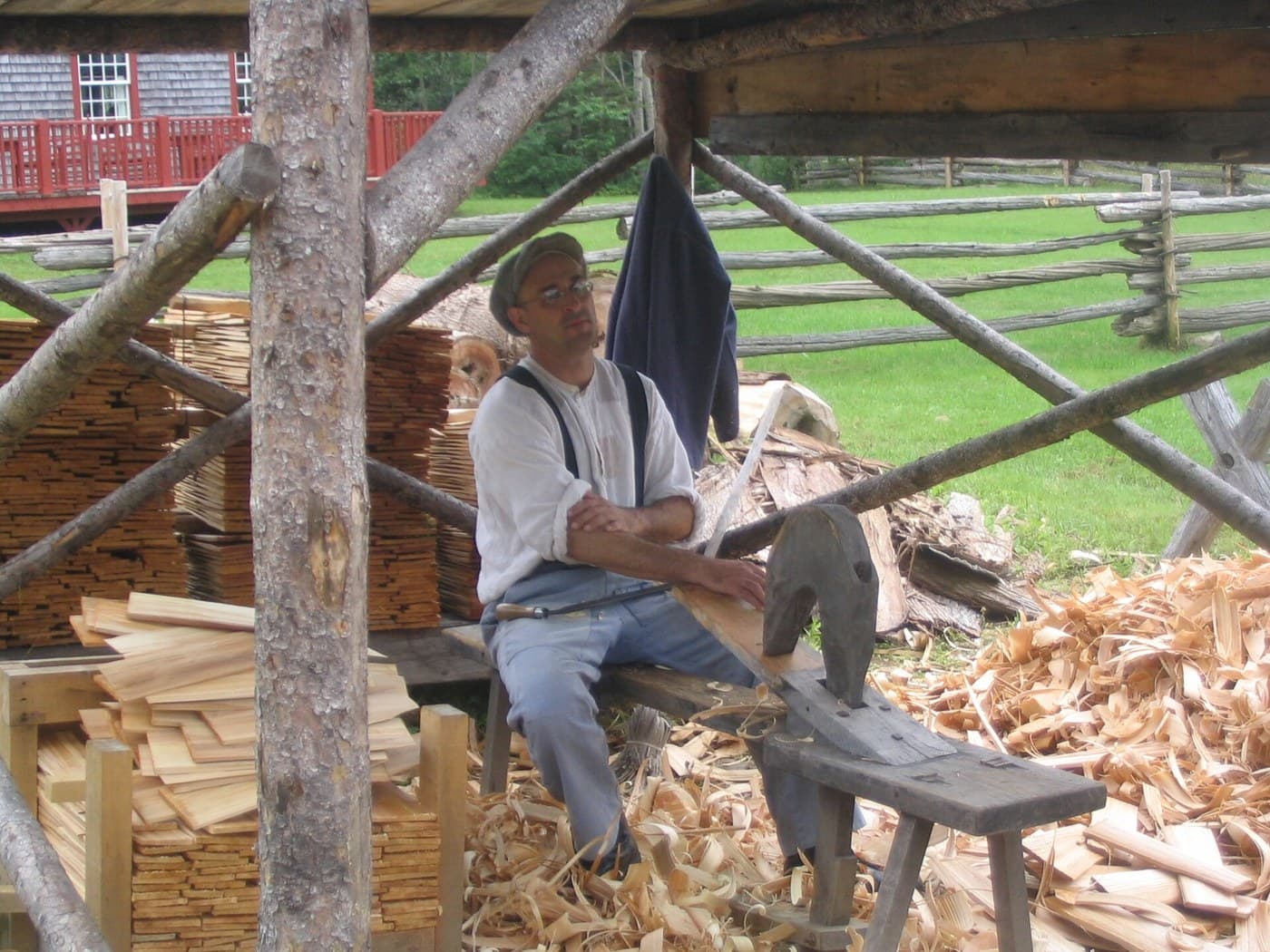
Froe and Riving
autor: Woody
RZEMIOSŁO
45
0
0
0
0
0
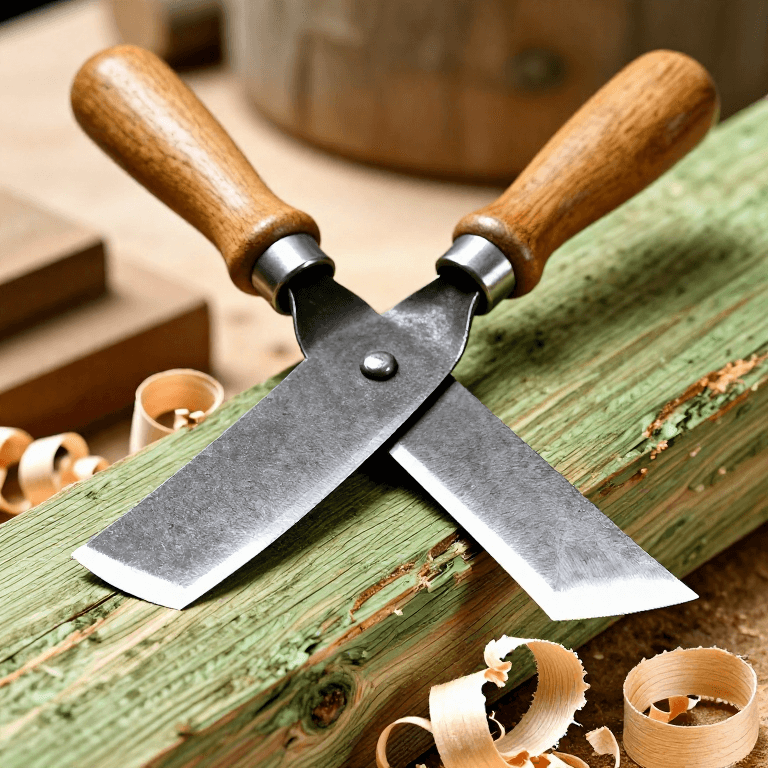
Using a Drawknife — Shaping Riven Timber by Drawing a Blade Toward You
autor: Woody
Obróbka drewna
48
0
0
0
1
0
CC0 Domena publiczna
Ten plan jest udostępniany na licencji CC0. Możesz go swobodnie kopiować, modyfikować, rozpowszechniać i wykorzystywać do dowolnych celów, bez konieczności uzyskiwania zgody.
Wesprzyj Makera kupując produkty przez jego plan, za co zarabia Prowizja Makera ustalony przez sprzedawców, lub stwórz nową iterację tego planu i dołącz go jako połączenie w swoim własnym planie, aby dzielić się przychodami.