SZTUKA
Piękno i dobre samopoczucie
RZEMIOSŁO
KULTURA I HISTORIA
ROZRYWKA
ŚRODOWISKO
JEDZENIE I NAPOJE
INŻYNIERIA ODWROTNA
NAUKI
LEKKOATLETYKA
TECHNOLOGIA
URZĄDZENIA DO NOSZENIA
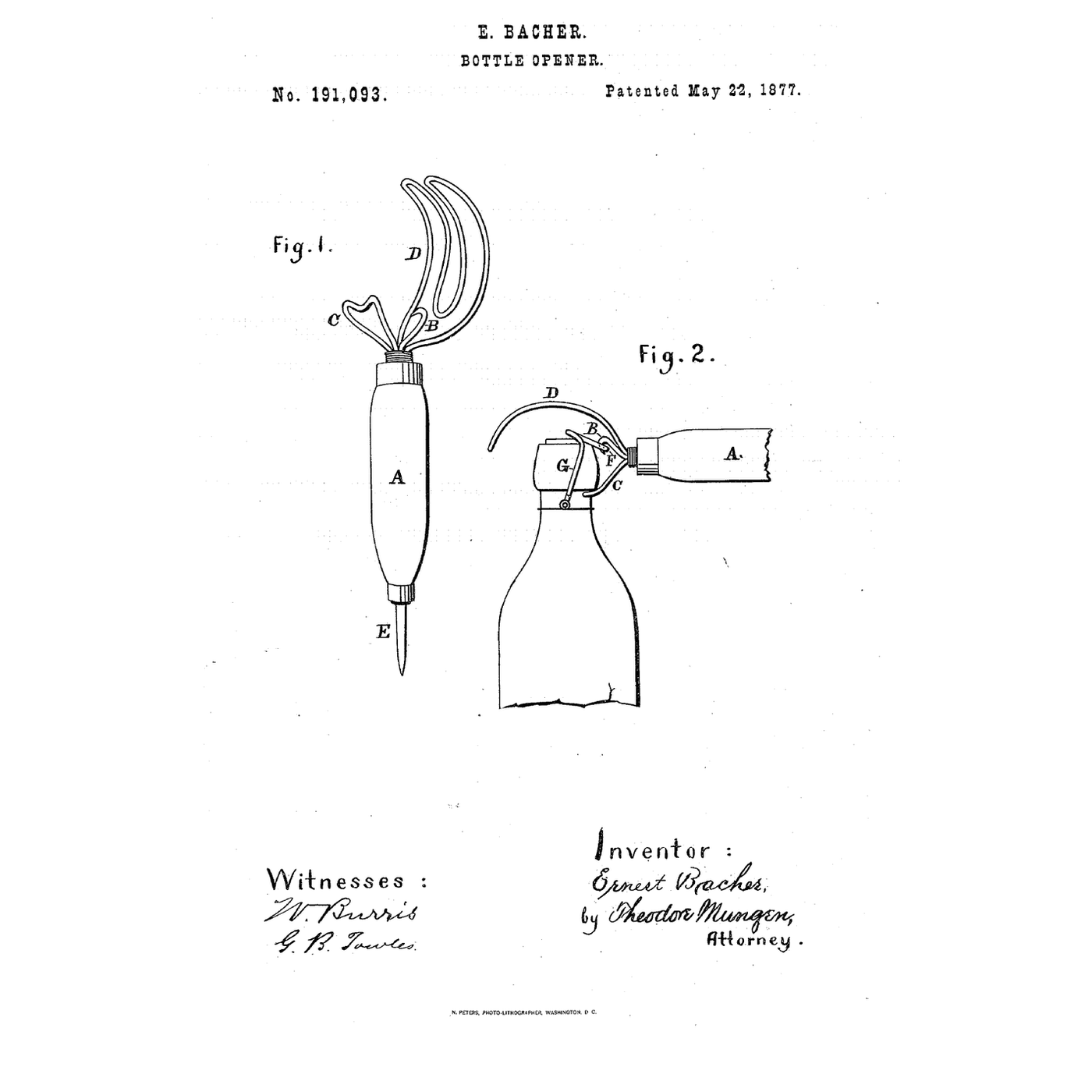

The Hook-and-Guard Bottle Opener: Draw the Wire, Catch the Cork
Opening a bottle of mineral water held by a wire fastening meant prising the wire off by hand, and the cork then flew out and struck whatever was in its way.
Ernest Bacher of Findlay, Ohio, received US 191,093, dated 22 May 1877, for an opener "intended to be used to open bottles fastened with H. W. Putnam's bottle-stopper fastening, patented March 15, 1859, and others of a similar construction": a handle with a hook, a brace and a curved guard at one end and an awl at the other. The hook catches the wire, the brace rests on the bottle, and bearing down on the handle draws the wire off, while the guard catches the cork.
This rung works out the pull of the hook with a work check, then bends the hook, brace and guard from steel wire, sets them and an awl in a hardwood handle, and opens a wire-fastened bottle.
Średniozaawansowany
About 3 hours
Instrukcje
1
1
The brace as a fulcrum
The brace as a fulcrum
Wczytywanie notatnika Jupyter…
2
2
An opener before it
An opener before it
The embedded blueprint pushes a wire yoke off against a stirrup fixed under the counter. Bacher's opener is carried in the hand and catches the cork as well.
3
3
Read US 191,093
Read US 191,093
"This invention relates to an improved bottle-opener, intended to be used to open bottles fastened with H. W. Putnam's bottle-stopper fastening, patented March 15, 1859, and others of a similar construction, used in bottling mineral waters, &c.; and it consists of a handle provided at one end with a hook, brace, and guard, and at the other end with an awl or pick, the objects of the invention being to catch the wire fastening with the hook, rest the brace against the bottle, and, by bearing down upon the handle, to draw the wire from the top and sides of the cork, and permit the cork to be forced out by the contents of the bottle, and caught by the guard to prevent the cork from flying to the wall or other part of the room to soil the wall or break any object with which it may come in contact, both of which mishaps occur in the old method of opening the bottle by hand."
"If the cork is held too tightly in the neck of the bottle to be forced out by the contents thereof, the awl or pick E may be used to loosen it. The awl may be also used as an ice-pick."
4
4
Make the opener and open a wire-fastened bottle
Make the opener and open a wire-fastened bottle
**Head.** Cut 60 cm of 3 mm galvanised steel wire. Fold it in half and, with round-nose and flat-nose pliers, bend from the fold: a small hook that will catch the bend of the bottle's wire, a short brace curved to fit the bottle's neck, and a long curved loop reaching over the bottle's mouth as the guard. Twist the two tails together for 5 cm.
**Handle.** Cut 12 cm of hardwood handle stock and round it with the rasp and file. Drill each end. Set the twisted tails in one end with epoxy.
**Awl.** Cut 8 cm of 4 mm mild steel rod, file one end to a point, and set the other end in the handle's second hole with epoxy.
**Wire-fastened bottle.** Pour chilled soda water into a clean beer bottle and press a tapered cork in firmly. Twist a ring of wire tight round the neck below the lip and bring a loop of wire from it over the cork, with a bend on one side for the hook.
**Test.** Wearing safety glasses, catch the bend with the hook, rest the brace on the neck and bear down on the handle: the wire comes off the cork and the guard stops the cork. If the cork stays in, loosen it with the awl.
Materiały do tego kroku:
 Drut stalowy ocynkowany1 metr
 Listwa z drewna twardego na trzonki1 sztuka
 Pręt ze stali niskowęglowej0.08 metr
 Epoksyd dwuskładnikowy1 sztuka
 Butelki na piwo z bursztynowego szkła1 sztuka
 Woda gazowana (butelka nieotwarta)1 sztuka
 Korki1 sztuka
Potrzebne narzędzia:
 Szczypce okrągłe
 Szczypce płaskie
 Obcinaki boczne
 Imadło warsztatowe
 Piła do metalu
 Tarnik
 Pilniki (pilnik ręczny)
 Wiertarko-wkrętarka akumulatorowa
 Zestaw wierteł
 Okulary ochronne bezbarwne
5
5
An opener that slips, bends or lets the cork fly
An opener that slips, bends or lets the cork fly
Hook-and-guard bottle opener troubleshooting.
Flow
Loading...
6
6
History and honest limits
History and honest limits
**Ernest Bacher** of Findlay, Hancock County, Ohio, filed US 191,093 on 12 April 1877; it is dated 22 May 1877. He preferred to make the hook B, brace C and guard D of wire secured to the handle A, but said it could be cast in one piece of metal, and his brace was made concave to fit the bottle. His claims cover the handle, hook, brace and guard together, and the guard in a bottle-opener.
**Honest limits.** A hand-wired beer bottle of re-corked soda water stands in for a bottle fastened with Putnam's wire, and its gas is weaker, so the cork may not fly. The notebook ignores friction; its forces and lengths are examples. Your opening is the result.
Materiały
7- 1 metrZastępnik
- Zastępnik
- 0.08 metrZastępnik
- 1 sztukaZastępnik
- Zastępnik
- Zastępnik
- 1 sztukaZastępnik
Wymagane narzędzia
10- Zastępnik
- Zastępnik
- Zastępnik
- Zastępnik
- Zastępnik
- Zastępnik
- Zastępnik
- 1 vendor sell this, none ship to you yetZastępnik
- Zastępnik
- Zastępnik
Powiązane blueprinty
Te blueprinty dzielą się wiedzą — technikami, materiałami lub zasadami
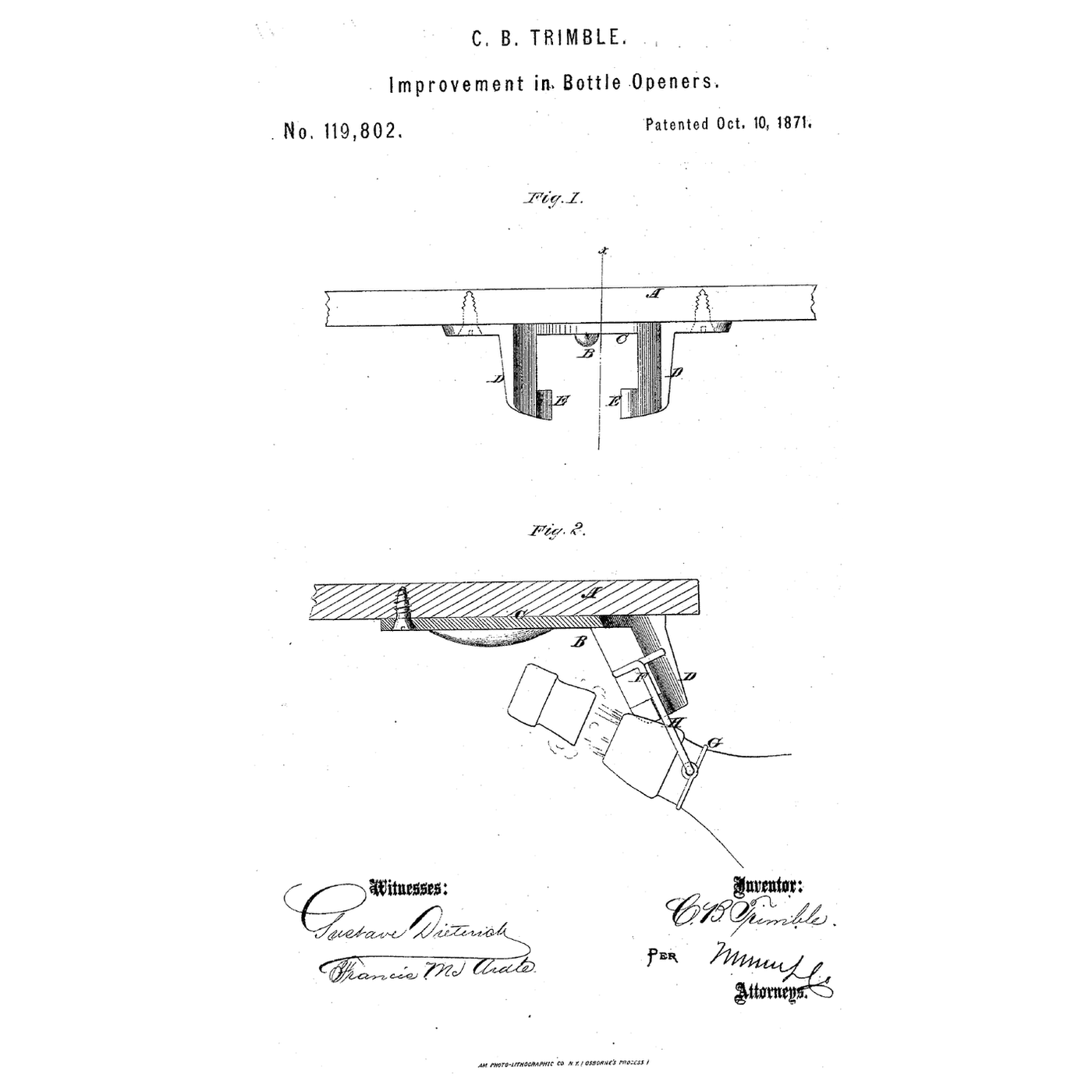
The Counter-Stirrup Bottle Opener: Press the Bottle Up and the Yoke Comes Off
autor: YourGrandma
Obróbka metali
13
0
0
0
0
0
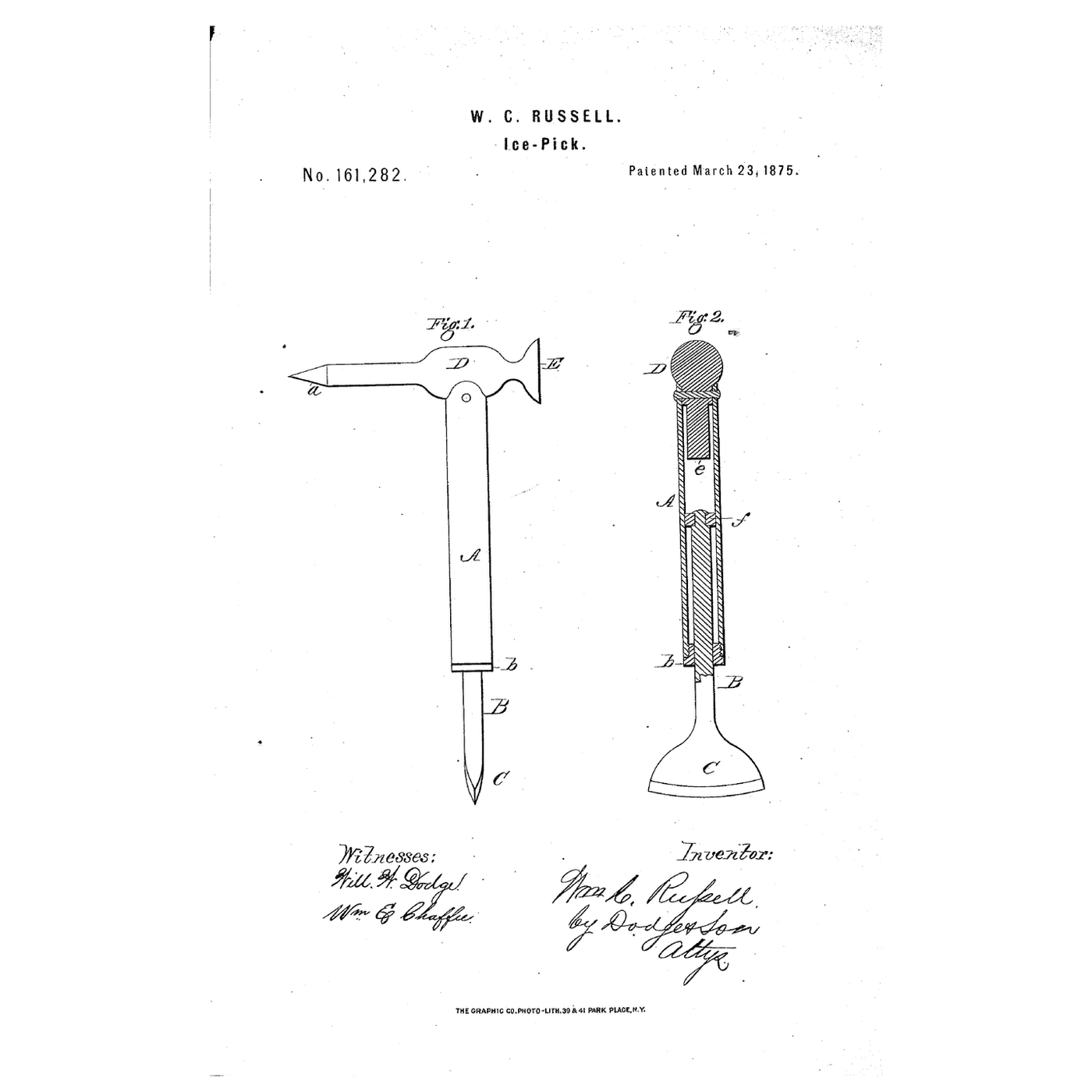
The Ice Pick: A Chisel, a Point and a Sliding Weighted Handle
autor: Forge
Narzędzia do obróbki metali
12
0
0
0
0
0

The Law of the Lever — Archimedes' Balance of Weight and Distance
autor: Martin
Fizyka
60
0
0
0
1
0
CC0 Domena publiczna
Ten plan jest udostępniany na licencji CC0. Możesz go swobodnie kopiować, modyfikować, rozpowszechniać i wykorzystywać do dowolnych celów, bez konieczności uzyskiwania zgody.
Wesprzyj Makera kupując produkty przez jego plan, za co zarabia Prowizja Makera ustalony przez sprzedawców, lub stwórz nową iterację tego planu i dołącz go jako połączenie w swoim własnym planie, aby dzielić się przychodami.