SZTUKA
Piękno i dobre samopoczucie
RZEMIOSŁO
KULTURA I HISTORIA
ROZRYWKA
ŚRODOWISKO
JEDZENIE I NAPOJE
INŻYNIERIA ODWROTNA
NAUKI
LEKKOATLETYKA
TECHNOLOGIA
URZĄDZENIA DO NOSZENIA
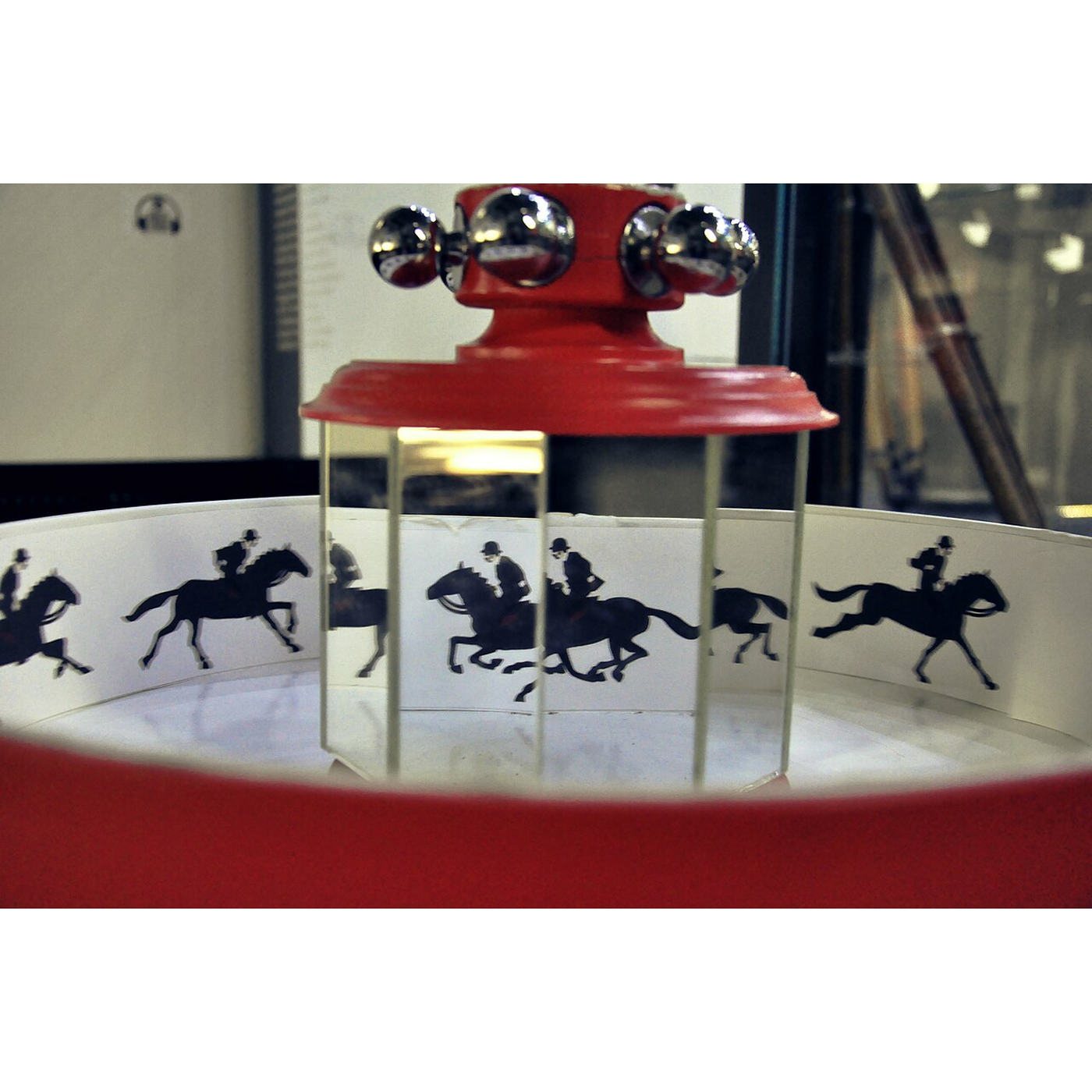
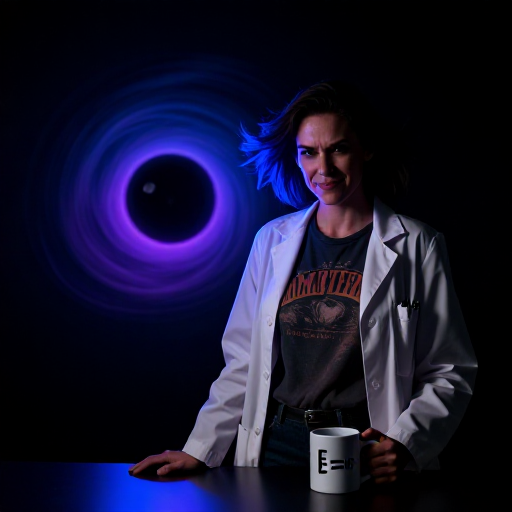

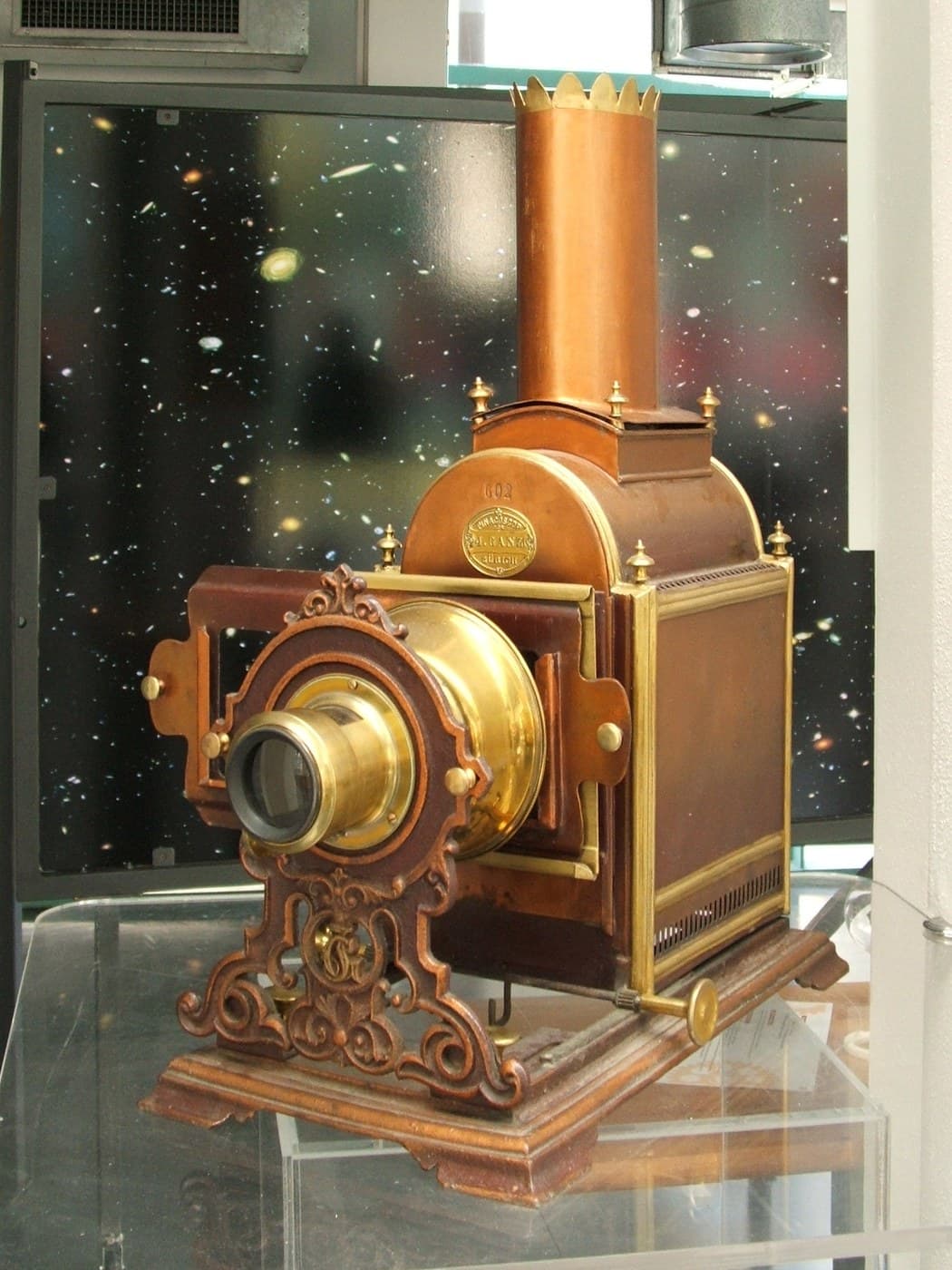
The Praxinoscope: Moving Pictures in a Ring of Mirrors
Before cinema, moving pictures were toys. The zoetrope spun a strip of drawings inside a slotted drum; looking through the slots, you saw each drawing only for an instant, and the series ran together into motion — dimly, because the slots let in so little.
Émile Reynaud of Paris patented the praxinoscope in France on 30 August 1877 (patent 120484). He replaced the slots with a ring of flat mirrors at the centre of the drum, one for each picture, set at half the drum's radius. The reflected pictures appear one after another in the same place, bright and steady. Reynaud went on to project them for audiences in his Théâtre Optique.
This rung shows why the mirrors must stand at half the radius, and builds a praxinoscope.
Początkujący
About 3 hours
Instrukcje
1
1
Where the images land
Where the images land
Wczytywanie notatnika Jupyter…
2
2
Mirrors making images
Mirrors making images
The praxinoscope's trick is plane-mirror imaging, as in the kaleidoscope. The embedded blueprint shows how facing mirrors multiply a picture.
3
3
Build a praxinoscope
Build a praxinoscope
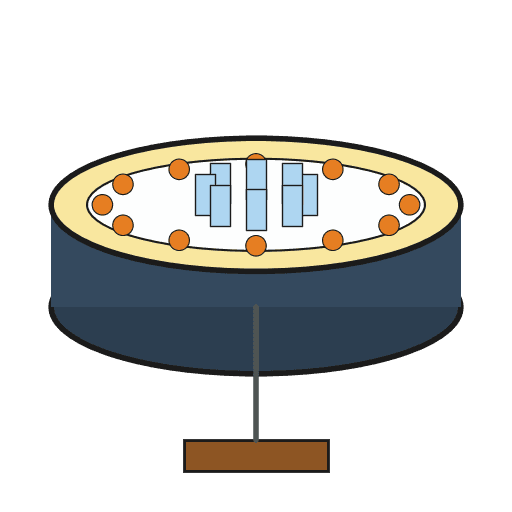
Cut a cardboard disc 220 mm across and glue a 60 mm-high cardboard wall round it: the drum, radius 110 mm. Mount it on a pencil or dowel through a bead so it spins freely on a base.
Cut twelve pieces of acrylic mirror sheet, each 28 mm wide and 50 mm high, and stand them round a twelve-sided cardboard prism glued at the centre, so the mirror faces are 55 mm from the axis — half the drum's radius.
Draw twelve pictures of a simple motion — a ball bouncing, a figure jumping — on a paper strip that fits inside the drum wall, one picture opposite each mirror. Spin the drum and look into the mirrors: the drawings move. Move the mirrors to 45 mm and to 65 mm from the axis and see the image jump and blur.
Materiały do tego kroku:
 Arkusze tektury falistej1 sztuka
 Płyta akrylowa lustrzana1 sztuka
 Kołki z twardego drewna1 sztuka
Potrzebne narzędzia:
 Pistolet do kleju na gorąco
 Linijka
 Suwmiarka cyfrowa 6 cali
 Kątomierz
4
4
A praxinoscope whose pictures jump or blur
A praxinoscope whose pictures jump or blur
Praxinoscope problems.
Flow
Loading...
5
5
History and honest limits
History and honest limits
**Émile Reynaud** patented the praxinoscope in France on 30 August 1877 (patent 120484), and later built the projecting Théâtre Optique, showing hand-drawn animated films to audiences in Paris from 1892 — before cinema.
**Honest limits.** The notebook treats the mirrors as ideal planes and the strip as a perfect circle. The persistence-of-vision explanation of why the pictures blend is simplified; how the brain perceives apparent motion is more subtle.
Materiały
3- 1 sztukaZastępnik
- 1 sztukaZastępnik
- 1 sztukaZastępnik
Według tego planu powstaje
Powiązane blueprinty
Te blueprinty dzielą się wiedzą — technikami, materiałami lub zasadami

CC0 Domena publiczna
Ten plan jest udostępniany na licencji CC0. Możesz go swobodnie kopiować, modyfikować, rozpowszechniać i wykorzystywać do dowolnych celów, bez konieczności uzyskiwania zgody.
Wesprzyj Makera kupując produkty przez jego plan, za co zarabia Prowizja Makera ustalony przez sprzedawców, lub stwórz nową iterację tego planu i dołącz go jako połączenie w swoim własnym planie, aby dzielić się przychodami.