SZTUKA
Piękno i dobre samopoczucie
RZEMIOSŁO
KULTURA I HISTORIA
ROZRYWKA
ŚRODOWISKO
JEDZENIE I NAPOJE
INŻYNIERIA ODWROTNA
NAUKI
LEKKOATLETYKA
TECHNOLOGIA
URZĄDZENIA DO NOSZENIA


The Reusable Can Opener: A Stop on the Knife and a Rim Left to Use Again
A can hacked open is fit only to be thrown away.
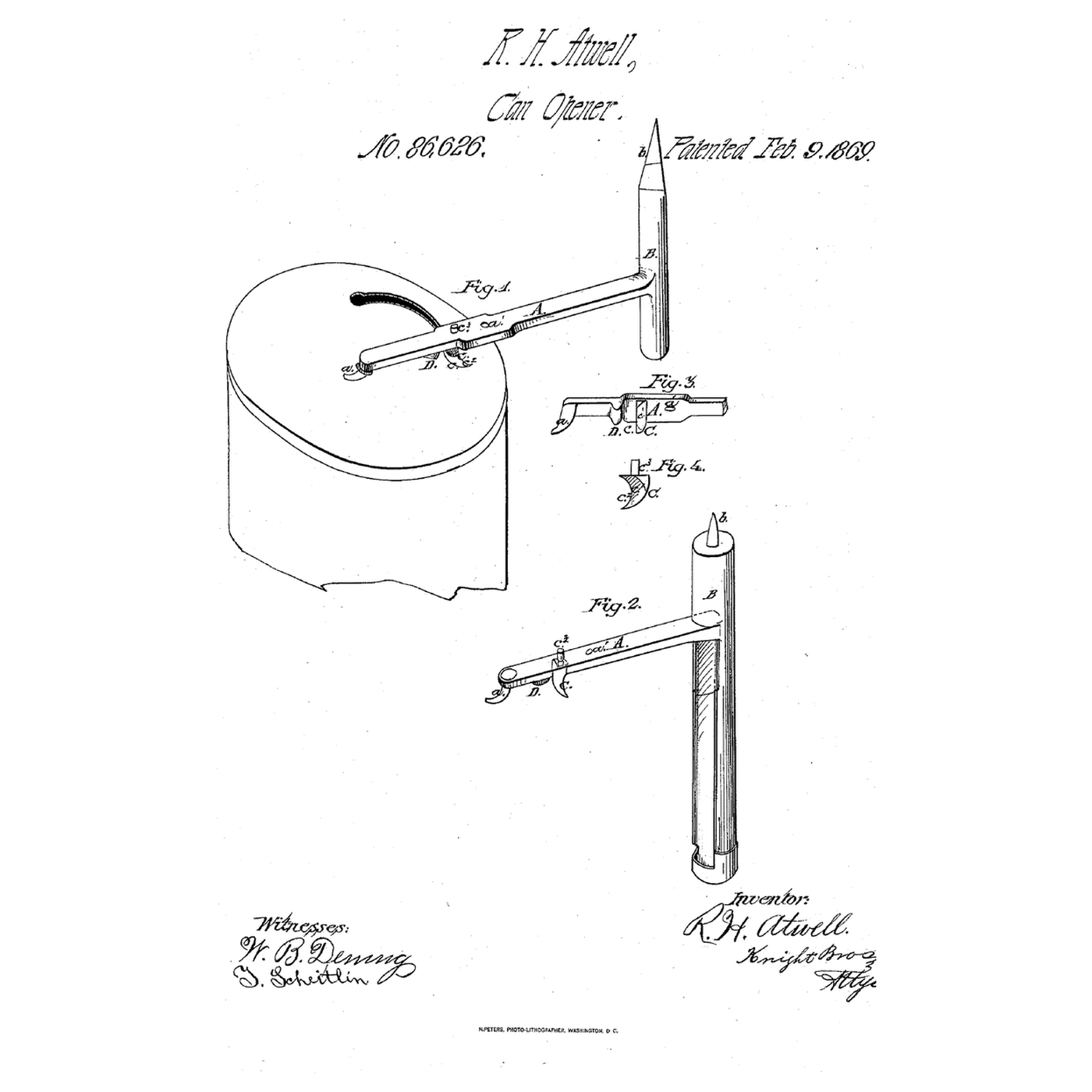
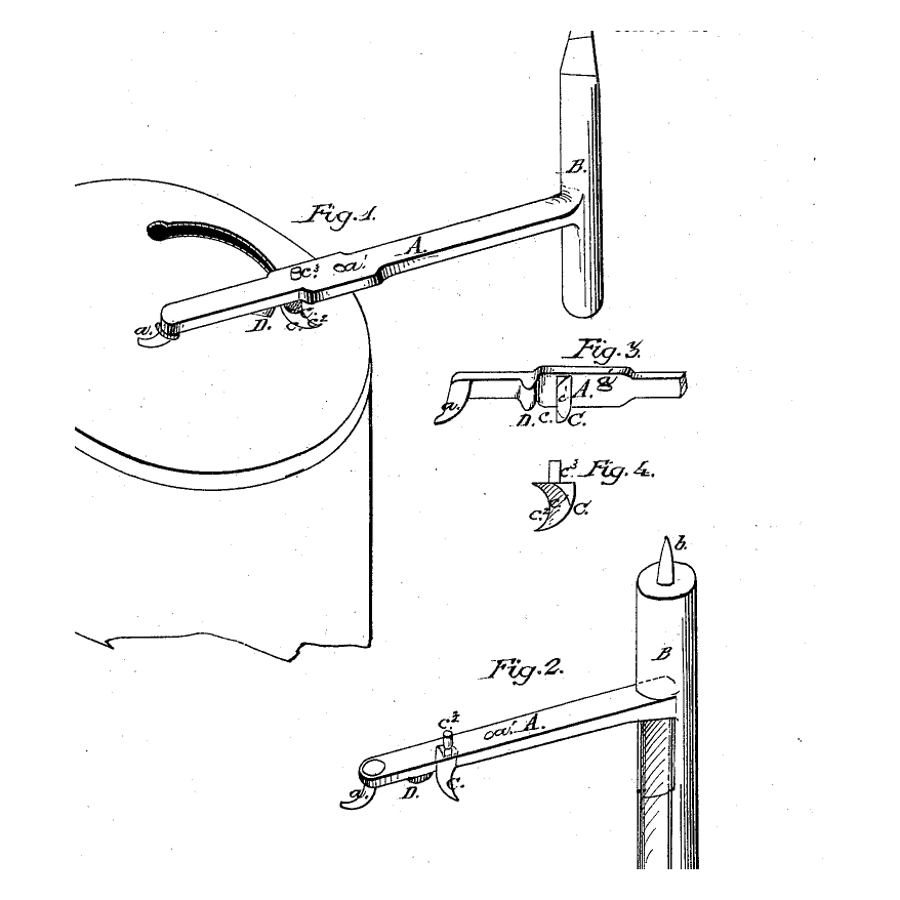
Richard H. Atwell of Baltimore, Maryland, received US 86,626, dated 9 February 1869, for a can opener: a bar at right angles to a handle that carries a piercer, a hook-shaped fulcrum pin in a hole made at the centre of the piece to be removed, a concave knife in one of several holes, and a stop that limits how far the knife goes in; the edges of the opening are so turned "as to adapt the can to be again used."
This rung works out which hole leaves a usable rim, then builds the bar, pin, knife and stop and opens a can cleanly enough to refill.
Średniozaawansowany
About 3 hours
Instrukcje
1
1
Which hole leaves a rim
Which hole leaves a rim
Wczytywanie notatnika Jupyter…
2
2
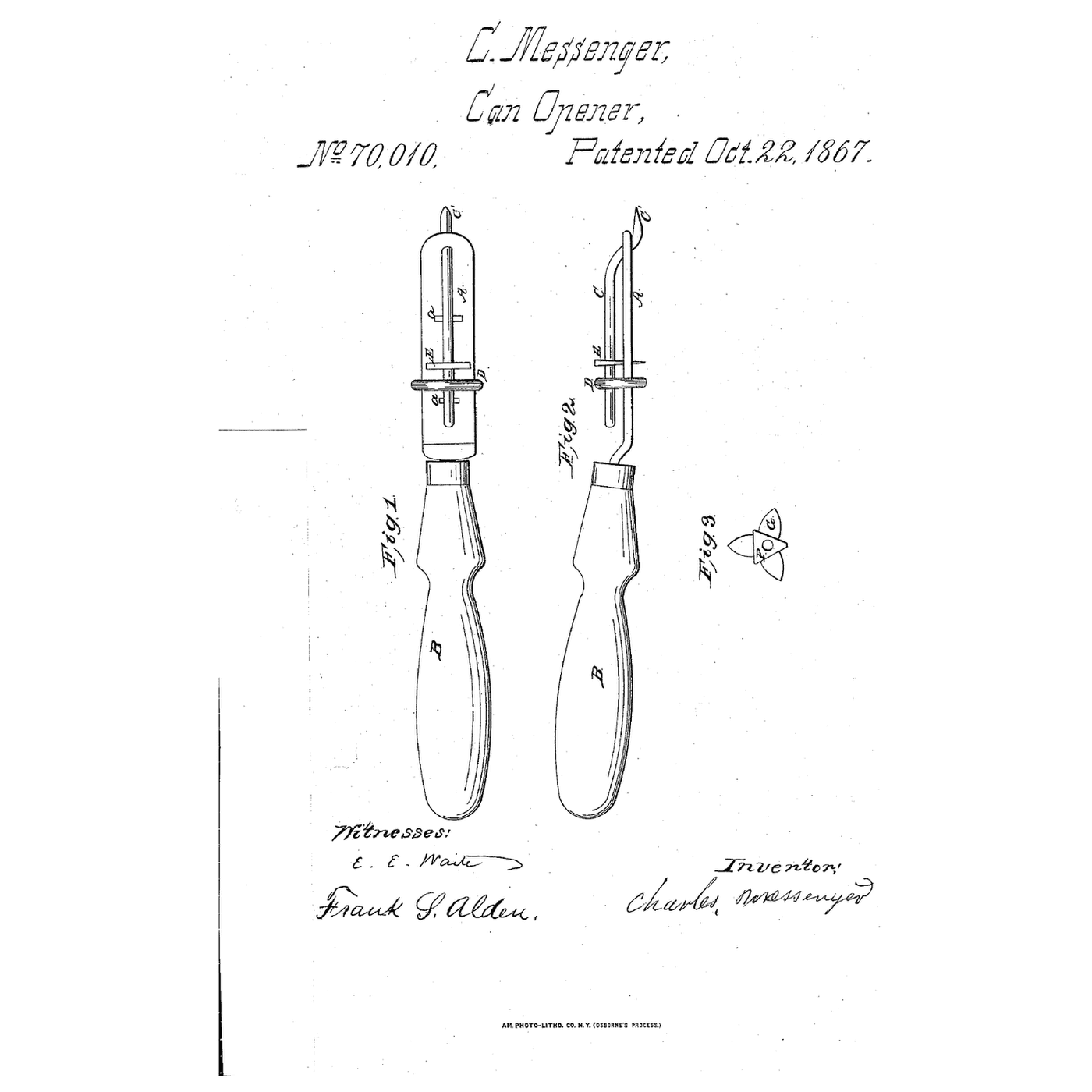
A centre-pivot cutter before it
A centre-pivot cutter before it
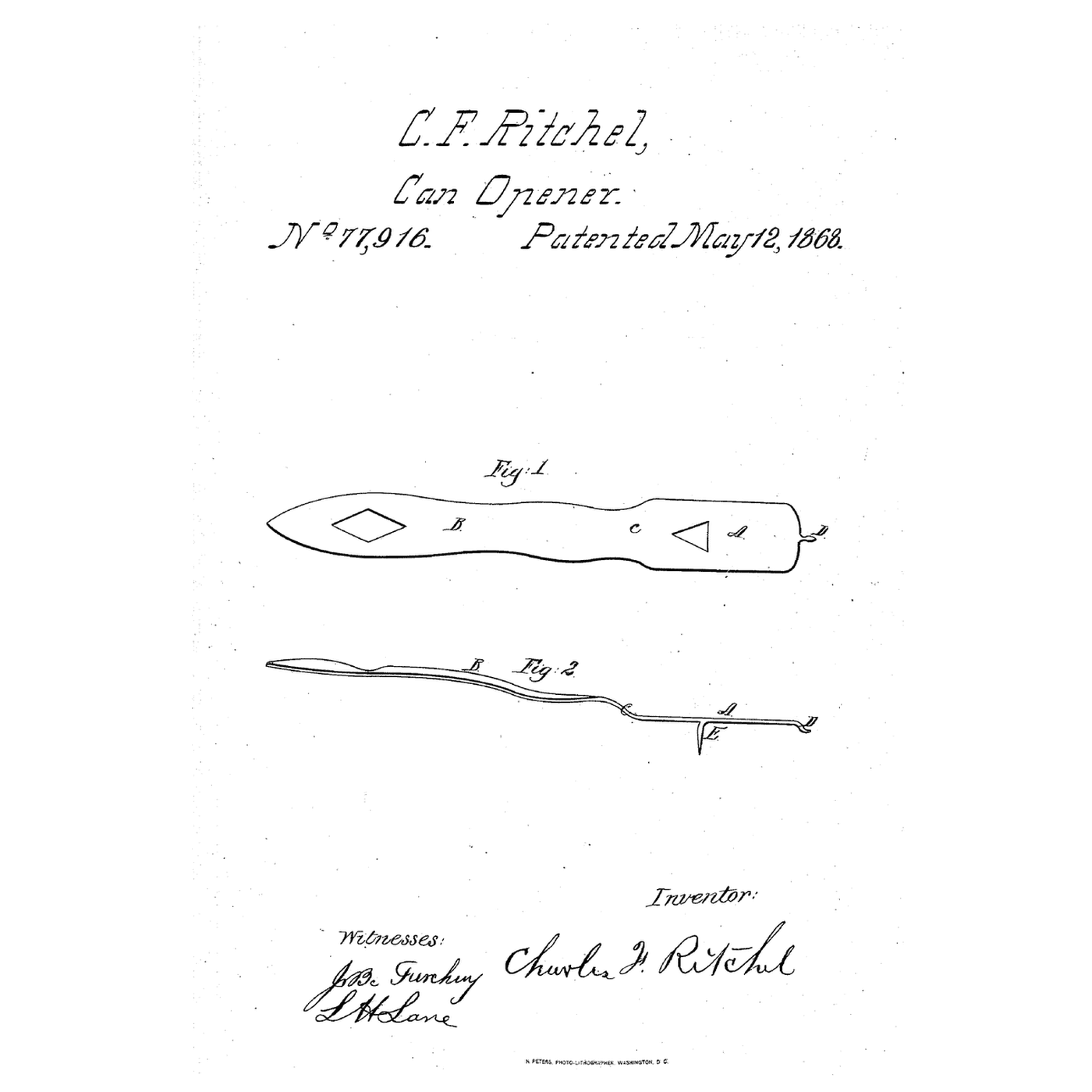
The embedded blueprint cuts a round hole round a spike. Atwell adds a stop on the knife and turns the edge so the can is fit to use again.
3
3
Read US 86,626
Read US 86,626
"The edges of the opening made in the can are so turned, by this construction of knife, as to adapt the can to be again used."
"A rest or stop, D, preferably cast on the bar, and arranged between the fulcrum a and knife C, limits the insertion of the knife, and thus prevents its hanging in the tin at its shank."
4
4
Make the bar and handle
Make the bar and handle
Cut 90 mm of 25 × 3 mm flat bar and drill 5 mm holes 20, 28 and 36 mm from one end. Fix its other end at right angles into a hardwood handle with epoxy, and file a point on the handle's far end as the piercer.
Materiały do tego kroku:
 Płaskownik ze stali miękkiej1 sztuka
 Kołki z twardego drewna1 sztuka
 Epoksyd dwuskładnikowy1 sztuka
Potrzebne narzędzia:
 Piła do metalu
 Punktak
 Wiertarko-wkrętarka akumulatorowa
 Zestaw wierteł
 Pilniki (pilnik ręczny)
5
5
Make the hook pin and stop
Make the hook pin and stop
Bend 4 mm steel rod into a hook and fix it through the bar's end as the fulcrum pin. Epoxy a hardwood stop under the bar between the pin and the first hole, 4 mm deep.
Materiały do tego kroku:
 Pręt ze stali niskowęglowej1 sztuka
 Klocek z drewna twardego1 sztukaEpoksyd dwuskładnikowy1 sztuka
Potrzebne narzędzia:
 Imadło warsztatowe
 MłotekPiła do metaluWiertarko-wkrętarka akumulatorowaZestaw wierteł
6
6
Make the knife
Make the knife
Cut a knife from 1 mm steel sheet with a 5 mm shank, file its cutting edge concave and its flat side toward the pin. Fit the shank through a hole and nut it on top.
Materiały do tego kroku:
 Blacha ze stali miękkiej1 sztuka
 Nakrętka sześciokątna1 sztuka
 Śruby maszynowe1 sztuka
Potrzebne narzędzia:
 Nożyce do blachyPilniki (pilnik ręczny)
 Osełka
 Klucz nastawny
 Okulary ochronne bezbarwne
7
7
The patent drawing
The patent drawing
US 86,626 drawing sheet, public domain (expired patent).
8
8
Open a can for reuse
Open a can for reuse
Pierce the centre of a sealed can's top with the handle's point and hook the pin in. Press the knife through to the stop and turn the bar round once. Measure the rim left and run a finger-safe check along it with a rag.
Materiały do tego kroku:
 Puszka blaszana1 sztuka
Potrzebne narzędzia:
 Suwmiarka cyfrowa 6 cali
 Stoper
 Skórzane rękawice robocze
9
9
A knife that hangs, wanders or leaves a ragged rim
A knife that hangs, wanders or leaves a ragged rim
Reusable can opener troubleshooting.
Flow
Loading...
10
10
History and honest limits
History and honest limits
**Richard H. Atwell** of Baltimore, Maryland, received US 86,626, dated 9 February 1869. His bar may be cast in one piece with the handle or hinged to it; the knife is held from lateral pressure and bending, its edge preferably concave so it need not be pressed down to its work. When the can is not to be refilled, part of the circle may be cut and the piece bent up.
**Honest limits.** Epoxy and a hardwood stop stand in for his casting, and the knife is unhardened sheet. Your rim measurements are the result.
Materiały
9- 1 sztukaZastępnik
- 1 sztukaZastępnik
- 2 sztukZastępnik
- 1 sztukaZastępnik
- 1 sztukaZastępnik
- 1 sztukaZastępnik
- 1 sztukaZastępnik
- 1 sztukaZastępnik
- 1 sztukaZastępnik
Wymagane narzędzia
14- Zastępnik
- Zastępnik
- 1 vendor sell this, none ship to you yetZastępnik
- Zastępnik
- Zastępnik
- Zastępnik
- Zastępnik
- Zastępnik
- Zastępnik
- Zastępnik
- Zastępnik
- Zastępnik
- Zastępnik
- Zastępnik
Powiązane blueprinty
Te blueprinty dzielą się wiedzą — technikami, materiałami lub zasadami


CC0 Domena publiczna
Ten plan jest udostępniany na licencji CC0. Możesz go swobodnie kopiować, modyfikować, rozpowszechniać i wykorzystywać do dowolnych celów, bez konieczności uzyskiwania zgody.
Wesprzyj Makera kupując produkty przez jego plan, za co zarabia Prowizja Makera ustalony przez sprzedawców, lub stwórz nową iterację tego planu i dołącz go jako połączenie w swoim własnym planie, aby dzielić się przychodami.