SZTUKA
Piękno i dobre samopoczucie
RZEMIOSŁO
KULTURA I HISTORIA
ROZRYWKA
ŚRODOWISKO
JEDZENIE I NAPOJE
INŻYNIERIA ODWROTNA
NAUKI
LEKKOATLETYKA
TECHNOLOGIA
URZĄDZENIA DO NOSZENIA
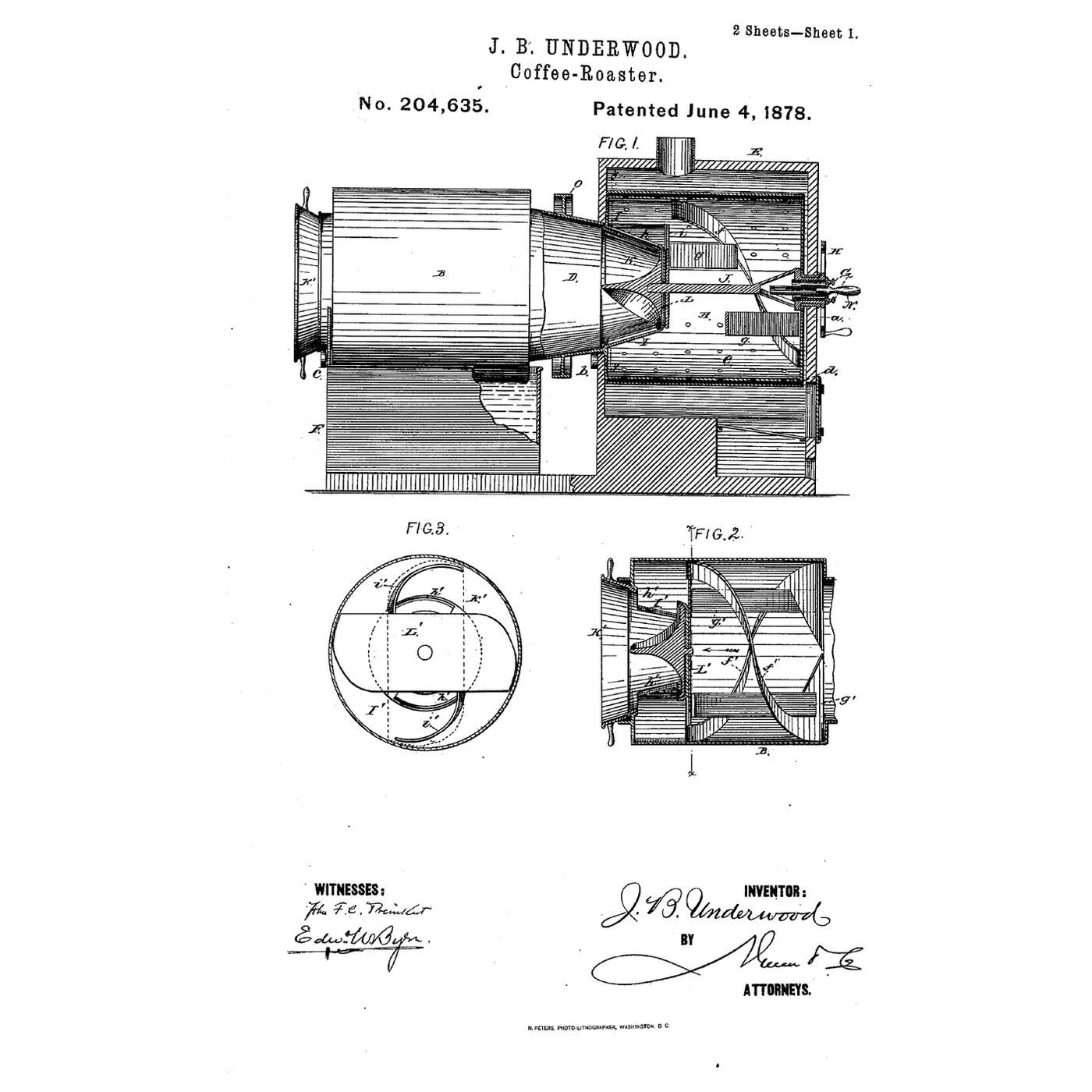


The Roaster and Cooler: Carry the Charge Straight Into Water-Cooled Iron
Roasted coffee goes on roasting in its own heat until it cools. A roaster that cannot cool the beans quickly over-roasts every batch.
Joseph B. Underwood of Fayetteville, North Carolina, received US 204,635, dated 4 June 1878 (filed 23 April 1878), for "a combined coffee roaster and cooler in which the charge of coffee in the roasting-cylinder shall be transferred to the cooling-cylinder without exposure to the air, and in an automatic manner, by the simple rotation of the cylinders", the cooler standing partly in a water tank.
This rung models how fast beans cool in a pile, in air and in a cooled drum, then roasts a small batch and cools half fast and half slow.
Średniozaawansowany
About 1 hour
Instrukcje
1
1
How fast the beans cool
How fast the beans cool
Wczytywanie notatnika Jupyter…
2
2
Carryover cooking
Carryover cooking
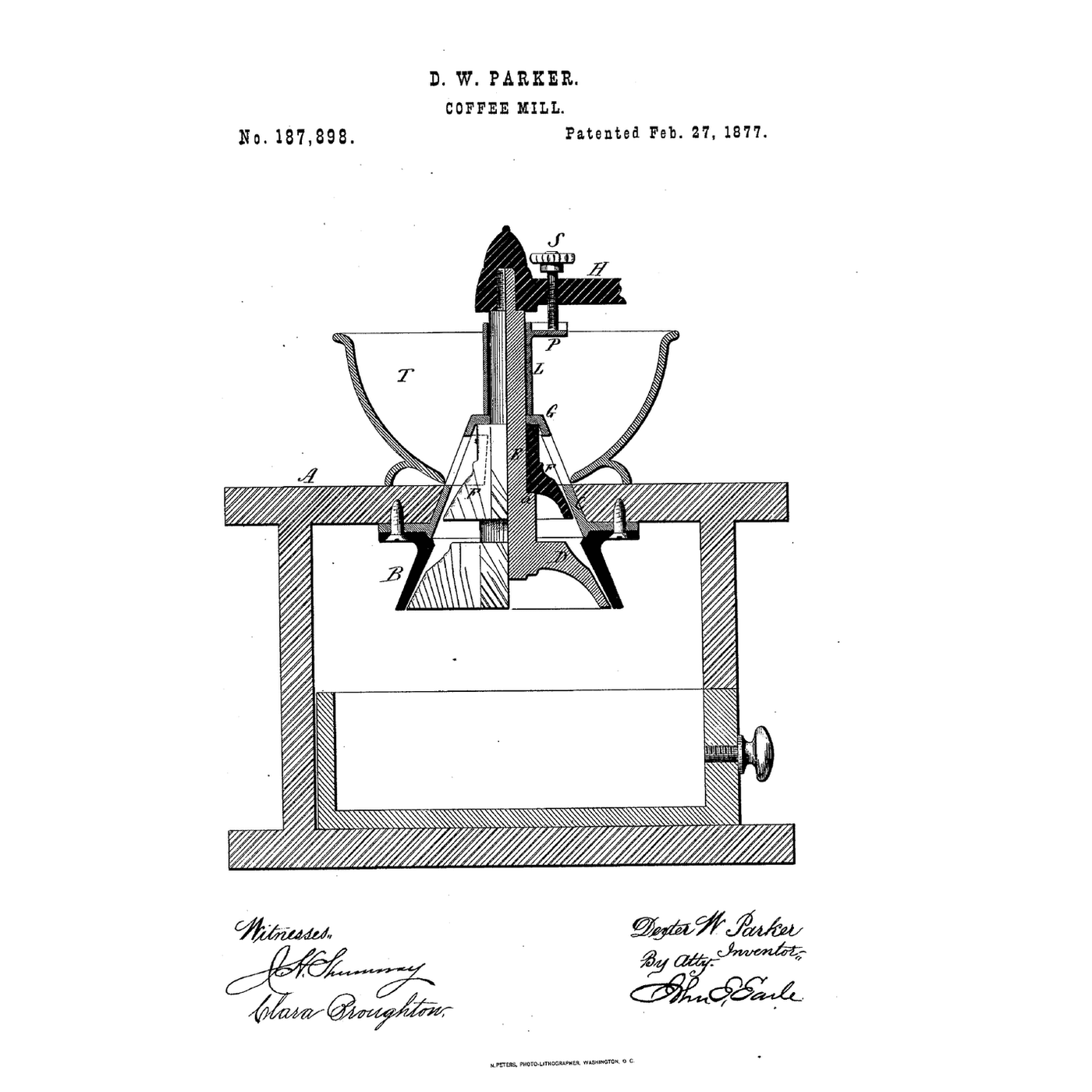
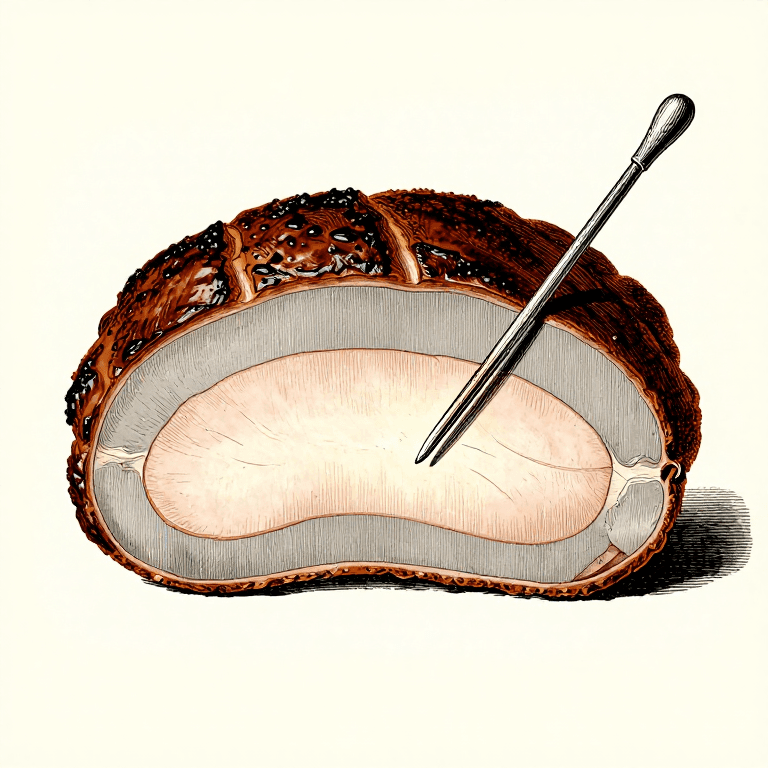
The embedded blueprint shows food going on cooking after it leaves the heat; roasted beans do the same, which is why Underwood cools them at once.
3
3
Read US 204,635
Read US 204,635
"The object of my invention is to provide a combined coffee roaster and cooler in which the charge of coffee in the roasting-cylinder shall be transferred to the cooling-cylinder without exposure to the air, and in an automatic manner, by the simple rotation of the cylinders, without raising the same into a vertical position."
"The roasting-cylinder A is arranged within the combustion-chamber of a furnace, E, so that the hot currents shall circulate around the same, while the cooling-cylinder is partly within a water-tank, F, in which water is placed, so as to partly surround the cooling cylinder and reduce the temperature of the same."
A removable "trier" or "sampler" "is adapted to catch a quantity of the coffee-beans and be pulled out to permit the progress of the roasting to be watched, as heretofore used."
4
4
Roasting, as a program
Roasting, as a program
Przestrzeń Blockly
Loading Blockly workspace...
5
5
Cool half fast, half slow
Cool half fast, half slow
Roast a single layer of green coffee beans in a heavy pan over a medium flame, stirring all the time, until they are an even brown. Work by an open window.
Tip half onto a cold baking sheet and fan them; leave the other half heaped in the hot pan off the heat. Read both with the infrared thermometer every 15 seconds for three minutes. Compare the colours once both are cool, and the cooling curves with the notebook.
Materiały do tego kroku:
 Ziarna kawy100 g
Potrzebne narzędzia:
 Prażalnica do kawy
 Patelnia
 Blacha do pieczenia
 Wentylator skrzynkowy (regulowana prędkość)
 Termometr na podczerwień
 Stoper
6
6
Beans that scorch, stay pale or roast unevenly
Beans that scorch, stay pale or roast unevenly
Roasting troubleshooting.
Flow
Loading...
7
7
History and honest limits
History and honest limits
**Joseph B. Underwood** of Fayetteville, North Carolina, filed US 204,635 on 23 April 1878; it is dated 4 June 1878, assigned to Annie V. Jessup.
**Honest limits.** A bean is treated as a small lump at one temperature with a single heat-transfer coefficient; real beans have a hot core and a cooler skin, and roasting chemistry does not stop at any single temperature. All values are examples. Your thermometer readings are the measurement.
Materiały
1- 100 gZastępnik
Wymagane narzędzia
6- Zastępnik
- Patelnia10% prowizjiZastępnik
- Zastępnik
- Zastępnik
- Zastępnik
Powiązane blueprinty
Te blueprinty dzielą się wiedzą — technikami, materiałami lub zasadami

CC0 Domena publiczna
Ten plan jest udostępniany na licencji CC0. Możesz go swobodnie kopiować, modyfikować, rozpowszechniać i wykorzystywać do dowolnych celów, bez konieczności uzyskiwania zgody.
Wesprzyj Makera kupując produkty przez jego plan, za co zarabia Prowizja Makera ustalony przez sprzedawców, lub stwórz nową iterację tego planu i dołącz go jako połączenie w swoim własnym planie, aby dzielić się przychodami.