SZTUKA
Piękno i dobre samopoczucie
RZEMIOSŁO
KULTURA I HISTORIA
ROZRYWKA
ŚRODOWISKO
JEDZENIE I NAPOJE
INŻYNIERIA ODWROTNA
NAUKI
LEKKOATLETYKA
TECHNOLOGIA
URZĄDZENIA DO NOSZENIA
The Savonius Rotor: Two Hollow Vanes, Any Wind, Always Starts
Cut a cylinder in half lengthwise, slide the halves apart so they overlap, and stand them on a vertical shaft: that is the rotor Sigurd Savonius of Finland patented in 1924–29. The wind pushes harder on the hollow of one vane than on the back of the other, and air flowing through the overlap from one hollow into the other helps it along.
It turns in wind from any direction without steering, starts itself in the lightest breeze, and gives strong torque at low speed — for pumping water, ventilating, or driving a current meter. It is also slow and inefficient, because it is pushed by drag.
This rung works out the drag machine's ceiling and builds a Savonius rotor from a PVC pipe, measuring its torque with a string brake.
Początkujący
About 4 hours
Instrukcje
1
1
Read Savonius's overlap
Read Savonius's overlap
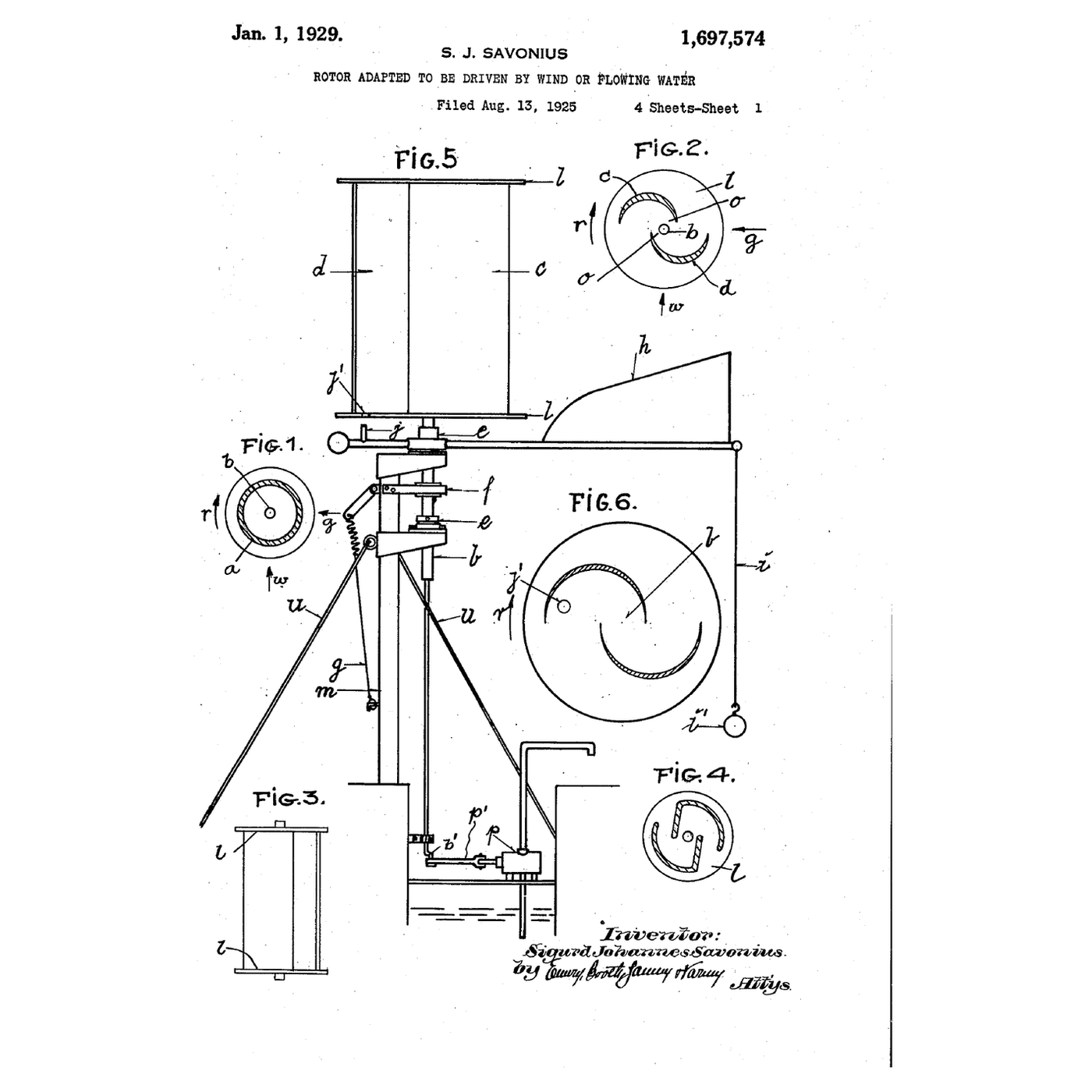
US 1,697,574, 'Rotor Adapted to be Driven by Wind or Flowing Water', Sigurd J. Savonius. The vanes are *"hollow-shaped"* and *"overlapping"*, so that the space between them forms an air passage *"from the hollow side of the vane d, to the hollow side of the other vane c"*. His text compares it with the rotating cylinder then being studied at the Aerodynamische Versuchsanstalt in Göttingen, which it cites.
The overlap is the detail that separates a Savonius rotor from two cups on a stick.
2
2
The drag machine's ceiling
The drag machine's ceiling
Wczytywanie notatnika Jupyter…
3
3
Build it from a PVC pipe
Build it from a PVC pipe
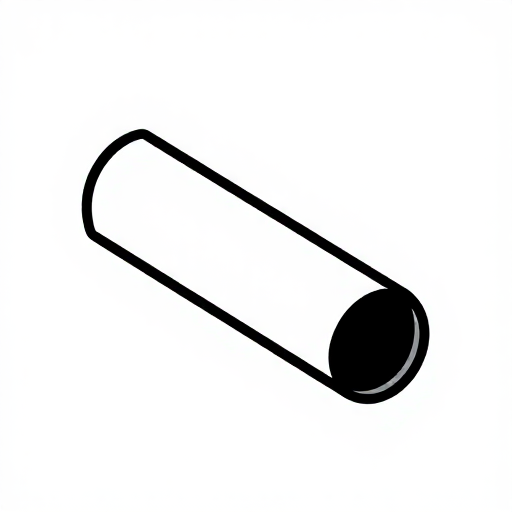
Cut a 300 mm length of 110 mm PVC pipe in half lengthwise with a saw. Cut two plywood end discs 240 mm across. Screw the two half-pipes between the discs, hollow faces opposite, each shifted towards the centre so they **overlap by about a fifth of a half-pipe's width**, leaving the air passage Savonius describes.
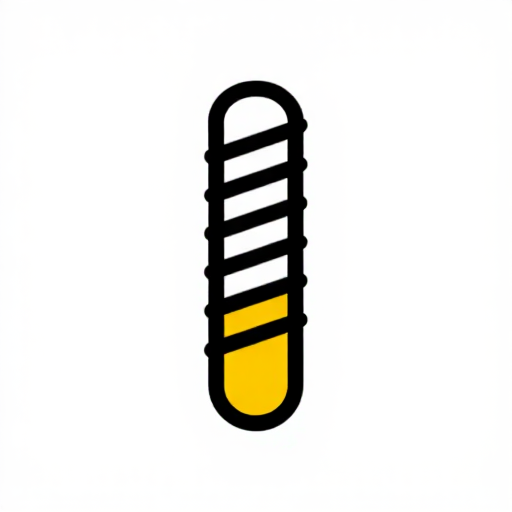
Run a threaded-rod shaft through the centre of both discs, held by nuts, and carry it vertically in two skateboard bearings in a plywood frame.
Materiały do tego kroku:
 Rura PVC1 sztuka
 Płyta sklejkowa1 arkusz
 Pręt gwintowany1 sztuka
 Łożyska do deskorolki2 sztuk
 Śruby maszynowe12 sztuk
Potrzebne narzędzia:
 Wiertarko-wkrętarka akumulatorowa
 Zestaw wierteł
 Klucz nastawny
 Linijka
 Obcinak do rur
4
4
Measure torque with a string brake
Measure torque with a string brake
Wrap fishing line once round the shaft. Tie one end to the spring scale fixed to the frame, and hang a small weight on the other end, so the line rubs on the turning shaft as a brake. The braking torque is **(weight − scale reading) × shaft radius**.
Put the rotor in front of the box fan. Start with a light weight: the rotor spins fast. Add weight step by step, reading the speed with the tachometer and the scale each time, until it stalls. Power = torque × angular speed.
Turn the rotor to face the wind at a different angle: it does not care. Start the fan at its lowest setting with the rotor stopped: it starts by itself. Those two facts are why Savonius rotors exist.
Materiały do tego kroku:
 Żyłka wędkarska (jednowłóknowa)1 rolka
 Ciężarek1 zestaw
Potrzebne narzędzia:
 Wentylator skrzynkowy (regulowana prędkość)
 Anemometr ręczny
 Tachometr cyfrowy
 Siłomierz (waga sprężynowa)
 Suwmiarka cyfrowa 6 cali
5
5
History and context
History and context
**US 1,697,574, 'Rotor Adapted to be Driven by Wind or Flowing Water', Sigurd J. Savonius; filed 13 August 1925 (Serial 49,985), claiming a Finnish filing of 12 December 1924; granted 1 January 1929.** The title names water as well as wind: the same rotor turns in a current.
**Honest limits.** Low efficiency — a drag machine cannot beat the notebook's ceiling by much. Heavy for its power, because the whole swept area is solid vane. Its torque pulses twice per turn, which is why many are built as two stages twisted 90° apart, or with helical vanes.
Materiały
7- 1 sztukaZastępnik
- 1 arkuszZastępnik
- 1 sztukaZastępnik
- Łożyska do deskorolki10% prowizji2 sztukZastępnik
- 12 sztukZastępnik
- Zastępnik
- 1 zestawZastępnik
Wymagane narzędzia
10- 1 vendor sell this, none ship to you yetZastępnik
- Zastępnik
- Zastępnik
- Zastępnik
- Obcinak do rur10% prowizjiZastępnik
- Zastępnik
- Zastępnik
- Zastępnik
- Zastępnik
Powiązane blueprinty
Te blueprinty dzielą się wiedzą — technikami, materiałami lub zasadami
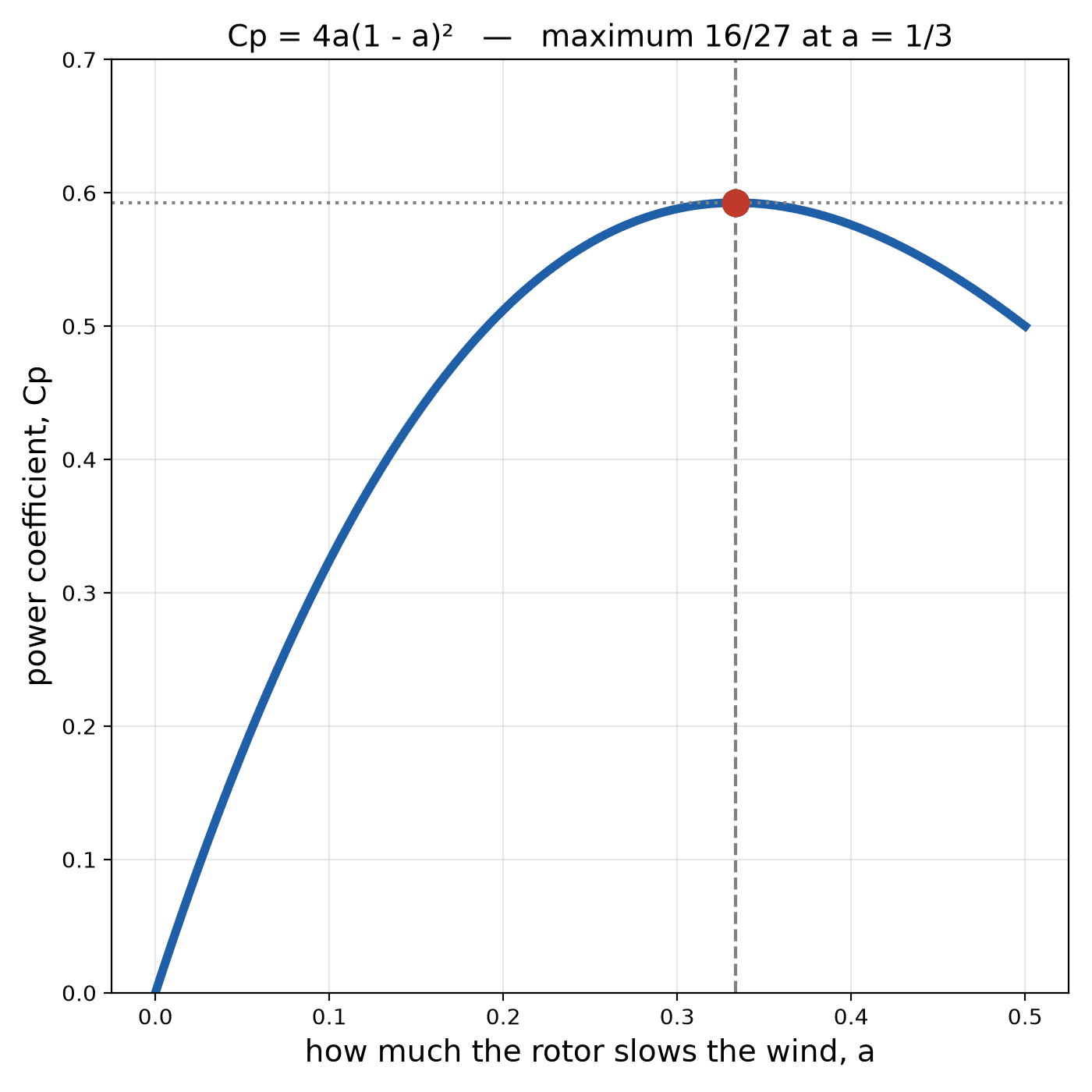
The Betz Limit: Why No Rotor Takes More Than 16/27 of the Wind
autor: Volt
Energia
10
0
0
0
0
0
Electricity From the Wind: The Cube Law and a Rotor on a Dynamo
autor: Volt
Energia
13
0
0
0
0
0
Building a Persian Windmill — The First Machine Powered by Wind
autor: Emma
Mechanika
79
0
0
0
0
0
Robinson Cup Anemometer
autor: Karen
ŚRODOWISKO
34
0
0
0
0
0
CC0 Domena publiczna
Ten plan jest udostępniany na licencji CC0. Możesz go swobodnie kopiować, modyfikować, rozpowszechniać i wykorzystywać do dowolnych celów, bez konieczności uzyskiwania zgody.
Wesprzyj Makera kupując produkty przez jego plan, za co zarabia Prowizja Makera ustalony przez sprzedawców, lub stwórz nową iterację tego planu i dołącz go jako połączenie w swoim własnym planie, aby dzielić się przychodami.