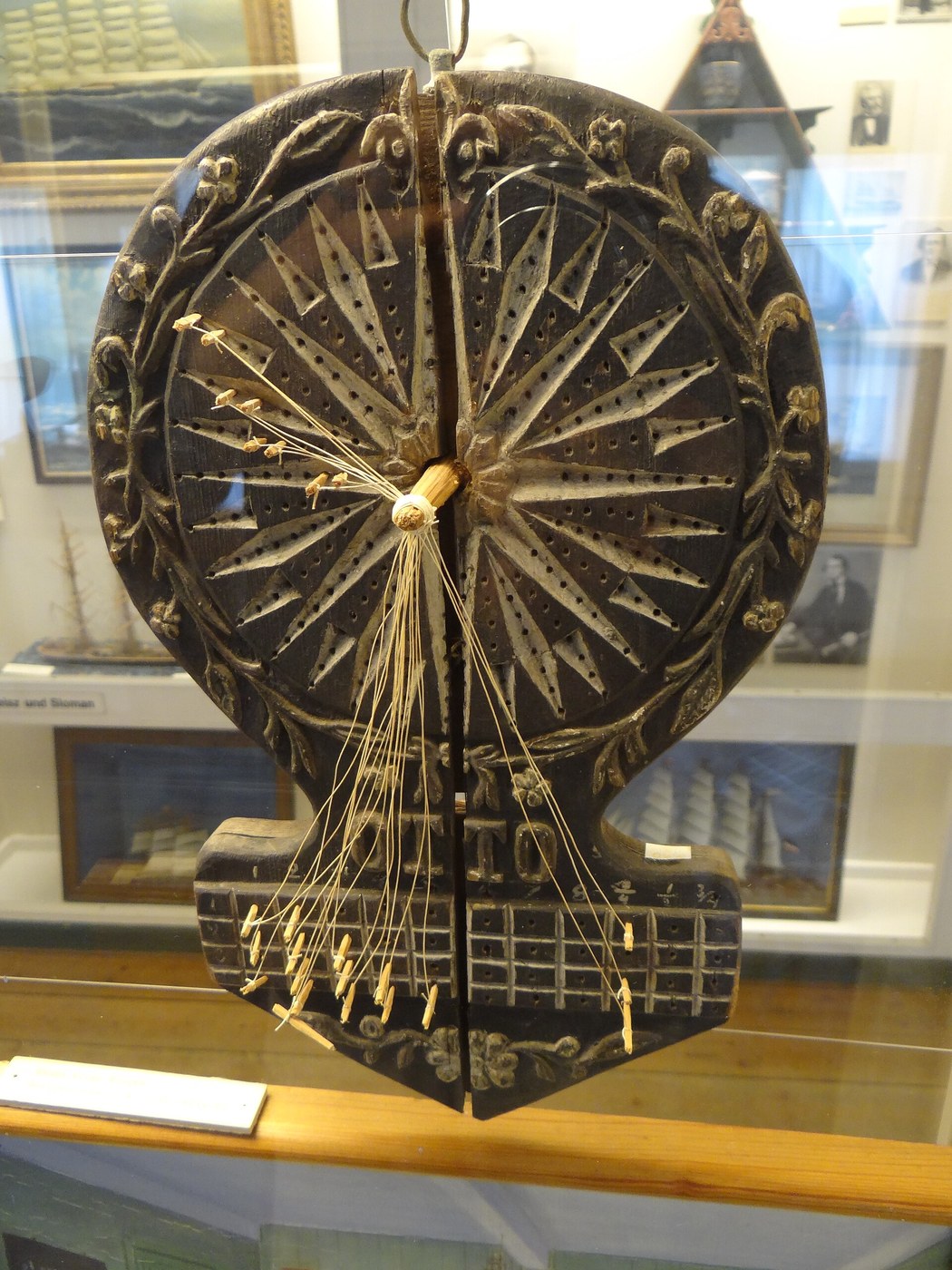


Traverse Board
Instrukcje
Lay out the compass rose
Lay out the compass rose
Thirty-two points, not 360 degrees.
- Draw a circle and divide it into 32 equal points — 11.25 degrees each.
- Label them in the traditional order: North, North by East, North-north-east, and so on.
- Drill eight holes along each radius, from centre outward.
Materiały do tego kroku:
 Deska sosnowa1 board
 Kątomierz1 sztuka
Add the speed section
Add the speed section
A separate grid below the rose records what the log said.
- Rule a grid of rows and columns beneath the rose.
- Columns are speed in knots; rows are the successive half-hours.
- Drill a hole at each intersection and attach pegs on lanyards.
Materiały do tego kroku:
 Sznurek bawełniany1 rolka
 Kołek drewniany1 sztuka
Keep a watch
Keep a watch
Run a simulated watch and fill the board.
- Every half-hour, peg the heading actually steered.
- Peg the speed from your log reading.
- Work outward from the centre so the sequence is unambiguous.
Materiały do tego kroku:
 Kompas1 sztuka
Work up the average course
Work up the average course
Turn eight headings and eight speeds into one position change.
- For each half-hour, resolve the run into north-south and east-west components.
- Sum each component over the watch.
- The totals give the distance made good and the course made good.
Materiały do tego kroku:
 Zestaw ołówków grafitowych1 zestaw
History and context
History and context
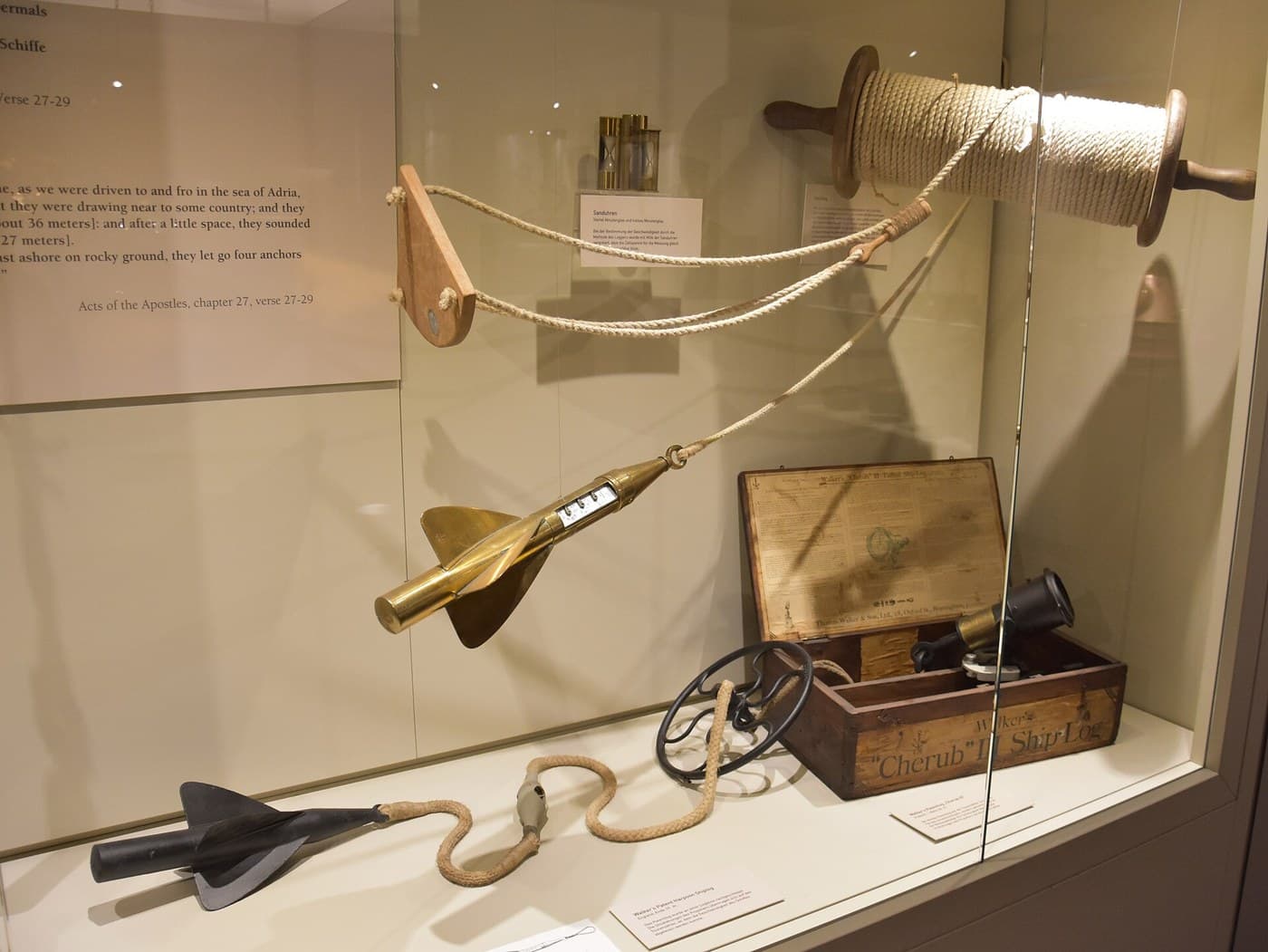
Traverse boards are documented from around the fifteenth century and were standard on European vessels for centuries. They belong to dead reckoning: from a known position, apply course and distance to get the next position. The chip log supplied speed, the compass supplied heading, the glass supplied time, and the board held the record between them.
The design assumes an illiterate user, deliberately. Ordinary seamen were often unable to read, and the helmsman was the only person who knew what had actually been steered. A pegboard lets that person record data accurately without writing, and lets the mate — who could write — read it off at the end of the watch. It is an interface designed around who is actually operating it, which is not a modern idea.
Errors accumulated relentlessly. Leeway from the wind pushing the hull sideways, currents, a helmsman's average error, and the chip log reading slightly low all compound over days out of sight of land. Dead reckoning was good enough for coastal work and terrifying for ocean crossings, which is the whole reason the longitude problem attracted a national prize.
Boxing the compass survives as a phrase, and the 32-point system persists in wind and swell descriptions. The board itself was displaced by the deck log book as literacy became general — and the underlying method, integrating heading and speed over time to update a position, is exactly what an inertial navigation system does now with gyroscopes and a processor.
Materiały
6- 1 boardZastępnik
- 1 sztukaZastępnik
- 1 rolkaZastępnik
- 1 sztukaZastępnik
- 1 sztukaZastępnik
- 1 zestawZastępnik
Powiązane blueprinty
Te blueprinty dzielą się wiedzą — technikami, materiałami lub zasadami
CC0 Domena publiczna
Ten plan jest udostępniany na licencji CC0. Możesz go swobodnie kopiować, modyfikować, rozpowszechniać i wykorzystywać do dowolnych celów, bez konieczności uzyskiwania zgody.
Wesprzyj Makera kupując produkty przez jego plan, za co zarabia Prowizja Makera ustalony przez sprzedawców, lub stwórz nową iterację tego planu i dołącz go jako połączenie w swoim własnym planie, aby dzielić się przychodami.