SZTUKA
Piękno i dobre samopoczucie
RZEMIOSŁO
KULTURA I HISTORIA
ROZRYWKA
ŚRODOWISKO
JEDZENIE I NAPOJE
INŻYNIERIA ODWROTNA
NAUKI
LEKKOATLETYKA
TECHNOLOGIA
URZĄDZENIA DO NOSZENIA
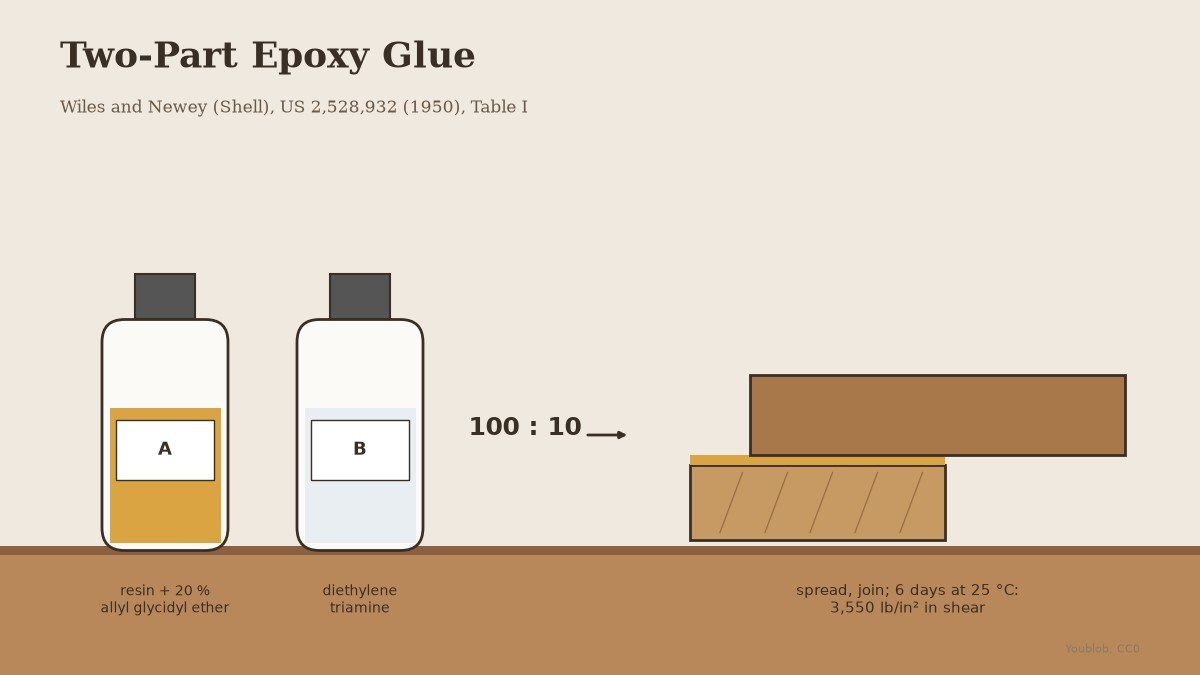


Two-Part Epoxy Glue: Bis-Phenol Resin Thinned with Allyl Glycidyl Ether, Hardened with Diethylene Triamine
Bis-phenol epoxy resin is too thick to spread, so it is thinned with a fifth of its weight of allyl glycidyl ether, which joins the cure. That is part A; part B is diethylene triamine. Stir 10 parts of B into 100 of A, spread, join, and it hardens at room temperature: after six days at 25 °C, block joints held 3,550 lb/in² (Wiles and Newey, Shell, US 2,528,932, 1950). It bonds wood, metal and resins.
The picture: our drawing of the two bottles and a glued joint.
Średniozaawansowany
A week to full strength
Instrukcje
1
1
Make part A
Make part A
Warm 400 g bis-phenol epoxy resin until it flows (our step; it softens at 43 °C) and stir in 100 g allyl glycidyl ether, to a smooth, spreadable syrup. Bottle it.
Materiały do tego kroku:
 Żywica epoksydowa bisfenolowa400 g
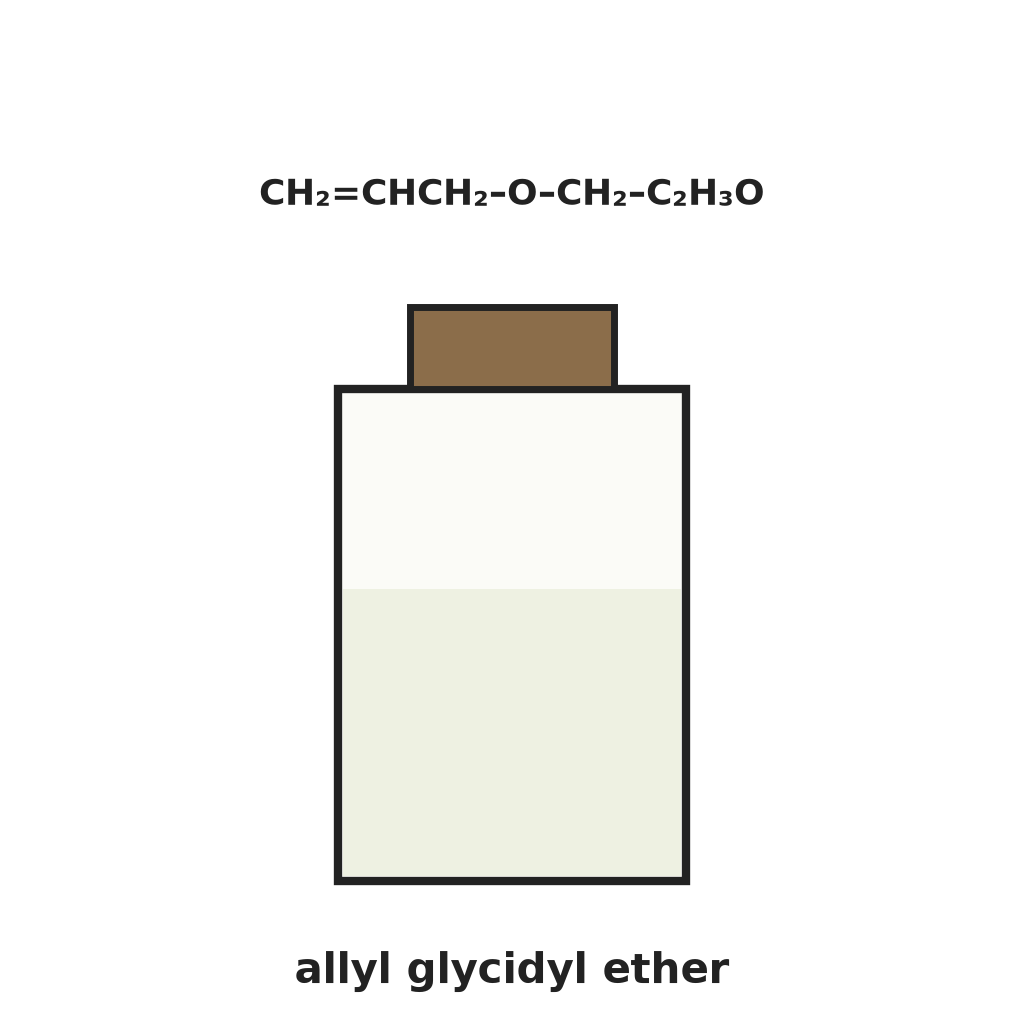 Eter allilowo-glicydylowy100 g
Potrzebne narzędzia:
 Zlewka borokrzemowa
 Płyta grzejna
 Mieszadło
 Termometr
 Cyfrowa waga kuchenna
 Butelki szklane z zakrętkami
 Rękawice gumowe
2
2
Bottle part B
Bottle part B
Bottle diethylene triamine separately and keep it closed: it is strongly alkaline and burns skin. You need 10 g for every 100 g of part A.
Materiały do tego kroku:
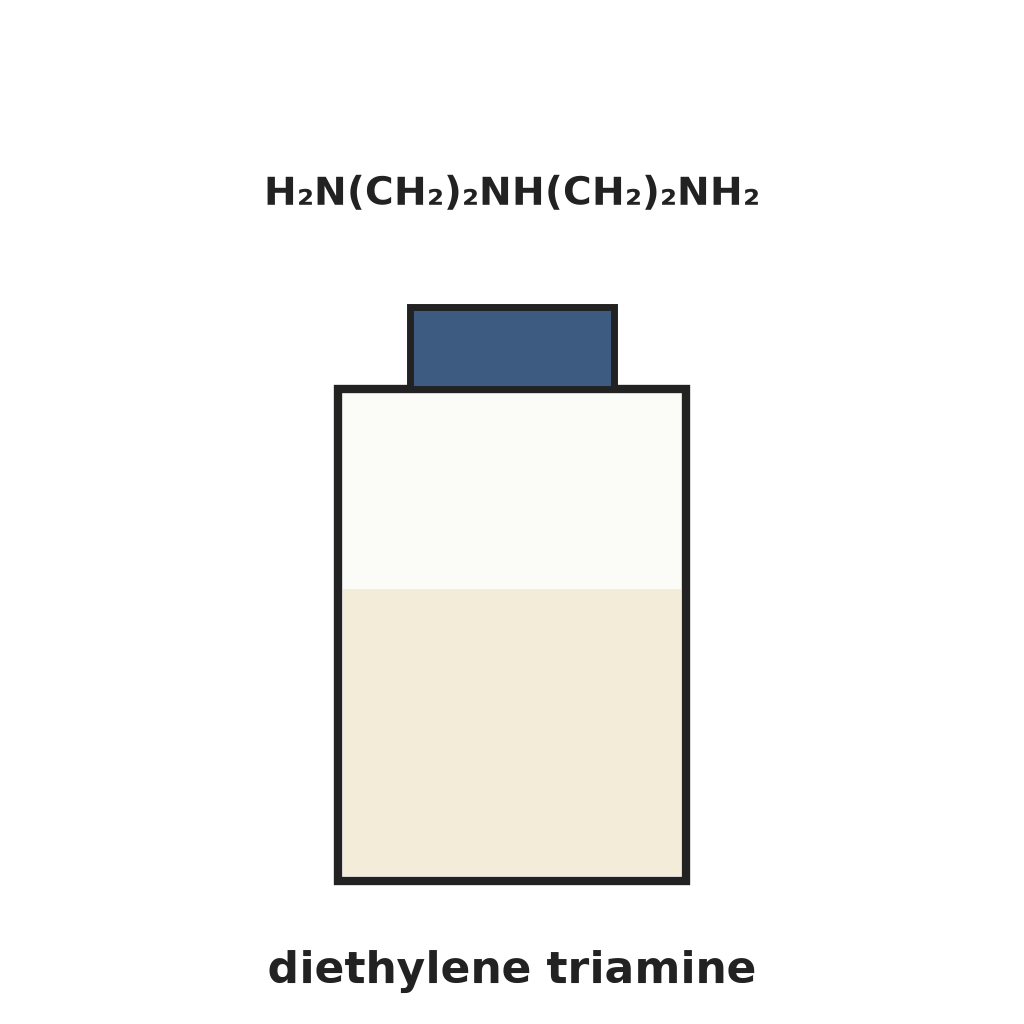 Dietylenotriamina50 g
Potrzebne narzędzia:
Butelki szklane z zakrętkamiRękawice gumowe3
3
Mix only what you need
Mix only what you need
Weigh part A into a cup, add a tenth of its weight of part B, and stir well. It begins to cure at once, so mix just before gluing.
Potrzebne narzędzia:
 Kubek miarowyCyfrowa waga kuchennaMieszadłoRękawice gumowe
4
4
Spread, join, wait
Spread, join, wait
Spread a thin coat on both faces and press them together. At room temperature it sets in half an hour to a day and reaches full strength in one to two weeks; warmth speeds it up.
Potrzebne narzędzia:
 Pędzel do kleju
5
5
Mixing table
Mixing table
Wczytywanie notatnika Jupyter…
Materiały
3- Zastępnik
- Zastępnik
- Zastępnik
Według tego planu powstaje

Powiązane blueprinty
Te blueprinty dzielą się wiedzą — technikami, materiałami lub zasadami
Niebezpieczne
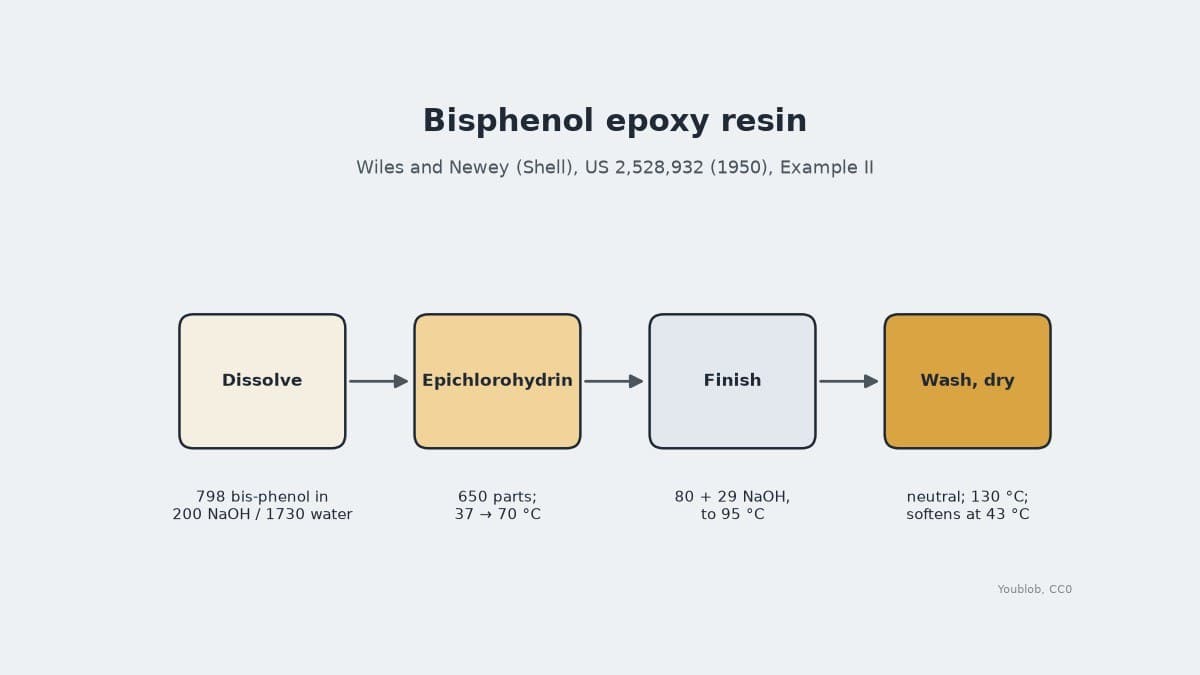
Bisphenol Epoxy Resin: Bisphenol A and Epichlorohydrin in Caustic Soda, Wiles and Newey 1950
autor: Charlie
Polimer
7
0
0
0
0
0
Niebezpieczne
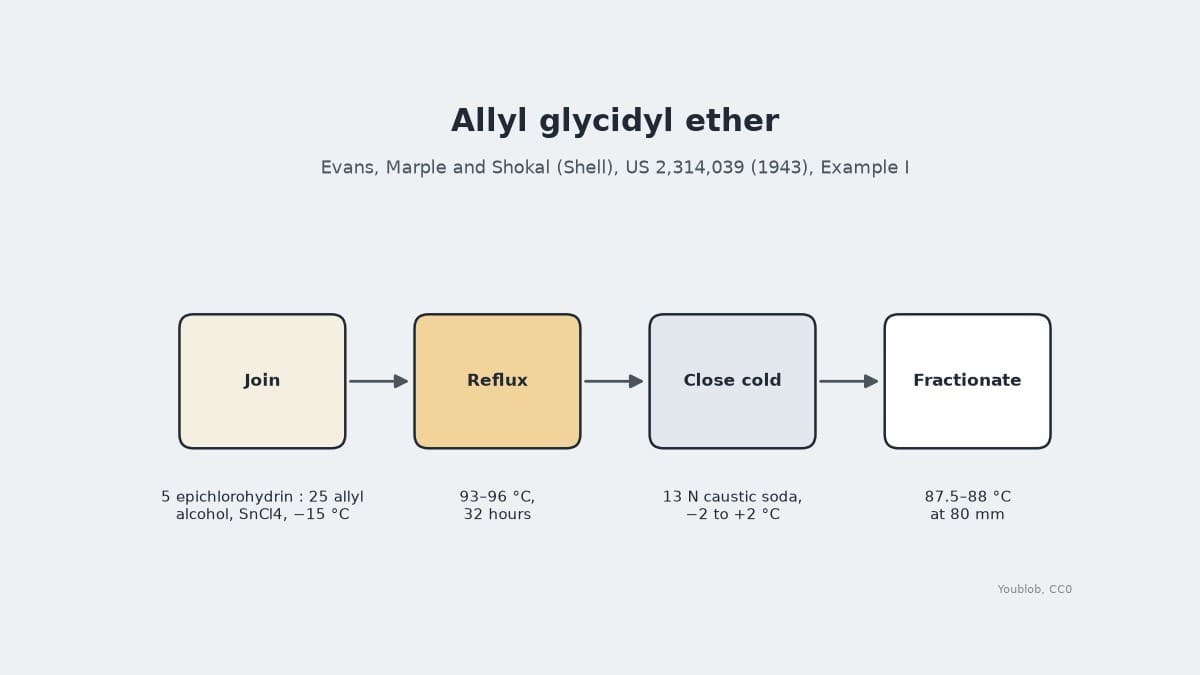
Allyl Glycidyl Ether: Allyl Alcohol and Epichlorohydrin, Evans, Marple and Shokal 1943
autor: Charlie
Organiczny
12
0
0
0
0
0
Niebezpieczne
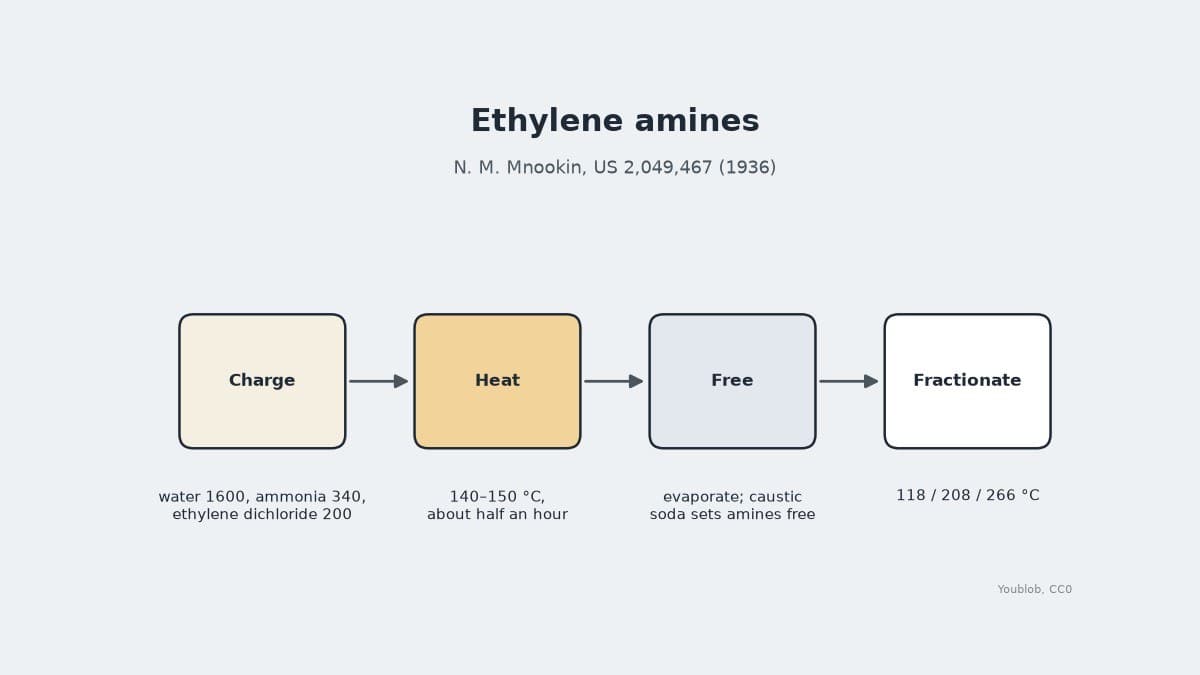
Ethylene Amines: Ethylene Dichloride Heated with Ammonia Water, Mnookin 1936
autor: Charlie
Organiczny
10
0
0
0
0
0
CC0 Domena publiczna
Ten plan jest udostępniany na licencji CC0. Możesz go swobodnie kopiować, modyfikować, rozpowszechniać i wykorzystywać do dowolnych celów, bez konieczności uzyskiwania zgody.
Wesprzyj Makera kupując produkty przez jego plan, za co zarabia Prowizja Makera ustalony przez sprzedawców, lub stwórz nową iterację tego planu i dołącz go jako połączenie w swoim własnym planie, aby dzielić się przychodami.